Kabaddi
The only sport whose central rule regulates a competitor's breathing: the raider must chant continuously, and when the chant stops, the raid is over.
- Official
- Kabaddi
- Game category
- Invasion
- Adjudication
- Decided by score
- Standing
- Never Olympic
- rule changes
- 4
- comparability break
- 1
- Olympic editions
- 0
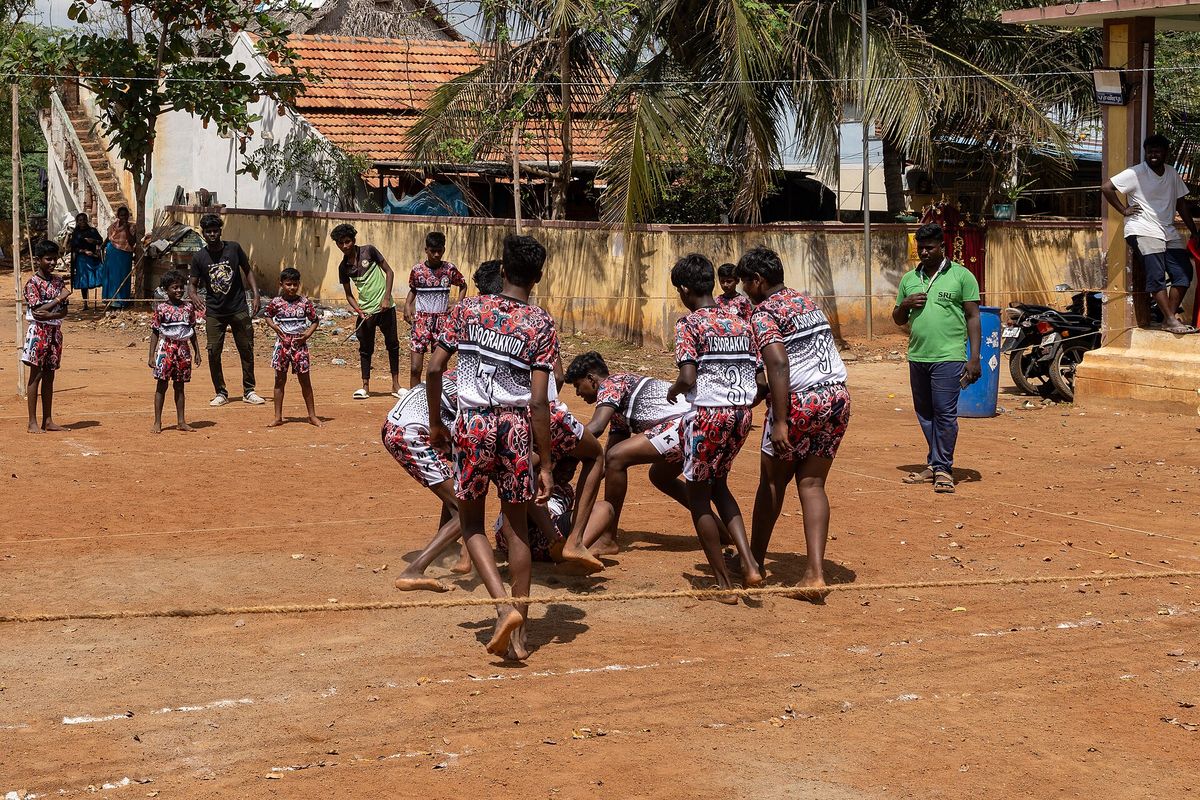
A tackle in a village kabaddi match at Soorakudi, Sivaganga district, Tamil Nadu · Rainer Halama · CC BY-SA 4.0
- Governing body
- International Kabaddi Federation
- Founded
- An ancient South Asian contest, codified in India in the 1920s; a full Asian Games medal sport from 1990, with the International Kabaddi Federation formed in 2004.
- Olympic status
- Not on the Olympic programme
- Also contested at
- Asian Games
One player crosses into the opposition's half, tries to touch as many of the seven defenders as possible, and gets back across the line — all while chanting "kabaddi" without pausing for breath. The chant is not tradition laid over the sport; it is the rule that limits the raid, judged by ear, and it makes kabaddi the only sport covered here where the referee is listening rather than watching.
The gamewhat it is now · sections 1 to 5
01How it is played
Seven a side on a court thirteen metres by ten. Teams alternate sending one raider into the opposition half to touch defenders and return. The raider must chant continuously on one breath, and has thirty seconds.
These figures were entered from the edition named above but have not been checked against its text line by line. Treat them as this site’s reading of the laws, not as a substitute for them.
The object of the game
Score more points than the opposition. A raider scores one point for each opponent they touch before returning across the midline; the defence scores one point for tackling the raider and holding them until the raid ends.
Players who are out leave the court and are revived one at a time as their team scores — so a raid that touches three defenders also brings three team-mates back on. Putting the entire opposing side out is an all-out, worth two extra points.
- Point per touch
- 1
- Point for a tackle
- 1
- All-out bonus
- 2
The court
Thirteen metres by ten for men, twelve by eight for women, divided across the middle. Along each side runs a lobby, which is out of play until a tackle begins and then becomes live — a rule that turns the court's dimensions into a tactical variable mid-raid.
A bonus line sits inside each half. A raider who crosses it with the required number of defenders on court takes an extra point without touching anybody.
- Court, men
- 13 × 10 m
- Court, women
- 12 × 8 m
- Lobbies
- Out of play until a tackle starts
- Bonus line
- An extra point for crossing it
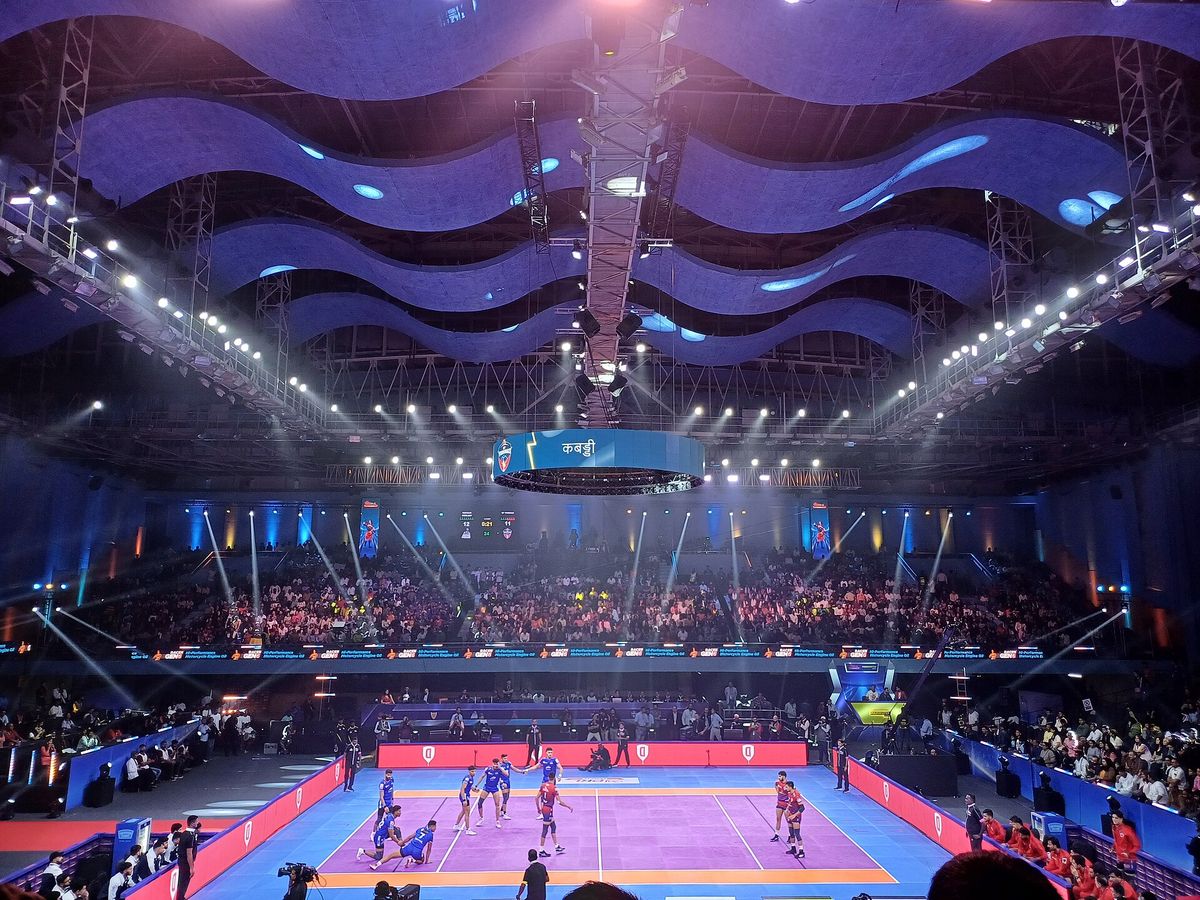
The court in the 2024 Pro Kabaddi League semi-finals, Pune.
A rectangle, a midline, the baulk and bonus lines, and the lobbies along the sides.
DesiBoy101 · CC BY 4.0 · Wikimedia Commons
Equipment
None. Kabaddi is played barefoot or in light shoes on a mat or on earth, in ordinary kit, with no ball, no implement and no protective equipment.
It is the only sport covered on this site with no object of play at all. Every other game here has a ball, a disc, a rope, a bar, a target or a weapon; kabaddi has two teams and a line.
- Object of play
- None
- Protective equipment
- None
- Surface
- Mat, or earth in the traditional game
Players and officials
Seven a side on court, with substitutes. Roles are specialised: raiders, corner defenders and cover defenders, and the best players are usually one or the other rather than both.
Officials are a referee, two umpires, a scorer and assistants — and part of their job is to listen. Whether the cant was continuous is an auditory judgement made over crowd noise.
- On court
- 7
- Officials
- Referee, two umpires, scorer
- Cant
- Judged by ear
This clause reads this way because of
Time
Two halves of twenty minutes with a five-minute interval. Within that, the raid clock: a raider has thirty seconds, and the raid also ends whenever the cant breaks — so a raid has two independent limits, one mechanical and one physiological.
- Halves
- 2 × 20 min
- Raid clock
- 30 s
- The other limit
- One breath
Scoring
One point per touch, one for a tackle, one for the bonus line, two for an all-out, and a point when a raider steps out of bounds or fails to return.
A raid that produces nothing is an empty raid. After two in a row, the third is a "do or die" raid that must produce a point or the raider is out — a rule that makes stalling expensive rather than merely dull.
This clause reads this way because of
The raid
Teams alternate raids. The raider must begin the cant before crossing the midline, keep it audible and unbroken while in the opposition half, and return across the line with it still going to bank any points.
A raider who is tackled is out unless they can reach back across the line, dragging defenders with them, which is why a kabaddi tackle looks like several people trying to stop one person crawling.
This clause reads this way because of
Infringements
Breaking the cant while in the opposition half. Crossing the line without having started it. Stepping out of bounds. On the defensive side: holding a raider by the clothing, the hair or the limbs in a way the rules forbid, deliberate violence, and — the characteristic one — more than the permitted defenders entering the lobby before a tackle has begun.
Deciding the winner
More points at full time. Knockout matches level at the end go to extra periods and then to a set number of raids each, which is the sport's version of a penalty sequence.
Everything above is current law. Everything below is how Kabaddi got here.
02Disciplines and events
No Olympic events. Kabaddi has been a full Asian Games medal sport since 1990 and is not on the World Games programme; its largest competition by money and audience is a domestic professional league in India.
- Disciplines
- 1
- Olympic medal events
- 0
- Men’s and women’s counted separately.
- Contested elsewhere
- 5
- asian games, world championship, federation only.
- Listed for context
- 3
- Not counted as this sport.
Standard style2
The codified international game. Seven a side on a marked court.
- Men's tournamentAsian GamesWorld championship
- Women's tournamentAsian GamesWorld championshipAdded to the Asian Games programme in 2010.
Circle style1
The Punjabi form, played on a circular field with different scoring and a different tackling culture. Governed separately and widely played in Punjab and among the Punjabi diaspora.
- Circle kabaddiFederation onlyIts own world cup, unconnected to the standard-style international structure.
The professional league1
A domestic Indian league launched in 2014 that became one of the country's largest television sports properties, and the source of the raid clock and do-or-die rules now used internationally.
- Professional league competitionFederation onlyWhere the sport's full-time athletes are, and where its rules are now effectively written.
Other forms1
- Beach kabaddiFederation onlyContested at Asian Beach Games.
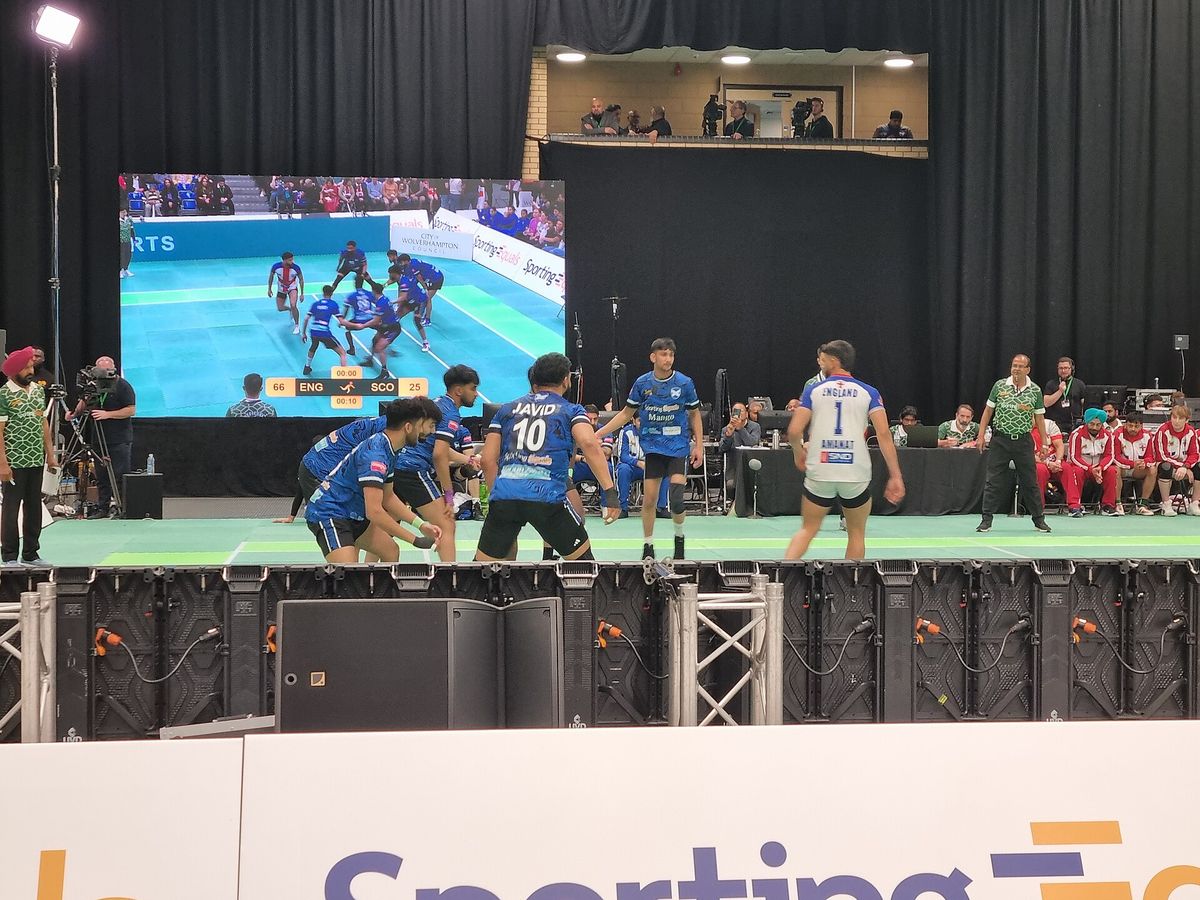
Scotland against England at the 2025 Kabaddi World Cup.
A world cup contested well beyond South Asia.
Bearas · CC BY 4.0 · Wikimedia Commons
03Officiating
Kabaddi is the only sport covered here whose central rule is enforced by listening.
The cant. The raider must chant continuously and audibly. If it breaks while they are in the opposition half, the raid is over and they must be back across the line. An umpire is therefore making an auditory judgement — was that chant continuous? — in an arena with a crowd, about a person who is being tackled by several opponents at the time. No instrument is used and none has been proposed.
The lobbies. The side areas are out of play until a tackle begins and live thereafter. Deciding the instant a tackle began, and therefore whether a defender who stepped into the lobby did so legally, is the most technical call in the sport and one of the most consequential.
The line. Whether a raider got any part of themselves back across the midline, often while being held by three people, decides whether points are banked or lost. Professional competition uses video review for this and for the lobby question, which is the only instrumentation kabaddi has accepted.
Holds. Defenders may not hold a raider by the hair or the clothing, and the boundary between a legal ankle hold and an illegal one is judged live in a pile of bodies.
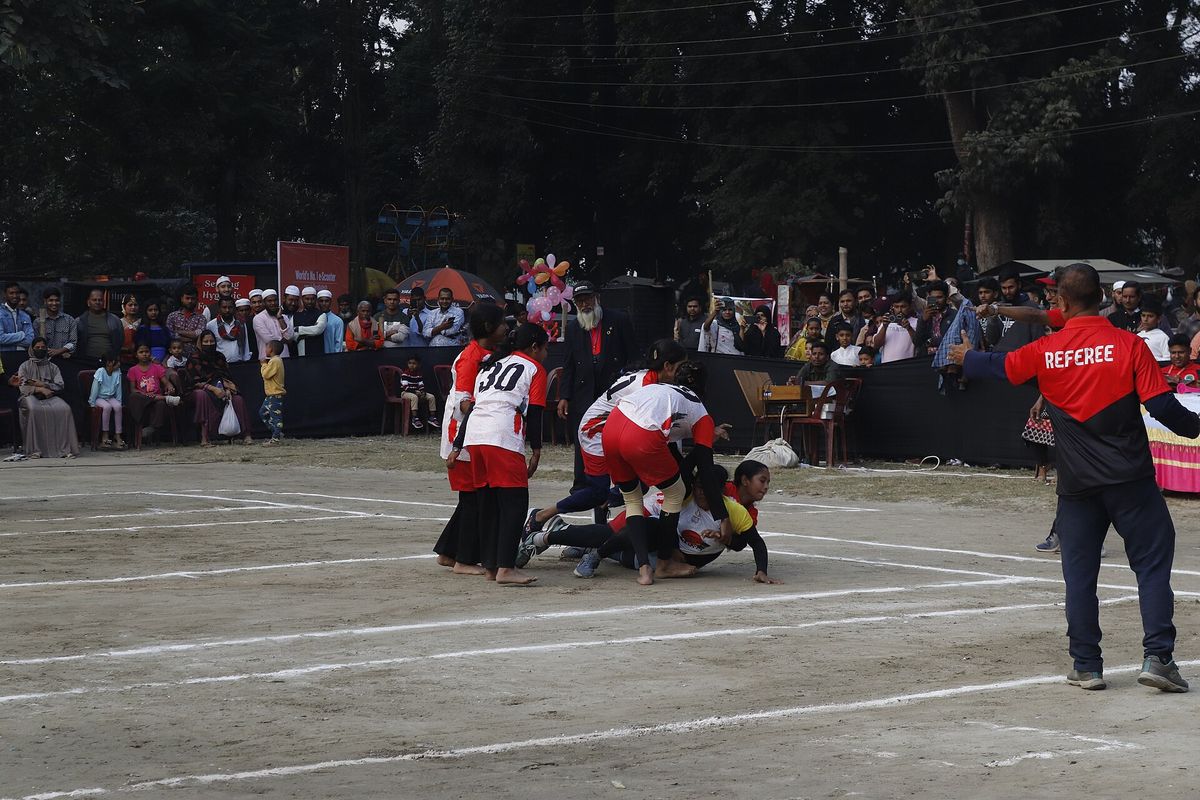
A referee watching a tackle at a tournament in Bangladesh.
Hair and clothing are off limits, and the line between a legal and an illegal hold is judged live in a pile of bodies.
Frameofashik · CC BY-SA 4.0 · Wikimedia Commons
The comparison worth making is with ultimate, elsewhere on this site, which removed officials entirely, and with orienteering, which replaced them with an electronic record. Kabaddi has kept a human standing at the edge of the mat deciding, by ear, whether an athlete stopped making a noise — and the sport's biggest commercial success has been built on top of that without changing it.
04Where it is played
Kabaddi is a mass sport in South Asia and a minority one everywhere else, and the imbalance is more extreme than for almost anything on this site.
India is the sport. It is played in villages, schools and universities across the country, it has a professional league that draws a national television audience, and it has won every men's Asian Games title from 1990 for decades. The women's game, added to the Asian Games programme in 2010, has followed the same pattern.
Iran is the only country to have seriously broken that dominance, with a national programme that has beaten India at Asian Games level, and it is the best evidence available that the sport's concentration is a matter of investment rather than of something intrinsic.
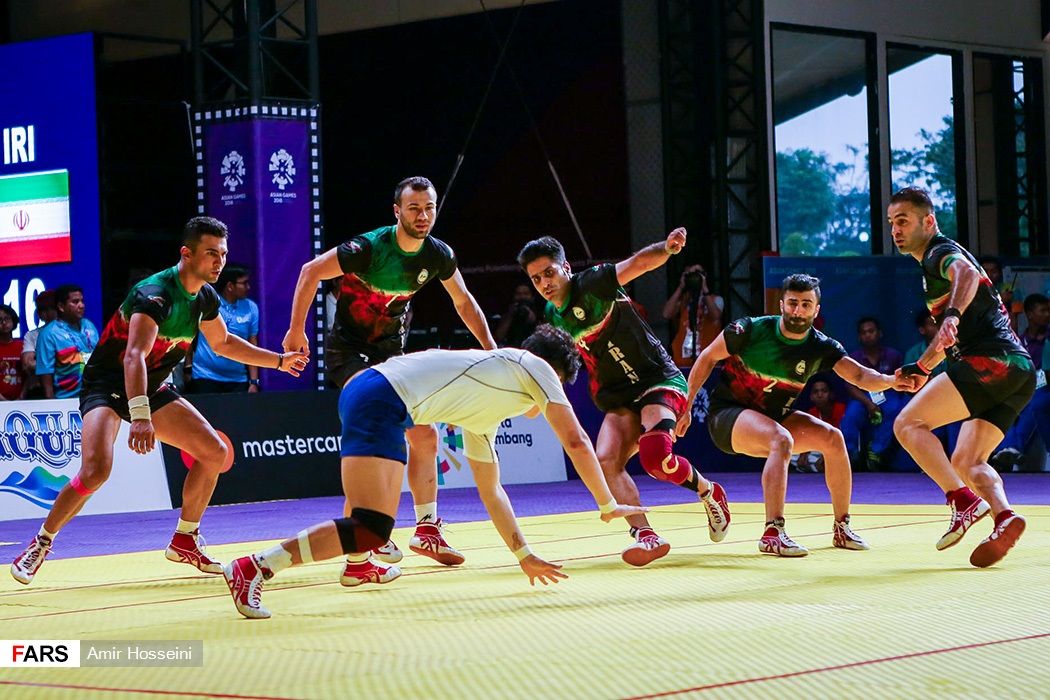
Iran's men defending against a raid at the 2018 Asian Games, Jakarta.
The only country to have seriously broken India's dominance.
Amir Hosseini · CC BY 4.0 · Wikimedia Commons
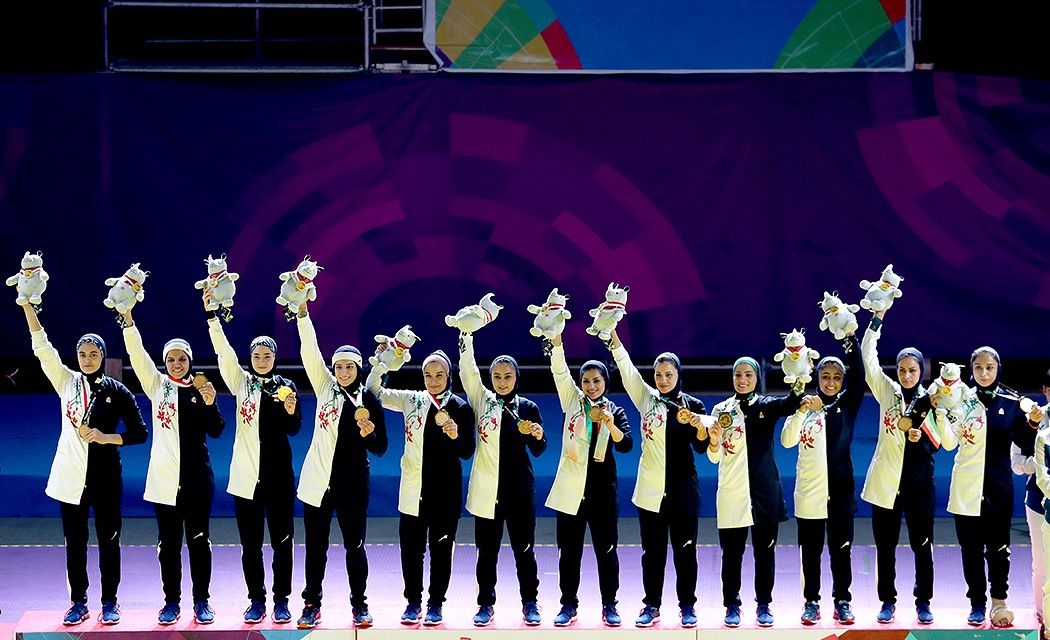
Iran's women on the podium at the 2018 Asian Games, Jakarta.
A national programme built by investment.
Amir Hosseini · CC BY 4.0 · Wikimedia Commons
Bangladesh has it as a national sport, and Pakistan, Nepal and Sri Lanka all play it widely. Beyond South Asia, South Korea, Japan and Chinese Taipei compete at Asian level, and the Punjabi diaspora has carried circle-style kabaddi to Britain, Canada and the United States, where it is a substantial community sport largely invisible to the mainstream.
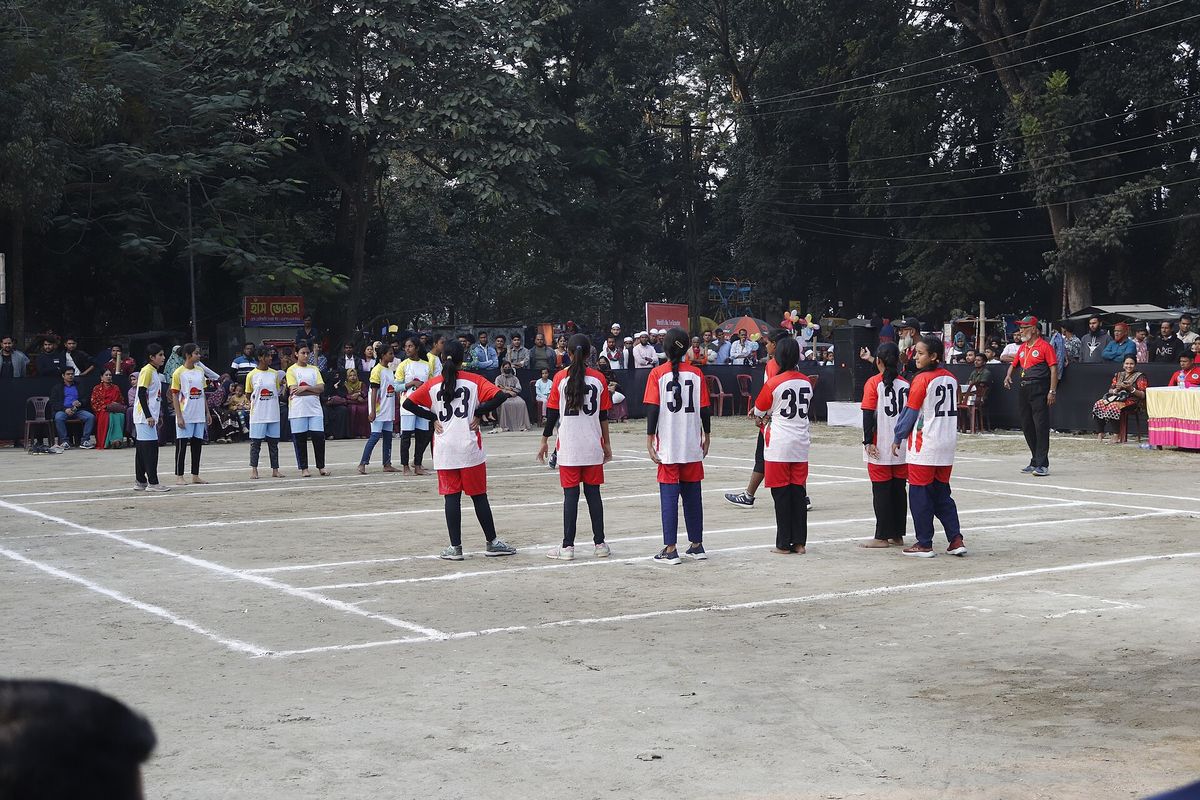
A team lined up on a chalked outdoor court in Bangladesh.
The standard game on an outdoor court.
Frameofashik · CC BY-SA 4.0 · Wikimedia Commons
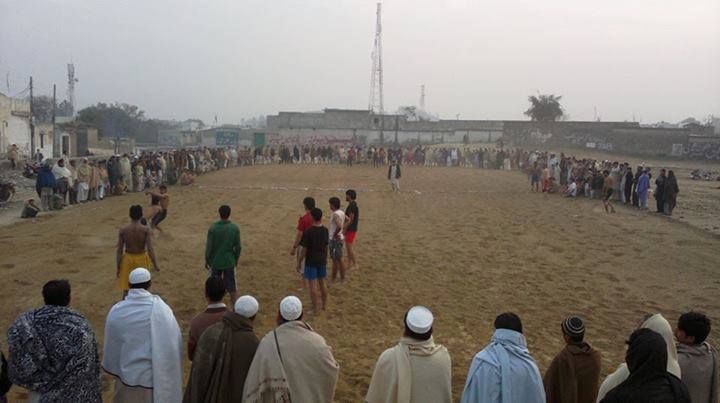
Kabaddi at Maini, Pakistan, played as winter arrives, with the village watching.
Pakistan plays it widely, and much of it this way.
Zafar Hayat Khan · CC BY-SA 3.0 · Wikimedia Commons
The circle-style game deserves separating out. It is played on a circular field, scores differently, has its own competitions and its own world cup, and is not the sport contested at the Asian Games. Two related codes, governed apart, with the diaspora largely playing the one that has no international programme.
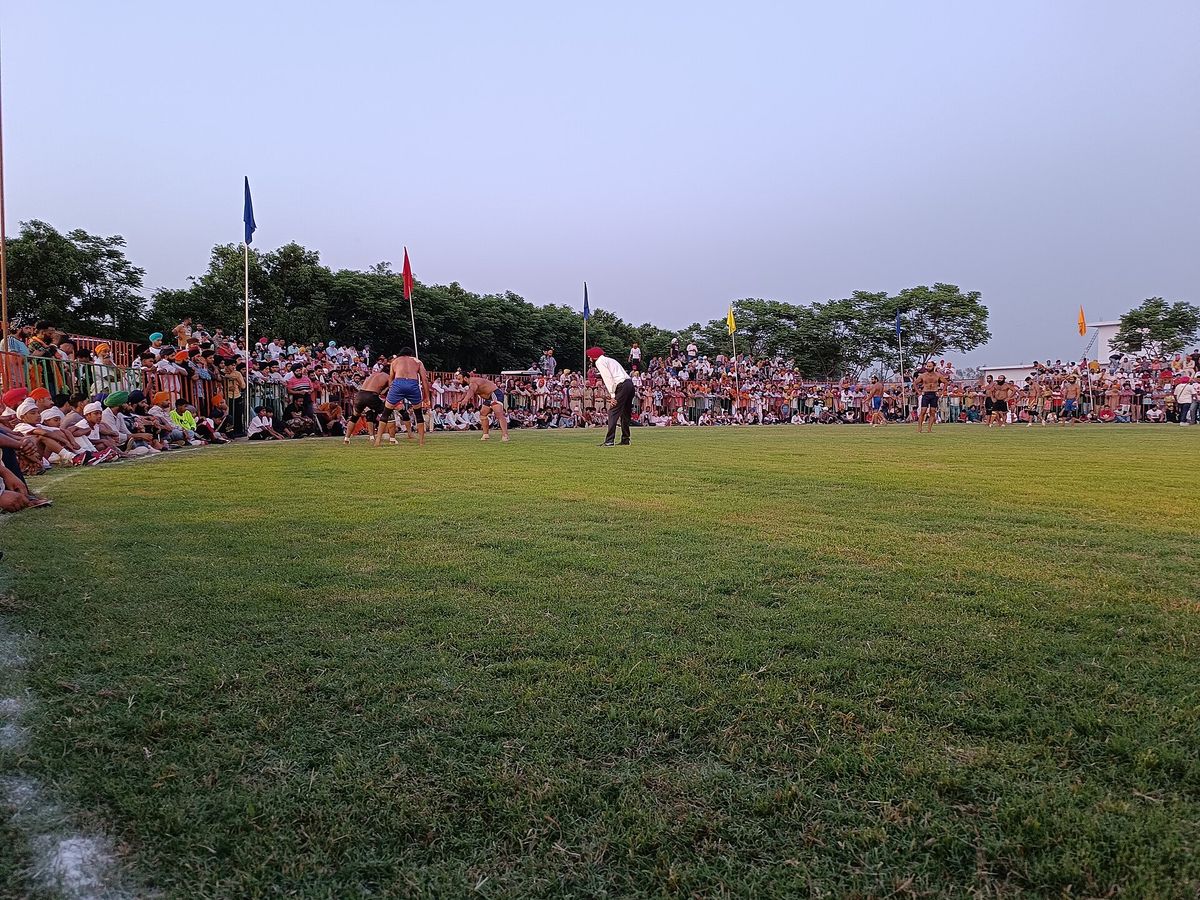
A circle-style kabaddi tournament on grass in Punjab, organised by the Bhullar group.
The circle game, with its own competitions and its own world cup.
Jaipartapsinghbhullar · CC BY-SA 4.0 · Wikimedia Commons
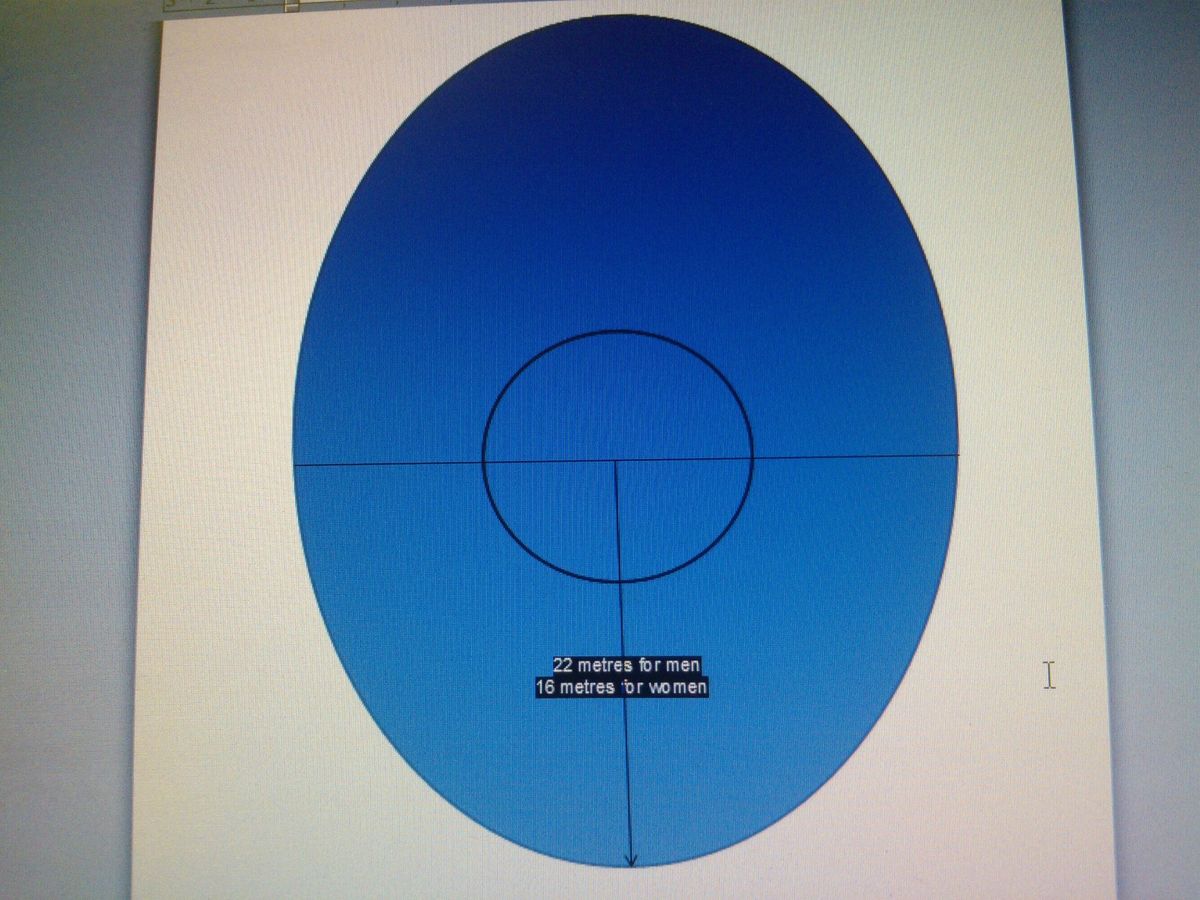
A diagram of the circle-style ground: 22 metres across for men, 16 for women.
A circular field, scored differently, and not the code contested at the Asian Games.
Malikhpur · CC BY-SA 4.0 · Wikimedia Commons
Kabaddi is not on the World Games programme, which makes it one of the few sports covered here whose only multi-sport home is a continental one.
05Learning curve
The cheapest sport on this site to start — no equipment of any kind — and a professional ceiling that arrived very suddenly, in one country, in 2014.
Editorial — the site’s reading, not a sourced claim
Barrier to entry
How hard is it to get to a real game?
Fourteen people and a line drawn on the ground. Nothing to buy.
Kabaddi has no object of play. No ball, no stick, no rope, no target. Two teams, a rectangle and a line through the middle, and the game can be played on earth, sand or a mat, barefoot.
That is the lowest material barrier of any sport covered here, and it is the reason kabaddi is a mass village and school sport across South Asia rather than a club sport. The rules can be explained in a minute and understood on the first raid.
The one genuine demand at entry is the cant, which is unfamiliar and feels strange, and which a beginner runs out of far sooner than they expect.
Evidence
- Players needed14rule1923 — the rule this rests on
- Kit to startNothingobservedThe only sport here with no object of play.
- SurfaceEarthobserved
- Rules to learnUnderstandable in one raidestimate
- Time to a real gameImmediateestimate
Barrier to the top
How hard is it to be good at?
Touch seven people and escape, on one breath, against defenders who train only to stop you.
The raid is a solved problem for defences and an unsolved one for raiders. Seven defenders coordinate a chain, corner defenders specialise in ankle holds, cover defenders in blocks, and a raider must enter that, take a point and leave — while chanting, and against a thirty-second clock.
The physiological demand is unusual. A raider is sprinting, changing direction, being tackled by several people and resisting them, all on a single breath, and then doing it again in a couple of minutes. Nothing else on this site combines maximal exertion with a rule against breathing.
The defensive craft is the sport's least visible skill and its deepest. A kabaddi tackle is not a collision; it is several people holding a stronger opponent away from a line for a few seconds, which is a grappling problem with a deadline.
The ceiling rose sharply and recently. A professional league from 2014 made kabaddi a full-time career in India, with the training, analysis and conditioning that follow, and the elite standard is not what it was before.
Evidence
- The cantOne breath, judged by earruleMaximal effort under a rule against breathing.1923 — the rule this rests on
- Raid clock30 sruleA second limit on top of the breath, added for broadcast.2014 — the rule this rests on
- Do-or-die raidAfter two empty raidsruleRemoves the option of a cautious raid, so a raider must take risk on demand.2014 — the rule this rests on
- Typical peak age24–31estimate
Why the two differ
Very low to high, on a material budget of zero, which makes kabaddi the clearest case on this site that entry cost and competitive difficulty are independent.
Everything about starting it is free: no equipment, no facility, no officials required, no prerequisite skill. Everything about the top of it is the ordinary apparatus of elite sport — full-time athletes, specialised positional roles, video analysis and conditioning — arriving in one country within about a decade because a television league made it worth funding.
It is also the sport here whose gap is most likely to move again. A professional structure exists in India and effectively nowhere else, so the ceiling is national rather than global, and the international competition reflects that: India won every men's Asian Games title from 1990 for decades.
The historyhow it got here · sections 6 to 10
06Origin and invention
Kabaddi is very old, very widespread, and has almost no documented invention — which is what you would expect of a game that requires nothing.
Contests in which one person enters a group's territory, tries to touch them and escape are recorded across South Asia for centuries, under a range of regional names: kabaddi, hu-tu-tu, ha-du-du, chedugudu, sadugudu. The breath-holding element appears throughout, and the chant is the mechanism that makes it verifiable — you cannot see whether someone is holding their breath, but you can hear whether they have stopped chanting.
A tackle in a village kabaddi match at Soorakudi, Sivaganga district, Tamil Nadu.
Earth, a rope for a midline and a crowd along the wall: the game as it is played across South India.
Rainer Halama · CC BY-SA 4.0 · Wikimedia Commons
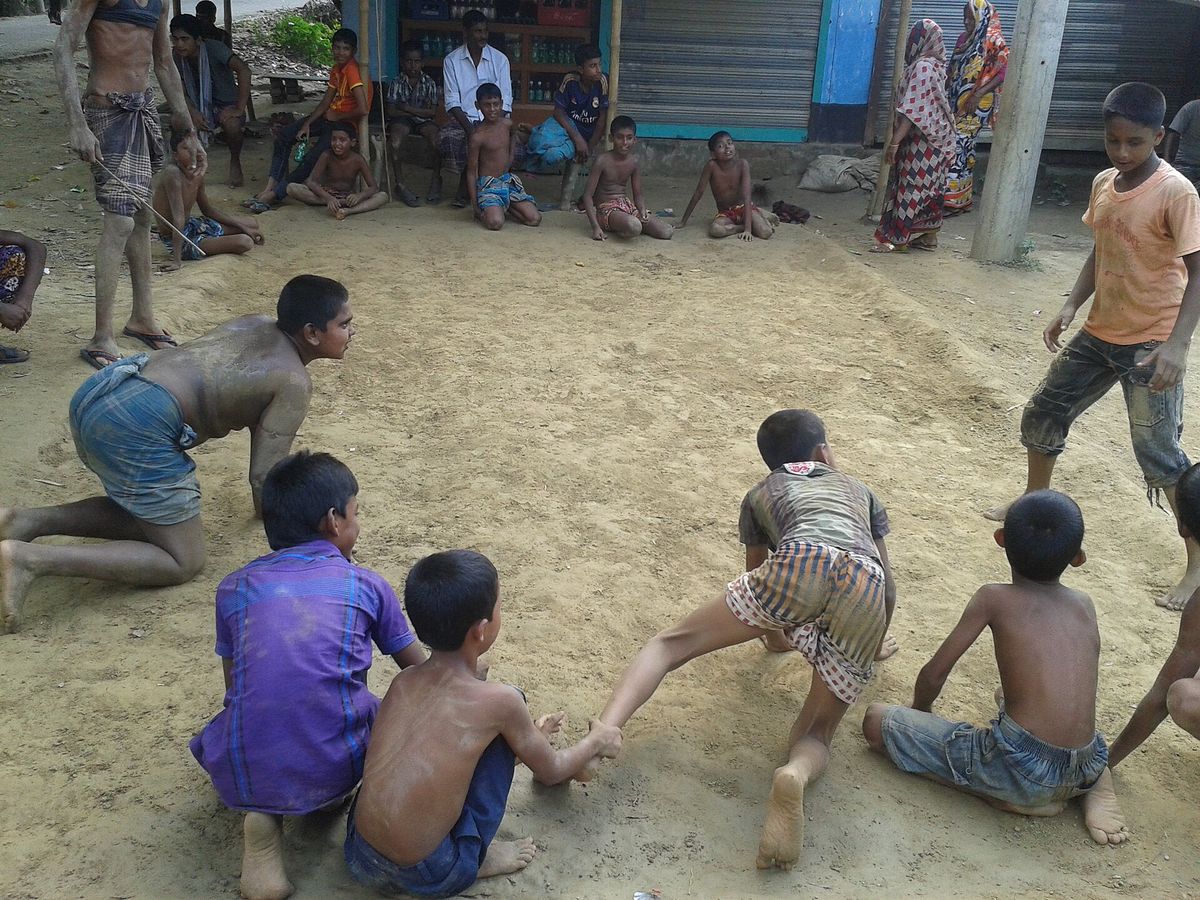
Children playing ha-du-du in Bangladesh.
One of the game's many regional names, and the national sport of Bangladesh.
S. M. Anisur Rahman · CC BY-SA 4.0 · Wikimedia Commons
Codification came in India in the 1920s, when written rules were framed so that clubs and regions could compete on common terms. That work turned a family of folk games into one sport with a court, a team size and a scoring system, and it is the version described on this page.
Institutional recognition followed slowly. Kabaddi appeared as a demonstration sport at the Asian Games and became a full medal event at Beijing in 1990, after which India won the men's title at every edition for decades. The International Kabaddi Federation was formed in 2004.
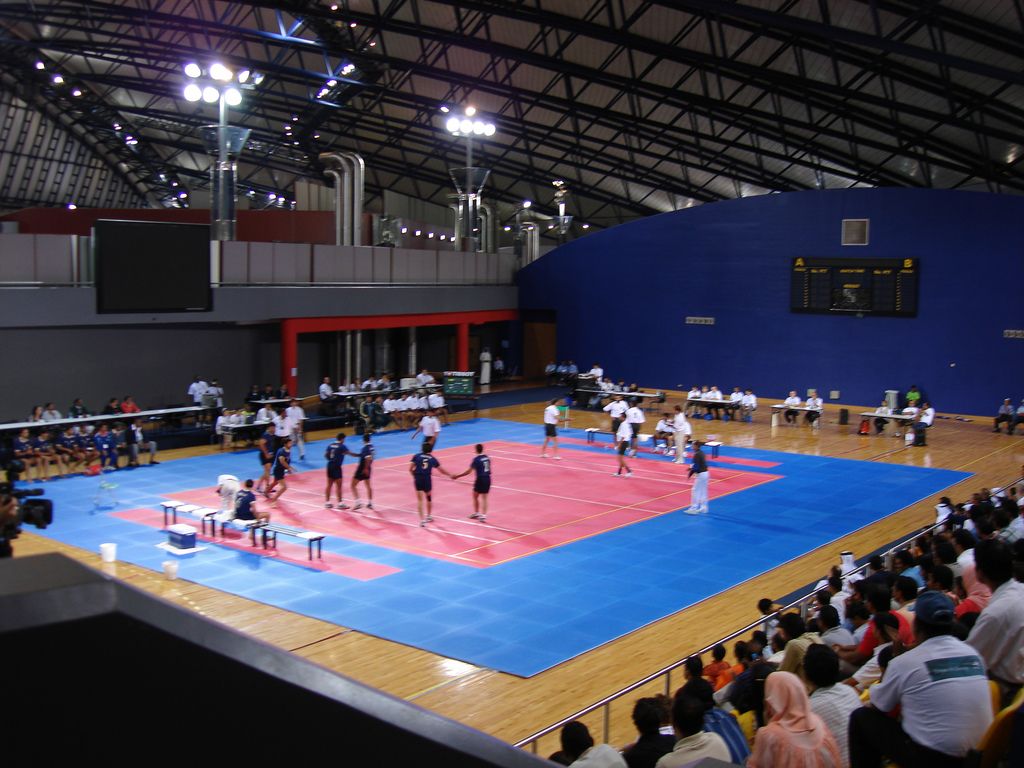
A kabaddi match at the 2006 Asian Games, Doha.
A full Asian Games medal event since Beijing 1990.
Doha 2006 · CC BY 2.0 · Wikimedia Commons
The most consequential thing that has happened to the sport is much more recent. A professional league launched in India in 2014, became one of the country's largest television properties, and rewrote the rules — a raid clock and a do-or-die raid — which were then adopted into the international game. A folk sport that had been governed by federations for ninety years had its laws changed by a broadcaster's format requirement, and this site records that as the same kind of event as badminton's rally scoring.
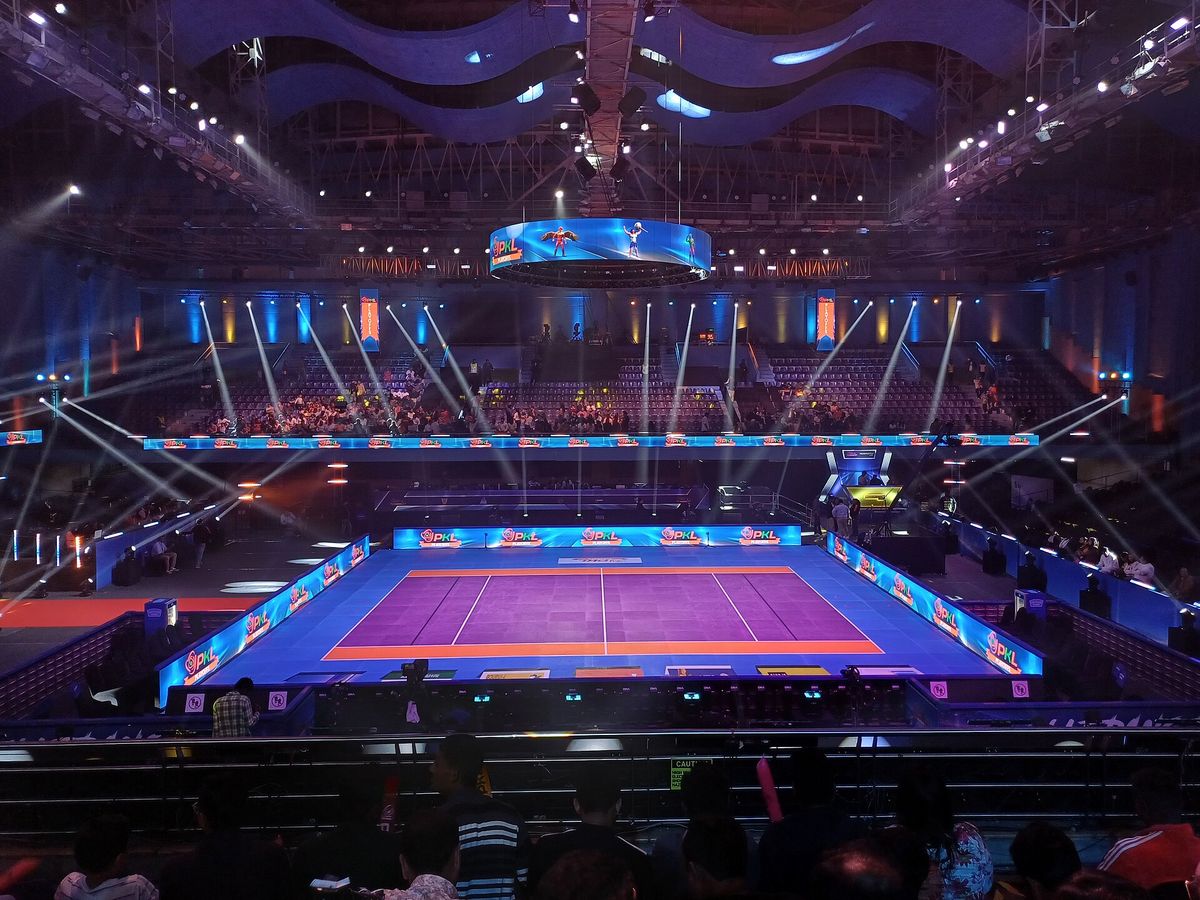
The Pro Kabaddi League arena for the 2024 semi-finals, Balewadi, Pune.
The 2014 league that became one of India's largest television properties and rewrote the rules.
DesiBoy101 · CC BY 4.0 · Wikimedia Commons
07Rule timeline
The sport’s own lane, expanded. Every entry carries a cause from the closed vocabulary and a citation, and says so where the citation is incomplete.
- 1923Fairness and eligibilityadopted 1923
A raider entering the opposition's half must chant "kabaddi" continuously and audibly — the cant — and may not take a second breath. When the cant breaks, the raid ends: the raider must be back across the midline or they are out. This is a limit on a raid enforced through the athlete's respiration, and nothing else on this site works that way. Every other sport that bounds an action does it with a clock, a line or an opponent. Kabaddi does it with the raider's own lungs, and an official adjudicates it by listening.
Trigger and citationIncomplete — no confirmed article
Trigger
The folk game was formalised into written rules in India in the 1920s so that it could be contested between clubs and regions, and the cant — an existing feature of the traditional game — became its timing mechanism.
IKF Rules of Korfball · IKF Rules of the Game, the raid
- 1990Participation and accessadopted 1990
Kabaddi became a full medal sport at the Asian Games in Beijing in 1990, having previously appeared as a demonstration. It has been contested at every edition since, and India won every men's title for decades.
Trigger and citationIncomplete — no confirmed article
Trigger
The Asian Games programme has consistently admitted sports with deep regional participation and no global federation structure, which is exactly what kabaddi was.
Asian Games sport programme listings · Olympic Council of Asia programme listings
- 2004Fairness and eligibilityalso disputedadopted 2004
The International Kabaddi Federation was formed to govern the sport internationally and hold a world cup, consolidating rules that had varied between South Asian national bodies. It has not settled the question. Rival international bodies have since claimed the same mandate, and kabaddi is one of several sports on this site where more than one organisation asserts the right to hold a world championship.
Trigger and citationIncomplete — no confirmed article
Trigger
The sport was contested internationally at the Asian Games without a single federation to govern it between editions.
Competing federations dispute each other's standing. This site records the dispute rather than adjudicating it.
IKF Rules of Korfball · IKF statutes
- 2014Broadcast and pacingalso commercialadopted 2014
A thirty-second limit on a raid, and the "do or die" raid: after two consecutive empty raids, a team's third must produce a point or the raider is out. Both exist because the cant alone did not guarantee a raid would end promptly — a fit raider could hold a chant for a long time, and defenders could simply decline to engage. The clock made the raid predictable in length and the do-or-die rule made a passive raid expensive. It belongs to the same category as the shot clock in basketball and the tie-breaker in softball: a device inserted to stop a sport from being able to stall.
Comparability break · Record book reset
A thirty-second raid clock and the do-or-die raid. Scoring rates before and after are not comparable. See the series
Trigger and citationIncomplete — no confirmed article
Trigger
A professional league launched in India in 2014 and became a large television property. Its format requirements — a fixed match length and guaranteed action — were built into the rules and carried into the international game.
IKF Rules of Korfball · IKF Rules of the Game, raid duration
08Equipment evolution
There is nothing to evolve, and that is worth a page of its own.
Kabaddi has no object of play. Every other sport covered on this site has something at its centre — a ball, a shuttle, a disc, a puck, a rope, a barbell, an arrow, a blade, a target. Kabaddi has two teams, a rectangle and a line. That makes it the cheapest sport here by a margin that is not close, and it is the direct cause of its reach: a game that requires nothing can be played anywhere by anyone.
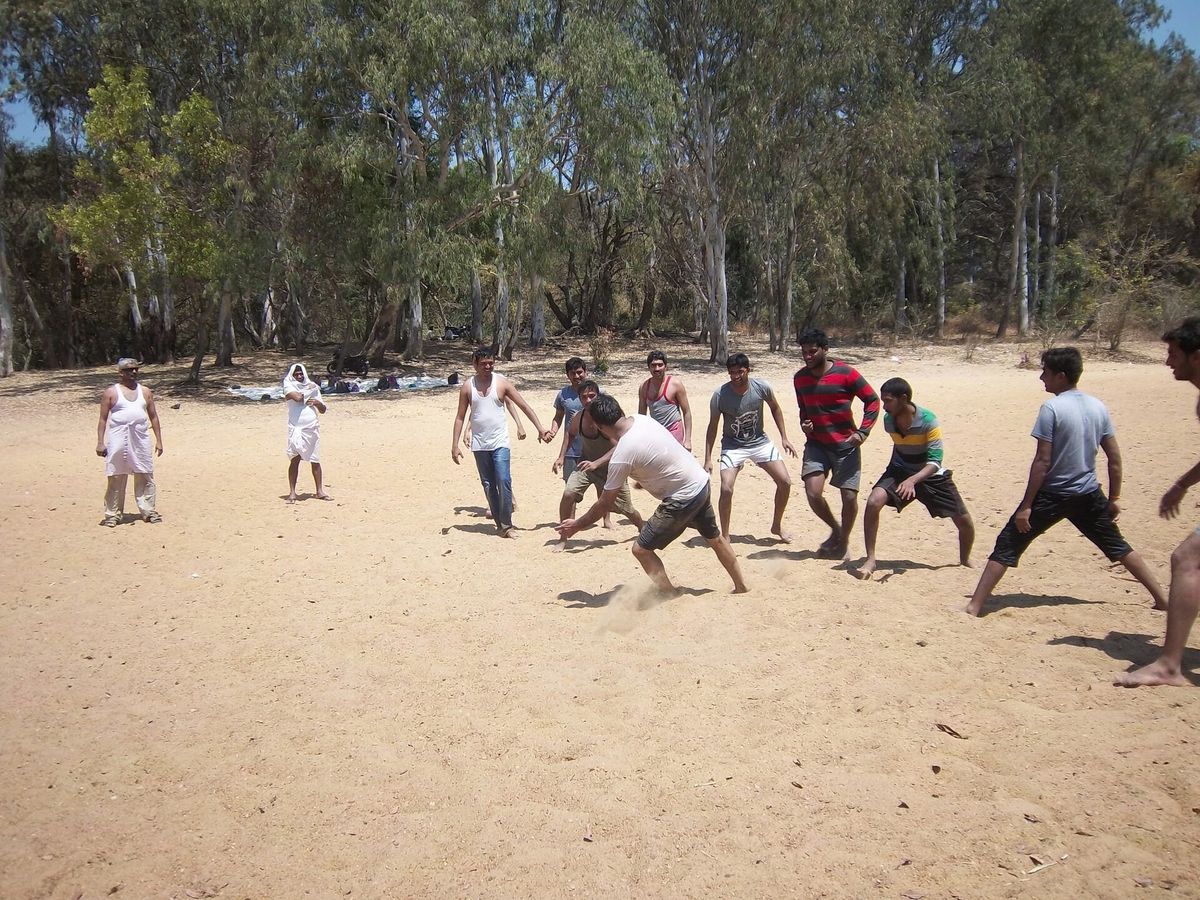
A game of kabaddi on the sandy bed of the Kaveri at Talakadu, Karnataka.
Nothing to buy and nothing to carry: two teams, a space and a line.
రవిచంద్ర · CC BY-SA 4.0 · Wikimedia Commons
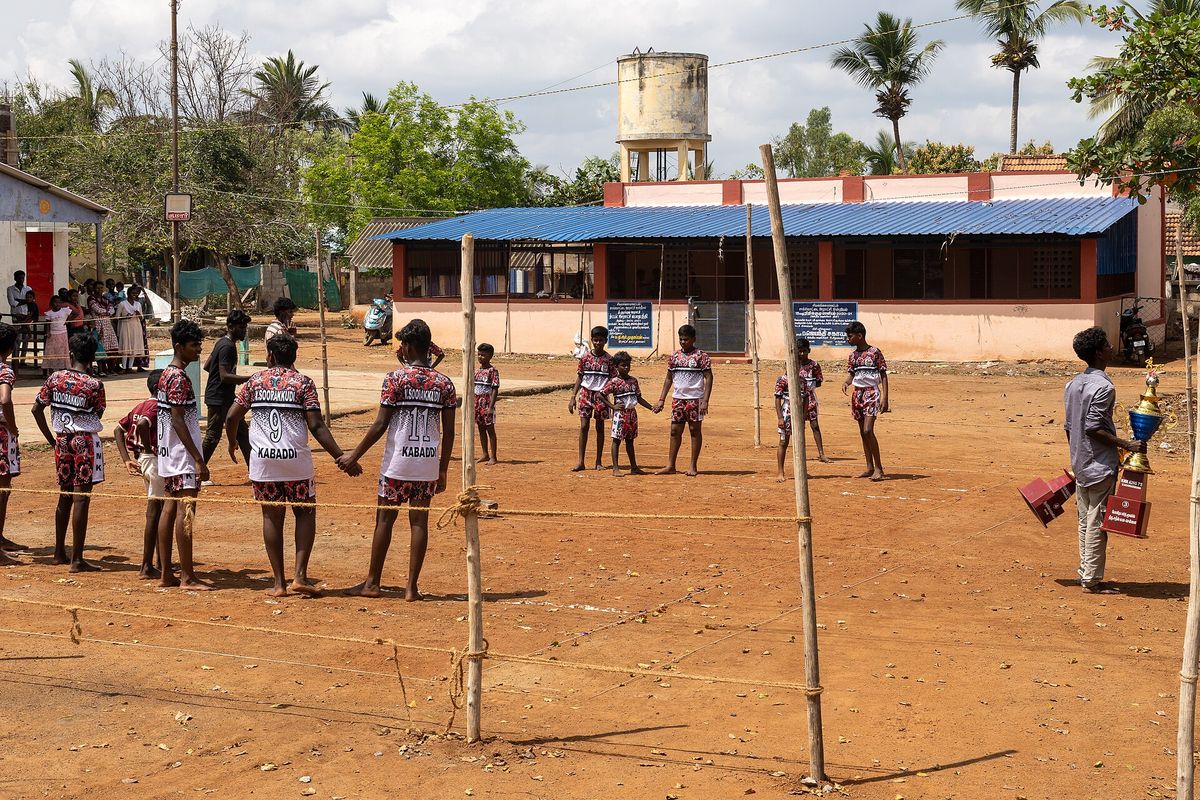
Teams holding hands in their half before a raid, Soorakudi, Tamil Nadu.
The traditional surface: earth, marked out by hand.
Rainer Halama · CC BY-SA 4.0 · Wikimedia Commons
What has changed is the surface. The traditional game is played on earth or clay, and much of the sport still is. Competitive kabaddi is played on a synthetic mat, which was adopted for safety — the sport involves being dragged and held on the ground constantly — and which had a second effect nobody legislated for: a consistent surface made the sport televisable and made tackling technique repeatable.
Clothing is ordinary sports kit, cut close so there is less for a defender to grab. There is no protective equipment. Some players wear light shoes and many play barefoot.
The one piece of technology in modern kabaddi is not on the court. It is the review system used in professional competition, where an official can go to video to check whether a raider's foot crossed the line or whether a defender entered the lobby early — the only place the sport has admitted an instrument at all.
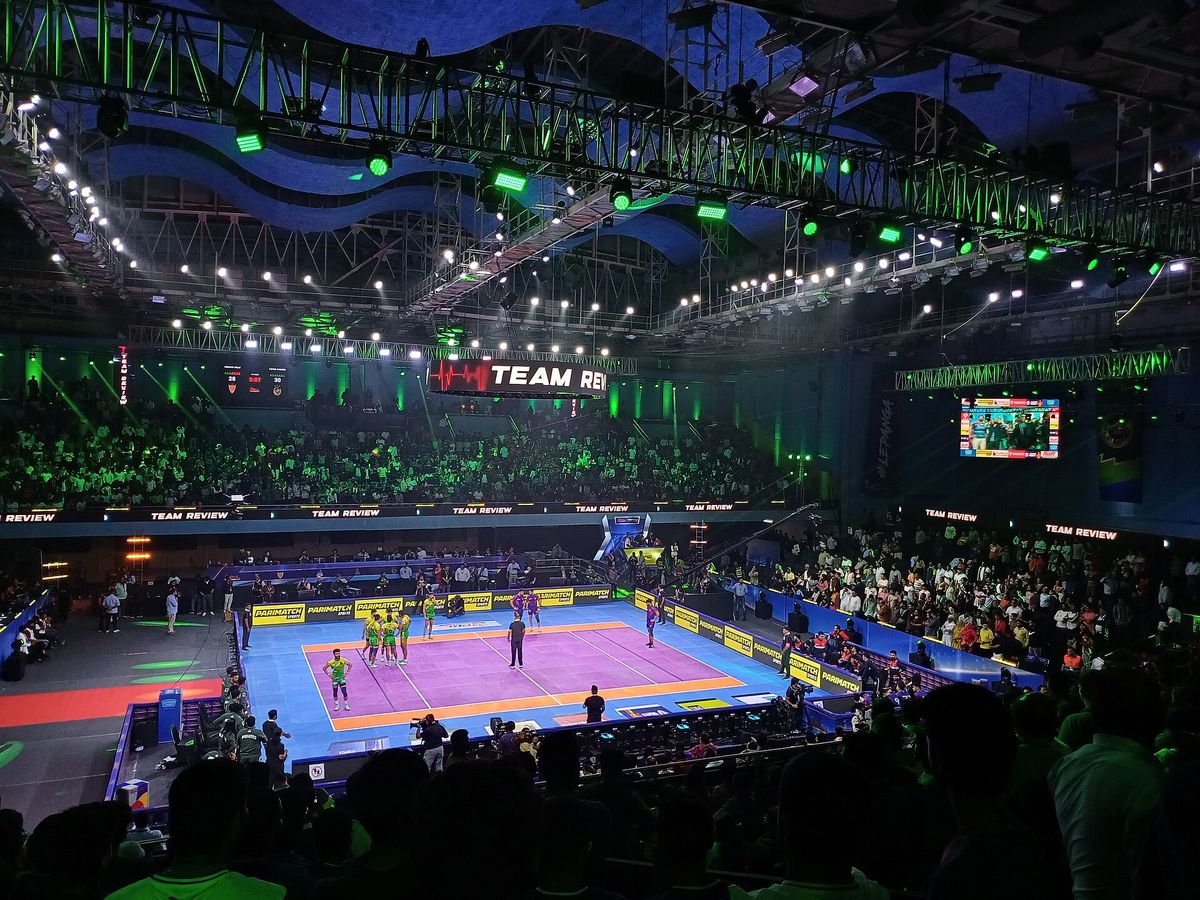
A raid in a 2024 Pro Kabaddi League semi-final in Pune, "Team Review" signage around the mat.
A synthetic mat, and the review system: the only instrument the sport has admitted.
DesiBoy101 · CC BY 4.0 · Wikimedia Commons
09Governing body politics
Kabaddi's governance has two problems: too many federations, and one country.
Too many federations. The International Kabaddi Federation was formed in 2004, and other international bodies have since claimed the same mandate. Competing organisations have held competing world cups. For a sport whose strongest claim to institutional seriousness is its Asian Games place, having more than one body assert the right to govern it is a substantial obstacle, and it is one this site has recorded elsewhere in powerlifting for entirely different reasons.
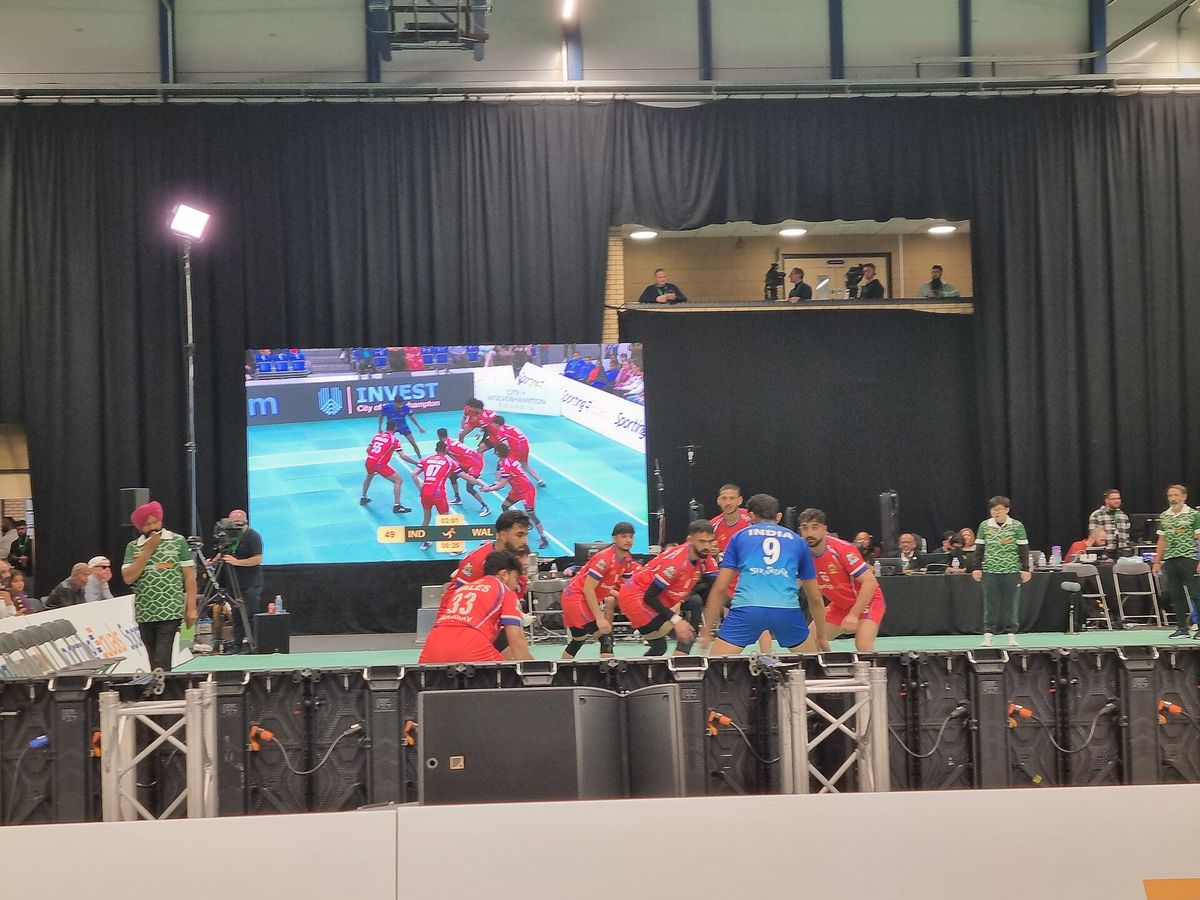
Wales against India at the 2025 Kabaddi World Cup.
One of the world cups held by the competing international bodies.
Bearas · CC BY-SA 4.0 · Wikimedia Commons
One country. India has dominated the sport completely — every men's Asian Games title from 1990 for decades — and the professional league that now effectively sets the rules is Indian. Iran has emerged as a genuine rival, and Bangladesh, Pakistan, South Korea and Japan compete, but the sport's centre of gravity has never moved.
The 2014 league is the most important political fact of kabaddi's modern history and it is not a federation at all. It made the sport a career, raised the standard, produced the raid clock and the do-or-die raid, and made an Indian domestic competition the venue where kabaddi's laws are decided in practice. International rulemaking has followed a broadcaster.
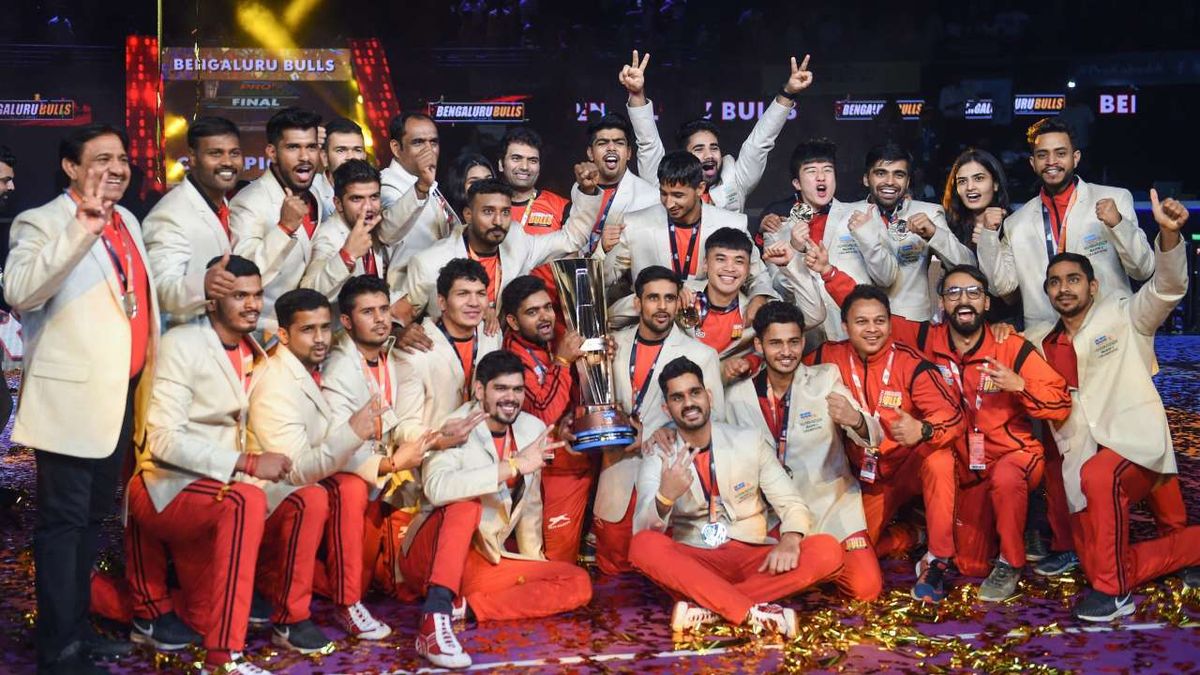
Bengaluru Bulls with the Pro Kabaddi League trophy after the sixth season, 2019.
The league made kabaddi a career, and made its format the one the sport now plays.
My Khel · CC BY-SA 4.0 · Wikimedia Commons
That is not unique — this site records the same pattern in the broadcast scoring wave that caught badminton, volleyball, table tennis and fistball — but it is unusually direct. In those sports a federation changed its rules because broadcast pressure existed. In kabaddi, a league wrote rules and the federations adopted them.
10Controversies that forced rule changes
Raids that did not happen. The founding problem of the modern game. The cant limits a raid, but a fit raider can chant for a long time, and a defence under no pressure can simply refuse to engage. Matches could become sequences of raiders stepping in and stepping out. The 2014 answer was two devices at once: a thirty-second raid clock, and the do-or-die raid, in which a team's third consecutive empty raid must produce a point or lose the raider.
Where the rules came from. Those changes were written for a professional television league and adopted into the international code afterwards. Whether a domestic commercial competition should be setting a sport's laws is disputed, and the argument is sharper here than in the broadcast-scoring cases elsewhere on this site because the route was so direct.
The lobbies. Side areas that are out of play until a tackle begins, at which point they become live. It is the sport's most technical rule, it decides a great many points, and its interpretation has been adjusted repeatedly because the moment a tackle "begins" is not a crisp fact.
Judging the cant over a crowd. The sport's defining rule is enforced by ear in a loud arena. There is no instrument for it and no proposal for one, and disputes about whether a cant had genuinely broken are as old as the codified game.
Which federation. Competing international bodies claiming the right to run world championships is a governance controversy rather than a rules one, and it constrains everything the sport might do next.
Where it standsthe record, and what is still open · sections 11 to 12
11Series
No series published
Points per match
Kabaddi's scoring changed shape in 2014 and the sport has not published a series across it. Before the raid clock, a raid ended when the cant broke or the raider was caught, so raids varied in length and a cautious team could run a low-scoring match by declining to engage. The thirty-second clock and the do-or-die raid removed both options. Scoring rose, and points per match before and after describe different games. The change also arrived through an unusual route. It was written for a professional television league in India in 2014 and adopted into the international code afterwards — so the severance in kabaddi's statistics was caused by a domestic commercial competition rather than by its federation. That is a first on this site. The figures are not entered because they have not been taken from a cited source. The league publishes detailed statistics for its own matches; the international game's are thinner, and nobody has reconciled the two.
2014Record book resetA thirty-second raid clock and the do-or-die raid. Scoring rates before and after are not comparable.
12What is contested now
Recorded as unsettled.
Which federation governs. More than one international body claims the mandate and competing world cups have been held. Until that is resolved, kabaddi cannot make the institutional argument that any wider recognition would require.
Whether a league should write the rules. The raid clock and the do-or-die raid came from a domestic professional competition and were adopted internationally. They improved the spectacle and they were not produced by the sport's governing process. Whether that is pragmatism or capture is argued.
One-country dominance. India has won nearly everything, and its professional league is where the money, the coaching and the athletes are. Iran has shown the gap is closable. Nobody else has.
Judging the cant. The sport's defining rule is enforced by ear in a loud stadium, with no instrument and no proposal for one, in a competition that is otherwise televised with video review.
Standard versus circle. Two codes, governed separately, with different scoring and different constituencies — and the diaspora communities that keep the sport alive outside South Asia largely play the one with no international programme.
Where it goes next. Kabaddi has an Asian Games place, no World Games place, and no realistic Olympic route. Whether to pursue the multi-sport system at all, or to build on the commercial success it already has, is the live strategic question and the federations disagree about it — partly because they disagree about which of them gets to decide.