Basketball
The only sport here invented on purpose, in an afternoon, to solve a stated problem.
- Official
- Basketball
- Game category
- Invasion
- Adjudication
- Decided by score
- Standing
- Added and kept
- rule changes
- 6
- comparability break
- 1
- Olympic editions
- 22
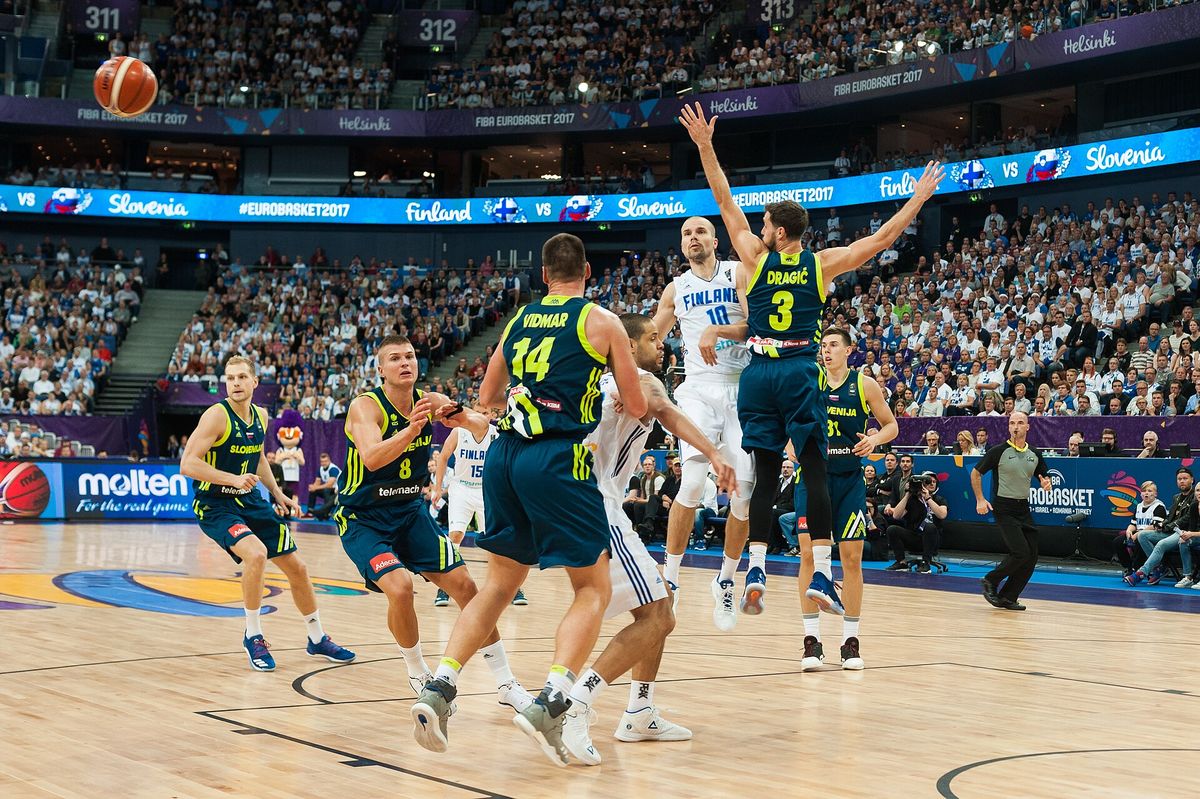
Finland against Slovenia at EuroBasket 2017, Helsinki · Tuomas Vitikainen · CC BY-SA 4.0
- Governing body
- FIBA, with the NBA keeping its own rulebook
- Founded
- Invented by James Naismith in Springfield, Massachusetts, in December 1891. FIBA founded 1932; the NBA formed in 1949.
- Olympic status
- 22 editions
- on the 2028 programme
- Also contested at
- Asian Games
Basketball has the cleanest documented origin of any sport on this site — one man, one afternoon, thirteen written rules — and the cleanest documented trigger. A 19–18 game in 1950 produced the shot clock in 1954, and the sport has been managing its own pace by rule ever since. It also runs two rulebooks at once, so almost every question here has to say whether it means FIBA or the NBA.
The gamewhat it is now · sections 1 to 5
01How it is played
Five against five, put the ball through a hoop ten feet up, and do it before one of four clocks stops you. Basketball is unusual among invasion sports in legislating time rather than space as its main constraint: there is a game clock, a shot clock, a backcourt clock and a three-second rule, and almost every famous rule change in the sport is a change to one of them.
These figures were entered from the edition named above but have not been checked against its text line by line. Treat them as this site’s reading of the laws, not as a substitute for them.
The object of the game
Score more points than the opponent by putting the ball through their basket. The basket is horizontal and above head height, which is the single design decision the whole sport rests on: a horizontal target cannot be defended by standing in front of it, so the game had to be about position and timing rather than about blocking a line.
The court
A rectangle with a hoop at each end, marked with a restricted area under each basket, a three-point arc, and a no-charge semi-circle. FIBA and the NBA use different dimensions, and the three-point distance is the one that matters most.
- Court, FIBA
- 28 × 15 m
- Court, NBA
- 28.65 × 15.24 m
- Basket height
- 3.05 m
- Three-point arc, FIBA
- 6.75 m
- Three-point arc, NBA
- 7.24 m
- At the top of the arc; shorter in the corners.
- Free-throw line
- 4.6 m from the backboard
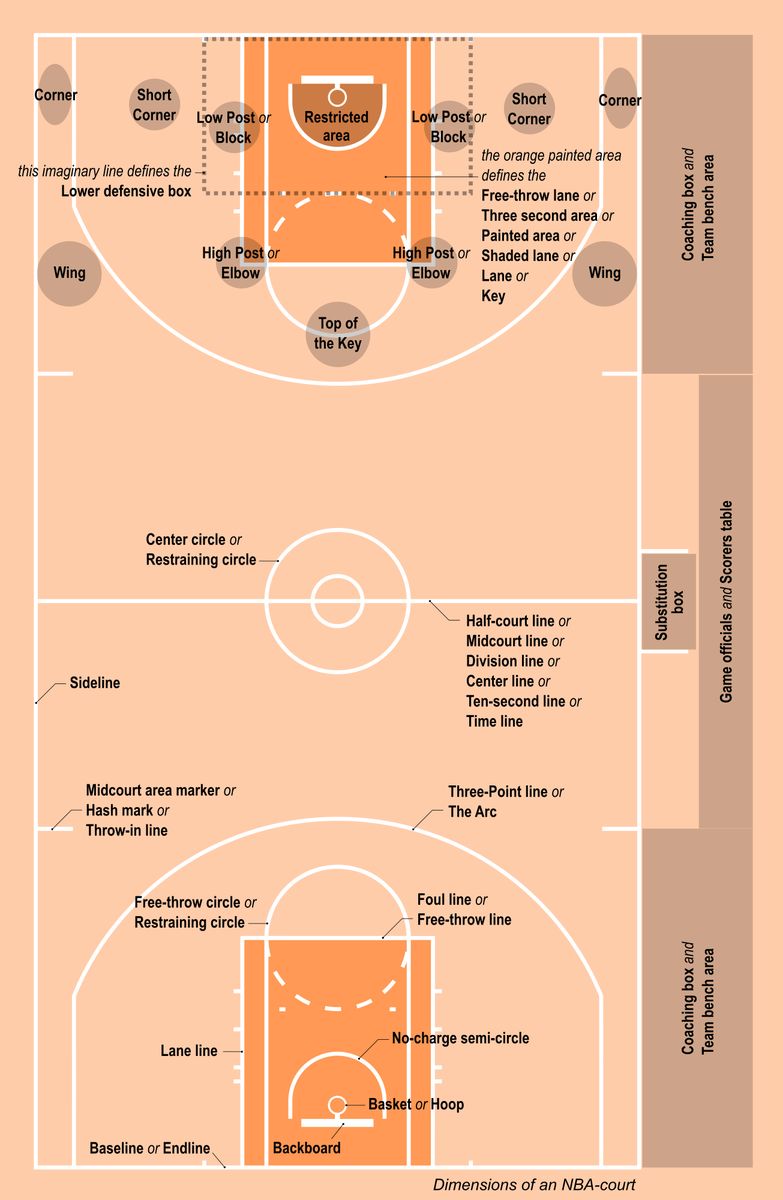
The court and its markings, labelled, on the dimensions of an NBA court.
The arc, the key and, under the basket, the restricted area: the semicircle inside which a defender cannot draw a charge. Basketball legislates where you may stand, and this is the map of it.
Lencer · CC BY-SA 3.0 · Wikimedia Commons
This clause reads this way because of
FIBA Official Basketball Rules, with NBA differences noted · Rule 2
Ball and basket
Almost nothing here has needed regulating. The ball is specified by circumference and pressure, in different sizes for the men's and women's game, and the rim and backboard by dimension and rebound. Basketball has produced no equipment-driven comparability break, for the same reason football has not: the specification was written loosely and the object never outran it.
- Ball, men
- Size 7
- Ball, women
- Size 6
- Rim diameter
- 45 cm
- Backboard
- 1.8 × 1.05 m
Players and officials
Five on court per side, with unlimited substitutions at stoppages. Three officials at international level, plus a table crew running the clocks — which in this sport is a substantive job rather than an administrative one, because the shot clock decides possessions.
Officials also administer fouls, and basketball is unusual in making accumulated fouls a resource: a player fouls out, and a team over the limit concedes free throws for every subsequent foul.
- On court per side
- 5
- Personal fouls before exclusion
- 5
- Six in the NBA.
- Team fouls before bonus free throws
- 4 per quarter
Time
Four quarters of ten minutes under FIBA, twelve in the NBA, with the clock stopped at every whistle — so a forty-minute game takes around two hours. International basketball played two twenty-minute halves until 2000; quarters were adopted because they create three more guaranteed breaks, which is a broadcast structure.
Ties are played out in five-minute overtime periods until somebody wins. There is no draw.
- Quarters, FIBA
- 4 × 10 min
- Quarters, NBA
- 4 × 12 min
- Overtime
- 5 min, repeated
This clause reads this way because of
Scoring
Three points from beyond the arc, two from inside it, one for a free throw. Basketball is the only sport on this site where the same action scores differently depending on where it is performed, and that has been true only since 1979 — before which every field goal was worth two.
The consequence is that the sport's entire statistical record is severed at that line, and severed differently in each competition, because FIBA adopted the arc in 1984 at a different distance and moved it again in 2010.
- Beyond the arc
- 3
- Inside the arc
- 2
- Free throw
- 1
Clocks and restarts
The shot clock is the defining rule of modern basketball. A team must attempt a shot that hits the rim within 24 seconds of gaining possession, and an offensive rebound resets it to 14. Before 1954 there was no obligation to shoot at all, and a leading team could simply keep the ball.
Two further clocks constrain where the ball may be: eight seconds to advance it past halfway, and three seconds for an attacker to remain in the restricted area. Play restarts by throw-in, jump ball at the opening, and by the possession arrow thereafter.
- Shot clock
- 24 s
- Reset after offensive rebound
- 14 s
- To cross halfway
- 8 s
- In the restricted area
- 3 s
This clause reads this way because of
FIBA Official Basketball Rules, with NBA differences noted · Rule 8
Fouls and violations
Violations return the ball to the opponent: travelling, double dribble, goaltending, and the clock violations above. Fouls are contact offences and carry free throws once a team is over its quarterly limit.
Zone defence is legal everywhere now, but it was forbidden in the NBA until 2001 by a set of illegal-defence rules so complicated that they had become the hardest thing in the sport to officiate — and their effect was to produce one-against-one basketball with everybody else standing clear.
This clause reads this way because of
Deciding the winner
More points, and there is no draw at any level: overtime periods repeat until somebody is ahead. Basketball is one of the highest-scoring sports on this site, which means a single rule change moves its rate statistics visibly and immediately — the reason the 1979 arc severed the record so cleanly.
Everything above is current law. Everything below is how Basketball got here.
02Disciplines and events
Two disciplines on the Olympic programme since 2020, and the second one is the interesting entry. 3x3 is not a reduced version of basketball; it is a separate discipline with its own rulebook, its own ball, a twelve-second shot clock and a scoring system where the arc is worth two and everything else is worth one.
- Disciplines
- 2
- Olympic medal events
- 4
- Men’s and women’s counted separately.
- Contested elsewhere
- 2
- paralympic, professional.
- Listed for context
- 1
- Not counted as this sport.
Basketball2
The five-a-side game, on the Olympic programme since 1936 for men and 1976 for women.
- Men's tournament
- Women's tournament
3x32
Half court, three a side, one basket, ten minutes or twenty-one points. Added for 2020 and governed by a separate FIBA rulebook.
- Men's tournament
- Women's tournament
Governed elsewhere2
- The NBAProfessionalKeeps its own rulebook, with a longer arc, twelve-minute quarters and six fouls.
- Wheelchair basketballParalympicGoverned by the IWBF under adapted rules.
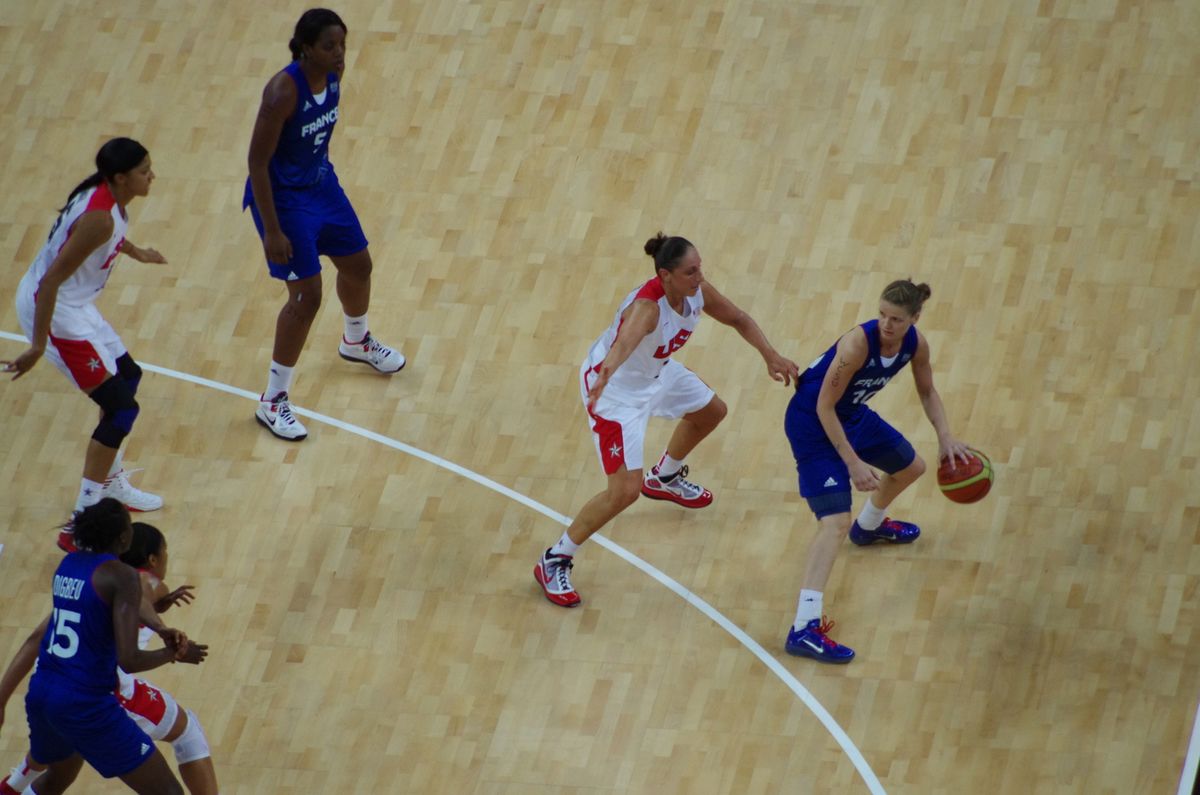
The women's Olympic final, London 2012.
Women's basketball entered the Olympic programme in 1976, forty years after the men's.
saw2th · CC BY-SA 2.0 · Wikimedia Commons
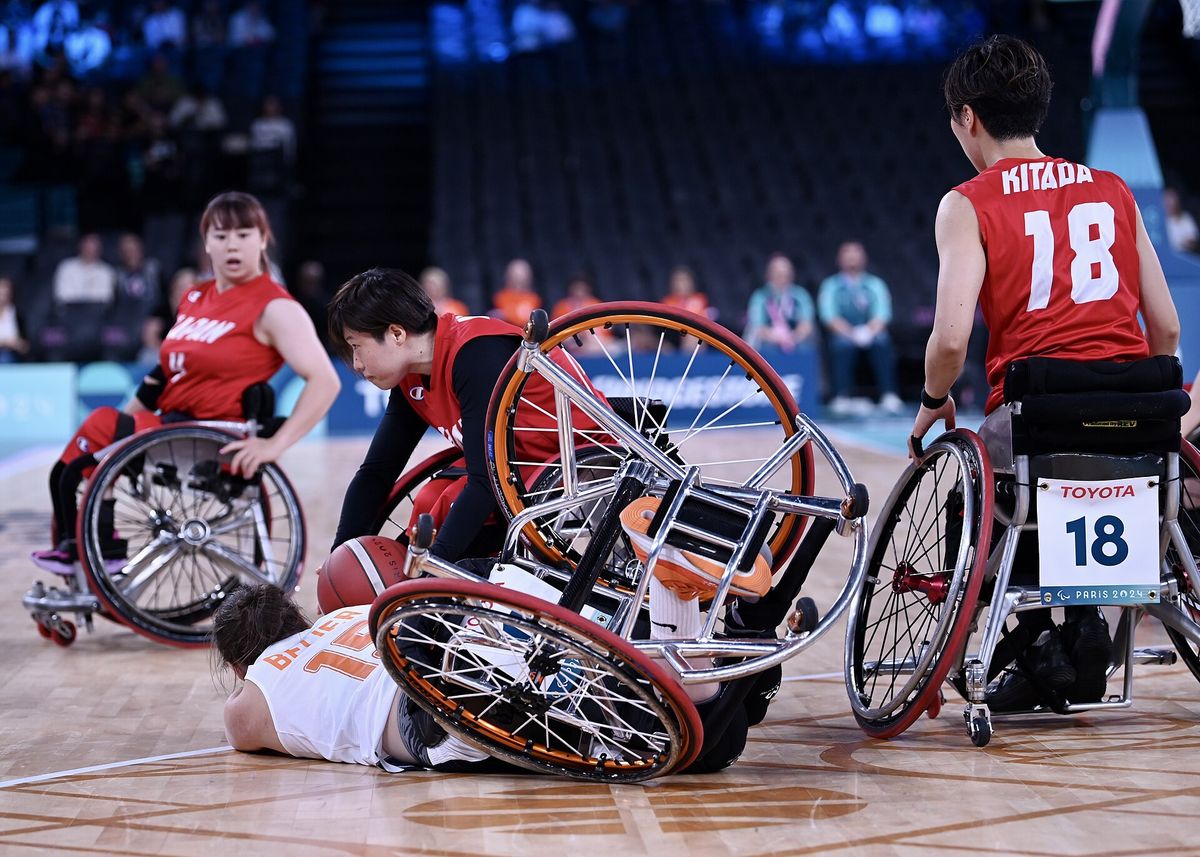
Wheelchair basketball, the Netherlands against Japan, Paris 2024 Paralympics.
Governed by its own federation under adapted rules, on the same court and at the same rim height.
Gail Leenstra · CC BY-SA 4.0 · Wikimedia Commons
03Officiating and technology
Basketball's officiating burden is unlike anything else here: three officials watching ten players in continuous contact on a small floor, adjudicating several hundred discrete events per game, while four separate clocks run.
The technology has gone almost entirely to the clocks, and that is the pattern worth noticing. Instant replay was written into the FIBA rules in 2014 for a defined list, and the list is dominated by questions of time and arithmetic: whether a shot was released before the buzzer, whether it was worth two points or three, whether the shot clock was set correctly. Those are facts with correct answers, and a camera settles them.
What the review system does not touch is the foul, which is the sport's central judgement and by far its most argued. Whether contact was incidental, whether a defender had established position, whether a shooter initiated the contact — these are the basketball equivalent of football's handball law, and for the same reason: the rule asks about a state of the world that no camera can photograph.
The sport's one genuine attempt to make a foul judgement mechanical is the no-charge semi-circle, added by FIBA in 2010. Inside the arc under the basket, a defender cannot draw a charging foul. It replaces a judgement about who was moving with a question about where somebody's feet were, which is exactly the move badminton made with its service height in 2018 and athletics makes wherever it can.
It is also worth recording that basketball trusts its officials with an unusual amount of discretion by design. The technical foul and the unsportsmanlike foul are deliberately broad, and the sport has not tried to narrow them.
04Where it is played
Basketball has the second-widest participation of any sport on this site and a competitive geography that has moved further in thirty years than any other sport's.
The spread is a function of the facility. A hoop and a hard surface is the entire requirement, it fits in a schoolyard, and unlike football it does not need a large flat field. That makes basketball the dominant urban sport in much of the world.

A game on a dirt court in San Vicente, Palawan, the Philippines, 2009.
Two posts, a board, a hoop. The whole requirement fits in the space between houses, which is why the game spreads wherever there is no room for a pitch.
Vyacheslav Argenberg · CC BY 4.0 · Wikimedia Commons
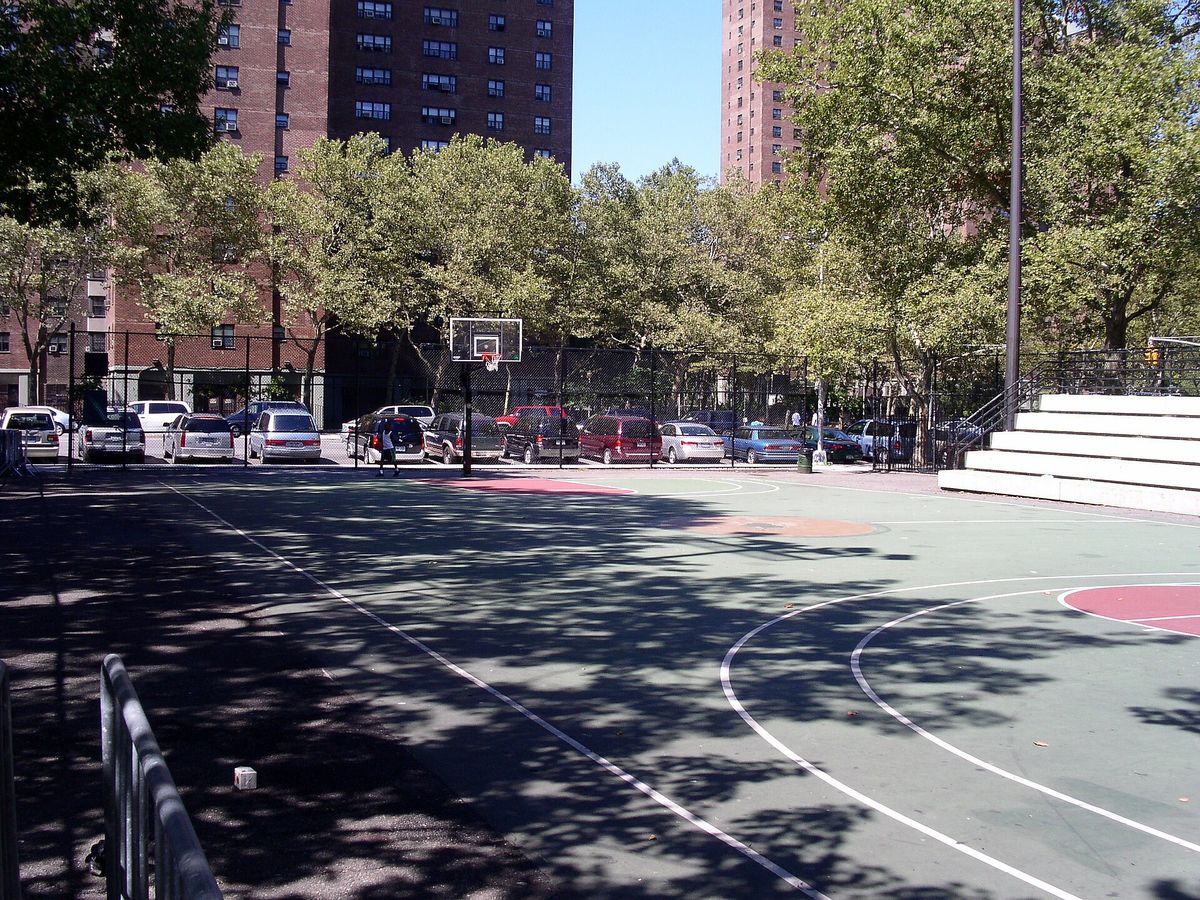
Rucker Park, Harlem, New York, 2008.
The urban version of the same point: a fenced hard court between apartment blocks, and one of the most famous places in the sport.
Stefano Brivio · CC BY 2.0 · Wikimedia Commons
The competitive map used to be simple: the United States, and everyone else. The 1989 decision to allow professionals at the Games and the 1992 team that followed marked the peak of that, and paradoxically began its end — the global audience it created fed a generation of players who now populate the professional league itself, which is why the international game has closed and in several tournaments overtaken.
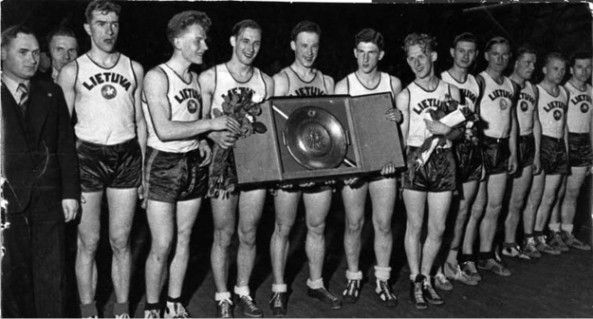
Lithuania's team after winning EuroBasket 1937, their first European title.
FIBA had been founded five years earlier. The international game had its own champions long before the professionals were allowed into it.
Photographer unknown · Public domain · Wikimedia Commons
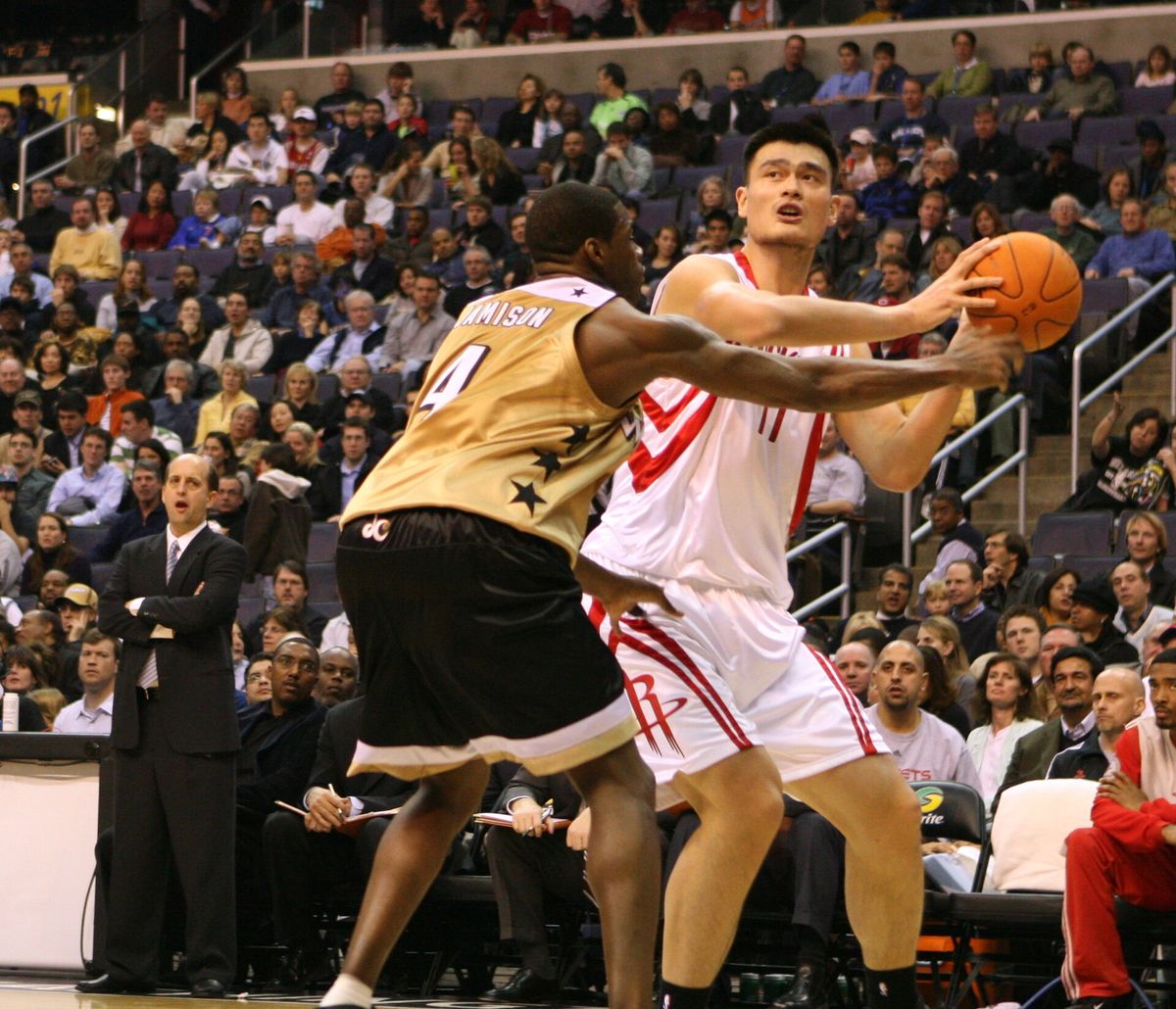
Yao Ming of the Houston Rockets, Washington, 2006.
One of the generation of players from outside the United States who came into the professional league after 1992, the movement that FIBA's 2010 changes to the court were made to accommodate.
Keith Allison · CC BY-SA 2.0 · Wikimedia Commons
The rule consequence is real. FIBA's 2010 changes to the arc and the key were explicitly about reducing the difference between the international and professional games, and they happened because players were routinely moving between them and having to adapt to a different court. Rule convergence followed player movement, not the other way round.
Women's basketball has a different and narrower map, concentrated where national federations funded the game early, and that funding history is directly legible in the medal table.
05Learning curve
A hoop on a wall and one ball, which is about as low as a barrier gets. What makes basketball's top end unusual is not the skill and not the population — it is the body. This is the only sport on this site where a physical characteristic nobody can train is close to a precondition.
Editorial — the site’s reading, not a sourced claim
Barrier to entry
How hard is it to get to a real game?
One person, one ball, one hoop, no opponent required.
Basketball is the only invasion sport here that can be practised alone and usefully. Shooting is a solo skill, the target is fixed, and feedback is instant. A hoop on a garage or in a park makes the sport available without a team, a pitch or a fixture.
The game also scales down gracefully. Three-a-side is a real version of it, one-on-one is a real version of it, and a half court is enough. Very few sports survive being cut in half.
Evidence
- Players needed1observedTo practise. Two for a game.
- Kit to startA ballobserved
- FacilityA hoop and a hard surfaceobserved
- Basket height3.05 mobservedUnchanged since 1891
- Time to a first gameOne sessionestimate
Barrier to the top
How hard is it to be good at?
The one sport here where an untrainable physical trait is close to a requirement.
Every sport rewards a body type. Basketball is the extreme case: the target is 3.05 m up and fixed, so height converts directly into shooting angle, rebounding reach and defensive coverage, and it cannot be trained. The proportion of professional players drawn from the tallest fraction of the population is unlike anything else on this site.
That is not the whole story — the skill demands are high and the tactical literacy required is closer to football's than it looks — but it is the part that makes the barrier different in kind. An athlete of average height can become an elite marathon runner, gymnast, swimmer or footballer. The equivalent claim in basketball is much harder to make.
The three-point line changed what the ceiling looks like without lowering it. Range shooting rewards a skill rather than a body, and the modern game values it more than it did, which is the closest thing to a widening of this sport's door in a century.
Evidence
- Three-point lineSince 1979ruleThe one rule change that rewards a trainable skill over a physical trait.1979 — the rule this rests on
- Shot clock24 sruleRaised the number of possessions per game sharply, which raised the conditioning demand as much as the skill demand.1954 — the rule this rests on
- Basket height3.05 mobservedFixed. Everything about the height barrier follows from this one number never moving.
- Typical age of academy entry8–12estimate
- Typical peak age26–29estimate
Why the two differ
Basketball and football have almost the same pair of verdicts and almost nothing else in common about why. Football's top is unreachable because everybody is trying — the barrier is population. Basketball's is unreachable for a large majority of people because of a measurement taken at birth, and no amount of trying changes it.
That distinction is worth keeping because it changes what a rule change can do. Football cannot legislate its way to a wider funnel; the funnel is the world. Basketball has, once, unintentionally: the three-point line made a trainable skill more valuable relative to an untrainable trait, which is the only door-widening rule change recorded anywhere on this site.
The historyhow it got here · sections 6 to 10
06Origin and invention
Basketball is the only sport on this site that was invented, on a known date, by a named person, to solve a stated problem. In December 1891 James Naismith, an instructor at the YMCA training school in Springfield, Massachusetts, was asked for an indoor activity that would occupy a class of restless young men through a New England winter without the injury rate of indoor football. He wrote thirteen rules and nailed a peach basket to the balcony railing.
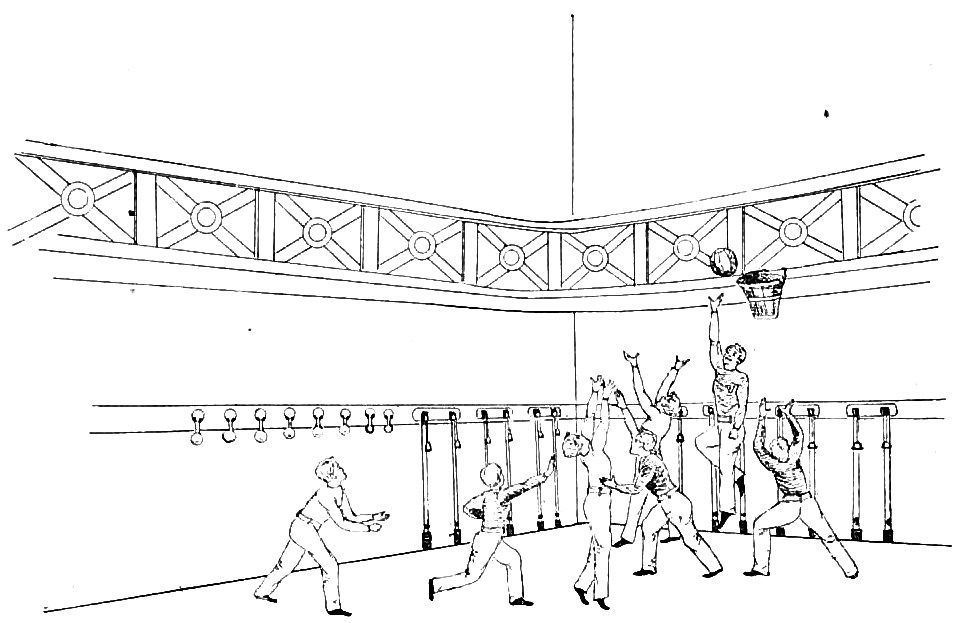
The first published picture of the game, from The Triangle, 15 January 1892.
The magazine of the Springfield training school printed Naismith's thirteen rules with this illustration: a basket fixed to the gymnasium's balcony rail, and players reaching up to it. The height of that rail became the height of every rim since.
The Triangle (Springfield YMCA training school) · Public domain · Wikimedia Commons
Two of his decisions still govern the sport.
The target is horizontal and above head height. Naismith reasoned that a goal you cannot run at in a straight line cannot be defended by brute force, so the game would reward placement over collision. Every distinctive feature of basketball follows from that: the arc of a shot, the value of height, the impossibility of goalkeeping.
A player holding the ball may not run with it. This is the anti-collision rule, and it is why the dribble had to be invented afterwards — Naismith's original rules did not contain one.
The balcony railing in Springfield was ten feet up. The rim has been 3.05 m ever since, in every competition in the world, for no reason other than that. It is the most consequential accident on this site: a sport's entire relationship with the human body was fixed by the height of a piece of architecture nobody chose.
07Rule timeline
The sport’s own lane, expanded. Every entry carries a cause from the closed vocabulary and a citation, and says so where the citation is incomplete.
- 1954-10Broadcast and pacingalso commercialadopted 1954-04
A team gained possession must attempt a shot at the basket within 24 seconds or lose the ball. Before it there was no obligation to shoot at all, so a team in the lead could hold the ball indefinitely and the trailing team's only recourse was to foul.
Trigger and citationIncomplete — no confirmed article
Trigger
On 22 November 1950 the Fort Wayne Pistons beat the Minneapolis Lakers 19–18, holding the ball for long stretches against the best team in the league. The scoreline is the single most cited trigger in the history of sports rulemaking. The 24-second figure is attributed to Danny Biasone, who divided the number of seconds in a game by the number of shots a watchable game seemed to contain.
Official Rules of the National Basketball Association · NBA Official Rules, 1954–55
- 1979-10Broadcast and pacingalso commercialadopted 1979
A field goal scored from beyond a marked arc counts three points instead of two. Adopted by the NBA in 1979 after the American Basketball Association had used it through the 1970s, and by FIBA in 1984. Every scoring statistic in the sport changed meaning: points per game, field goal percentage and the value of a possession are all measured against a different scale afterwards.
Comparability break · Scoped to one competition
A real break, in one league's series. There is no series for the sport as a whole to break, because there is no body that governs the sport as a whole. See the series
Trigger and citationIncomplete — no confirmed article
Trigger
The stated aim was to open the floor by making long shooting worth taking, and to give a trailing team a faster route back into a game. The ABA had adopted it as an explicit spectator draw and the NBA followed a rival league's innovation.
Official Rules of the National Basketball Association · NBA Official Rules, 1979–80
- 2000Broadcast and pacingalso commercialadopted 1998
The international game moved from two halves of twenty minutes to four quarters of ten, and the shot clock was shortened from thirty seconds to twenty-four, matching the NBA. The backcourt time limit was cut from ten seconds to eight.
Trigger and citationIncomplete — no confirmed article
Trigger
Quarters create three additional guaranteed stoppages, which is a broadcast structure rather than a sporting one. Aligning the shot clock with the NBA also removed a difference that made international and professional statistics incomparable.
Official Basketball Rules · FIBA Official Basketball Rules, 2000
- 2001-10Broadcast and pacingadopted 2001-04
Zone defence was permitted, ending decades of illegal-defence rules that had required defenders to guard an individual opponent. A defensive three-second rule was introduced at the same time to stop a defender simply camping under the basket.
Trigger and citationIncomplete — no confirmed article
Trigger
The illegal-defence rules had become unenforceably complicated and were widely held to have produced isolation basketball — one attacker against one defender while everyone else stood clear — which the league judged unwatchable.
Official Rules of the National Basketball Association · NBA Official Rules, 2001–02
- 2010-10Broadcast and pacingalso commercialadopted 2008
The international three-point arc was moved out to 6.75 m, the trapezoidal key was replaced by a rectangular one, and a no-charge semi-circle was added under the basket. Three changes to the geometry of the floor at once, all bringing the international game closer to the NBA's.
Trigger and citation
Trigger
The stated aim was to open space under the basket and to reduce the difference between international and professional play, which had made players moving between them adapt to a different court.
Official Basketball Rules · FIBA Official Basketball Rules, 2010 · article Rule 2
- 2014Integrityadopted 2014
Instant replay was written into the international rules for a defined list of situations — whether a shot was released before the buzzer, whether it was worth two points or three, shot-clock errors, and the identification of players in an altercation.
Trigger and citationIncomplete — no confirmed article
Trigger
The reviewable list is almost entirely questions of fact with a correct answer, and most of them are questions about time. Basketball's officiating problem is that its game is governed by four clocks at once.
Official Basketball Rules · FIBA Official Basketball Rules, 2014
08Equipment evolution
Basketball's equipment history is quiet, and the quietness is the finding.
The peach baskets had their bottoms cut out within a few years. The ball stopped being a laced soccer ball and became a moulded one in the 1940s. Backboards appeared to stop spectators in the balcony interfering with shots, then became glass so the crowd behind them could see. Breakaway rims arrived in the 1970s after dunking began shattering backboards. None of these produced a comparability break, and none required a fight.
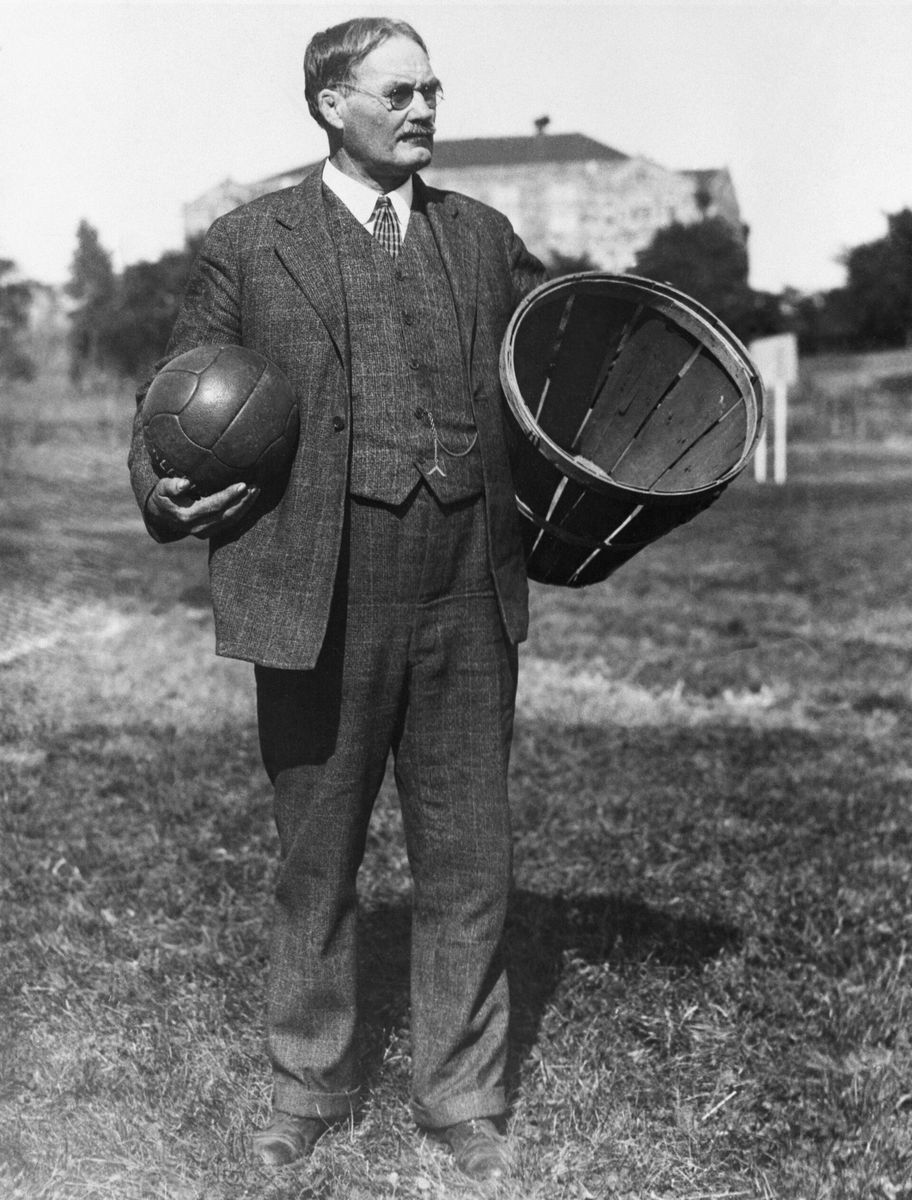
James Naismith with a soccer ball and a peach basket.
Photographed later in his life with the two objects the game started with. The basket lost its bottom within a few years, and the soccer ball gave way to a moulded ball in the 1940s. Neither change needed a fight.
Photographer unknown · Public domain · Wikimedia Commons
The reason is the same as football's: Law-level specification here is loose. The ball is given by circumference, weight and rebound, and the rim by diameter and material. Nothing in the sport's history has outrun those numbers.
What did change the sport was not equipment but geometry — the three-point arc, the shape of the key, the no-charge semi-circle. Basketball legislates the floor, not the object, and that is unusual enough among the sports here to be worth stating plainly. Athletics regulates the javelin; swimming regulates the suit; badminton regulates the shuttle. Basketball regulates where you may stand.
The one piece of equipment that has never moved is the one that matters most. The rim has been 3.05 metres from the floor since 1891, while the average height of an elite player has risen substantially. The sport has quietly become harder to reach without changing a single specification.
09Governing body politics
Basketball is the only sport on this site with two rulebooks that both matter, and the relationship between them is the whole of its politics.
FIBA governs the international game. The NBA governs itself, is not a member federation, and has repeatedly innovated first: the shot clock in 1954, the three-point line in 1979 following the ABA, the legalisation of zone defence in 2001. FIBA has followed each time, at its own pace and at different dimensions — the arc in 1984 and again in 2010, the twenty-four second clock in 2000.
The result is a sport where a fact about the rules has to name its jurisdiction. The court is a different size. The arc is a different distance. A quarter is ten minutes or twelve. A player fouls out on five or six. None of these are small enough to ignore when comparing anything.
Finland against Slovenia at EuroBasket 2017, Helsinki.
A FIBA game, on a FIBA court: the arc at 6.75 metres, ten-minute quarters, five fouls. The same sport in the NBA is played to different numbers on each.
Tuomas Vitikainen · CC BY-SA 4.0 · Wikimedia Commons
The other long-running dispute was eligibility, and it was settled in 1989 when FIBA voted to allow professional players at the Olympic Games. The immediate consequence was the 1992 United States team, and the longer consequence was the globalisation of the professional league — which is why the NBA's rulebook now exerts gravitational pull on FIBA's rather than the reverse.
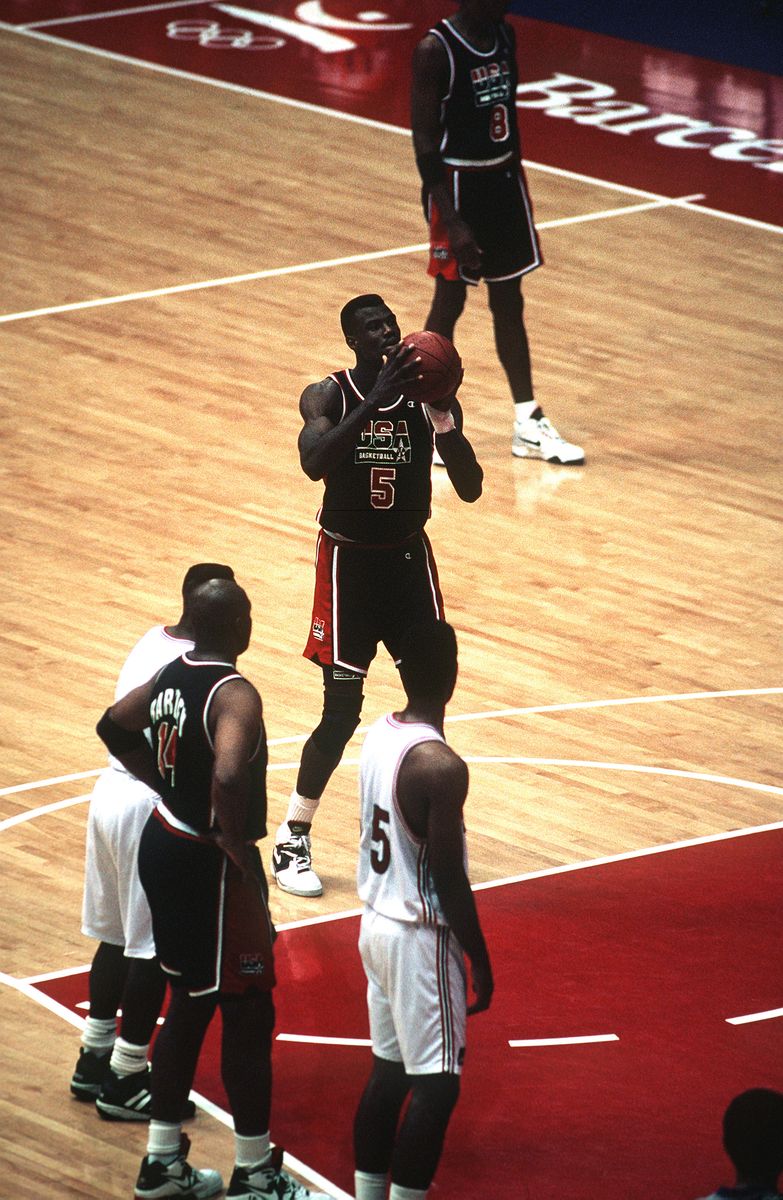
David Robinson shooting a free throw for the United States against Puerto Rico, Barcelona 1992.
The first Olympics after FIBA voted in 1989 to let professionals play. The team that came of it made the professional league a global audience, which is how the NBA's rulebook came to pull FIBA's toward it.
Ken Hackman, US Air Force · Public domain · Wikimedia Commons
Women's basketball entered the Olympic programme in 1976, forty years after the men's, and its professional structures remain differently resourced in a way that is a governance fact rather than a sporting one.
10Controversies that forced rule changes
Fort Wayne 19, Minneapolis 18. On 22 November 1950 the Fort Wayne Pistons beat the Minneapolis Lakers by holding the ball. There was no rule requiring a team to shoot, so a side in front could simply stop playing, and the only counter available to the trailing team was to foul deliberately. The game is the most cited trigger in the history of sports rulemaking, and it is on this site because the PRD names it.
Four years later the NBA adopted a twenty-four second shot clock. The number is attributed to Danny Biasone and to an arithmetic almost too neat to be true: divide the seconds in a game by the number of shots a watchable game seemed to contain. It worked immediately, scoring rose, and no serious basketball competition has been played without a shot clock since.
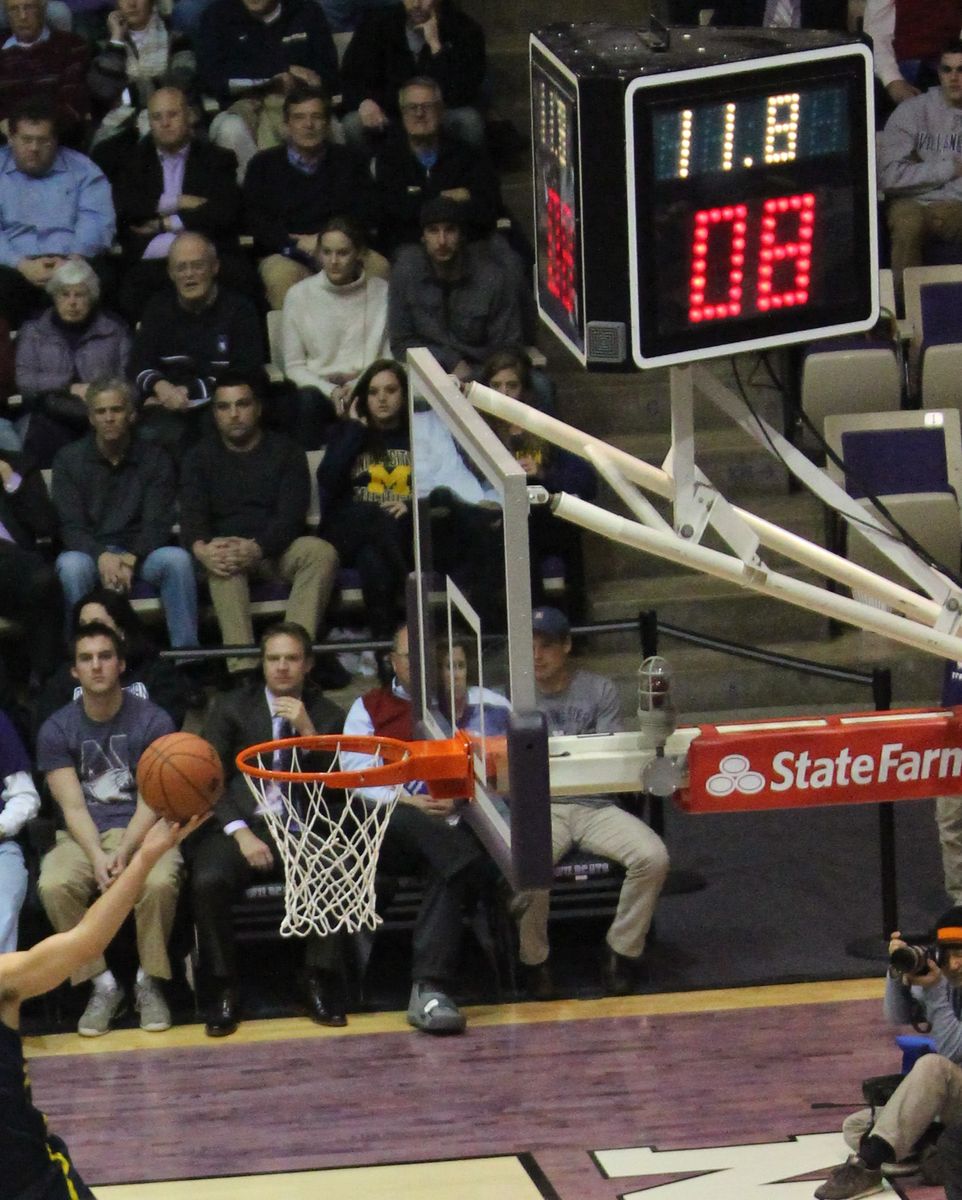
A shot clock at 8 and the game clock at 11.8, above a basket in a 2013 college game.
The rule the Fort Wayne game produced, above every basket. The red digits count down the time left to shoot and the white ones are the game clock: two of the clocks officials have to keep right, and most of what replay is asked to check.
TonyTheTiger · CC BY-SA 3.0 · Wikimedia Commons
Wilt Chamberlain. A run of rules is attributable to one player being too good at exploiting geometry the rules had not anticipated — the widening of the lane, offensive goaltending, restrictions on inbounding the ball over the backboard, rules against leaving the floor from behind the free-throw line. Basketball legislates against individuals more visibly than any other sport here.
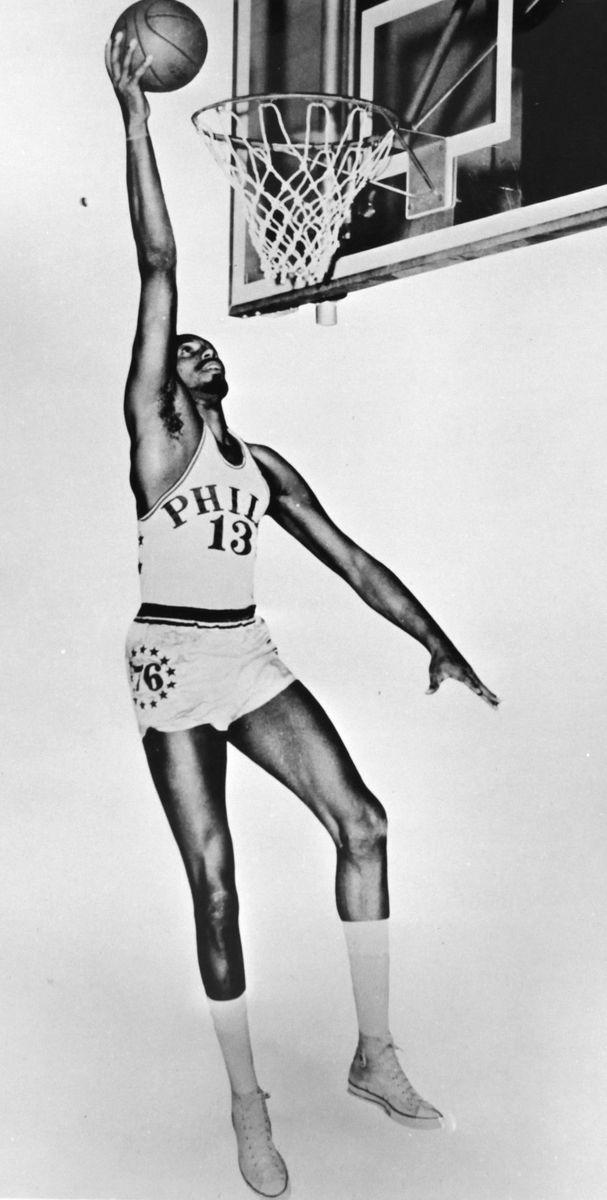
Wilt Chamberlain at the rim for the Philadelphia 76ers, 1967.
A player tall and athletic enough that the rules around the basket were rewritten in his career: the lane was widened, and offensive goaltending was defined.
Photographer unknown · Public domain · Wikimedia Commons
Isolation basketball. The NBA's illegal-defence rules had been written to prevent zone defences and had grown into a body of regulation nobody could officiate consistently. Their effect was one attacker working against one defender while three team-mates stood clear, which the league judged unwatchable. Zone defence was legalised in 2001 and a defensive three-second rule added to stop the obvious abuse.
The buzzer. Almost everything basketball reviews on video is a question about time — was the ball released before the horn, was the shot clock right, was that two points or three. A sport governed by four clocks has an officiating problem shaped like a stopwatch.
Where it standsthe record, and what is still open · sections 11 to 12
11Series
No series published
Scoring statistics across the three-point line — NBA
Before 1979 every field goal in the NBA was worth two points. After it, some were worth three. Points per game, field goal percentage, offensive rating and the value of a possession are all measured against a different scale on either side of that line, and no rescaling recovers the difference — a pre-1979 shot from 25 feet was worth two points and there is no record of how many were taken. The series is scoped to one league on purpose, and this is a stronger version of the football problem. Basketball does not have one rulebook: FIBA adopted the three-point line five years after the NBA, at a different distance, and moved it again in 2010. A figure for "basketball" would be averaging across competitions whose courts are different shapes. The figures are not entered because they have not been taken from a cited source. When they are, the chart appears here in two segments with 1979 between them, and the caption will still have to say that the NBA changed the distance twice in the 1990s and changed it back.
1979Scoped to one competitionA real break, in one league's series. There is no series for the sport as a whole to break, because there is no body that governs the sport as a whole.
12What is contested now
Recorded as unsettled.
Whether the three-point line broke the game it saved. The arc was added to open the floor, and it did. Four decades later the argument is that it has done so too well: teams shoot from range because the arithmetic says to, mid-range shooting has largely disappeared, and the objection is that a rule intended to add variety has produced a different monoculture. Proposals to move the line, to add a four-point zone, or to vary the value by distance all circulate. None has been adopted, and the sport is aware that any of them would sever its statistics a second time.
Two rulebooks. FIBA and the NBA have converged on the shot clock and moved closer on the arc without ever unifying. Whether a sport this global should have a single set of rules is an argument nobody wins, because neither body can compel the other and the professional league has no incentive to be governed.
Load and the calendar. Player workload, and the practice of resting healthy players in professional fixtures, is a governance dispute with a sporting cause. It has produced regulation about availability rather than about play, which is an unusual shape for a rule.
The height barrier. Not a rule argument, and included because it is the thing this sport's learning curve rests on. Nobody proposes raising the rim, and the reason nobody proposes it is that a century of records would stop meaning anything — which is exactly the trade every federation on this site has had to weigh at least once.
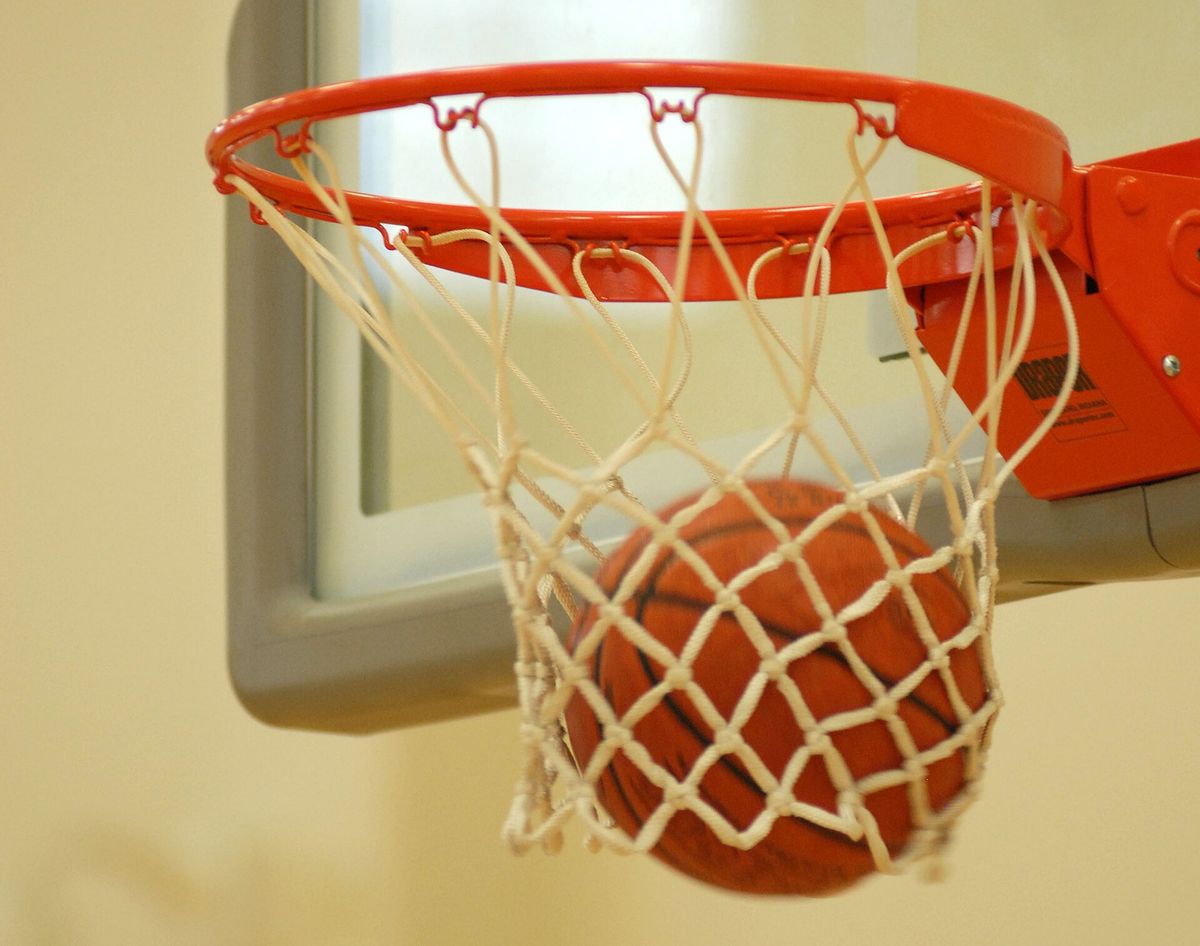
A ball dropping through the rim.
A regulation rim is three metres and five centimetres from the floor, as it has been since 1891. The players have grown and the rim has not, and nobody proposes raising it, because every record would stop meaning anything.
Kerelin Molina, US Air Force · Public domain · Wikimedia Commons