Basque pelota
One specialty throws a ball at three hundred kilometres an hour; another is played with the bare hand, and ends careers through it.
- Official
- Basque pelota
- Game category
- Net and wall
- Adjudication
- Decided by score
- Standing
- Lapsed pre-1940
- rule changes
- 5
- comparability break
- 1
- Olympic edition
- 1
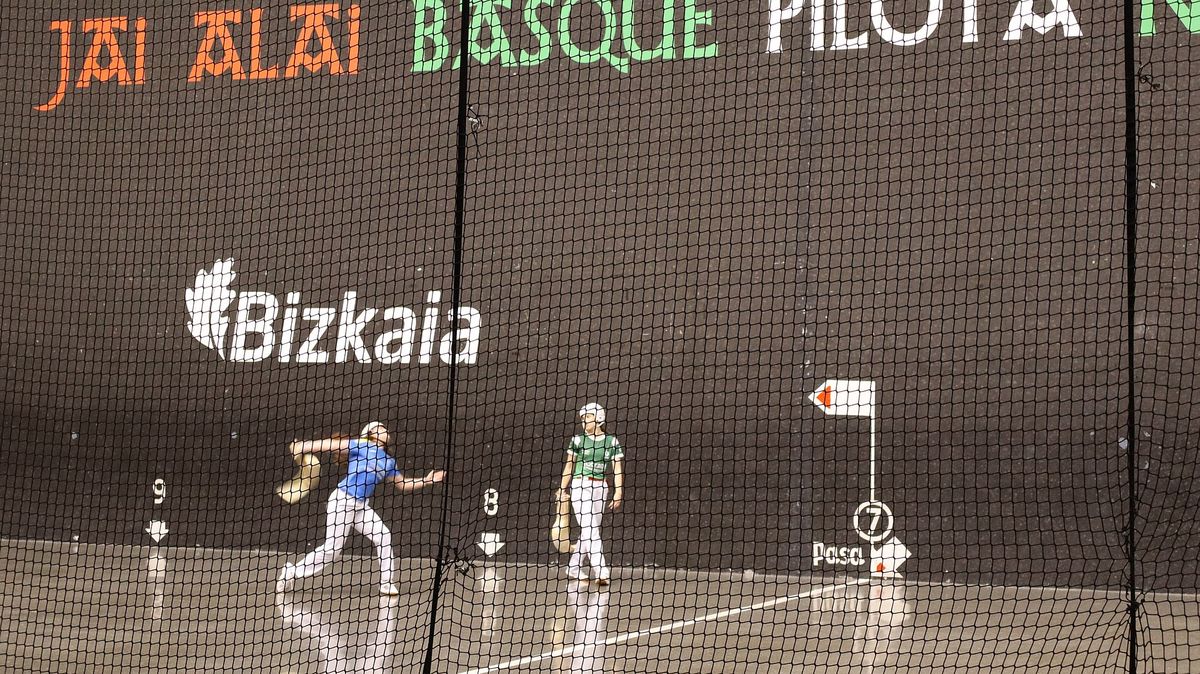
Cesta punta at the Gernika Jai Alai fronton, 2025: Erika Mugartegi in blue, Elaia Gogenola in green · Gorkaazk · CC BY 4.0
- Governing body
- Federación Internacional de Pelota Vasca
- Founded
- Descended from medieval European handball games, codified across the Basque Country and beyond through the nineteenth century; the international federation was formed in 1929.
- Olympic status
- 1 edition
- not on the 2028 programme
- Also contested at
- No other programme here
Not one game but a family of them, played against walls of three different lengths, in enclosed courts, with the bare hand, wooden bats, stringed rackets or a long curved wicker basket. The basket version, cesta punta, produces the fastest ball in any sport. The bare-hand version is the one the Basque Country actually watches, and it is played for money in front of bookmakers calling odds during the rally.
The gamewhat it is now · sections 1 to 5
01How it is played
A ball struck against a front wall, alternately, until somebody fails to return it — with the court, the implement and the ball all varying by specialty, and the specialties contested separately.
These figures were entered from the edition named above but have not been checked against its text line by line. Treat them as this site’s reading of the laws, not as a substitute for them.
The object of the game
Strike the ball against the front wall so that it lands in play and your opponent cannot return it before it bounces twice.
That sentence covers every specialty and tells you almost nothing about any of them, because the court length, the implement and the ball change the game completely. The principle is shared; the sport is not.
- Common principle
- Return the ball off the front wall
The courts
Frontón courts have a front wall and a long left side wall, and come in three lengths — thirty metres, thirty-six metres and fifty-four metres. The longer the wall, the faster and more spectacular the specialty played on it.
Trinquete is enclosed on four sides, with a sloping penthouse roof running along one wall that the ball may be played off, and a buttress in one corner. It is the most geometrically complicated court on this site — surfaces at several angles, all live.
The court is the first half of a specialty's definition. A hand game on a thirty-metre wall and a cesta game on fifty-four are different sports.
- Frontón lengths
- 30, 36 and 54 m
- Trinquete
- Enclosed, with a sloping penthouse roof
- Live surfaces
- Front wall, side wall, floor, and the penthouse
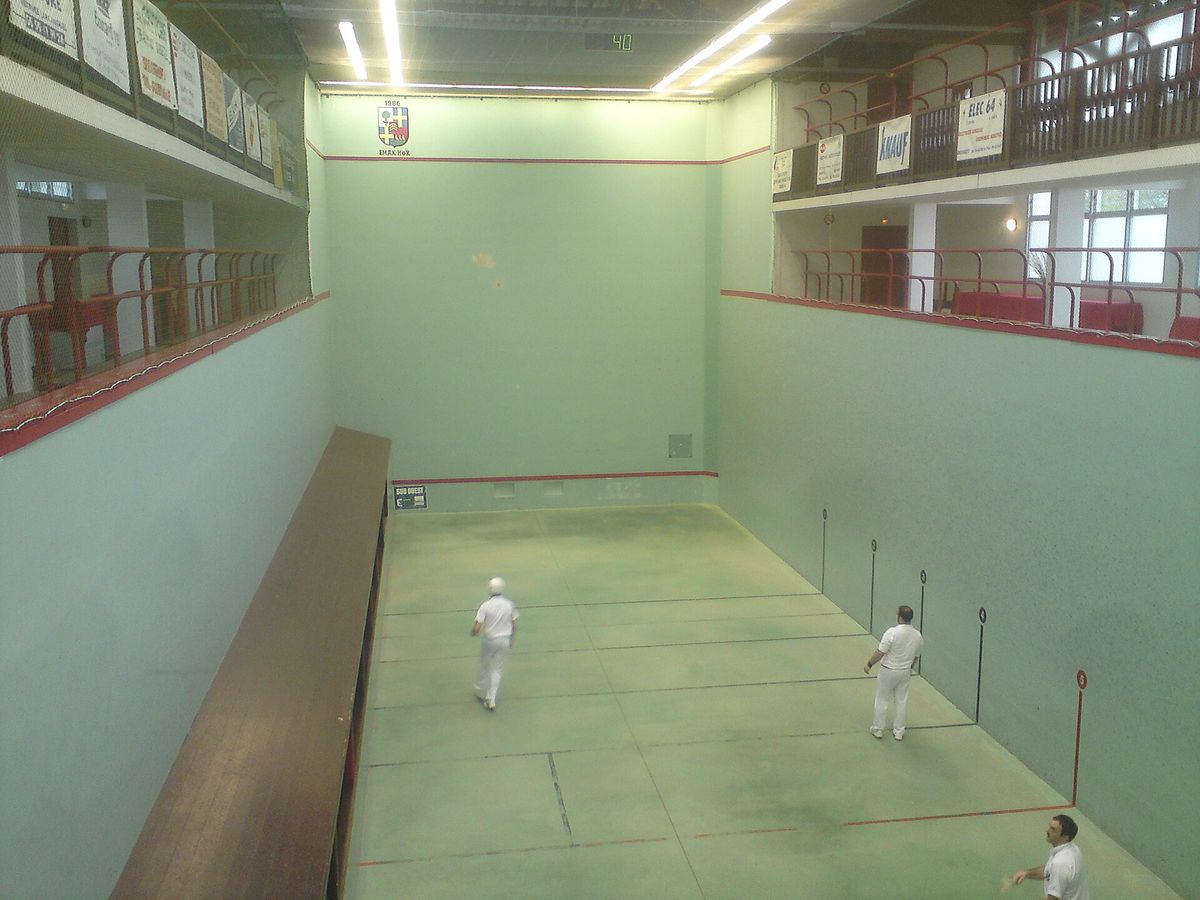
The trinquet at Arcangues, in the French Basque Country.
The enclosed court. The sloping roof along the side wall is the penthouse, and the ball is live off it, as it is off the walls and the floor.
xganachex · CC BY 3.0 · Wikimedia Commons
Hand, bat, racket and basket
The second half of a specialty's definition.
Mano — the bare hand. Nothing but tape and pads the player builds up themselves, against a hard leather-covered ball.
Pala and paleta — solid wooden bats, heavier and lighter, with leather or rubber balls to match.
Share — a stringed racket used in the trinquete.
Remonte and cesta punta — long curved wicker baskets strapped to the arm, which catch the ball and slings it. The cesta produces the fastest ball in any sport, recorded at around three hundred kilometres an hour.
Helmets are compulsory in the basket specialties, for the obvious reason.
- Mano
- The bare hand, taped
- Cesta punta
- A wicker basket; about 300 km/h
- Helmets
- Compulsory in the basket specialties
This clause reads this way because of
Players and officials
Singles or pairs, depending on the specialty. A judge on the court, with line judges, calling the ball in or out and adjudicating interference.
Professional hand pelota in the Basque Country is organised by private promotion companies, which contract the players, arrange the matches and set the pairings — so the sport's most followed form is run by businesses rather than by the federation.
- Format
- Singles or pairs, by specialty
- Professional mano
- Run by private promotion companies
Time
No clock. Matches are played to a target number of points — commonly twenty-two in professional hand pelota — and take as long as they take.
- Professional mano
- Usually to 22 points
Scoring
A point on every rally, to whoever wins it. Simple, and unchanged — pelota never made the service-scoring conversion that this site records in five other net sports between 1999 and 2006, because it never had service scoring to convert.
What sits alongside the score is the betting. In a Basque fronton, corredores work the crowd during play, calling odds aloud as the match swings and settling bets by throwing slit balls containing tickets into the stands. The wagering is audible from the court and is part of what the sport sounds like.
- Scoring
- A point on every rally
- Betting
- Called aloud during play, in the fronton
The serve
The serve must reach the front wall and land within marked zones, which vary by specialty and are the main thing keeping a serve from being an outright weapon on a fifty-four-metre wall.
Infringements
Letting the ball bounce twice, failing to reach the front wall, landing outside the court's marked lines, holding the ball in a basket rather than slinging it in one motion, and interfering with an opponent's swing or path.
In mano, catching or scooping rather than striking, and touching the ball with anything but the hand.
Deciding the winner
The target score. Because there is no clock and no set structure, a pelota match has no natural comeback architecture — the score moves in one line to the finish.
Everything above is current law. Everything below is how Basque pelota got here.
02Disciplines and events
Contested for medals at one Olympic Games, in 1900, and as a demonstration three times since. The international federation contests each specialty separately, and the sport's most followed professional competition is run by private companies in the Basque Country.
- Disciplines
- 2
- Olympic medal events
- 0
- Men’s and women’s counted separately.
- Contested elsewhere
- 10
- world championship, federation only, lapsed.
- Listed for context
- 3
- Not counted as this sport.
Frontón specialties8
A front wall and a long left side wall, at thirty, thirty-six or fifty-four metres. The implement changes with the length.
- Mano — bare handWorld championshipSingles and pairs; the specialty the Basque Country follows.
- Pala and paletaWorld championshipSolid and light wooden bats, with leather or rubber balls.
- Cesta puntaWorld championshipThe wicker basket, on the 54-metre wall; the fastest ball in sport.
- RemonteWorld championshipA shallower basket than the cesta, played on the long wall.
Trinquete specialties4
An enclosed court with a sloping penthouse roof and a corner buttress, all of it live.
- Hand, paleta and shareWorld championshipShare is a stringed racket used only here.
Formats built for export1
The federation's answer to needing a fronton, which almost nowhere outside the Pyrenees and Latin America has.
- FrontballFederation onlyA short three-wall format designed for schools and for countries with no court tradition.
Its Olympic record2
- Basque pelota, Paris 1900LapsedA medal event contested by two teams, Spanish and French, in one match.
- Demonstration appearancesLapsed1924, 1968 and 1992 — the last at Barcelona.
The professional game2
Hand pelota in the Basque Country is contracted, promoted and scheduled by private companies rather than by the federation, and is played for money in front of live betting.
- Professional hand pelotaFederation onlyWhere the sport's audience and money are; the federation does not run it.
- American jai alaiLapsedA parimutuel betting industry from 1935, effectively collapsed after 1988 as other gambling was legalised.
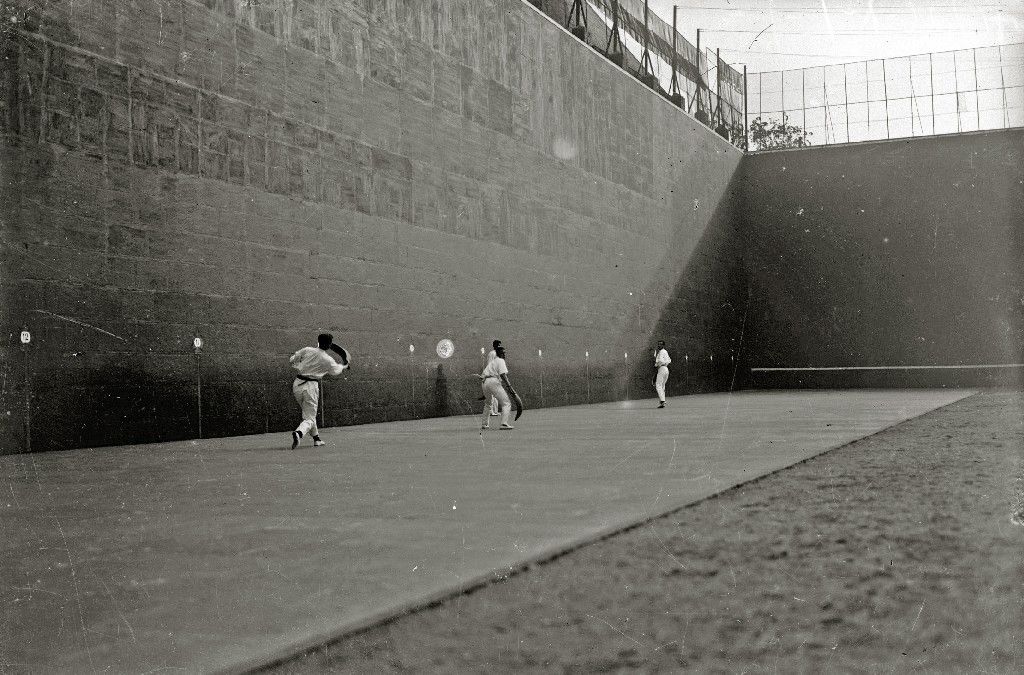
A remonte match at the Jai Alai fronton in San Sebastián, 1922.
Remonte uses a shallower basket than the cesta, on the long wall. From the Kutxa photographic archive.
Ricardo Martín · Public domain · Wikimedia Commons
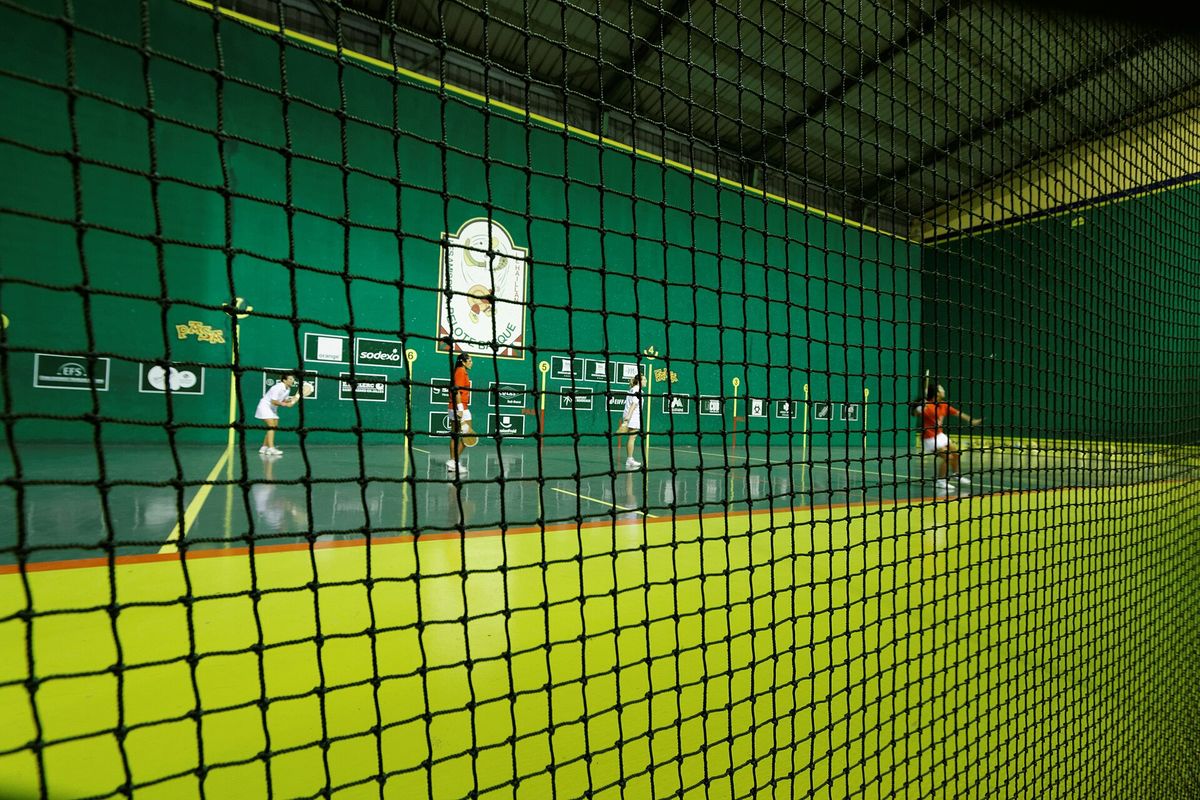
The 2013 Basque Pelota World Cup at Le Haillan, France.
The federation's own competition, where each specialty is contested separately. It is not where the professional hand game's audience is.
Pierre-Yves Beaudouin · CC BY-SA 4.0 · Wikimedia Commons
03Officiating
A judge on the court, in the middle of a ball travelling faster than anything else in sport.
The calls are boundary calls. Did the ball reach the front wall? Did it land inside the marked lines? Did it bounce twice before it was returned? On a fifty-four-metre wall with a cesta, those judgements are made about an object moving at around three hundred kilometres an hour, by an official standing on the court.
Interference is the other recurring call, and pelota's version is unavoidable rather than deliberate: two or four players share an undivided court with no net and no lanes, and a player moving to the ball necessarily moves through space an opponent wants. Judging whether an obstruction was avoidable is the sport's equivalent of racquetball's hinder, and it is decided the same way — by an official's reading of what a player could have done.
The basket adds a call unique to the sport. The ball must be caught and slung in one continuous motion; holding it in the cesta, even briefly, is a fault. That is a judgement about the duration of contact, made at speed, on an implement designed to make the contact last as long as physics allows.
In mano, whether the ball was struck or scooped is the equivalent.
There is no instrumentation anywhere in the sport — no line technology, no video review in most competition. A judge stands on a court and watches the fastest ball in the world.
04Where it is played
The Pyrenees, and everywhere Basque and Spanish emigration went.
The Basque Country, on both sides of the Spanish–French border, and Navarre are the sport's heartland, and the density is remarkable: a fronton in almost every village, publicly owned, free to use, and in constant use. That infrastructure is why pelota survived when the other European handball traditions did not.
Spain and France more broadly play it, particularly in the south-west of France, where the trinquete and the long-wall specialties have their own strong tradition.
Latin America is the sport's second home, carried by Basque and Spanish emigration: Mexico, Argentina, Cuba, Uruguay, Chile and Venezuela all have real structures, and Mexico in particular has a deep cesta punta tradition and produced many of the professionals who filled the American frontons.
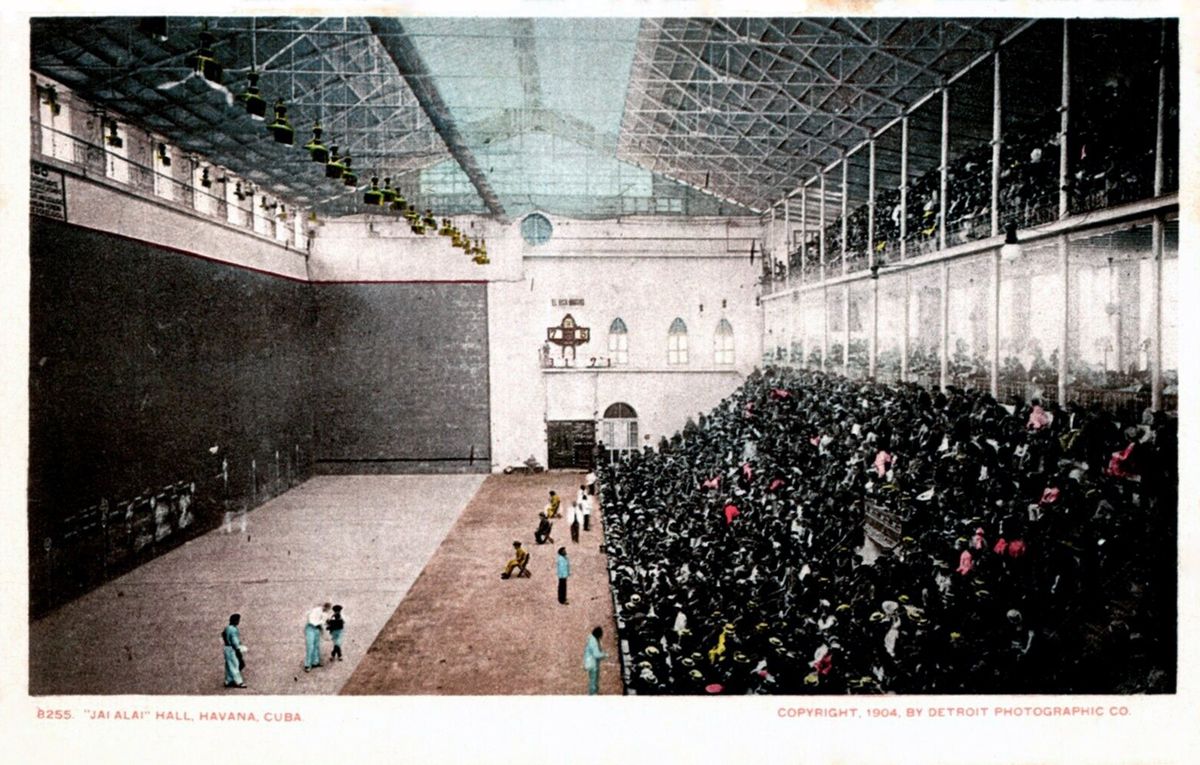
The jai alai hall in Havana, on a postcard of 1904.
A full house for an early professional fronton in Cuba, one of the Latin American countries where Spanish and Basque emigration carried the game.
Detroit Photographic Co. · Public domain · Wikimedia Commons
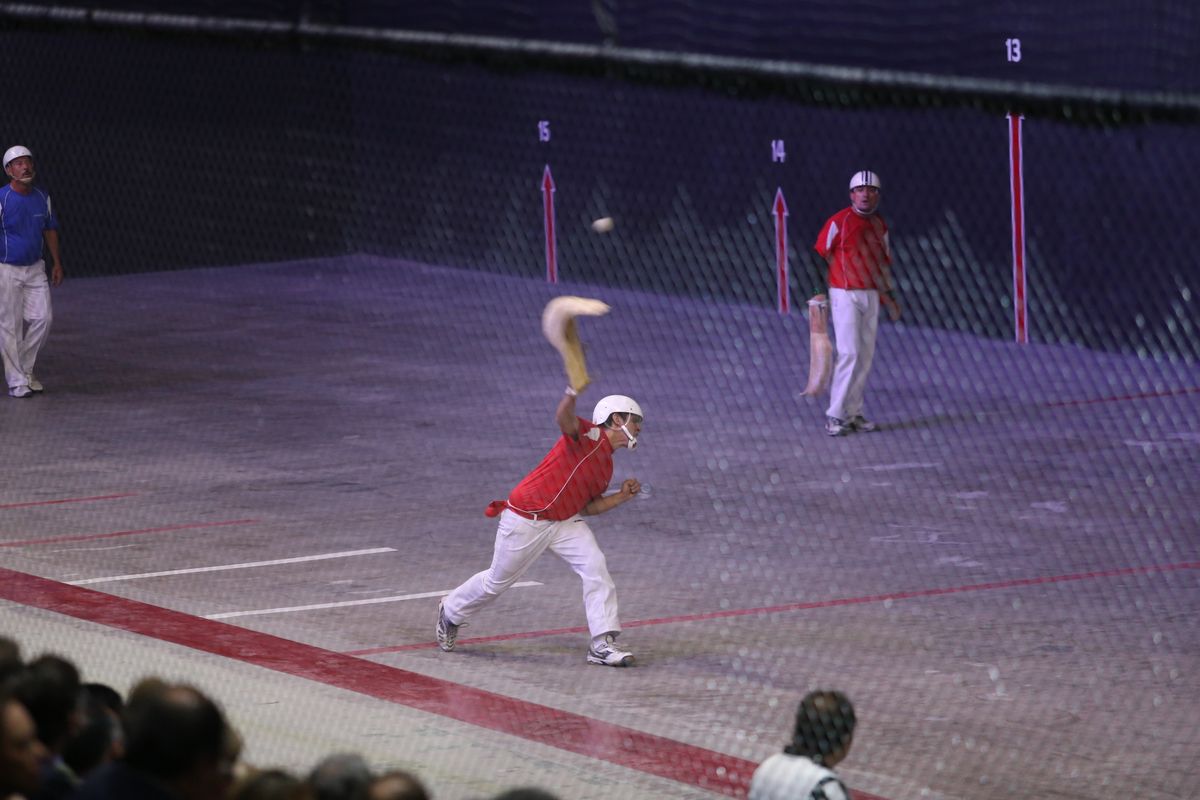
Jai alai at the reopening of the Frontón México, Mexico City, 2017.
Mexico has a deep cesta punta tradition of its own, and produced many of the professionals who filled the American frontons.
Gobierno de la Ciudad de México · CC0 · Wikimedia Commons
The United States had jai alai as a substantial industry in Florida and Connecticut from the 1930s, sustained by parimutuel betting, and it has effectively disappeared.
The Philippines had a significant jai alai scene through the twentieth century, on the same betting model and with a similar outcome.
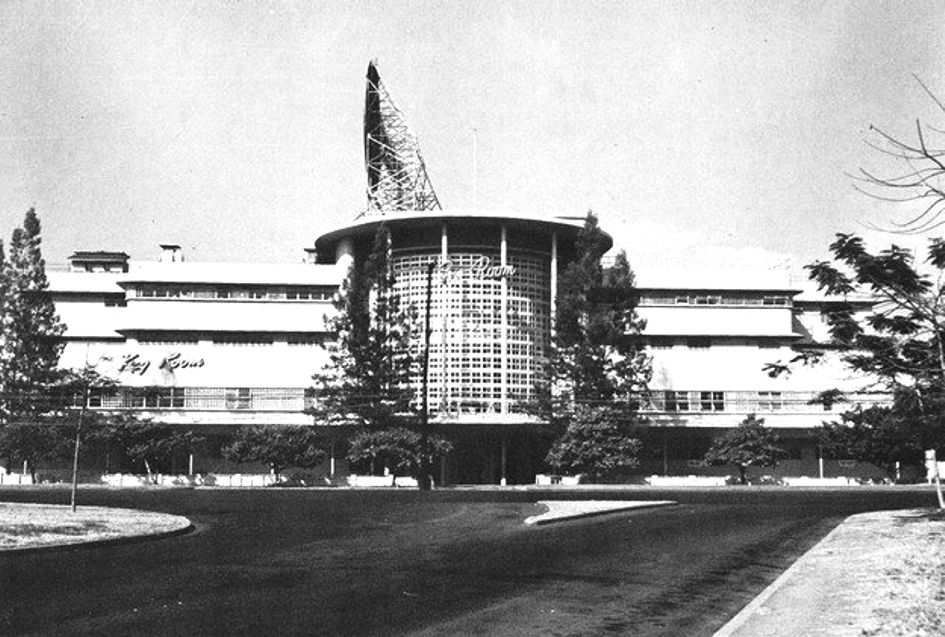
The Manila Jai Alai building in 1955.
Built in 1940 and demolished in 2000. The Philippines ran jai alai on the same betting model as Florida, with a similar ending.
US Navy · Public domain · Wikimedia Commons
The pattern is the one this site keeps finding. Fistball follows German emigration, boules follows French administration, soft tennis follows Japanese rule — and pelota follows the Basque and Spanish diaspora, plus one American industry that existed because of a gambling statute and ended when the statute stopped mattering.
05Learning curve
A wall and a ball, and in the Basque Country a fronton in almost every village — and a professional hand game whose entry cost is paid in permanent damage to the hands you play it with.
Editorial — the site’s reading, not a sourced claim
Barrier to entry
How hard is it to get to a real game?
A wall, a ball and a hand. In the Basque Country the wall is already there, next to the church.
Where pelota lives, the facility is public. Basque and Navarrese villages have a fronton — often beside the church or the town hall, frequently covered, always free — and children play against it with a ball and their hands.
That is a genuinely unusual arrangement on this site: the sport's court is municipal infrastructure rather than a club asset, which puts the entry cost close to zero in its homeland and close to prohibitive everywhere else.
The bat and racket specialties need an implement and cost more. Frontball, a short three-wall format the federation promotes for schools and for export, was designed to bring the entry cost down further and travel to places with no fronton tradition.
What stops it being very low is the hand. Even at amateur level, striking a hard ball with a bare palm hurts, and learning to take it is part of starting.
Evidence
- FacilityA public frontonobserved
- Kit to startA ballrule1929 — the rule this rests on
- Outside the Basque CountryAlmost no courts existestimate
- The handHurts from the first sessionobserved
- Time to a real gameImmediateestimate
Barrier to the top
How hard is it to be good at?
The fastest ball in any sport, or a professional career measured by how long your hands last.
Cesta punta is the extreme. A ball slung from a wicker basket travels at speeds recorded around three hundred kilometres an hour — faster than anything else in sport — off a fifty-four-metre wall, and a player must catch it in the basket, hold the momentum through a single continuous motion and return it. The reaction demand is at the limit of what a person can do.
Mano is harder in a different way, and this is the part outsiders miss. A professional hand player strikes a hard ball with a bare palm, hundreds of times a match, for a career. Hands swell, bruise to the bone, lose sensation and are permanently deformed. Players build up pads and tape, manage their hands between matches like an injury, and retire when the hands go rather than when the legs do.
The professional structure is small and concentrated. A handful of promotion companies contract a few dozen professionals in the Basque Country, and outside it the elite pathway is a world championship in a specialty most of the world has never seen played.
Evidence
- Cesta punta speedAbout 300 km/hobservedThe fastest ball recorded in any sport.
- The bare handNo glove or padding beyond taperuleHand damage ends more careers here than anything else.1929 — the rule this rests on
- Specialties are separate sportsCourt plus implementruleA hand player and a cesta player do not compete.1929 — the rule this rests on
- Typical peak age24–33estimate
Why the two differ
Low to very high, and the interesting thing is where the cost falls.
Most sports on this site put the barrier at the entrance — equipment, facilities, coaching — and then reward whoever gets through. Pelota inverts it in its homeland: the fronton is free public infrastructure and a child can start with a ball, and the price is charged later, out of the professional's hands.
It is also the site's clearest case of a sport that is really several. Boules, billiards and board games group unrelated codes under one federation for institutional convenience; pelota's specialties are combinations of a court and an implement, contested separately at world championships, and its two most famous forms — the fastest ball in sport and a game played with the naked hand — share nothing but a wall.
The historyhow it got here · sections 6 to 10
06Origin and invention
Pelota is what happened to medieval handball when a wall turned out to be better than an opponent.
The ancestor is jeu de paume and the family of European hand-ball games played across a net or a line — the same root that produced tennis, and which this site records elsewhere as a sport contested at the 1908 Olympics and now nearly extinct. In the Basque Country the game moved from playing over a dividing line to playing against a wall, and the wall version survived while almost every other European handball tradition did not.
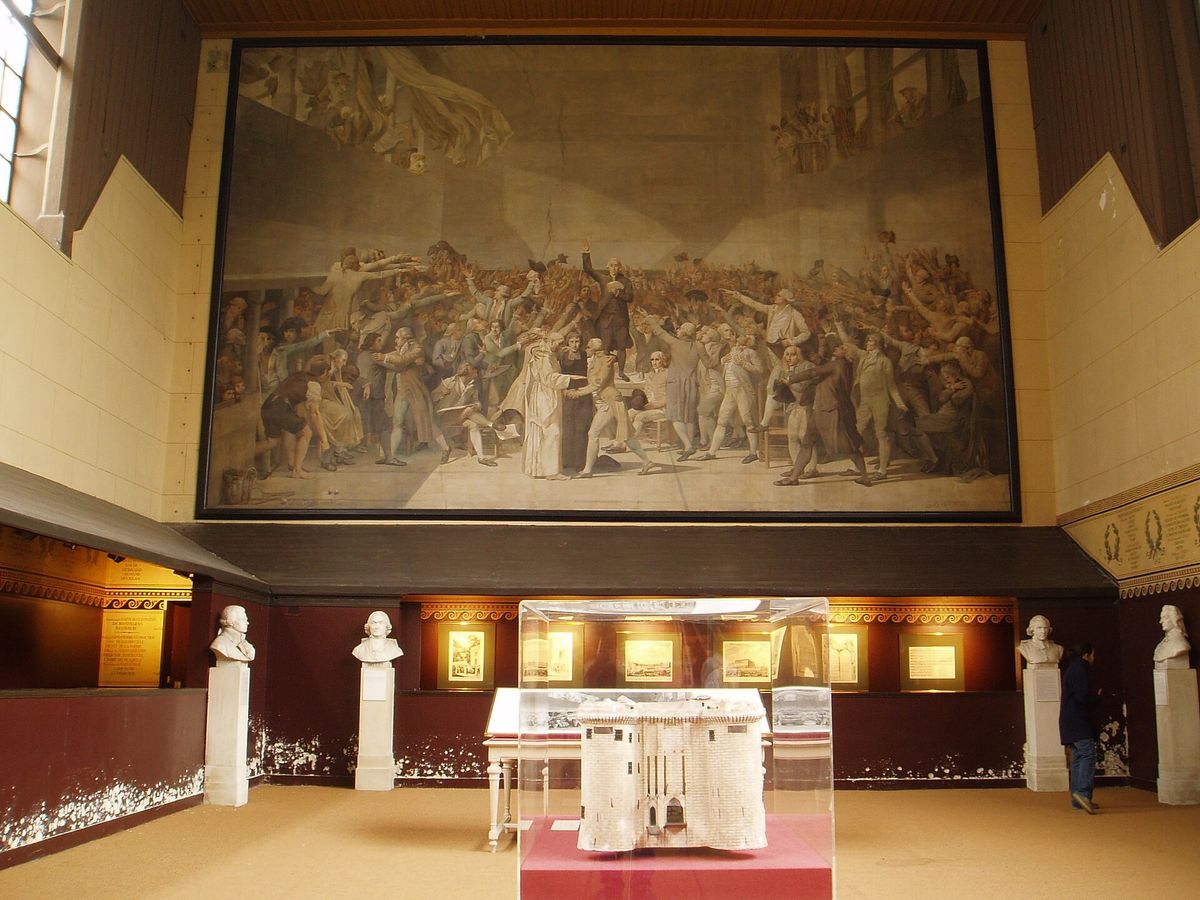
The Salle du Jeu de Paume at Versailles, now a museum.
A court built in 1686 for jeu de paume, the handball-over-a-line game that pelota shares its ancestry with, and that produced real tennis. It is remembered now for the oath sworn in it in 1789, not for the game.
BenP · CC BY-SA 2.5 · Wikimedia Commons
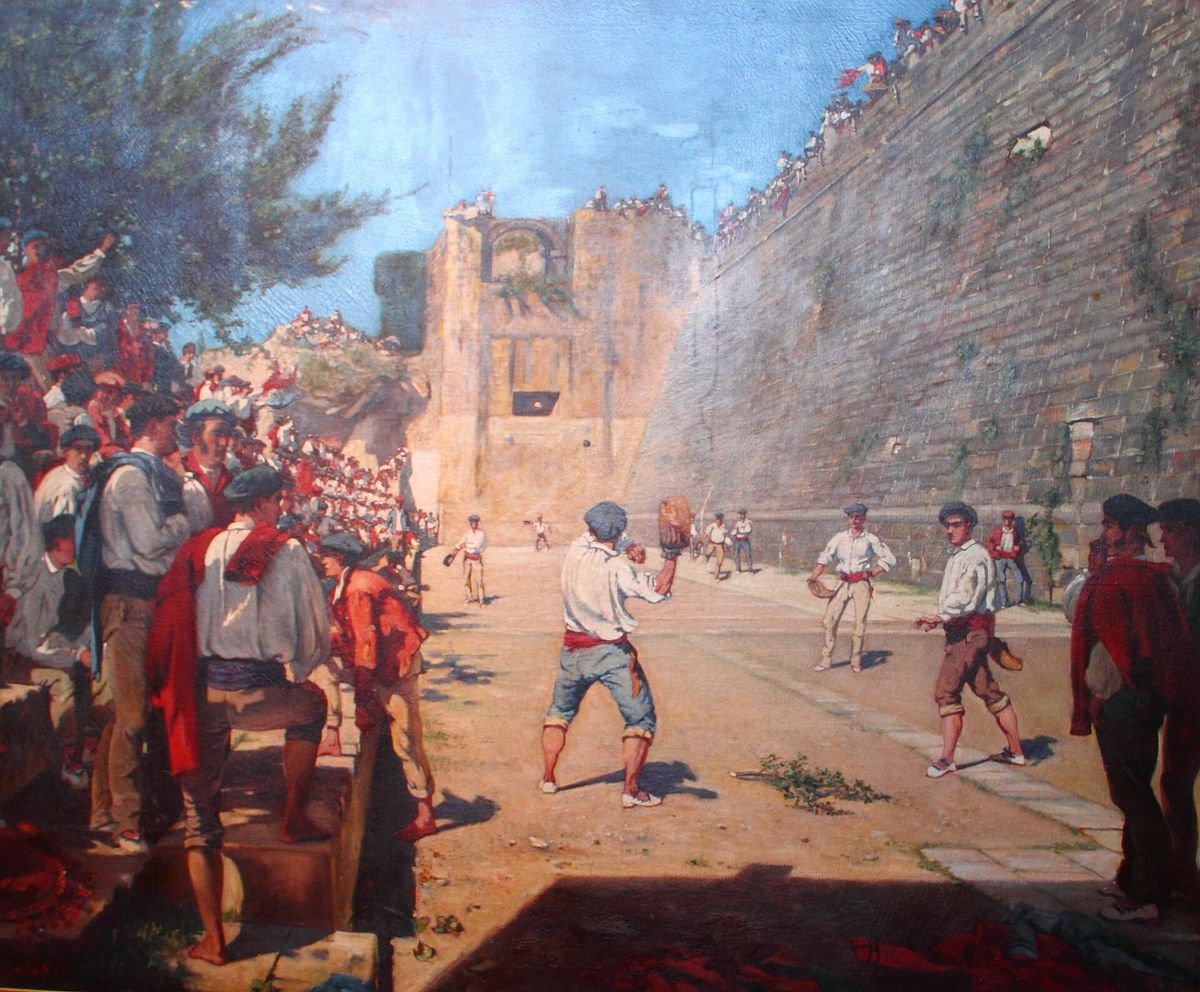
Gustave Colin, A game of pelota under the ramparts of Fontarrabie, 1863.
The wall game in the middle of the nineteenth century, played against the town's own fortifications, with the crowd pressed along the side of the court.
Gustave Colin · Public domain · Wikimedia Commons
The reason it survived is infrastructure. A fronton — a high wall with a marked floor, often beside the church or the town hall — became standard municipal furniture in Basque and Navarrese villages, free to use and permanently there. A sport with a public court in every village does not need clubs to persist.
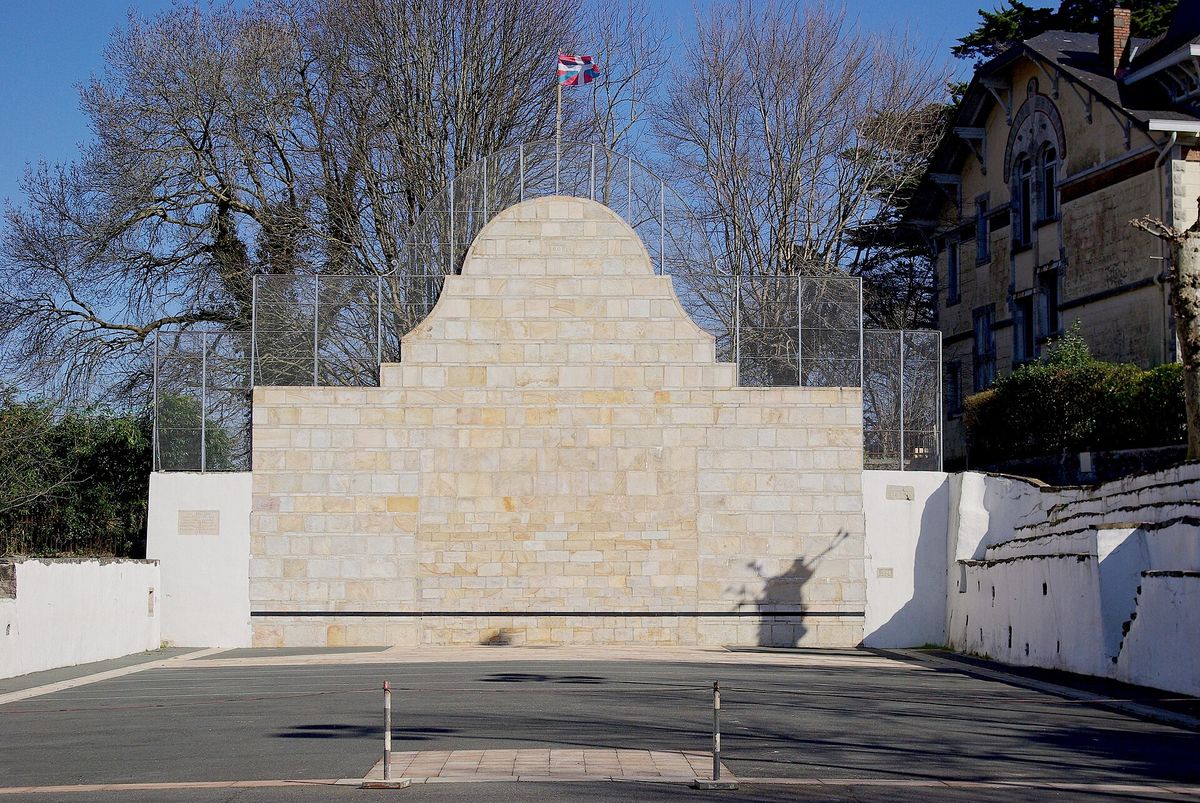
The village fronton at Sare, Pyrénées-Atlantiques.
A single high wall and a marked floor in the middle of the village: public, free, always there. This is the infrastructure the section credits with the game's survival.
JLPC · CC BY-SA 3.0 · Wikimedia Commons
Through the nineteenth century the game diversified rather than converging. Longer walls made a faster game and invited implements: the solid pala, the lighter paleta, the stringed share for enclosed courts, and eventually the long curved wicker cesta, which catches and slings the ball and produces the fastest projectile in any sport.
Basque pelota was contested for medals at the 1900 Paris Games, where two teams entered and one match was played, and returned three times as a demonstration — 1924, 1968 and 1992.
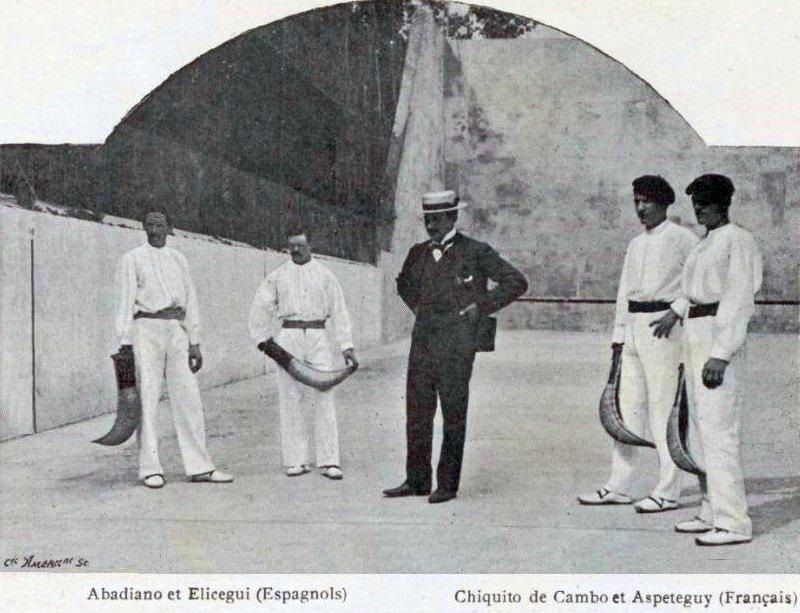
The two pairs at the 1900 Paris Games: Abadiano and Elicegui for Spain, Chiquito de Cambo and Apesteguy for France.
Pelota's whole Olympic medal history in one photograph: two teams entered, and one match was played. Both pairs hold baskets.
Le Sport universel illustré · Public domain · Wikimedia Commons
The international federation, formed in 1929, made the decisive institutional choice: rather than pick a code, it recognised specialties, each a combination of a court and an implement, contested separately. Pelota remains several sports that share a wall.
07Rule timeline
The sport’s own lane, expanded. Every entry carries a cause from the closed vocabulary and a citation, and says so where the citation is incomplete.
- 1900Participation and accessAdopted, then rescinded before it was ever enforcedadopted 1900
Basque pelota was contested at the Paris Games in 1900 as a medal event. Two teams entered — one Spanish and one French — and one match was played. It returned three times as a demonstration sport, in 1924, 1968 and 1992, the last of those at Barcelona. It has never been on the programme since 1900, which makes it one of a small group of sports contested for medals exactly once.
Trigger and citationIncomplete — no confirmed article
Trigger
The 1900 Games ran alongside the Paris Exposition with a sprawling programme drawn from what was played in France and its neighbours, and pelota was a substantial professional sport across the Pyrenees.
Olympedia · Olympedia, basque pelota 1900
- 1929Fairness and eligibilityadopted 1929
An international federation was formed and did something unusual: rather than choose a code, it recognised a set of specialties, each defined by a court and an implement. A specialty is a court length — a thirty-metre wall, a thirty-six-metre wall, a fifty-four-metre wall, or an enclosed trinquete with a sloping penthouse roof — combined with what the ball is struck with: the bare hand, a solid wooden pala, a lighter paleta, a stringed share, or the long curved wicker cesta. The combinations are not variants of one game. A hand player on a thirty-metre wall and a cesta player on a fifty-four-metre wall are doing unrelated things, and world championships contest each specialty separately.
Comparability break · Scoped to one competition
A specialty is a court plus an implement. Speeds and results belong to a specialty, never to pelota. See the series
Trigger and citationIncomplete — no confirmed article
Trigger
Pelota was played across the Basque Country, Spain, France and Latin America in locally distinct forms, and international competition needed a structure that did not require any of them to be abandoned.
FIPV reglamento de especialidades · FIPV reglamento, especialidades
- 1929Participation and accessadopted 1929
Pelota mano is played by striking a hard ball with the naked hand. There is no glove, no bat and no padding beyond tape and adhesive pads that players build up on the striking surfaces themselves. The ball has a rubber or wound core and a stitched leather cover, and it is hard. Hands swell, bruise deeply, lose feeling and are permanently damaged; hand condition determines whether a professional can play at all, and hand injury ends more careers in this sport than anything else. It is also the specialty the Basque Country actually follows. The most dangerous form of the sport for the athlete is the popular one.
Trigger and citationIncomplete — no confirmed article
Trigger
The hand game is the oldest form and the one embedded in Basque village and festival life, and codification recorded practice rather than substituting an implement for safety.
FIPV reglamento de especialidades · FIPV reglamento, mano
- 1935Commercialadopted 1935
Parimutuel wagering on jai alai — cesta punta — was legalised in Florida, and an American industry grew around it: purpose-built frontons, imported Basque and Latin American professionals, and daily programmes of matches run principally as a betting product. That is the reverse of the ordinary arrangement. Elsewhere on this site betting attaches to a sport that exists; here a sport was imported and staged because betting on it was legal, and the match card was designed around wagering formats rather than around competition.
Trigger and citationIncomplete — no confirmed article
Trigger
Florida legalised parimutuel betting on jai alai as it had on horse and dog racing, and promoters built frontons to take it.
FIPV reglamento de especialidades · Florida parimutuel statutes
- 1988Commercialalso integrityadopted 1988
American jai alai's players struck in 1988 over pay and conditions. Frontons ran replacement players, the standard fell, and audiences did not return in the numbers they had left in. Two things finished it. A state lottery and, later, casino gambling gave Floridians other ways to bet, and a sport whose American existence rested on being the legal option lost the only reason it had been imported. Jai alai in the United States has since contracted to almost nothing. It is the clearest case on this site of a sport dying not from a rule, a scandal or a safety problem, but because the gambling regulation that created it changed.
Trigger and citationIncomplete — no confirmed article
Trigger
A strike over pay coincided with the expansion of legal gambling in Florida, and the fronton business had no proposition once wagering was available elsewhere.
Some accounts weight the strike more heavily and some the lottery. The site records both without ranking them, since the industry declined through a period in which both were true.
FIPV reglamento de especialidades · Contemporary accounts of the Florida fronton industry
08Equipment evolution
Every implement in this sport exists to do something to the ball that the hand could not, and the hand game outlived all of them in popularity.
The hand came first and is still the most followed specialty. There is no glove and no padding — only tape, and adhesive pads that players build up on their own striking surfaces over years. The ball is hard: a wound or rubber core under a stitched leather cover, and unforgiving. Hands swell, bruise to the bone, lose sensation and deform permanently, and hand condition rather than fitness is what determines whether a professional can play.
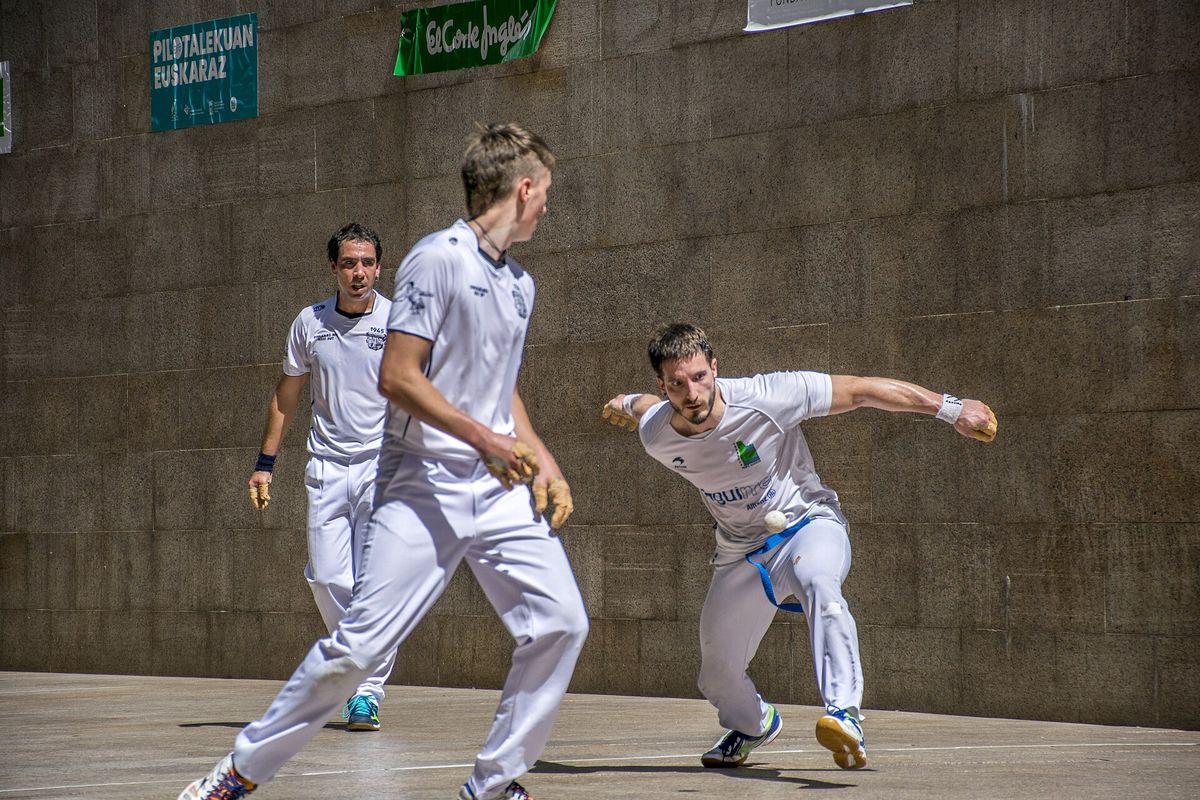
Hand pelota at the La Blanca tournament, Vitoria-Gasteiz, August 2019.
The specialty the Basque Country follows. The players' hands are taped; that is all the protection the rules allow, against a hard leather ball.
Pixelillo · CC BY-SA 4.0 · Wikimedia Commons
Bats followed. The pala is a heavy solid wooden bat and the paleta a lighter one, each paired with a ball chosen to suit it — leather or rubber — which is why the bat specialties are separate events rather than the same game with different sticks.
The share is a stringed racket used only in the enclosed trinquete.
The cesta is the extreme. A long curved wicker basket strapped to the forearm, it catches the ball and slings it in one continuous motion, and it is the reason cesta punta produces speeds around three hundred kilometres an hour — the fastest ball recorded in any sport. Baskets are made by hand from woven chestnut and reed, fitted to the individual player, and there are very few people left who make them.
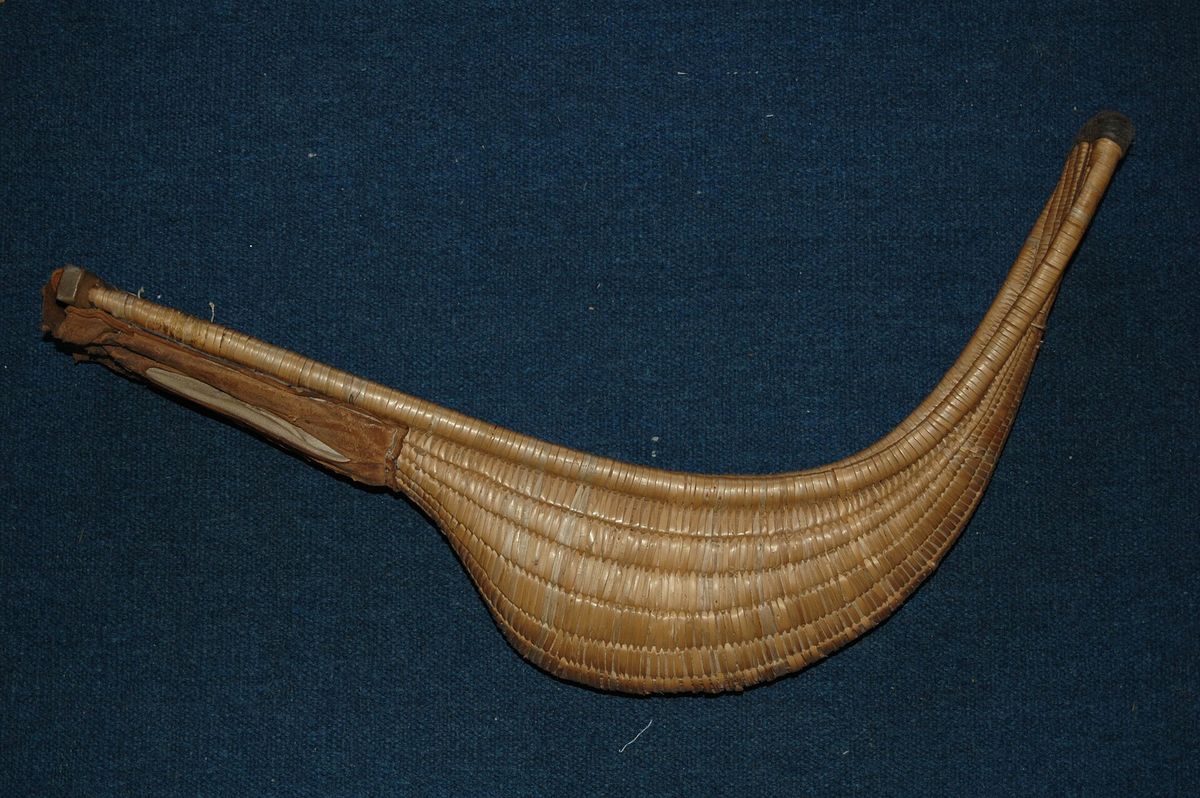
A grand chistera, the long wicker basket, 2006.
Woven by hand and strapped to the forearm, it catches the ball and slings it in one motion. This is the implement behind the fastest ball in sport.
Harrieta171 · CC BY 2.5 · Wikimedia Commons
Helmets are compulsory in the basket specialties and were not always. In the hand game there is nothing to make compulsory, which is the point.
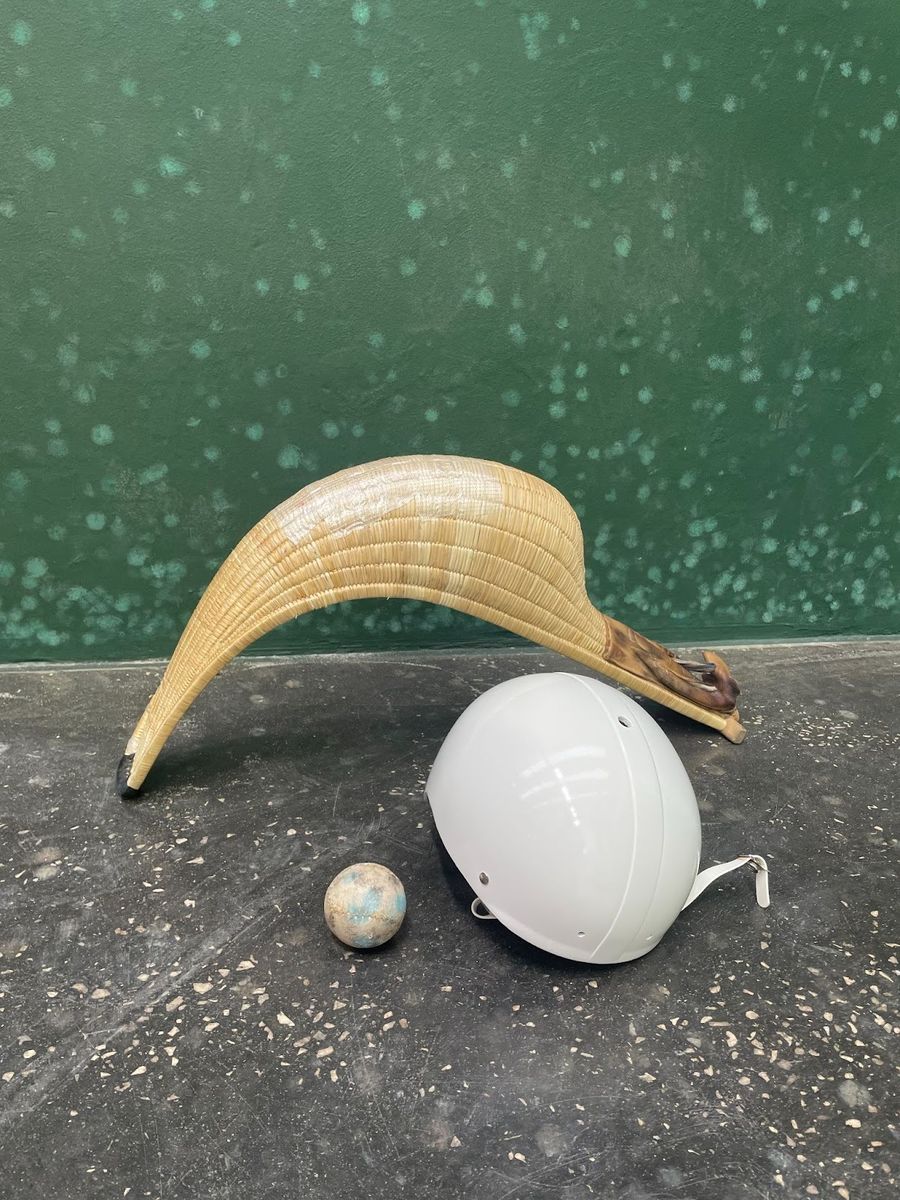
A xistera, a helmet and a ball, Vitoria-Gasteiz, 2025.
The three objects of the basket game side by side. The helmet was not always required; it is compulsory now in the basket specialties because of what that ball does when it leaves the basket.
Landita · CC BY-SA 4.0 · Wikimedia Commons
09Governing body politics
The federation governs the world championships; private companies govern the sport people watch.
The Federación Internacional de Pelota Vasca, formed in 1929, contests each specialty separately at world championships, promotes the sport internationally, and has pushed frontball — a short three-wall format — as a way of exporting the game to countries with no court tradition, which is almost all of them.
Professional hand pelota in the Basque Country is a different structure entirely. Private promotion companies contract the players, arrange the pairings, schedule the matches and sell them to television. The federation does not run it. This site has recorded the same shape in sumo, muaythai and snooker: an internationally recognised body running a real competition that is not where the sport's audience, money or best competitors are.
The betting is inseparable from that. In a fronton, corredores work the crowd during play, calling odds aloud as the match turns and settling wagers by throwing slit balls containing tickets into the stands. It is legal, public and constitutive of the atmosphere, and it produces the integrity exposure that every sport with live in-play betting has.
The American chapter is the sharpest political story pelota has. Florida legalised parimutuel wagering on jai alai in 1935 and an industry was built — frontons, imported professionals, daily cards designed around betting formats. When the players struck in 1988 and the state expanded other gambling, the proposition disappeared, and American jai alai has contracted to almost nothing.
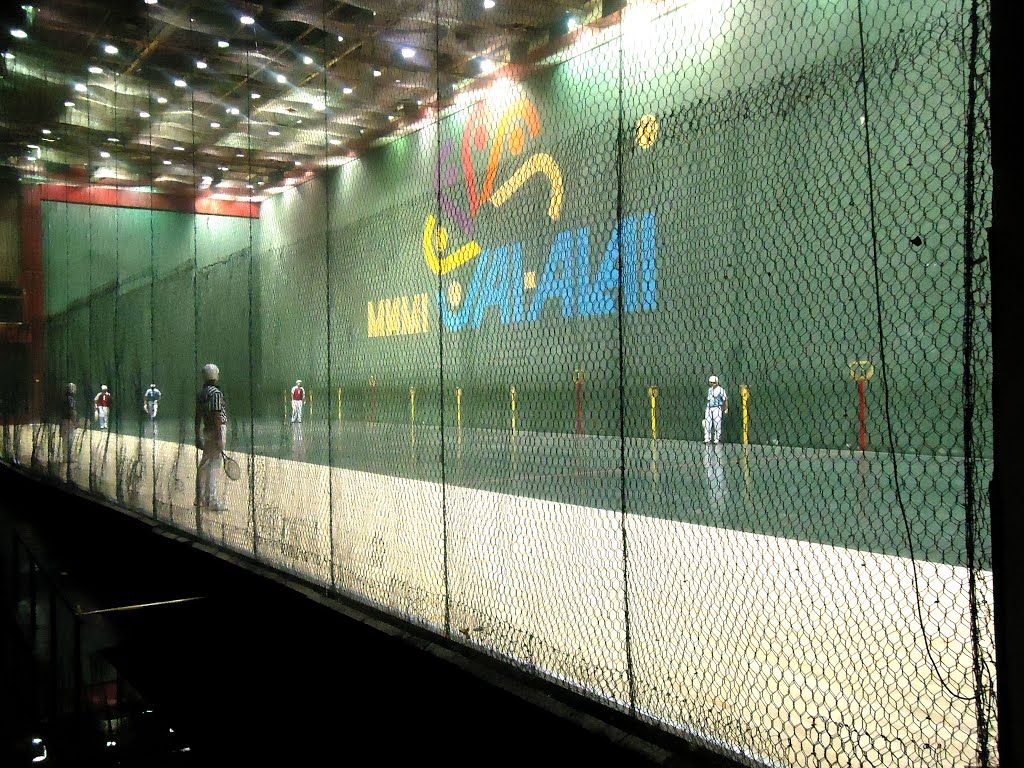
The court at Miami Jai-Alai, built in 1926, photographed in 2013.
Florida legalised betting on jai alai in 1935, and frontons like this one were built to stage it. The players' strike of 1988, and the spread of other legal gambling, took most of the industry away.
Lander Eizagirre · CC BY-SA 3.0 · Wikimedia Commons
A sport imported as a gambling product died when the gambling moved on.
10Controversies that forced rule changes
The hand. Pelota's central and unresolved problem. Professional hand players sustain permanent damage to the hands they compete with, and the sport has no equipment answer available — putting a glove on it would make it a different specialty, which the federation already contests separately. What exists instead is management: taping, pads, restricted playing schedules and careers that end when the hands do.
Speed and safety in the basket specialties. A ball at three hundred kilometres an hour in an enclosed court is a serious hazard to players and, historically, to spectators. Helmets became compulsory, protective netting separates the crowd, and the court's geometry is specified precisely.
Cesta punta at the Gernika Jai Alai fronton, 2025: Erika Mugartegi in blue, Elaia Gogenola in green.
A match in the basket specialty's league of nations. The net across the front of the court separates the crowd from a ball travelling at around three hundred kilometres an hour.
Gorkaazk · CC BY 4.0 · Wikimedia Commons
Betting. Live in-play wagering called aloud during matches is integral to the professional hand game and creates the conditions for manipulation that every sport in that position faces. It is regulated as gambling rather than as sport.
Losing America. The 1988 strike and the expansion of legal gambling in Florida ended jai alai as a substantial industry. It changed no rule of pelota and removed a professional market that had employed hundreds of players.
Whether the specialties should be consolidated. A federation contesting a dozen combinations of court and implement spreads a small sport very thin, and the case for choosing a flagship recurs. Nobody has been willing to tell a specialty it is finished.
Frontball. A format invented for export, which purists regard as not the sport and which is the only version with a plausible route into countries that have never built a fronton.
Where it standsthe record, and what is still open · sections 11 to 12
11Series
No series published
Ball speed
Pelota holds the fastest ball speed recorded in any sport, and it is not a series. The figure usually cited for cesta punta is around three hundred kilometres an hour. It is a measurement taken on particular occasions, by particular methods, rather than a ratified record with a progression behind it — there is no equivalent of a governing body homologating ball speeds the way athletics homologates a throw, and no continuous list to chart. The specialties make anything broader impossible. A ball struck by a bare hand, a solid wooden pala and a metre-long wicker basket are three different projectiles, and the balls themselves differ — leather over a wound core for the hand, rubber for paleta. Speeds across specialties are not comparable and were never intended to be. Nor are results. Each specialty is contested separately at world championships, on courts of different lengths, and the professional hand game — the sport's largest audience — is run by private promotion companies whose competitive records are not the federation's. So the sport's most striking number sits here as a single fact rather than a line, which is the honest way to hold it.
1929Scoped to one competitionA specialty is a court plus an implement. Speeds and results belong to a specialty, never to pelota.
12What is contested now
Recorded as unsettled.
The hands. Professional hand players accumulate permanent damage as a condition of competing, and the sport has no equipment remedy that would not turn mano into a different specialty. Management is the only answer anybody has, and it is not a solution.
Too many specialties. A dozen combinations of court and implement, each contested separately, in a sport with a small international base. The argument for choosing a flagship recurs and nobody will be the one to end a tradition.
Frontball. Designed for export and dismissed by purists. It is also the only form with a plausible path into countries that will never build a fronton, and the federation knows it.
Betting. Live wagering called aloud during matches is part of what the professional hand game is, and it carries the integrity exposure that comes with it. Regulated as gambling, not as sport.
Who runs the professional game. Private promotion companies contract the players and schedule the matches; the federation runs world championships in specialties with far smaller audiences. Neither arrangement is going to change.
Whether jai alai comes back. American frontons have closed almost completely and a few have persisted in reduced forms tied to gambling licences. A sport that exists because a betting statute requires it to be staged is not in a healthy position, and it is the clearest cautionary case on this site of what happens when the reason for a sport's existence is not the sport.