Board games
The only sports here a machine plays better than any human — and both know the year it happened.
- Official
- Board games
- Game category
- Outside this taxonomy
- Adjudication
- Decided by score
- Standing
- Never Olympic
- rule changes
- 5
- comparability break
- 1
- Olympic editions
- 0
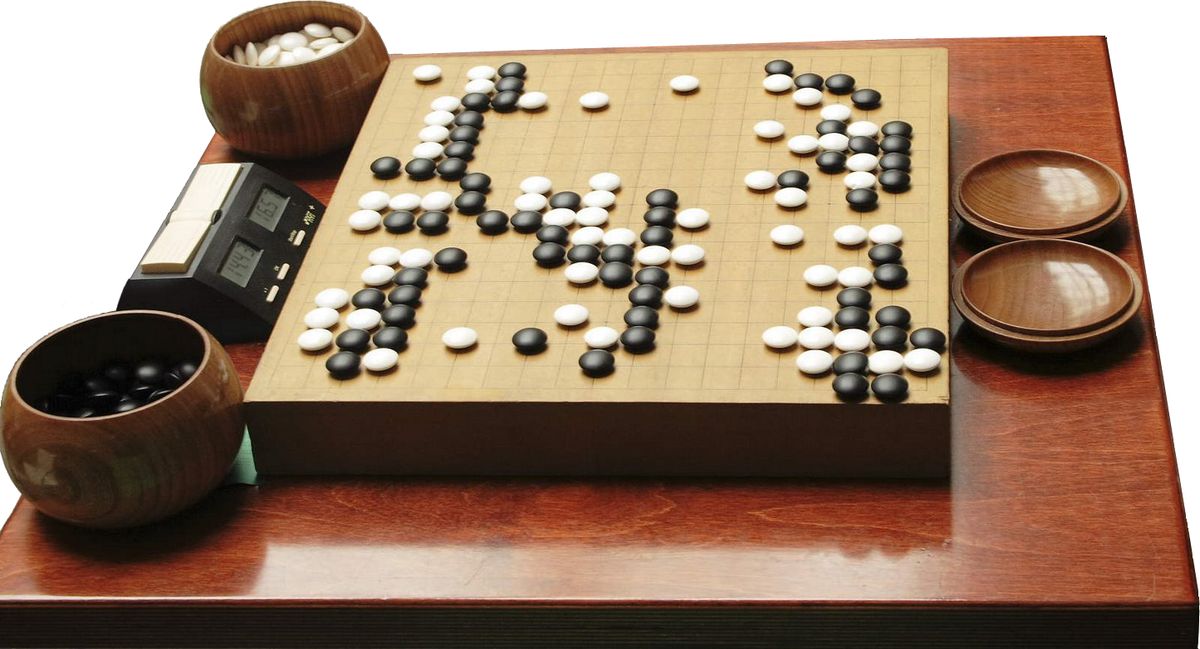
Board, stones, bowls and an electronic clock, halfway through an amateur go game · HermanHiddema · CC BY-SA 3.0
- Governing body
- FIDE, the International Go Federation and the World Xiangqi Federation
- Founded
- Chess, go and xiangqi are each many centuries old; their international federations date from 1924, 1982 and 1993 respectively, and they were contested together at the Asian Games from 2010.
- Olympic status
- Not on the Olympic programme
- Also contested at
- Asian Games
Chess, go and xiangqi, contested at the Asian Games as one listing under three separate federations. They are the only sports on this site with no physical component at all, the only ones where a machine is definitively better than the best human, and the only ones where that produced an integrity problem no other sport can have: a competitor with a hidden device is unbeatable.
The gamewhat it is now · sections 1 to 5
01How it is played
Three games contested under one Asian Games listing. Chess: checkmate the king. Go: surround more territory. Xiangqi: checkmate the general, across a river, with pieces that cannot leave their palace.
These figures were entered from the edition named above but have not been checked against its text line by line. Treat them as this site’s reading of the laws, not as a substitute for them.
The object of the game
Chess: place the opponent's king under an attack it cannot escape.
Go: control more of the board than the opponent by surrounding territory and capturing stones. Nothing moves once placed.
Xiangqi: checkmate the general. Pieces move on the intersections, a river divides the board and changes what some pieces may do, and the general is confined to a nine-point palace.
The three share a board and almost nothing else. Go is additive — stones are placed and stay. Chess and xiangqi are subtractive and positional.
- Chess
- 64 squares, 32 pieces
- Go
- 361 intersections, stones placed and not moved
- Xiangqi
- Played on intersections, with a river and a palace
The board
Chess is played on the squares of an eight-by-eight board. Go is played on the intersections of a nineteen-by-nineteen grid. Xiangqi is played on the intersections of a nine-by-ten grid, with a river across the middle and a marked palace at each end.
That distinction — squares against intersections — is not cosmetic. A board of intersections has more points and different geometry, and go's 361 of them are the reason its search space defeated computers for two decades after chess fell.
- Chess
- Squares
- Go and xiangqi
- Intersections
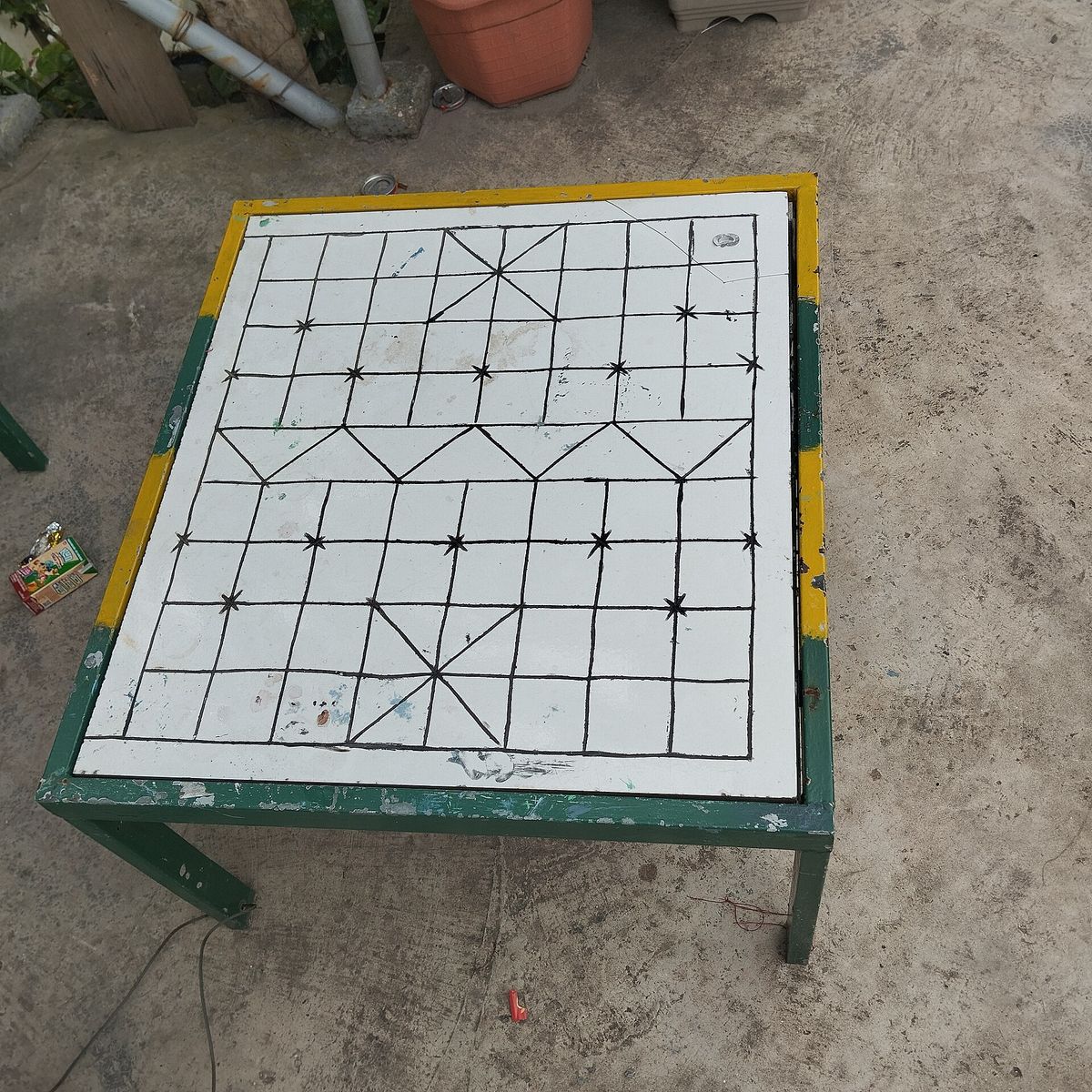
A xiangqi board painted on a table, Vietnam, 2026.
The river across the middle, the two palaces marked by their diagonals, and the pieces placed on the intersections rather than in squares.
Manhdeptraipro2114 · CC BY-SA 4.0 · Wikimedia Commons
Equipment
A board, pieces or stones, and a clock. That is the whole list, and it is the shortest on this site.
The clock is the only piece of technology, and it is essential: without a time control a game has no bounded length, and time is now part of the contest rather than an administrative limit. Increment systems add seconds per move so a player cannot lose a won position purely to the clock.
What is regulated far more heavily than the equipment is what a player may carry. Electronic devices are prohibited in the playing area and players are screened, because a phone is a stronger player than any human alive.
- Equipment
- A board, pieces and a clock
- Prohibited
- Any electronic device
This clause reads this way because of
Players and officials
Two players. An arbiter enforces the laws, the clock and the conditions, and does not decide anything about the game itself — the position is a fact and the rules apply to it mechanically.
That makes an arbiter's job unlike any other official's here. There is nothing to judge about play. There is a great deal to enforce about conduct, devices and time.
- Players
- 2
- Arbiter
- Enforces conditions, not play
Time
Set by time control, and the control defines the event: classical games run for hours, rapid for tens of minutes, blitz for minutes and bullet for seconds per player.
These are treated as different disciplines with separate ratings and separate world championships, because the same player is a different strength at each. A sport where the clock setting creates distinct titles has no real counterpart elsewhere on this site.
- Classical
- Hours per player
- Rapid and blitz
- Separate titles and separate ratings
Scoring
A game is won, lost or drawn — one point, nothing, or a half each. Matches and tournaments accumulate those into scores, and tie-breaks are decided by published systems rather than by replay.
Alongside the result sits the rating: a continuous number updated by every game, calibrated so that a difference in rating predicts an expected score. It orders every rated player in the world on one scale.
- Result
- 1, ½ or 0
- Rating
- A continuous scale, updated by results
This clause reads this way because of
Openings and adjournment
A game begins from a fixed starting position — the same one every time, which almost nothing else on this site can say about its field of play.
Adjournment, in which an unfinished game was sealed and resumed the next day, was abolished once engines made overnight analysis decisive. Games are now played to a finish in one session, which is a rule changed entirely by a machine.
This clause reads this way because of
Infringements
Electronic devices in the playing area. Leaving the playing area without permission. Receiving assistance of any kind. Distracting an opponent. Illegal moves, which carry escalating penalties. Exceeding the time control, which loses the game outright.
And, in chess, the rule that governs how a game may honourably end: a draw may be agreed, but arranging a result in advance is an integrity offence, and some events prohibit draw offers before a set move number to prevent it.
Deciding the winner
Checkmate, resignation, a completed territory count, or the clock. In a tournament, the highest score, with published tie-break systems applied in order — a sport that resolves ties by arithmetic rather than by playing again.
Everything above is current law. Everything below is how Board games got here.
02Disciplines and events
No Olympic events. Chess, go and xiangqi were contested together at the Asian Games from 2010, under three separate federations, and chess and bridge both hold IOC recognition without any prospect of a programme place.
- Disciplines
- 3
- Olympic medal events
- 0
- Men’s and women’s counted separately.
- Contested elsewhere
- 9
- asian games, world championship, federation only.
- Listed for context
- 1
- Not counted as this sport.
Chess6
Governed by FIDE since 1924, with a continuous world rating.
- IndividualAsian GamesWorld championship
- Team and rapid eventsAsian GamesWorld championship
Go4
Governed internationally since 1982, with the deepest professional structures in China, Japan and South Korea.
- IndividualAsian GamesWorld championship
- TeamAsian GamesWorld championship
Xiangqi3
Chinese chess, with its own international federation from 1993.
- Individual and teamAsian GamesWorld championship
Where these games actually live4
The competitive structures of all three sit almost entirely outside the multi-sport system, in professional circuits, national leagues and — for chess — online platforms with more players than any federation.
- Online playFederation onlyWhere the overwhelming majority of rated games are now played, on commercial platforms rather than under a federation.
- Professional goFederation onlyNational professional systems in China, Japan and South Korea, with their own titles and their own ranking.
- Chess OlympiadFederation onlyFIDE's biennial team event, which is not part of the Olympic Games despite the name.
- Shogi and other regional codesFederation onlyJapanese chess, in which captured pieces change sides and re-enter play; governed separately and not at the Asian Games.
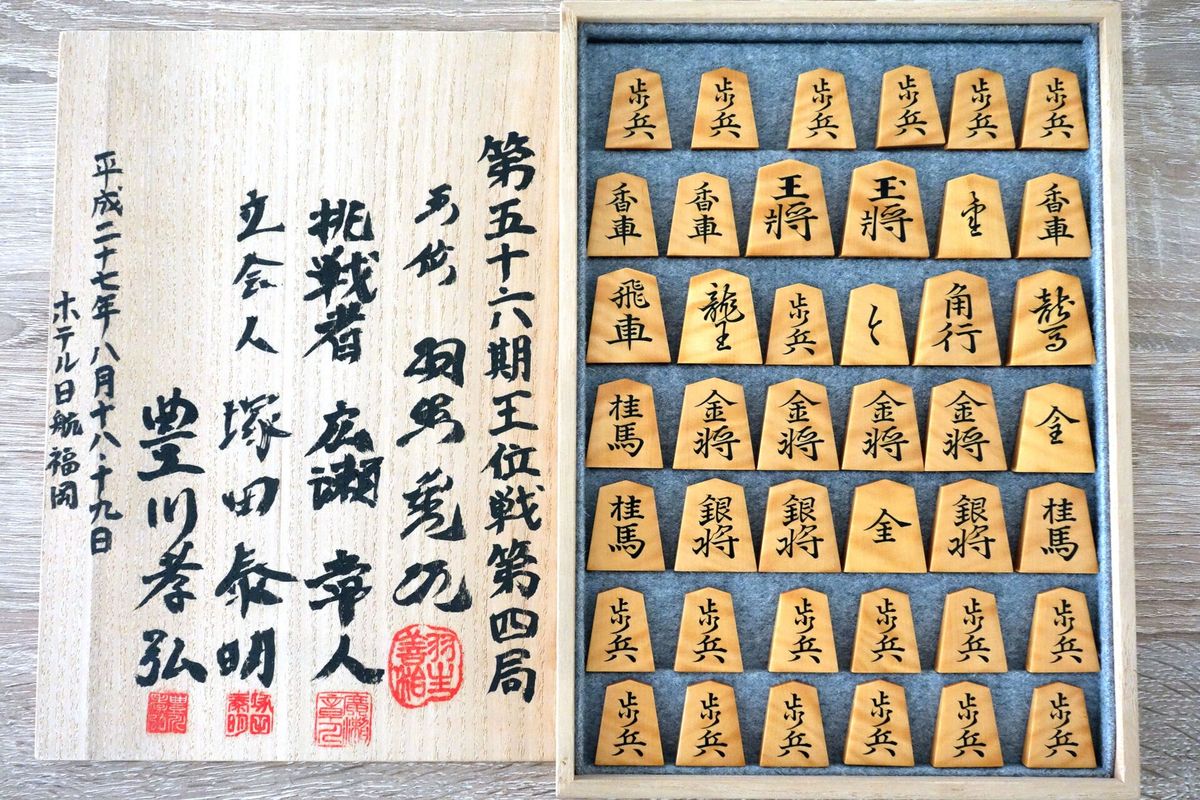
The shogi set used in the fourth game of the 56th Ōi title match, Fukuoka, August 2015.
Habu Yoshiharu against Hirose Akihito. Shogi is Japanese chess, in which captured pieces change sides and come back into play; it is governed separately and is not at the Asian Games.
Fabien Osmont · CC BY-SA 4.0 · Wikimedia Commons
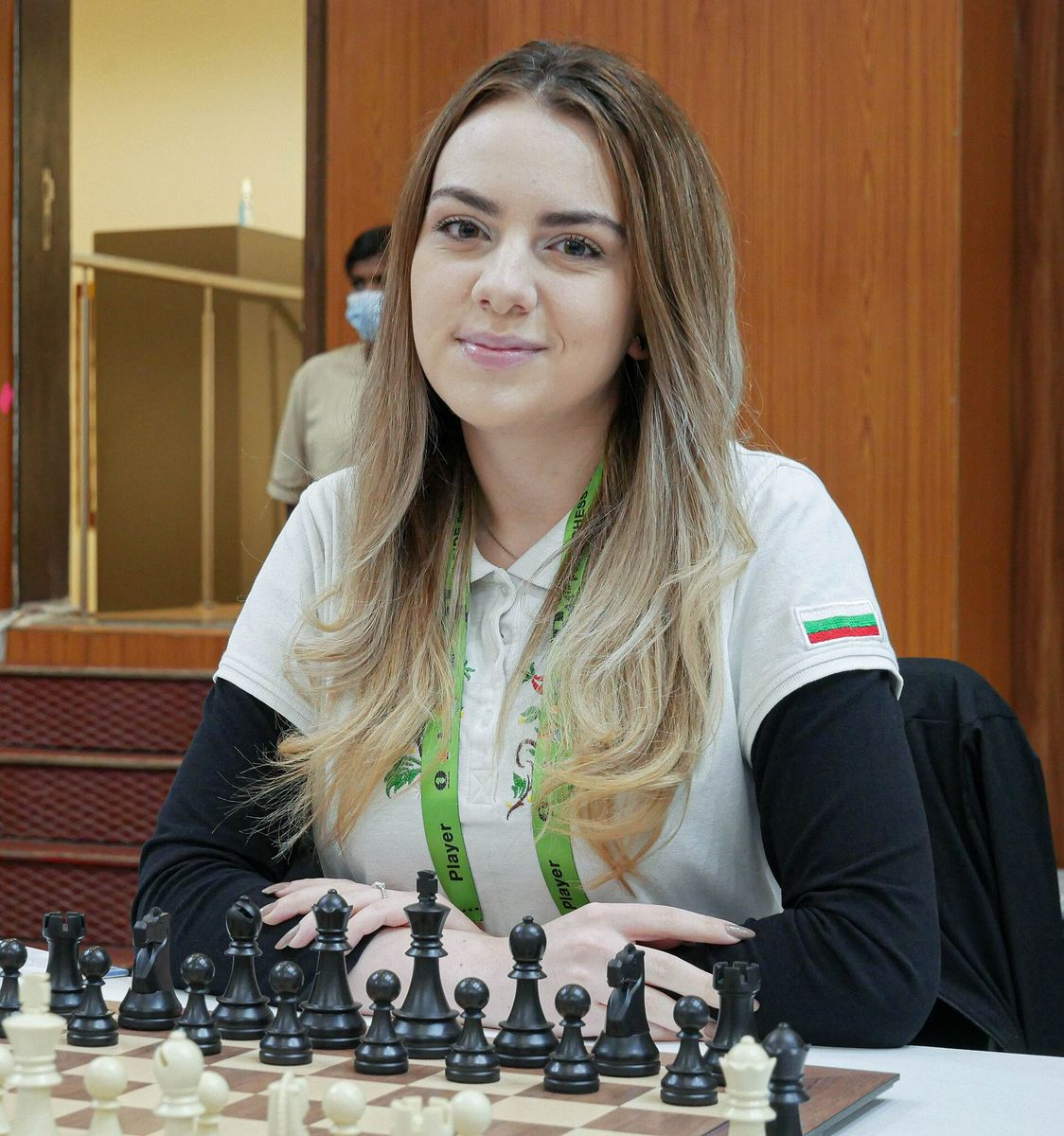
Nurgyul Salimova of Bulgaria at the board, Chess Olympiad, Chennai, 2022.
FIDE's team event, which is not part of the Olympic Games despite the name.
Paul Meyer-Dunker · CC BY-SA 4.0 · Wikimedia Commons
03Officiating
An arbiter decides nothing about the game and almost everything about the conditions.
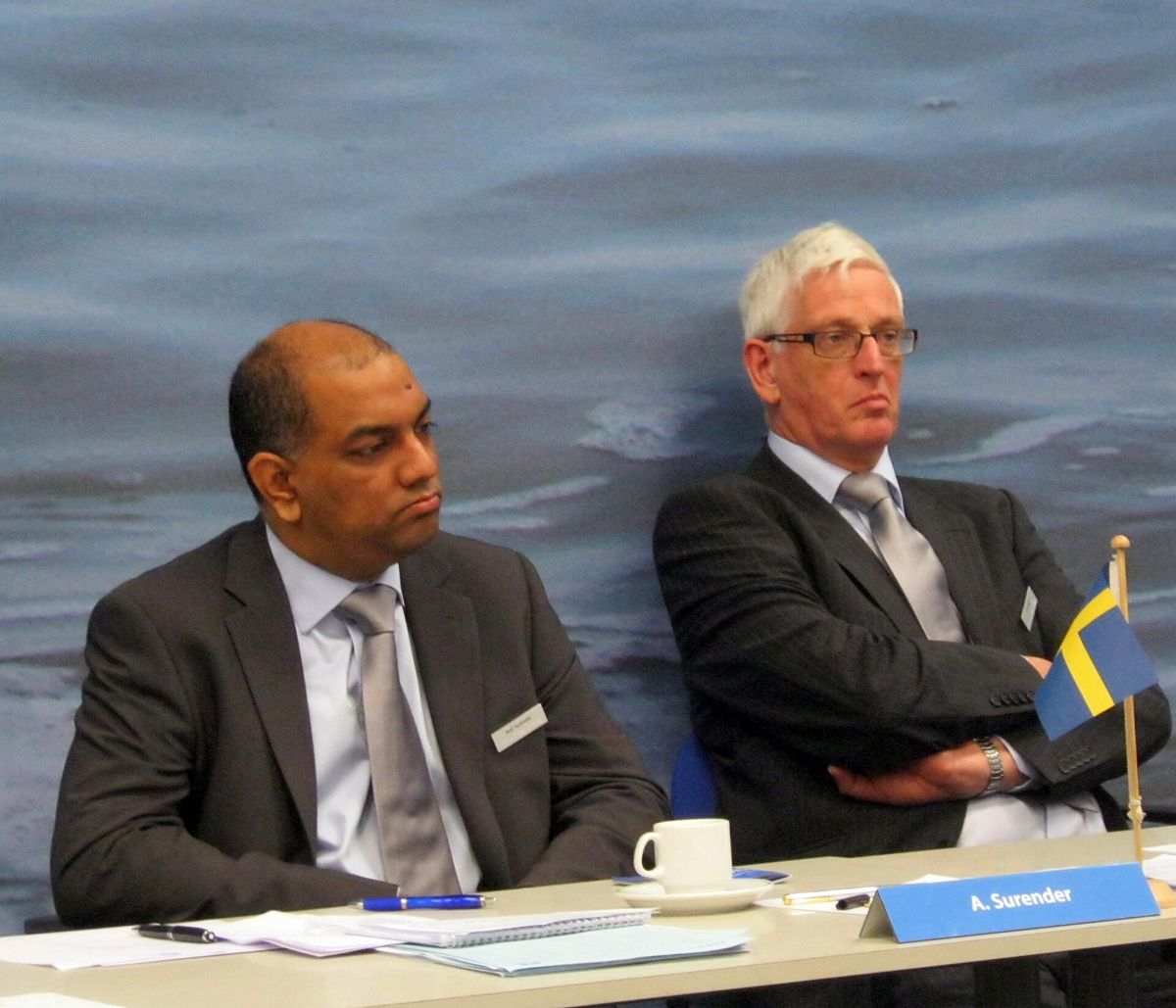
Arbiters Anil Surender and Cor Roet at the Tata Steel tournament, Wijk aan Zee, January 2012.
The officials who decide nothing about the game: the clock, illegal moves, tie-breaks and, increasingly, the anti-cheating regime.
Stefan64 · CC BY-SA 3.0 · Wikimedia Commons
The position on the board is a fact. The rules apply to it mechanically: whether a king is in checkmate, whether a stone group is captured, whether a move is legal are not matters of judgement in the way that every other officiating decision on this site is. There is nothing to see and nothing to mark.
What an arbiter does instead:
Enforces the clock. Exceeding the time control loses the game, and in fast time controls the difference between a flag falling and a move being completed is decided by a human watching two hands and a display.
Handles illegal moves. These carry escalating consequences — added time to the opponent, then loss of the game — and the arbiter must reconstruct what happened from a position that has already moved on.
Runs the anti-cheating regime. Screening on entry, control of the playing area, monitoring absences from the board, and referring suspicious games for statistical analysis. This is now the substantial part of the job at any event that matters.
Applies the tie-breaks. Tournaments are resolved by published systems applied in order, and an arbiter computing a tie-break is doing arithmetic that decides a title.
The comparison worth drawing is with boules and orienteering, elsewhere on this site: three sports where the result is a fact rather than a judgement, and the officials exist almost entirely to police the conditions under which the fact was produced.
04Where it is played
Three games, three maps, and one of them is genuinely global.
Chess is the most widely played competitive game in the world with any claim to being a sport. Its historic strength is Russian and post-Soviet — Russia, Armenia, Ukraine, Georgia, Azerbaijan and Uzbekistan far above their size — with deep structures in the United States, China, India, Iran and across Europe. India is the fastest-rising, on a scale that has changed the sport's demographics, and China has been a leading nation in both the men's and women's game for two decades.

Uzbekistan's team at the 44th Chess Olympiad, Chennai, 2022.
Nodirbek Abdusattorov, Nodirbek Yakubboev, Javokhir Sindarov, Jakhongir Vakhidov and Shamsiddin Vokhidov. They won the open section: a post-Soviet chess nation far above its size.
Youth Affairs Agency of Uzbekistan · CC BY-SA 4.0 · Wikimedia Commons
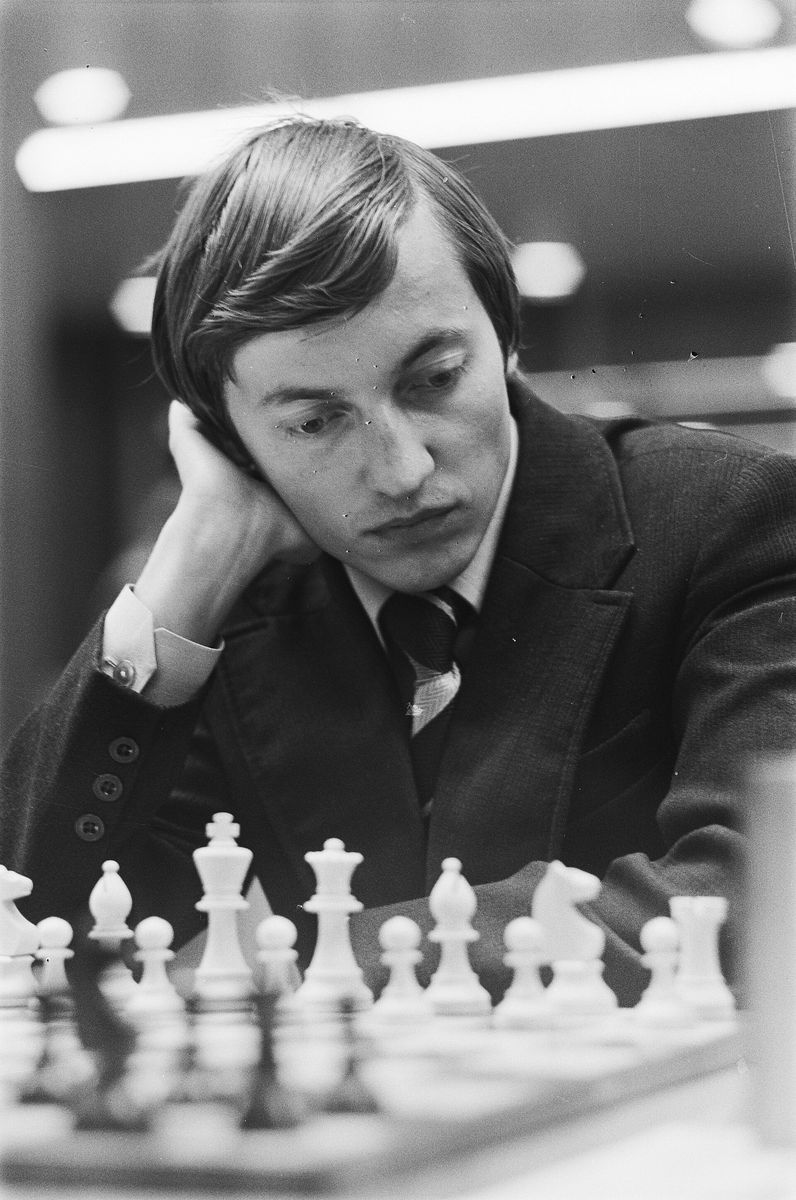
Anatoly Karpov at the Tilburg tournament, September 1977.
World champion at the time, and the product of the Soviet chess system whose strength the post-Soviet map still shows.
Koen Suyk, for Anefo · CC0 · Wikimedia Commons
Go is East Asian, professionally speaking, and almost exclusively so. China, Japan and South Korea have full professional systems that take children full-time from a young age, and the best players in the world are produced by them. Everywhere else the game is amateur.
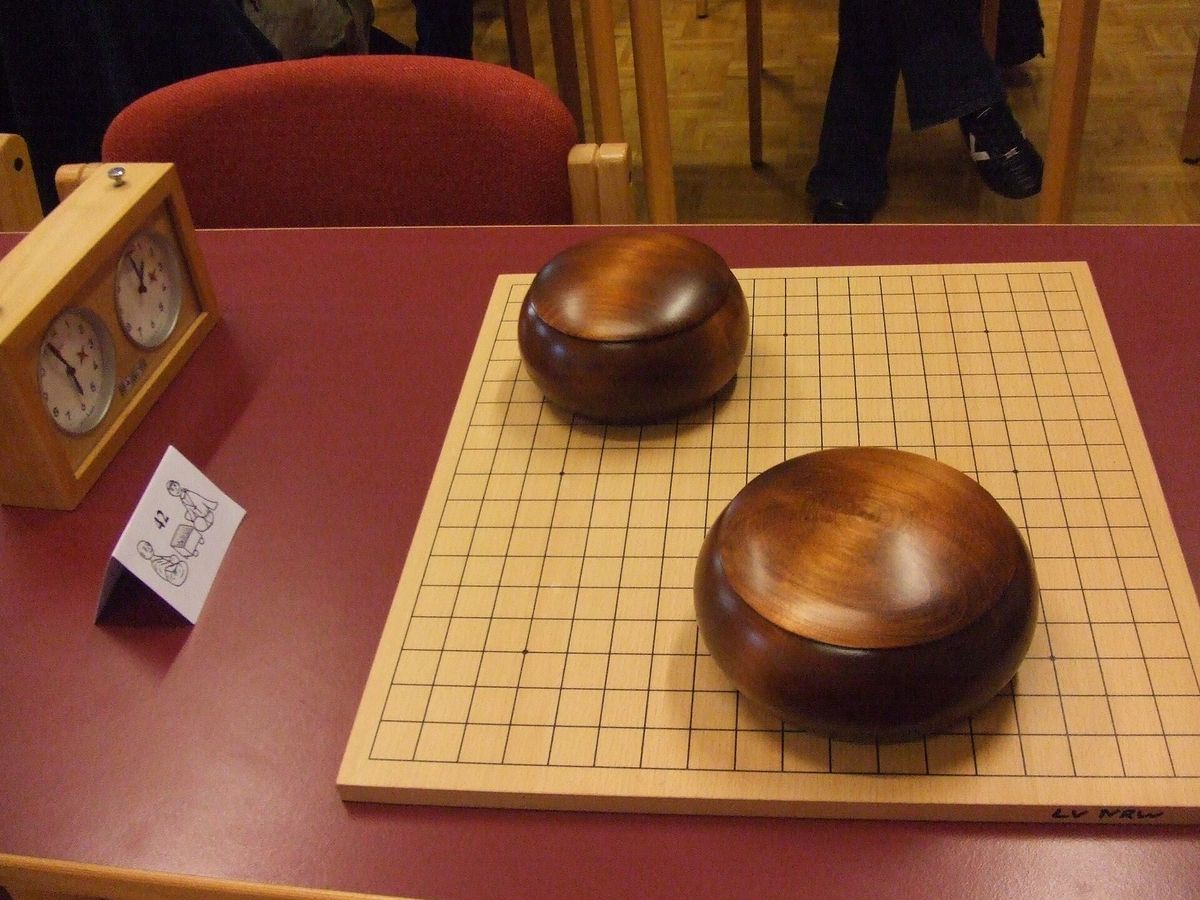
A go tournament in Sankt Augustin, Germany, 2006.
Go outside China, Japan and Korea: a real competitive scene, and an amateur one. The professional systems that produce the best players are in three countries.
Jens Ohlig · CC BY-SA 2.0 · Wikimedia Commons
Xiangqi is Chinese and follows the Chinese diaspora — Vietnam in particular, where it is deeply established, along with Chinese communities across Southeast Asia and beyond.
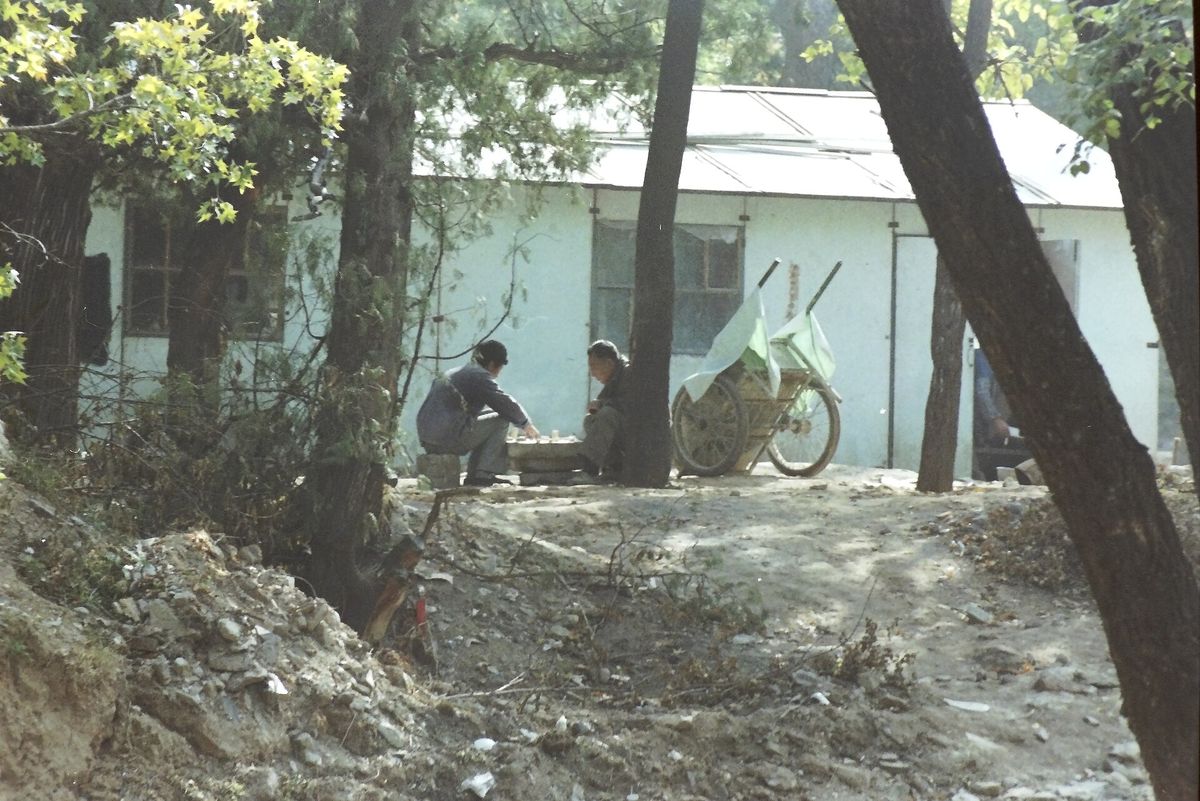
Two workers playing xiangqi in Xiangshan Park, Beijing, October 1984.
Xiangqi as it is mostly played: outdoors, in public, in China.
BabelStone · CC BY-SA 4.0 · Wikimedia Commons
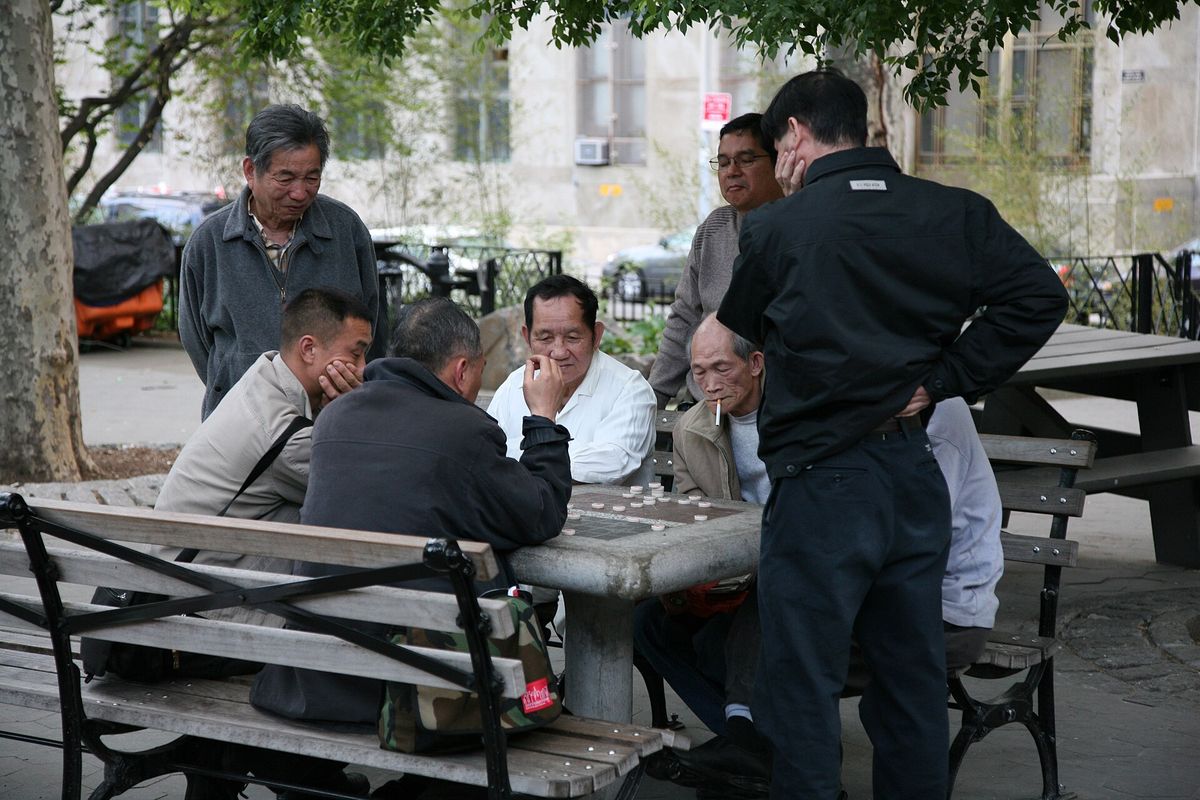
Xiangqi players and onlookers in Columbus Park, Manhattan, 2008.
The same game in New York's Chinatown: xiangqi's map follows the Chinese diaspora.
Daniel Schwen · CC BY-SA 4.0 · Wikimedia Commons
The distinctive geographic fact about chess in the last twenty years is that it stopped depending on geography at all. Online platforms mean a player anywhere with a connection can play rated games against opponents at their exact strength, at any hour, and much of the world's competitive chess is now played by people who have never entered a tournament hall.
That is not true of go or xiangqi to nearly the same extent, and it is not true of any other sport covered on this site.
05Learning curve
The rules of chess take ten minutes and the rules of go take five, and both are among the deepest competitive pursuits humans have. The gap between knowing how the pieces move and being any good is the largest on this site.
Editorial — the site’s reading, not a sourced claim
Barrier to entry
How hard is it to get to a real game?
A board, an opponent, and ten minutes to learn how the pieces move. It is free online.
Nothing here is cheaper to start. A chess set costs almost nothing and the game is free on any phone; go's rules are simpler than chess's — place a stone, surround to capture — and are learnable in five minutes.
There is no physical requirement whatsoever. Age, size, strength, mobility and coordination are all irrelevant, which makes these the most genuinely open competitive activities covered on this site: an eight-year-old and an eighty-year-old can meet on equal terms and one of them will lose fairly.
Online play removed the last barrier — an opponent of exactly your strength, available immediately, at any hour, rated automatically.
Evidence
- Kit to startA boardobserved
- Physical demandNoneestimate
- Rules to learnMinutesobserved
- OpponentAvailable online at your exact ratingrule1924 — the rule this rests on
- Time to a real gameImmediateestimate
Barrier to the top
How hard is it to be good at?
A decade of study to reach a level a phone exceeds, in a field where every position has an objectively correct answer.
The depth is not in dispute and it is very large. Reaching international master level in chess typically takes a decade of concentrated work started in childhood, and grandmaster is a substantial further step. Professional go in East Asia runs through insei systems that take children full-time from a young age.
What makes the ceiling distinctive is what sits above it. In every other sport covered here, the best human is the best there is. In these, a consumer device plays better than the world champion, and has since 1997 in chess and 2016 in go. Elite preparation is now conducted by consulting a machine that would beat you, about a game you are better at than almost everyone alive.
That also changed what mastery consists of. Opening preparation became memorisation of engine-verified lines, and the competitive edge moved towards positions engines evaluate as balanced but humans find hard — a player is no longer trying to find the best move so much as the move that is hardest for the person opposite.
Evidence
- Engines beat the world championChess 1997, go 2016ruleThe only sports here where the best competitor is not human.1997 — the rule this rests on
- Rated on one continuous scaleEvery player in the worldruleA measurement instrument almost nothing else here possesses.1924 — the rule this rests on
- Time controls create separate titlesClassical, rapid, blitzobservedThe same player is a different strength at each.
- Typical peak age24–35estimate
Why the two differ
Very low to very high — the widest gap on this site, and the only one where the top is not the top.
Everything about starting is free, instant and open to anyone with a mind. Everything about excelling takes a decade and a childhood start. And above the very best human sits a machine that would beat them every time, which no other sport on this page has to accommodate.
That fact has been absorbed rather than resisted, and the absorption is the interesting part. Chess did not diminish when engines passed it — participation grew enormously, because the same technology that beat everybody also made the game free, instantly available, and automatically matched to your exact strength. A sport that lost its claim to supremacy gained the largest playing population it has ever had.
The historyhow it got here · sections 6 to 10
06Origin and invention
Three games, three origins, and one Asian Games listing that groups them for administrative convenience.
Chess descends from chaturanga in India, reached Persia as shatranj, moved into the Islamic world and then into Europe, where the modern moves settled in the fifteenth century — the queen and bishop acquired their long-range powers then, which is what made chess fast enough to be the game it is. FIDE was founded in 1924.
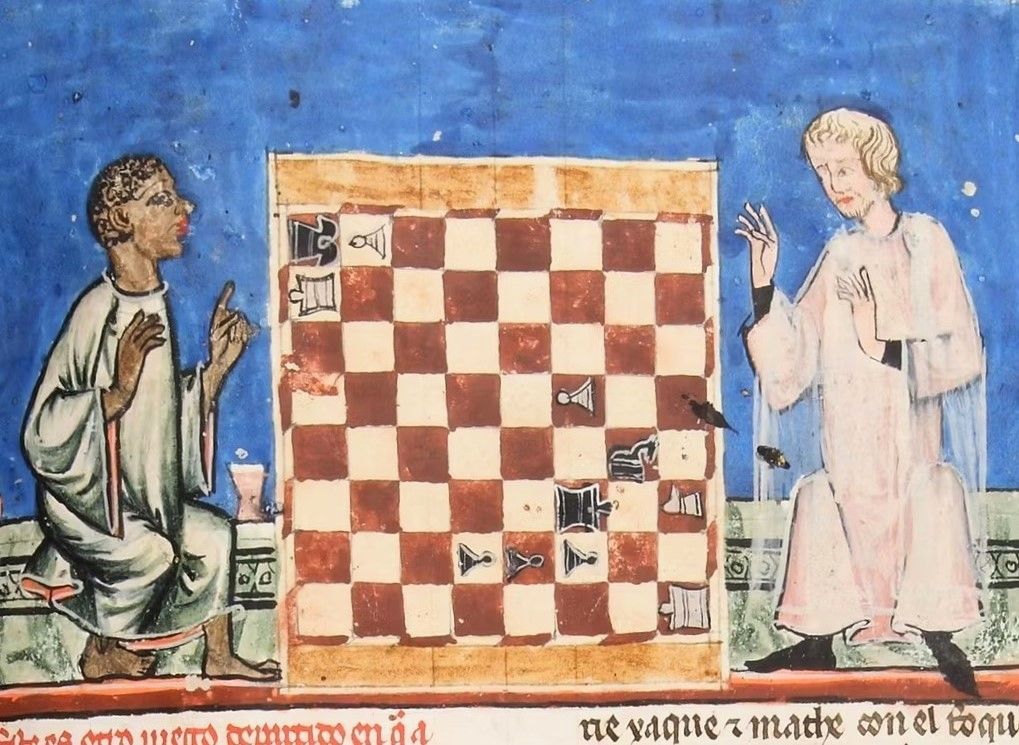
A chess problem from the Libro de los juegos, Seville, 1283.
Made for Alfonso X of Castile, and one of the earliest European books on the game. The chess here is the older game, before the queen and bishop took on their long-range moves in the fifteenth century.
Scriptorium of Alfonso X · Public domain · Wikimedia Commons

A bishop from the Lewis chessmen, twelfth century.
Carved from walrus ivory and found on the Isle of Lewis. The pieces had names and shapes long before the moves reached their modern form.
Jessica Spengler · CC BY 2.0 · Wikimedia Commons
Go — weiqi in Chinese, baduk in Korean — is the oldest of the three and probably the oldest board game still played in its original form, attested in China for well over two thousand years. It went to Korea and Japan, and it was Japan that built the professional structures, the schools and the ranking system that the modern game inherited. The International Go Federation dates from 1982.
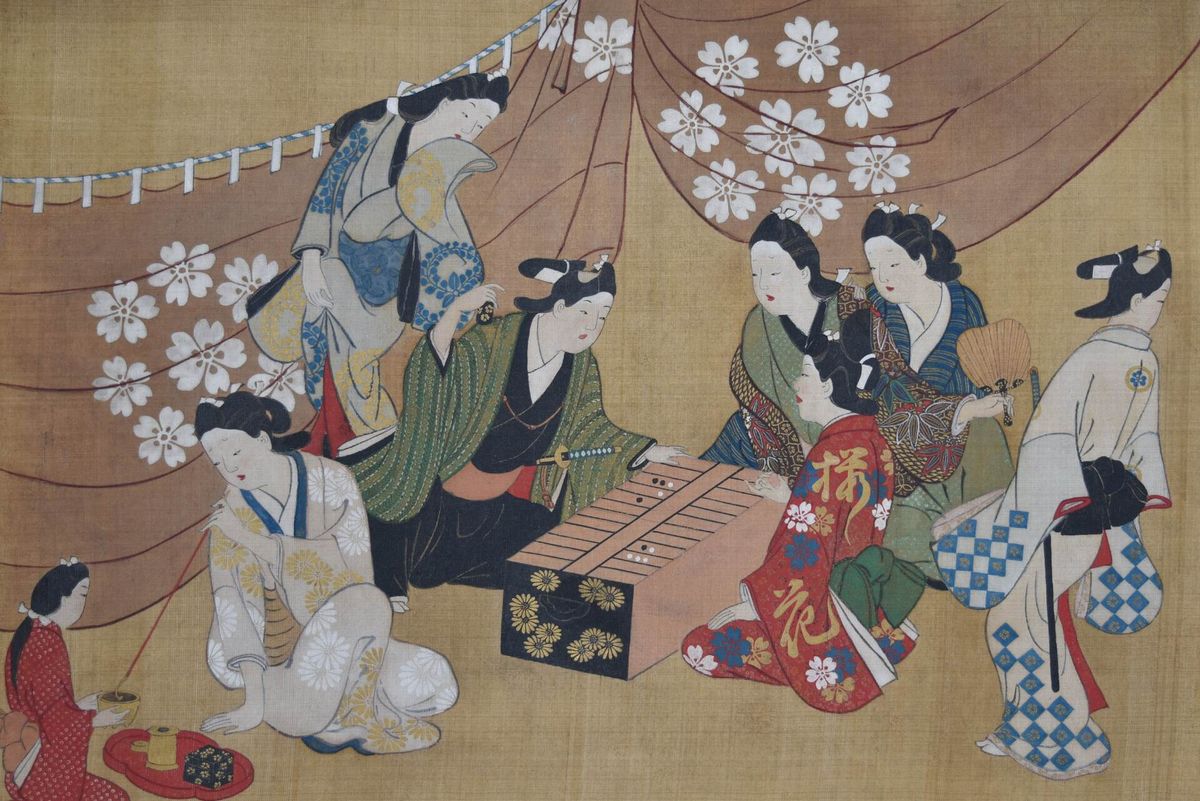
A game of go watched by elegantly dressed women, by Hishikawa Moroshige, about 1700.
Go in Japan, the country that built the professional houses, schools and ranks the modern game inherited.
Hishikawa Moroshige · Public domain · Wikimedia Commons
Xiangqi shares chess's ancestry and diverged in China, acquiring the river across the board, the palace that confines the general, and pieces played on intersections rather than squares. Its international federation dates from 1993.
They have no players in common and no shared governing body. What they have is a shape — two people, a board, complete information, no luck — and it was enough for the Asian Games to contest them together from Guangzhou in 2010, in a host country where go and xiangqi have very deep participation.
The most consequential events in all three games' histories are much more recent than any of this, and neither was a rule change. A machine beat the world chess champion in 1997, and one beat a top go professional in 2016.
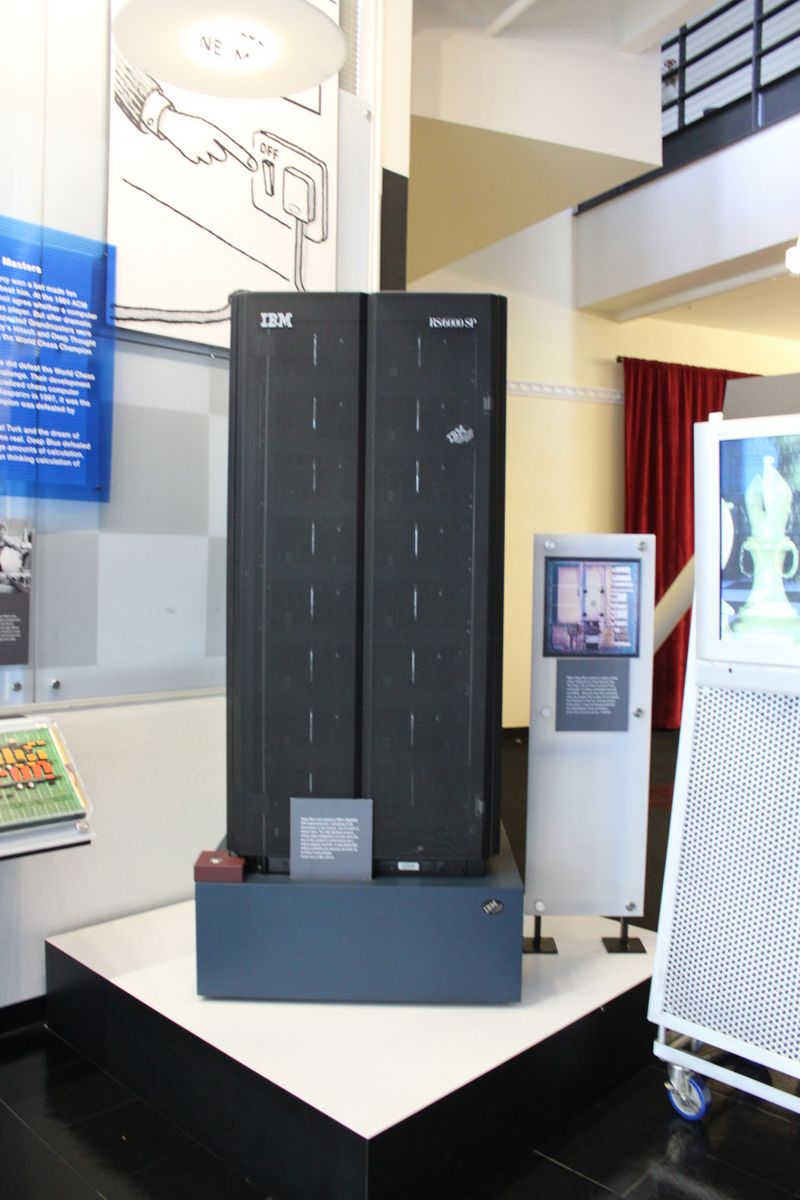
One of the two cabinets of IBM's Deep Blue, at the Computer History Museum, California.
The machine that beat the world chess champion, Garry Kasparov, in a match in May 1997. It is a pair of computer racks, not a player, and nothing in the rules of chess had to change for it to win.
Anton Chiang · CC BY 2.0 · Wikimedia Commons
07Rule timeline
The sport’s own lane, expanded. Every entry carries a cause from the closed vocabulary and a citation, and says so where the citation is incomplete.
- 1924Fairness and eligibilityadopted 1924
An international chess federation was founded, standardising the laws, the conditions of play and eventually the title system and the rating that orders every player in the world on one scale. That rating is worth naming as a rule rather than a statistic. A continuous number, comparable between players who have never met, updated by results, is a measurement instrument almost nothing else on this site possesses — and it is the reason chess can say who the tenth best player in the world is without holding a tournament to find out.
Trigger and citationIncomplete — no confirmed article
Trigger
International chess was played to national conventions, with no body able to run a world championship or settle the laws between countries.
FIDE Laws of Chess and Anti-Cheating Regulations · FIDE Laws of Chess
- 1997Equipment and technologyalso integrityadopted 1997
A computer defeated the reigning world chess champion in a match. Engine strength has been beyond every human player since, by a margin that has only widened. Nothing in the laws changed on the day, and everything about the sport did. Opening preparation became a matter of engine analysis. Post-game analysis became objective rather than argued. And the sport acquired an integrity problem that no physical sport can have: a player receiving engine moves is not advantaged, they are unbeatable.
Comparability break · Measurement scale changed
Engine preparation lifted the whole rated population, and the meaning of a rating relative to the field moved with it. See the series
Trigger and citationIncomplete — no confirmed article
Trigger
Deep Blue beat Garry Kasparov over six games in New York in 1997, the first such result against a reigning world champion under match conditions.
The result was disputed at the time by the defeated player on grounds of match conditions and transparency. It is recorded here for its consequences rather than as a settled verdict on that particular match — the consequences arrived regardless, and quickly.
FIDE Laws of Chess and Anti-Cheating Regulations · FIDE anti-cheating regulations, background
- 2010Participation and accessadopted 2010
Chess, go and xiangqi were contested together at the Asian Games in Guangzhou in 2010, under a single board games listing — three games with three federations, three cultures of origin and no players in common, grouped for programme purposes. It is the same construction this site records for boules and for billiards: unrelated codes presented as one sport because the multi-sport system recognises one federation per entry.
Trigger and citationIncomplete — no confirmed article
Trigger
The Games were held in China, where xiangqi and go have very deep participation, and the host proposed a listing that could hold all three.
Asian Games sport programme listings · Olympic Council of Asia programme listings
- 2014Integrityadopted 2014
A formal anti-cheating regime was adopted: prohibition of electronic devices in the playing area, screening on entry, delayed broadcast of moves so that a transmitted position cannot be analysed live, restrictions on leaving the board, and statistical analysis comparing a player's moves against engine choices. The last of those is unlike anything else on this site. It is a detection method that works by measuring how *good* a player's moves were — because beyond a certain level of agreement with an engine, the explanation is not talent.
Trigger and citationIncomplete — no confirmed article
Trigger
Engine strength on a concealable device made undetectable assistance possible at any level, and several cases at open tournaments made the absence of a regime untenable.
FIDE Laws of Chess and Anti-Cheating Regulations · FIDE Anti-Cheating Regulations
- 2016Equipment and technologyadopted 2016
A program defeated a top professional go player in a five-game match, nineteen years after the equivalent result in chess. Go had been the standing example of a game whose search space was too large for the methods that solved chess, and the nineteen-year gap is the measure of how much harder it was. When it fell, it fell the same way: engine analysis reshaped opening theory within a few years, and moves that generations of professionals had considered mistakes were reassessed.
Trigger and citationIncomplete — no confirmed article
Trigger
AlphaGo beat Lee Sedol 4–1 in Seoul in March 2016, using methods that did not depend on the exhaustive search chess engines had relied on.
International Go Federation competition rules · International Go Federation, competition background
08Equipment evolution
A board, pieces and a clock — and then a category of regulation about objects the player is forbidden to carry.
The board and pieces have been effectively stable for centuries. Chess standardised on the Staunton pattern in the nineteenth century so that pieces would be unambiguous across countries, which is a genuine equipment standardisation and the last one the game needed.
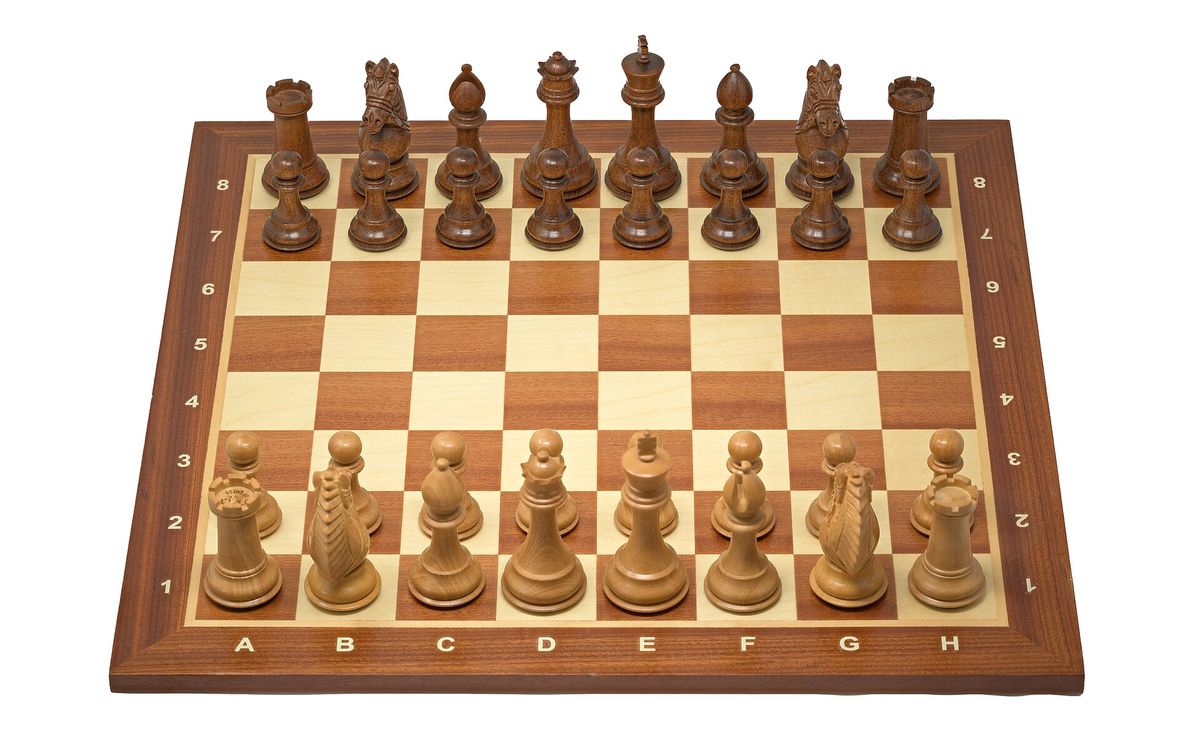
A Staunton-pattern chess set, 2024.
The pattern standardised in the nineteenth century so that a knight, a bishop and a king would be unmistakable in any country: the last change the board and pieces needed.
Wilfredor · CC0 · Wikimedia Commons
The clock is the only technology the sport added, and it changed the game more than it looks. Before it, a player could think indefinitely and games were abandoned or decided by exhaustion. With it, time became a resource to be spent, and different time controls turned into different disciplines with separate world championships and separate ratings. Increment systems — seconds added per move — exist so that a won position cannot be lost purely to the clock.
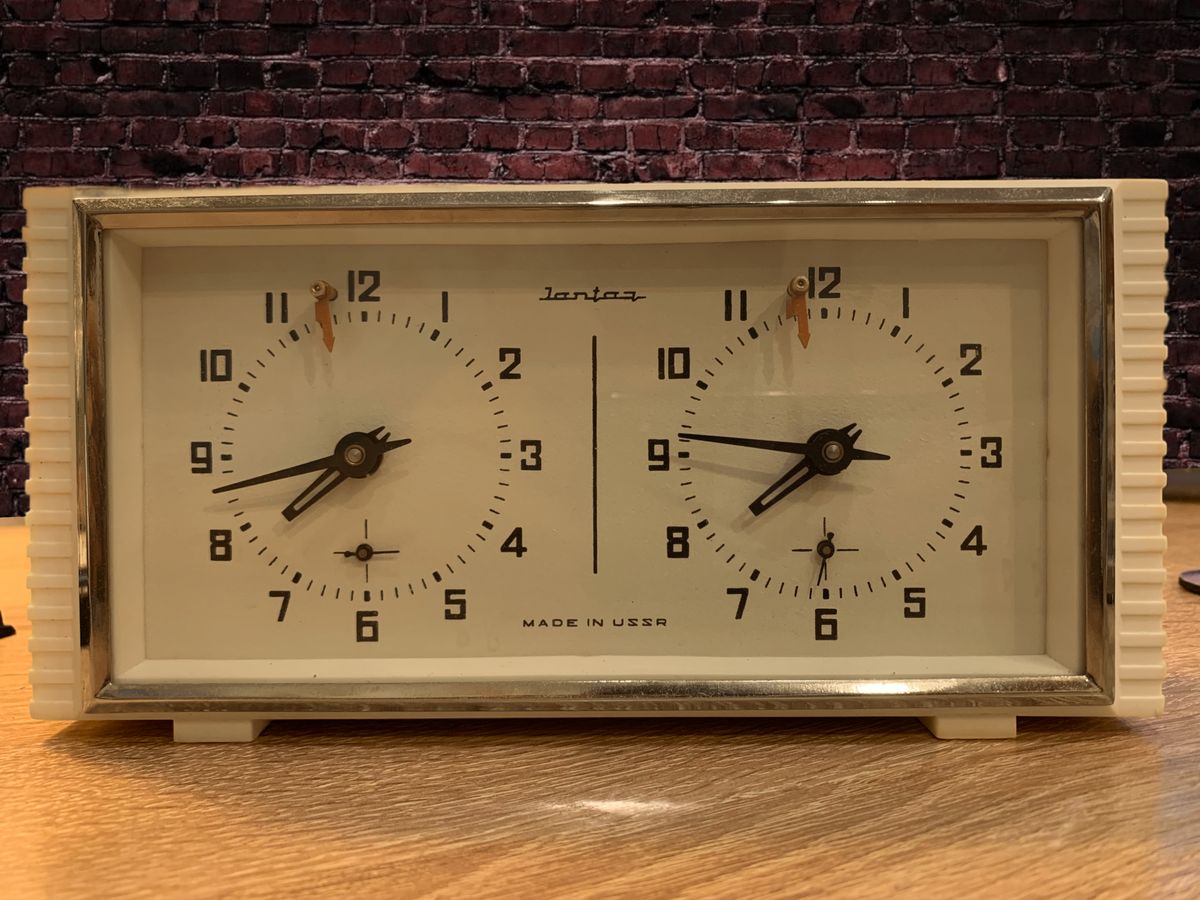
A Soviet mechanical chess clock, the Jantar.
Two faces, two buttons, and a small flag on each face that falls when that player's time runs out. Time became a resource to spend, and different time controls became different disciplines.
Alexandr Kapustnikov · CC BY-SA 4.0 · Wikimedia Commons
Board, stones, bowls and an electronic clock, halfway through an amateur go game.
The same short list as chess: a board, playing pieces and a clock. Everything else in the equipment rules is about what may not be brought to the table.
HermanHiddema · CC BY-SA 3.0 · Wikimedia Commons
Adjournment was equipment-adjacent and is gone. Unfinished games were once sealed and resumed the following day, and overnight analysis was part of the craft. Engines made that analysis decisive rather than skilful, and the practice was abolished.
What is banned is now the larger part of the equipment rules. No electronic device may be carried into the playing area, players are screened on entry, and broadcasts of moves are delayed so a transmitted position cannot be analysed live and relayed back.
That is the equipment story of these games in one sentence: nothing the player uses has changed in a century, and everything they are forbidden to use has been invented in the last thirty years.
09Governing body politics
Three federations, one Asian Games listing, and an Olympic recognition that has led nowhere for thirty years.
FIDE is the oldest and largest, founded in 1924, and it holds IOC recognition. Chess has never been on an Olympic programme and there is no serious prospect of it. The federation runs a world championship cycle, a title system and the rating, and it has had a turbulent political history — contested presidencies, a long schism in the 1990s and 2000s during which two rival world championship lineages ran in parallel, and sustained questions about its governance and its funding sources.
The International Go Federation and the World Xiangqi Federation are smaller and quieter, and both sit beneath national professional systems that matter more than they do. Professional go in China, Japan and South Korea has its own titles, its own money and its own ranking, and an international federation does not govern any of that.
The Asian Games listing from 2010 grouped all three, in the same way boules and billiards group unrelated codes: the multi-sport system recognises one entry per sport, so unrelated games are presented together in order to be present at all.
The genuine political question these games face is not about programmes. It is that their competitive life has moved onto commercial online platforms with more rated players than every federation combined, and those platforms run their own events, their own ratings and their own anti-cheating regimes. The governing bodies are no longer where the game happens.
10Controversies that forced rule changes
Cheating with an engine. The defining modern controversy, and it is unlike any other integrity problem on this site. In a physical sport, assistance improves a competitor. Here it replaces them — a player relaying engine moves is not advantaged but unbeatable, and the difference is why the anti-cheating regime is so intrusive: screening on entry, prohibition of devices, delayed broadcast, restrictions on leaving the board, and statistical comparison of a player's moves against engine choices.
That last method is remarkable in itself. It detects cheating by measuring how good the moves were, on the reasoning that beyond a certain agreement with an engine there is no human explanation.
The end of adjournment. Games were once sealed overnight and resumed. Engines made the overnight analysis decisive, and the practice was abolished. A rule removed entirely because a machine made it meaningless.
Draw arrangement. Two players can agree a result that suits both and harms the competition. Some events prohibit draw offers before a set move number, and prearranged results are an integrity offence — a rule regulating collusion between opponents rather than misconduct by one.
Rating inflation. Whether a rating today means what it meant decades ago is argued seriously, and the formula and its parameters have been adjusted more than once. It is a comparability problem in the sport's own measuring instrument.
Who is world champion. Chess ran two rival championship lineages through a long schism, and the sport's title was genuinely ambiguous for over a decade.
Where it standsthe record, and what is still open · sections 11 to 12
11Series
No series published
Rating progression
Chess has the best measurement instrument on this site and it still cannot be charted honestly across a century. The rating is a continuous number, updated by results, calibrated so that a difference predicts an expected score. It orders every rated player in the world without their having to meet. Almost nothing else covered here has an equivalent — most sports can rank the people who competed and no more. The problem is that a rating is relative, and the population it is relative to has changed enormously. Ratings are computed against other rated players, so the scale drifts as the pool grows, as the entry threshold moves, and as improvements in training raise the whole distribution. Whether a rating of 2700 in 1980 describes the same strength as 2700 today is a genuine and unresolved argument inside the sport, and rating inflation has been studied and adjusted for more than once. Engines complicate it further, in both directions. They raised the standard of preparation for everybody, which lifts the pool. And they provide the only absolute yardstick anyone has — comparing historical games against engine evaluation — which is a different measurement from rating and does not reconcile with it. So the number is excellent within its era and drifting between them, and this site does not draw a line through it.
1997Measurement scale changedEngine preparation lifted the whole rated population, and the meaning of a rating relative to the field moved with it.
12What is contested now
Recorded as unsettled.
Cheating. The sport's permanent problem now that a phone plays better than any human. Detection is statistical, intrusive and imperfect, accusations are extremely damaging whether or not they are upheld, and the highest-profile disputes have ended in litigation rather than in a sporting finding.
Whether the online game is the game. Most rated play now happens on commercial platforms that run their own events, ratings and anti-cheating systems. The federations govern a shrinking share of the activity and have no mechanism for changing that.
Rating inflation. The sport's own measuring instrument drifts between eras and the adjustments are argued about. It is the closest thing chess has to a comparability break and the sport has not settled it.
Whether these are sports. Chess and bridge both hold IOC recognition and neither has a programme place, and the question of whether an activity with no physical component qualifies is answered differently by different institutions — including, for bridge, by a court.
Classical against fast. Rapid and blitz are more watchable, more online and more commercially viable; classical is where the depth is. Which represents the sport is a live argument, and the answer the audience gives is not the one tradition prefers.
Go's professional systems. The best go players are produced by national professional structures in three countries, and international federation events are secondary to those titles. Whether that is sustainable as the game spreads is not the federations' decision to make.