Boules sports
Pétanque's founding rule was written in 1907 to let a man with rheumatism keep playing, and it created the sport.
- Official
- Boules sports
- Game category
- Target
- Adjudication
- Measured
- Standing
- Never Olympic
- rule changes
- 4
- comparability break
- 1
- Olympic editions
- 0
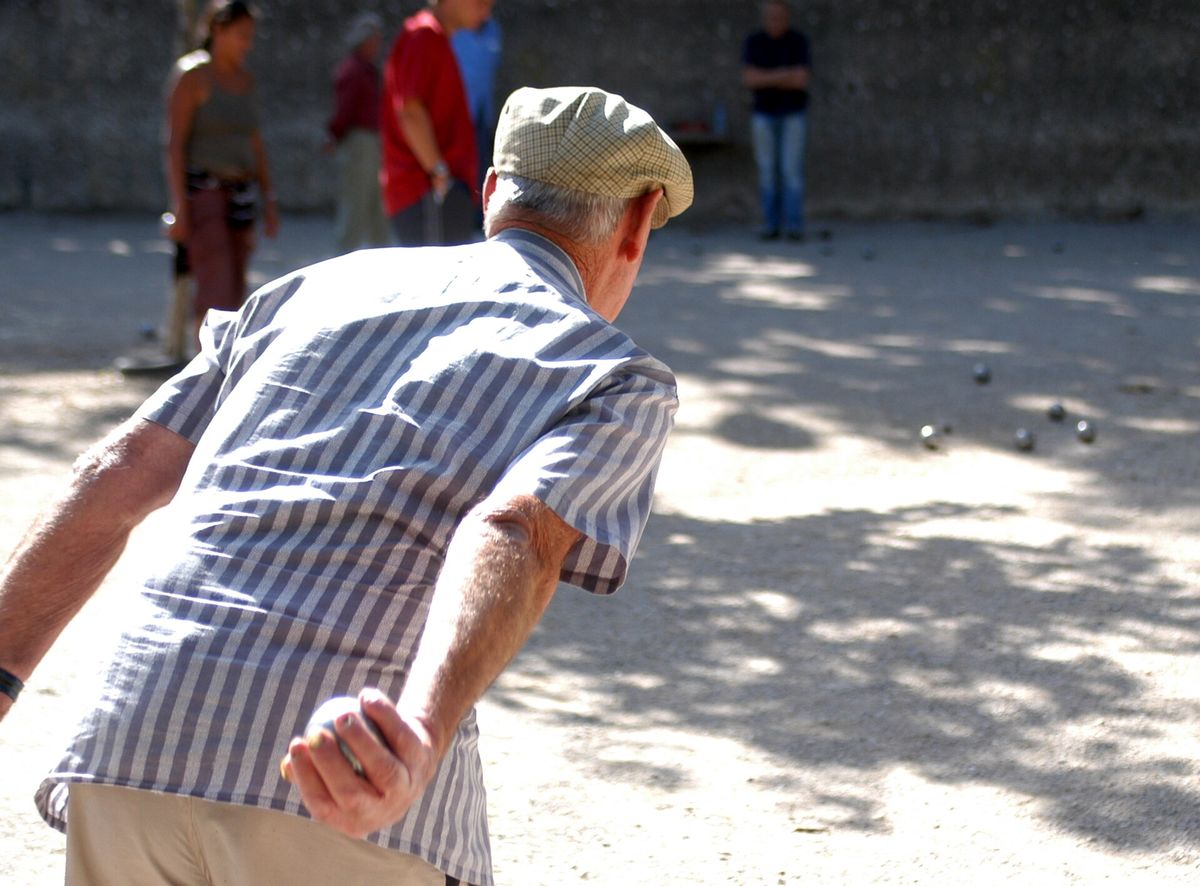
Shooting at pétanque, Gréoux-les-Bains, 2006 · ADT 04 · CC BY 2.0
- Governing body
- Confédération Mondiale des Sports de Boules
- Founded
- A family of European throwing games of great antiquity; pétanque was devised at La Ciotat in 1907, its federation followed in 1958, and the umbrella body uniting the boules codes was formed in 1985.
- Olympic status
- Not on the Olympic programme
- Also contested at
- World Games
Throw a metal ball closer to a small wooden jack than your opponent can. It is a target sport whose target moves — the jack is knocked about by play — and in which the most valued shot destroys the opponent's position rather than improving your own. Pétanque, its largest code, exists because a rule was relaxed in 1907 for a player who could no longer run, which makes it the only sport here founded on an accessibility accommodation.
The gamewhat it is now · sections 1 to 5
01How it is played
Pétanque, the largest of the boules codes: throw metal boules closer to a small wooden jack than the opposition, with both feet planted inside a circle on the ground. First to thirteen points.
These figures were entered from the edition named above but have not been checked against its text line by line. Treat them as this site’s reading of the laws, not as a substitute for them.
The object of the game
At the end of each round, the side with the boule nearest the jack scores — one point for every boule it has closer than the opponent's best. First to thirteen wins.
That scoring shape is what makes the sport tactical. You are not trying to get close; you are trying to have *more* boules closer than their best one, which means a single well-placed opponent boule can cancel five of yours.
- Game to
- 13 points
- Points per end
- One per boule closer than the opponent's best
The terrain
Any rough open ground — gravel, packed earth, grit. Competition pitches are marked at about 15 metres by 4, but the surface is deliberately not standardised: stones, ruts and slopes are part of the game, and reading the ground is a skill.
That is unusual among the target sports covered here. Archery and shooting standardise everything between athlete and target; boules leaves the intervening ground as it found it.
- Pitch
- About 15 × 4 m
- Surface
- Rough ground, deliberately unstandardised
- Jack thrown
- 6–10 m from the circle
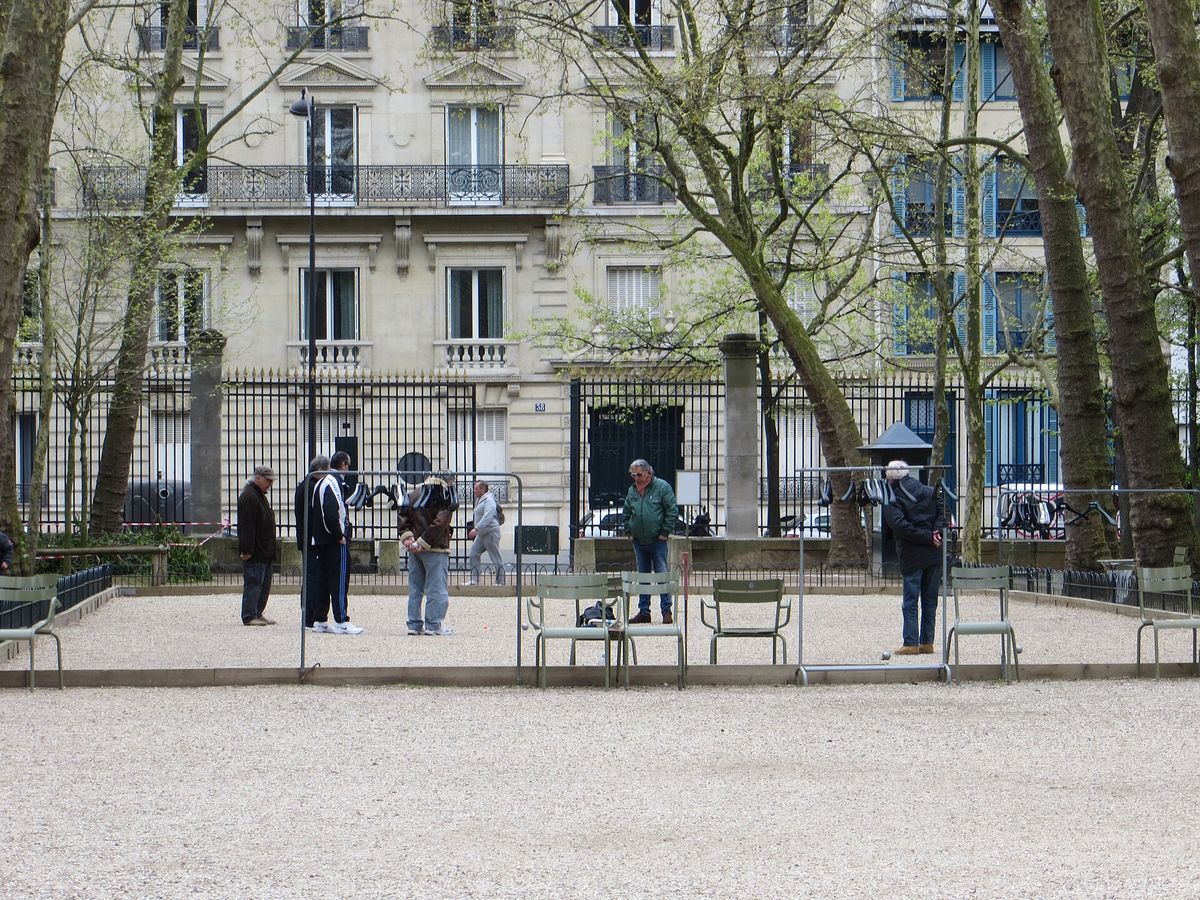
The pétanque terrain in the Jardin du Luxembourg, Paris, 2016.
Gravel over earth, with whatever stones and ruts it has. The terrain is not standardised, and reading it is part of the game.
Jason Riedy · CC BY 2.0 · Wikimedia Commons
Equipment
Metal boules of 650 to 800 grams and 70.5 to 80 millimetres across, in sets of three per player, chosen for weight and hardness to suit a player's style. The jack — the *cochonnet* — is a small wooden ball.
A circle to throw from, which may be drawn on the ground or placed as a plastic ring, and nothing else. There is no footwear requirement, no protective equipment and no implement.
- Boule
- 650–800 g, 70.5–80 mm
- Boules per player
- 3
- Jack
- A small wooden ball
- Circle
- 35–50 cm across
Players and officials
Singles, doubles or triples, with the number of boules per player varying so that each side throws the same total. Within a team, players specialise: a *pointeur* places boules close, a *tireur* knocks the opposition's away, and a *milieu* does both.
- Formats
- Singles, doubles, triples
- Roles
- Pointeur, tireur, milieu
Time
No clock in the traditional game — a match lasts as long as it takes to reach thirteen. Time limits have been introduced in some televised and championship formats, which is the sport's concession to scheduling.
- Match length
- Untimed, in the traditional game
Scoring
Measured, literally. When an end is close, officials and players use callipers and tape to determine which boule is nearer, and the sport's characteristic image is two people crouched over a measuring device.
It is the only sport covered here where the competitors routinely perform the measurement themselves, in the middle of the game, and agree the result.
The end
The side that scored throws the jack for the next end, from a circle drawn where the jack previously lay. Play alternates by disadvantage: the side not holding the point throws until it takes the lead.
That rule — throw again if you are losing the end — is what produces the sport's rhythm and means a side can throw several boules in succession.
Infringements
Lifting a foot, or letting either foot leave the circle, before the boule lands. Throwing out of turn. Moving a boule or the jack while an end is live. Interfering with the ground — smoothing a rut, filling a hole, or removing a stone in the target area.
That last one matters more than it sounds. Because the terrain is unstandardised, the temptation to improve it is constant, and the prohibition is what keeps the ground a shared condition rather than a contested one.
Deciding the winner
Thirteen points. Because points accrue in blocks — a good end can be worth six — a match can turn entirely on a single shot that displaces the opponent's nearest boule.
Everything above is current law. Everything below is how Boules sports got here.
02Disciplines and events
No Olympic events — pétanque bid for Paris 2024 and was not selected. The boules codes are contested at the World Games under an umbrella confederation that unites federations which do not otherwise play each other.
- Disciplines
- 1
- Olympic medal events
- 0
- Men’s and women’s counted separately.
- Contested elsewhere
- 9
- world games, world championship, federation only.
- Listed for context
- 2
- Not counted as this sport.
Pétanque8
Feet planted in a circle, thrown to a jack 6 to 10 metres away. The largest code.
- Men's singles, doubles and triplesWorld GamesWorld championship
- Women's singles, doubles and triplesWorld GamesWorld championship
- Precision shootingWorld GamesWorld championshipA timed shooting discipline against set targets, contested on its own.
The other boules codes3
Each has its own international federation, its own rules and its own championships. They share an umbrella body and are not played across.
- Boule lyonnaiseWorld GamesWorld championshipA long lane and a run-up; the game pétanque was created by simplifying.
- RaffaWorld championshipThe Italian code, played on a prepared lane.
- VoloWorld championshipItalian and French, with a running throw.
Games in the same family3
- BocceFederation onlyThe Italian social game, and a Special Olympics sport.
- Lawn bowlsFederation onlyGoverned separately, played on grass with biased bowls; a Commonwealth Games sport.
- Jeu provençalFederation onlyThe parent code, with its three-step run-up, still played in southern France.
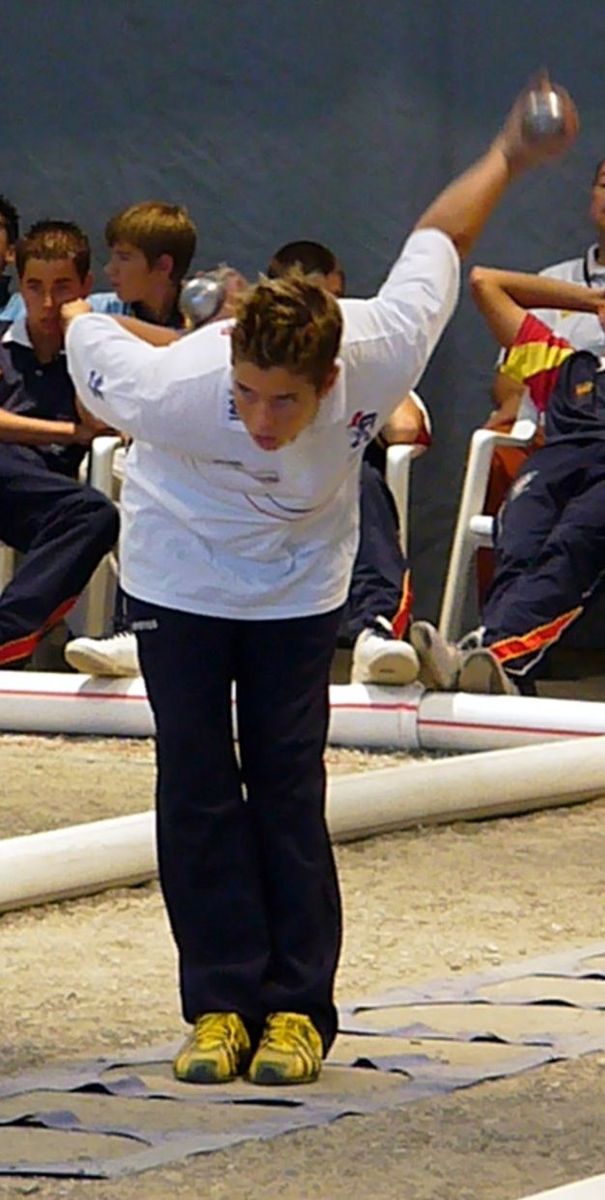
Dylan Rocher in the precision shooting competition, European Junior Championships, Martigny, 2006.
Precision shooting, contested on its own: set targets, a clock, and no opponent's position to read.
Buahaha · CC BY-SA 3.0 · Wikimedia Commons
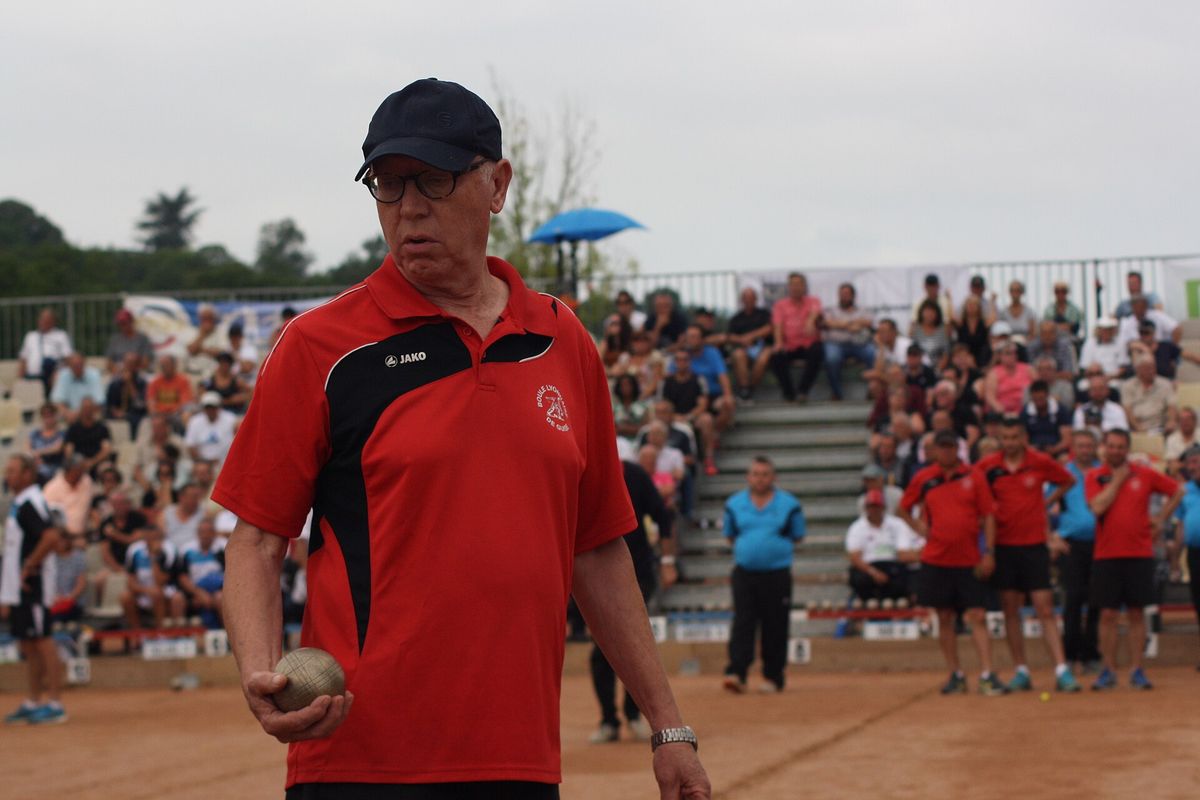
The French boule lyonnaise championship at L'Arbresle, 2016.
A different code: a long lane and a run-up, the game pétanque was created by simplifying.
Renhour48 · CC0 · Wikimedia Commons
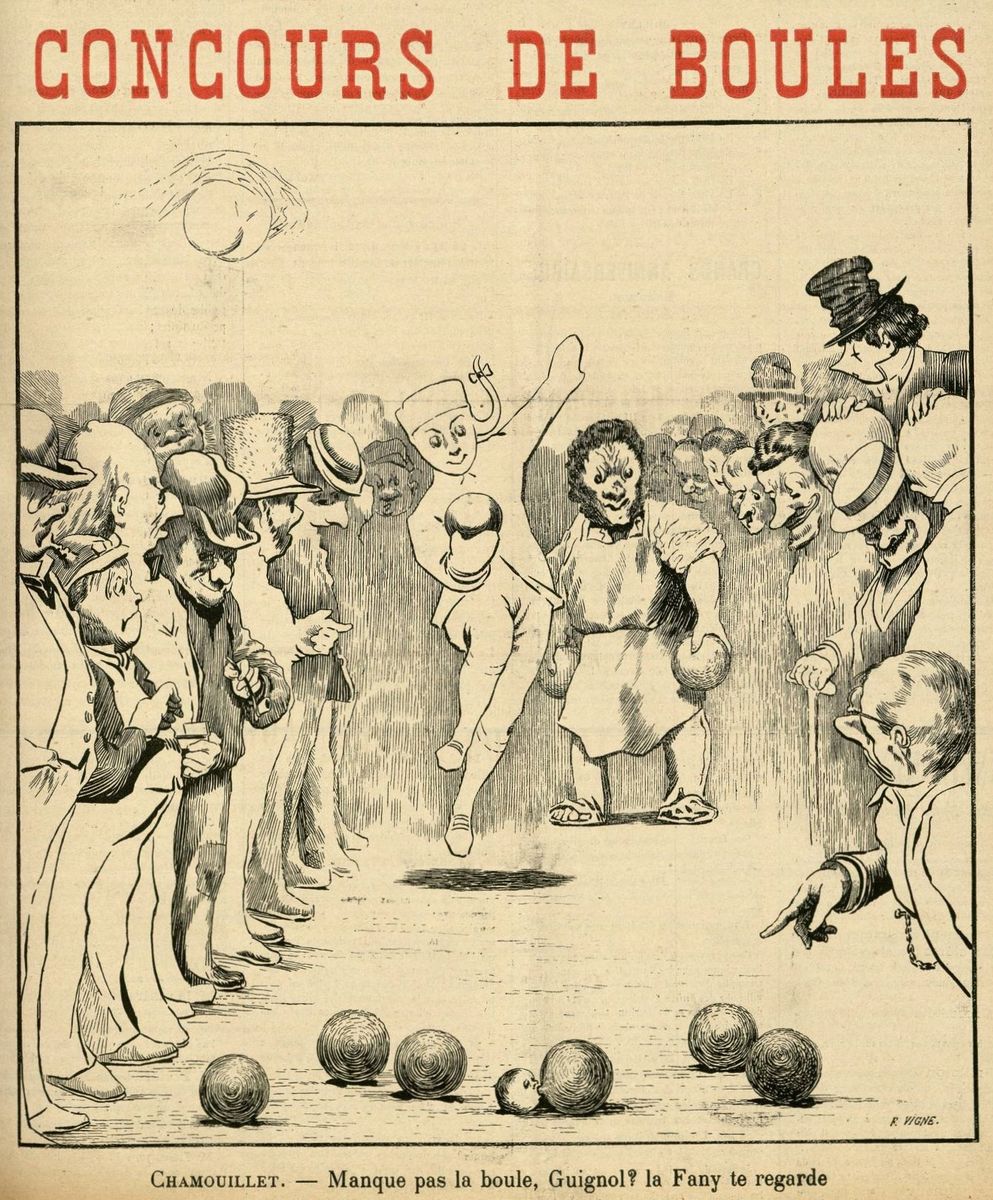
Guignol at a boules contest, from the Lyon républicain, July 1895.
A newspaper cartoon of the Lyon game twelve years before pétanque: the codes had their own cultures well before the confederation grouped them.
Bibliothèque municipale de Lyon (Numelyo) · CC0 · Wikimedia Commons
03Officiating
Boules is largely self-officiated, and the reason is that its central question is answerable.
Which boule is nearer? That is a fact, and the players determine it themselves with callipers and a tape, in the middle of the game, by agreement. In recreational play there is no official at all, and in competition the umpire is called only when the players cannot agree or when the measurement is consequential enough that neither wants to make it.
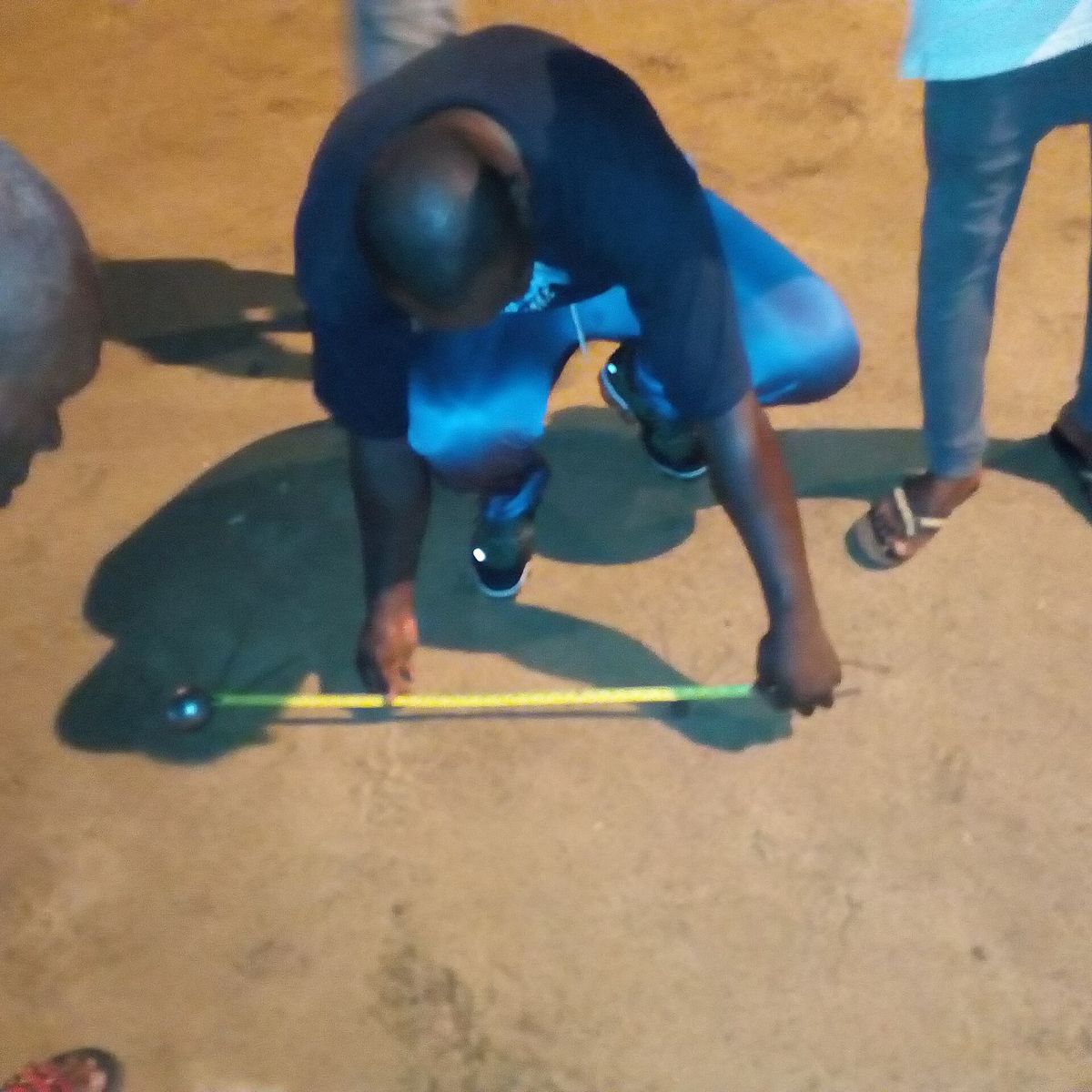
A player measuring the distance from a boule to the jack, Cotonou, Benin.
The players settle the sport's central question themselves, with a tape on the ground; an umpire is called only when they cannot agree.
Domingo Daniella Rhode · CC BY-SA 4.0 · Wikimedia Commons
This puts boules in a small group on this site with ultimate, which removed officials entirely, and orienteering, which replaced them with an electronic record. The difference is that boules' self-officiation covers a measurable fact rather than a foul, which is why it works without a Spirit of the Game clause to hold it up.
What officials do judge is behaviour:
The circle. Did a foot lift or leave before the boule landed? Watched closely, and the most common technical offence.
The ground. Was a stone removed, a rut smoothed, a hole filled? Prohibited in the target area, and tempting precisely because the terrain is unstandardised.
Displacement. If a boule or the jack is moved by something other than play — a spectator, an animal, a player's foot — the rules prescribe how the position is restored or the end voided, and this requires an official's ruling about what would have happened.
There is no instrumentation beyond the callipers, and none is needed. The sport's hardest question is the one it can answer with a ruler.
04Where it is played
France, overwhelmingly, and then a map drawn almost exactly by French colonial history.
France has participation numbers in the millions and a licensed competitive base larger than most sports on this site have players. Pétanque is played in town squares, on club terrains and at every level from the entirely social to the professional, and it is bound up with the culture of southern France in particular.
Shooting at pétanque, Gréoux-les-Bains, 2006.
A tireur, knocking an opponent's boule away rather than placing his own: the shot that destroys a position instead of improving one.
ADT 04 · CC BY 2.0 · Wikimedia Commons
The rest of the competitive map follows the French language. Madagascar is one of the strongest pétanque nations in the world and has been for decades — a genuine power, in a country with very little sporting infrastructure of any kind, because the game arrived under colonial rule and stayed. Thailand is the major exception to the pattern and now a leading nation, having invested seriously in the sport since the 1980s. Cambodia, Laos, Vietnam, Tunisia, Morocco, Senegal and Benin all play it widely.
In Europe, Spain, Italy, Belgium and Switzerland compete, and the other boules codes have their own geographies: boule lyonnaise in France and Italy, raffa and volo in Italy, Croatia and Slovenia.
The pattern this site keeps finding holds here too. Fistball follows German emigration, sepak takraw follows childhood exposure, finswimming follows diving federations — and boules follows French administration, with Thailand as the one country that acquired it on purpose.
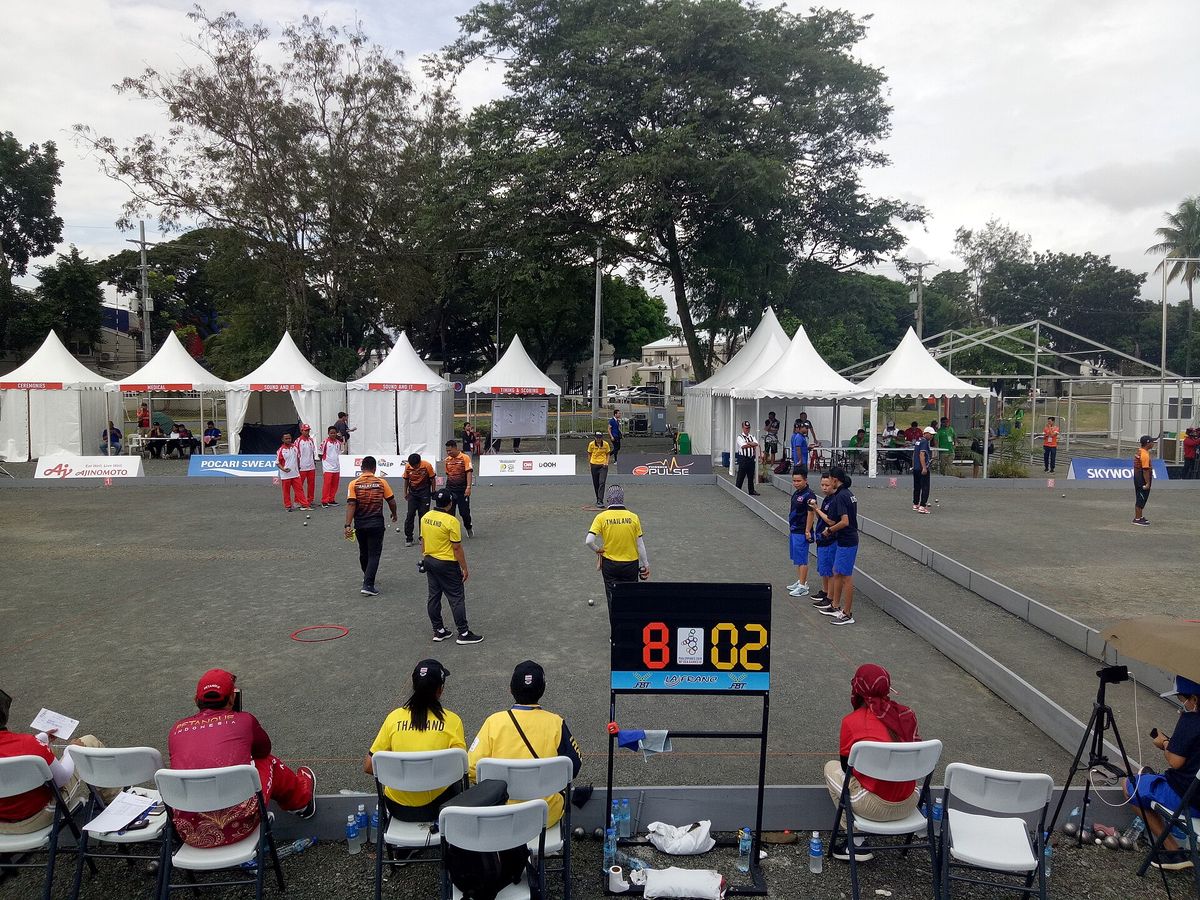
Thailand against Laos in the women's triples at the 2019 Southeast Asian Games.
Thailand is the country that took up the game on purpose and became a leading nation; Laos is one that inherited it from French rule.
Roel Balingit · CC BY-SA 4.0 · Wikimedia Commons
05Learning curve
The lowest entry barrier of any sport on this site that uses equipment, by design rather than by accident — and a genuinely high ceiling that is almost entirely invisible to the people playing it in a park.
Editorial — the site’s reading, not a sourced claim
Barrier to entry
How hard is it to get to a real game?
Three metal balls and any patch of rough ground. You can play at eighty.
Pétanque was created in 1907 by removing the physical demand from an existing game so that a man with rheumatism could keep playing, and that decision still governs the sport. Both feet stay on the ground inside a small circle. There is no run-up, no stride, no impact and no requirement to move quickly or at all.
The consequence is that pétanque is playable across a wider range of age and physical capacity than anything else covered here. Children and people in their eighties compete in the same club sessions, and it is played in public squares by people who would not describe themselves as doing sport.
A set of boules is the only purchase, the ground is free, and the rules can be explained in two minutes.
Evidence
- Kit to startThree boulesobserved
- FacilityAny rough open groundobserved
- Physical demandStandingruleThe founding rule removed the run-up deliberately.1907 — the rule this rests on
- Age rangeEffectively unlimitedestimate
- Time to a real gameMinutesestimate
Barrier to the top
How hard is it to be good at?
Hitting a 75 mm ball at ten metres, on purpose, and leaving your own in its place.
The gap between social pétanque and the competitive game is almost entirely hidden, because the two look identical from a distance.
Shooting is the visible half. A *tireur* is asked to strike an opponent's boule — a target 75 millimetres across, at up to ten metres, on rough ground — cleanly out of position. Elite shooters do this at a very high success rate, on demand, under pressure. The *carreau*, in which the opponent's boule is driven out and yours stops in its place, is the sport's perfect shot.
Pointing is harder to see and just as hard to do. A *pointeur* reads a surface nobody has standardised — its stones, ruts, slope and hardness — and chooses a trajectory and a landing point accordingly. On unfamiliar ground this is close to what an orienteer does with terrain.
The tactical layer is the scoring shape. Because a side scores one point per boule closer than the opponent's best, positions can be worth six points or nothing, and the decision of when to point, when to shoot and when to concede an end is a genuine game.
Evidence
- Shooting targetA 75 mm boule at up to 10 mobservedElite shooters hit it on demand at a high rate.
- Unstandardised terrainRead, not controlledobservedUnlike every other target sport covered here.
- Scoring shapeOne point per boule closer than the opponent's bestruleAn end can be worth six points or nothing.1958 — the rule this rests on
- Typical peak age30–50estimateLater than almost anything else here.
Why the two differ
Very low to high, and it is the site's most deliberate gap: the bottom of it was lowered on purpose, in 1907, for one person.
Almost every accessible sport on this site is accessible by accident of what it happens to require. Pétanque is accessible because somebody removed the hard physical part so a friend could keep playing, and the removal turned out to make a better game — one that a whole country now plays in its town squares.
The ceiling was not lowered with it. Hitting a small metal ball at ten metres on rough ground is difficult in a way that is invisible until you try it, and the peak age of thirty to fifty says something no other sport here says: this is a game where experience compounds for longer than physical decline costs you.
The historyhow it got here · sections 6 to 10
06Origin and invention
Pétanque was invented in 1907 so that one man could keep playing, and this site knows of no other sport with that origin.
Throwing games are ancient and were played across the Mediterranean for centuries. By the early twentieth century the dominant French form was jeu provençal, in which a player took a three-step run-up before releasing and threw to a jack fifteen or twenty metres away. It was a game for people who could run.
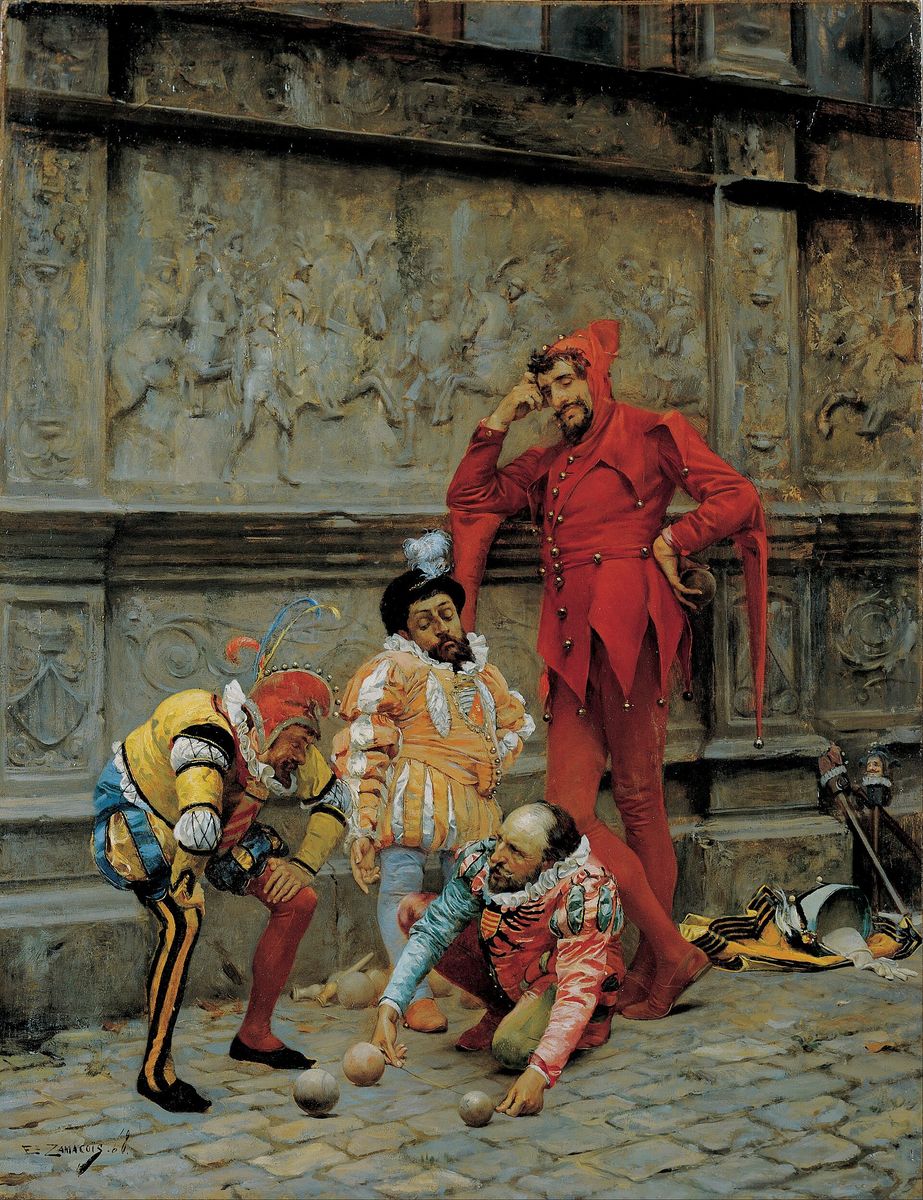
Eduardo Zamacois, Jesters Playing Cochonnet, 1868.
A painting, and a costume piece, not a record of how anyone played. It is evidence that the throw-to-a-jack game was old and familiar enough to paint as a scene from the past.
Eduardo Zamacois y Zabala · Public domain · Wikimedia Commons
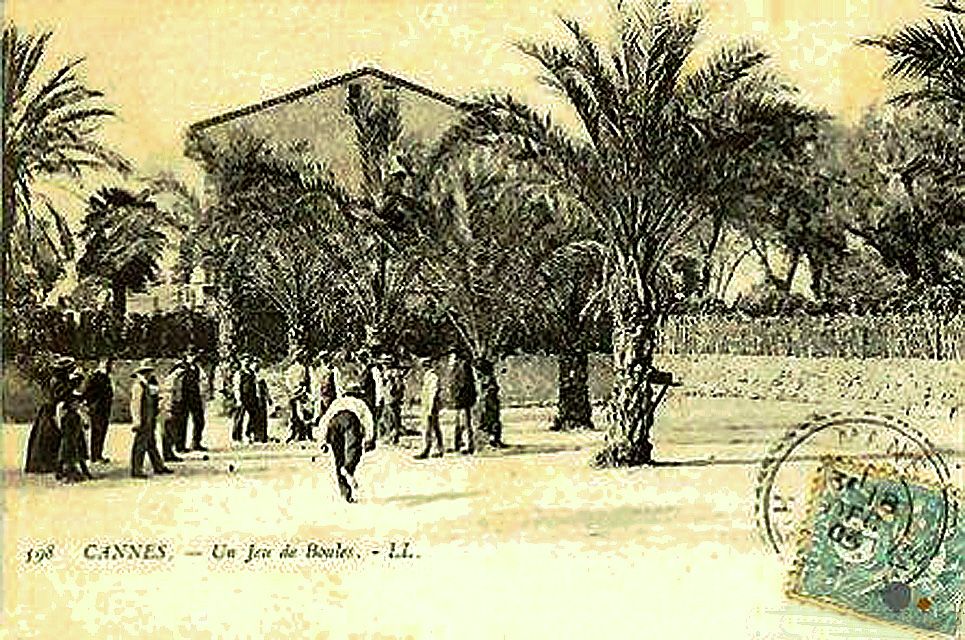
A game of boules at Cannes, on a postcard of 1905.
Jeu provençal, two years before pétanque by the sport's own account: a long pitch across open ground, played by men standing well back from the target.
LL (postcard publisher) · Public domain · Wikimedia Commons
The accepted account, told by the sport about itself, is that at La Ciotat near Marseille in 1907 the rules were adapted for Jules Lenoir, whose rheumatism had made the run-up impossible. Both feet would stay together on the ground inside a small circle, and the jack would be thrown much closer. The Provençal for feet planted — pieds tanqués — gave the game its name.
It is folk history rather than a documented committee decision, and it is what the sport says about itself.
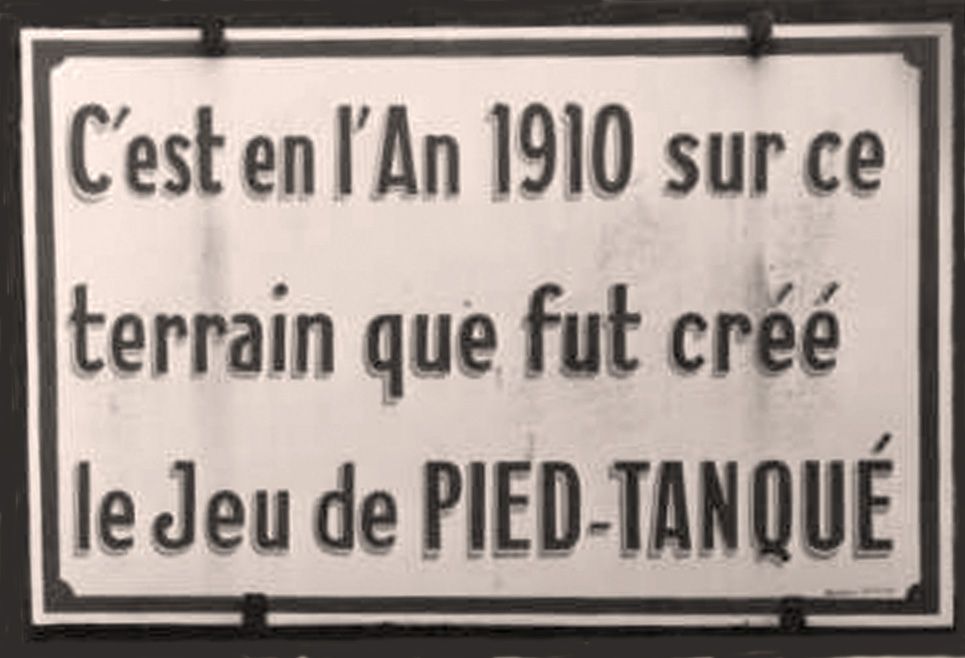
The plaque at the boulodrome in La Ciotat: "C'est en l'an 1910 sur ce terrain que fut créé le jeu de pied-tanqué."
The sport's own memorial dates the invention to 1910, not the 1907 usually given, and spells the game "pied-tanqué". It is exactly the kind of folk history the section says this is.
Photographer unknown · Public domain · Wikimedia Commons
What is not in doubt is the consequence. Removing the run-up removed the physical barrier, and pétanque became a mass participation game across France in a way its parent code never did — played in town squares, by anyone, at any age, on whatever ground was there. Jeu provençal survives; pétanque is what France plays.
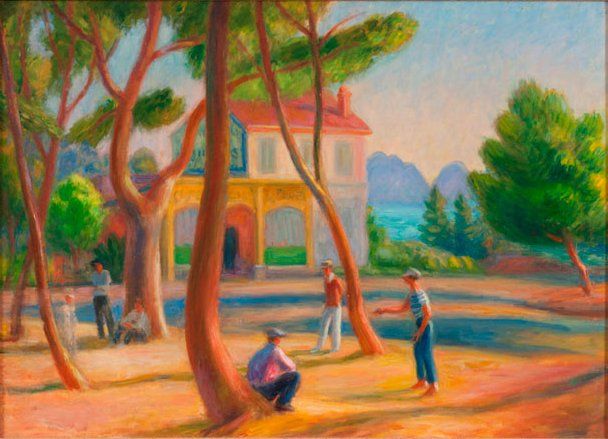
William Glackens, Bowlers, La Ciotat, 1930.
The game in the town where it began, about two decades on, painted by an American visitor: a handful of men on open ground under the trees.
William James Glackens · Public domain · Wikimedia Commons
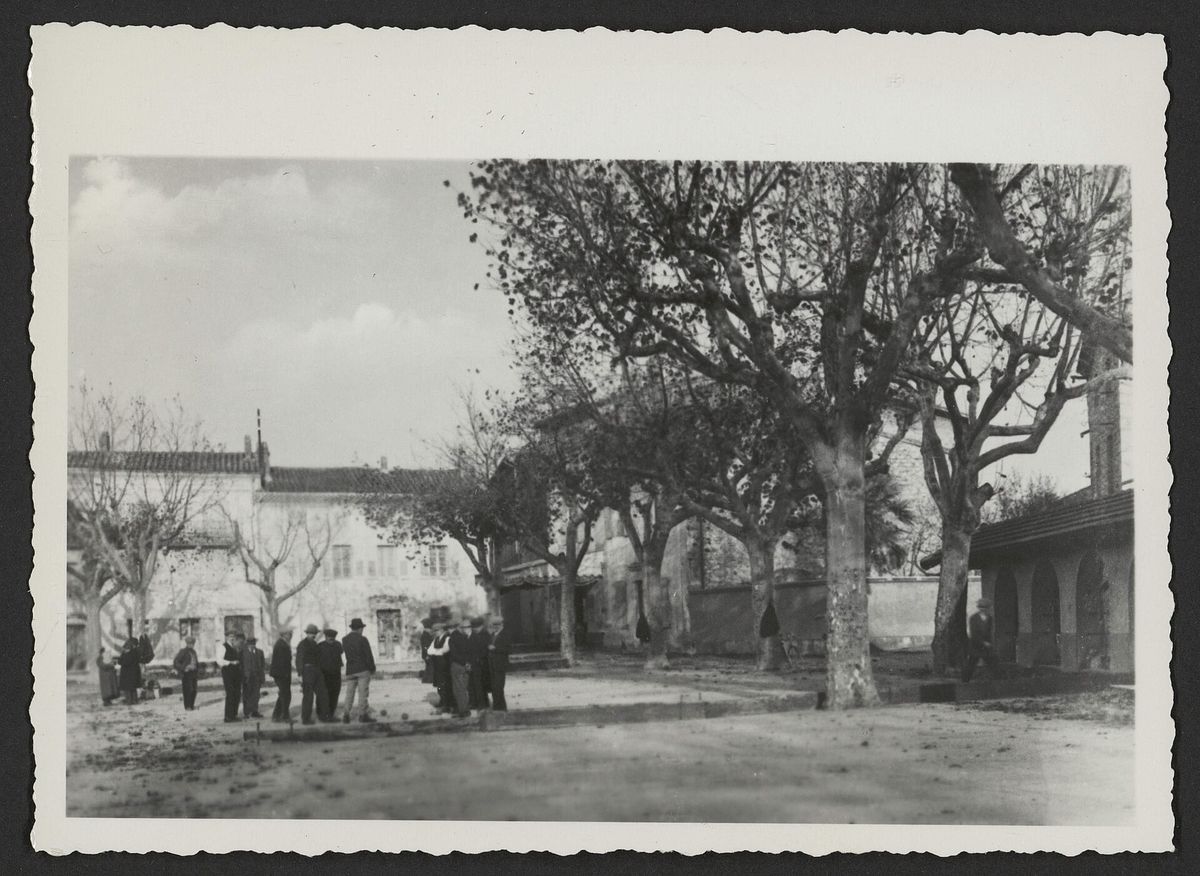
Boules players on a village square in the Drôme.
A square, a few trees, and whoever turned up. The whole requirement is ground, which is why removing the run-up made this a game for anybody.
Médiathèques Valence Romans Agglomération · CC BY 2.0 · Wikimedia Commons
The international federation followed in 1958, and an umbrella confederation above the several boules codes in 1985. Pétanque sought a place at the Paris 2024 Games and was not selected.
07Rule timeline
The sport’s own lane, expanded. Every entry carries a cause from the closed vocabulary and a citation, and says so where the citation is incomplete.
- 1907Participation and accessadopted 1907
Pétanque was created by removing the run-up. In the dominant Provençal game a player took three steps before releasing, and the throw was long. The new rules required both feet to stay together inside a small circle, on the ground, and shortened the distance to the jack. The name records it: *pieds tanqués*, feet planted. Every other consequence follows. A stationary throw from a fixed circle is playable by anyone who can stand, on any rough ground, at any age — which is why pétanque became a mass participation game across France and its parent code did not.
Trigger and citationIncomplete — no confirmed article
Trigger
The accepted account is that the rules were adapted at La Ciotat for Jules Lenoir, a player whose rheumatism had made the run-up impossible, so that he could keep competing with his friends.
The story is well established in the sport's own literature and is a folk history rather than a documented committee decision. It is recorded here as what the sport says about itself.
FIPJP Rules of the Game of Pétanque · FIPJP Rules of the Game, the throwing circle
- 1958Fairness and eligibilityadopted 1958
An international federation was formed for pétanque and jeu provençal, fixing the competition rules internationally: games to thirteen points, boule dimensions and weight, the circle, and the distance the jack must be thrown.
Trigger and citationIncomplete — no confirmed article
Trigger
The game had spread well beyond Provence, including into French colonial territories, with local conventions on distances and boules.
FIPJP Rules of the Game of Pétanque · FIPJP statutes
- 1985Commercialalso participation and accessadopted 1985
An umbrella confederation was formed above the separate boules codes — pétanque, boule lyonnaise and the Italian raffa and volo games — each of which keeps its own federation, its own rules and its own championships. The umbrella exists for institutional reasons rather than sporting ones: a single body could hold recognition and pursue multi-sport programmes on behalf of codes that do not otherwise play each other.
Comparability break · Scoped to one competition
The umbrella unites codes that are not played across. Results belong to a code, never to boules as a whole. See the series
Trigger and citationIncomplete — no confirmed article
Trigger
Several national and international boules federations were separately too small to be recognised, and the codes are close enough in family to be presented together and far enough apart to be unplayable across.
FIPJP Rules of the Game of Pétanque · CMSB statutes
- 2019CommercialAdopted, then rescinded before it was ever enforcedadopted 2019
Pétanque sought inclusion as an additional sport at the Paris 2024 Games and was not selected. The organisers chose breaking, skateboarding, sport climbing and surfing. It is the clearest case on this site of the host-city mechanism working against the host nation's own sport: a French organising committee declined to add the game most closely identified with France, in favour of four sports with younger audiences.
Trigger and citationIncomplete — no confirmed article
Trigger
The additional-sport mechanism asks host organisers to propose sports that broaden the Games' appeal, and the selection criteria in this cycle were explicitly about youth and urban audiences.
FIPJP Rules of the Game of Pétanque · Paris 2024 additional sports decision
08Equipment evolution
Boules went from wood, to wood with nails, to steel, and the change altered the game more than the dates suggest.
Traditional boules were turned from boxwood root. Through the nineteenth century they were reinforced with hammered nails — boules cloutées — driven into the surface in patterns, which made them heavier, more durable and, as it turned out, decorative. Making them was a craft trade.
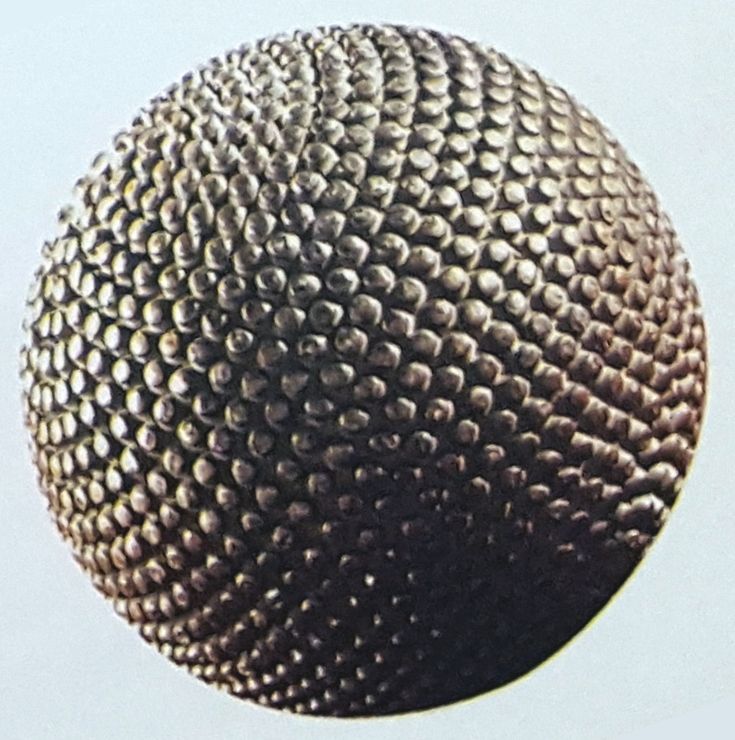
A boule covered in iron studs.
The surface of hammered nail heads that reinforced wooden boules through the nineteenth century, before steel replaced them in the 1920s.
Tapautour · CC BY-SA 4.0 · Wikimedia Commons
Steel boules arrived in the 1920s and standardised everything. A modern competition boule is hollow steel, 650 to 800 grams and 70.5 to 80 millimetres across, and a player chooses within those limits deliberately: heavier boules sit down where they land and suit a pointeur, lighter ones travel and suit a tireur, and hardness affects how much a boule rebounds when struck.
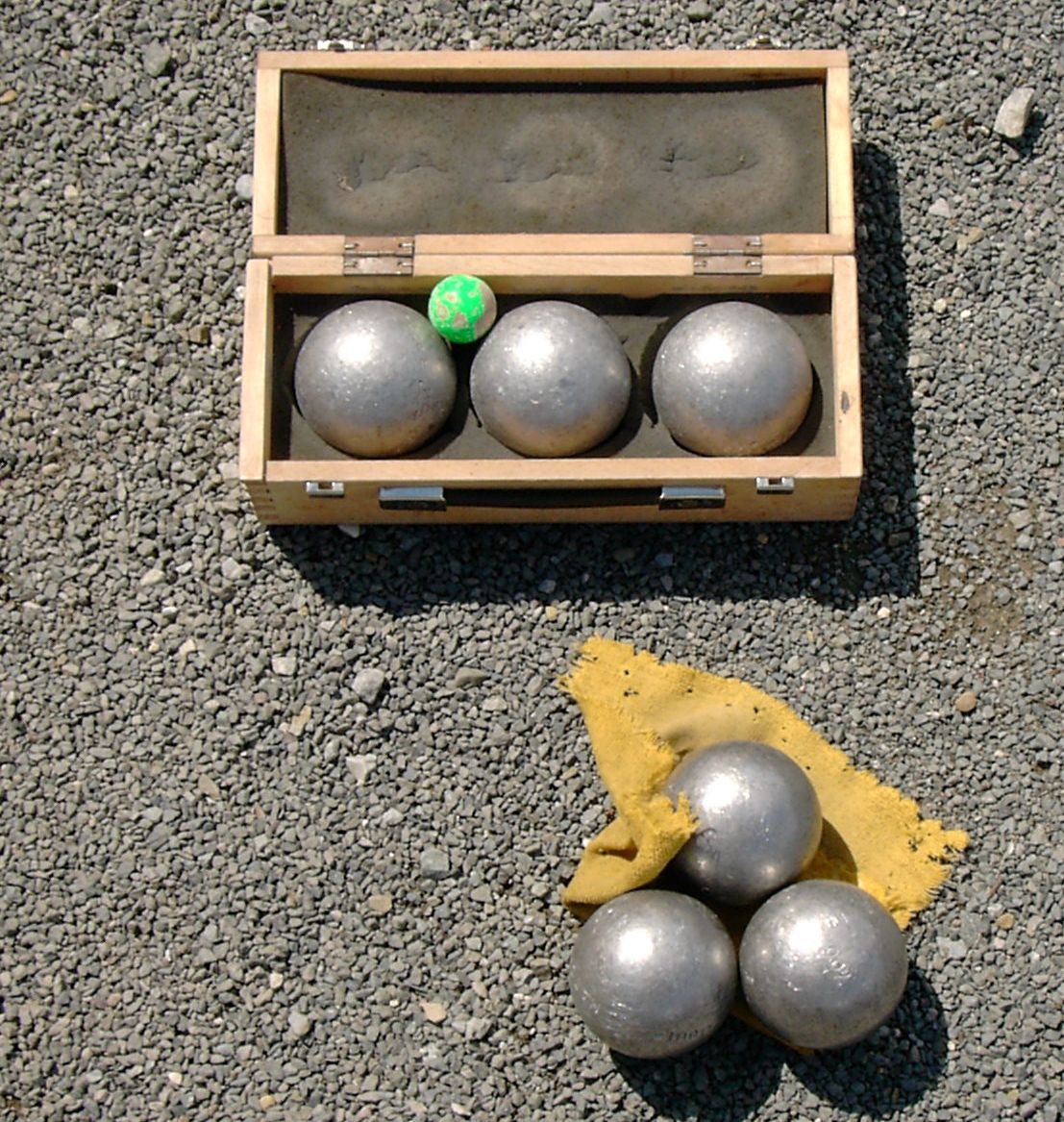
A set of steel competition boules and a jack.
Hollow steel, and chosen within the weight and size limits: heavier ones sit where they land, lighter ones travel. The small green ball is the jack, the one target in sport that the play itself moves.
Chauki · Public domain · Wikimedia Commons
That is a genuine equipment-fitting discipline, and it is regulated the way this site has seen elsewhere — by dimension and weight rather than by standardisation, so choice remains part of the sport. It is the same instrument finswimming uses for the monofin.
The jack is a small wooden ball, and it is the sport's most interesting piece of equipment because it is the target and it moves. Strike it and the whole geometry of the end changes, which is a property no target in archery, shooting or golf has.
Everything else is absent. No footwear requirement, no clothing rules of consequence, no protective equipment. What competition does add is a measuring device — callipers and tape — used by the players themselves, mid-game, to settle which boule is nearer.
09Governing body politics
Boules is governed by a confederation of federations that do not play each other, and that structure exists for a reason this site has seen before.
Pétanque has the FIPJP, formed in 1958. Boule lyonnaise, raffa and volo have their own international bodies. The codes are related — all involve throwing a ball towards a smaller target ball — and they are not interchangeable: the throwing action, the surface, the distances and the tactics all differ, and a champion in one does not compete in another.
The Confédération Mondiale des Sports de Boules was formed in 1985 above them. Its purpose is institutional: several small federations, each too small to hold recognition alone, present themselves as one sport in order to be recognised and to pursue multi-sport programmes. It is a rational response to how the international sports system works, and it means the entity holding the recognition governs no competition itself.
The Olympic story is the sharpest thing in the sport's politics. Pétanque sought inclusion at Paris 2024 — a Games held in the country where it is a national pastime, played by millions — and the organising committee chose breaking, skateboarding, sport climbing and surfing instead.
The host-city mechanism is supposed to let organisers add sports that resonate locally. In this cycle its stated criteria were youth and urban appeal, and a French committee applied them to exclude the game most identified with France. Nothing on this site illustrates the mechanism's actual priorities more plainly.
10Controversies that forced rule changes
The ground. Pétanque's defining decision is not to standardise the terrain. Stones, ruts, slope and hardness are conditions of play, and reading them is a skill — which creates a permanent temptation to improve them. Smoothing a rut, filling a hole or removing a stone from the target area is prohibited, and it is the sport's most frequently policed offence. Every competitive player knows exactly where the line is.
The circle. Both feet must stay together on the ground inside the circle until the boule lands. It is the rule that constitutes the sport, and it is enforced strictly, because a lifted heel at the moment of release is a meaningful advantage and an easy habit to acquire.
Time. A game to thirteen points has no predictable length, which is the scheduling problem this site records for five other sports. Boules has introduced time limits in televised and championship formats without adopting them generally — a partial answer, and one that has not severed anything, because the score is bounded either way.
Measuring. The competitors measure. In a sport where the difference between six points and none can be a millimetre, having the interested parties determine the result is remarkable, and the etiquette around it — who measures, when an official is called — is as codified as anything in the rulebook.
Being French. Not a rule change and the sport's largest political question: a game with enormous participation in one country and its former colonial territories, and very little institutional weight anywhere, which is exactly the profile the multi-sport system rewards least.
Where it standsthe record, and what is still open · sections 11 to 12
11Series
No series can exist
A comparable series
There is no series to draw here, and the reason is structural rather than archival. A pétanque match ends at thirteen points. The number is bounded, it has not changed, and a final score of 13–7 in 1960 means what it means in 2026. There is nothing to progress and nothing to break. What could in principle be measured is shooting accuracy — the rate at which an elite *tireur* displaces a target boule — and the precision shooting discipline generates exactly that number. It is not published in any cited, continuous form, and it would in any case be scoped to that discipline rather than to the sport. The umbrella structure rules out anything broader. Pétanque, boule lyonnaise, raffa and volo are separate codes with separate federations, separate rules and separate championships, united by a confederation formed in 1985 for institutional reasons. A number from one says nothing about another, and the confederation has never tried to make one.
1985Scoped to one competitionThe umbrella unites codes that are not played across. Results belong to a code, never to boules as a whole.
12What is contested now
Recorded as unsettled.
Whether the umbrella should hold. The confederation unites codes that do not play each other, for institutional rather than sporting reasons. It gives the family a single voice and it means the recognised body governs no competition. Whether that is a sensible structure or a bureaucratic fiction is argued by the federations inside it.
Paris 2024. Pétanque was not selected for a Games held in the country where it is a national game. The sport's own reading is that the additional-sport mechanism is about youth audiences rather than about local resonance, and that reading is hard to argue with. What to do next is genuinely open.
Time limits. Introduced for television in some formats and not adopted generally. The sport has watched five others on this site rewrite their scoring for schedulability and sever their own statistics; boules' bounded score means it could adopt a clock without that cost, and it has still not done so generally.
The terrain. Not standardising the ground is a deliberate choice that keeps the sport playable anywhere and makes competition conditions uneven. Proposals to prepare championship terrains more consistently recur.
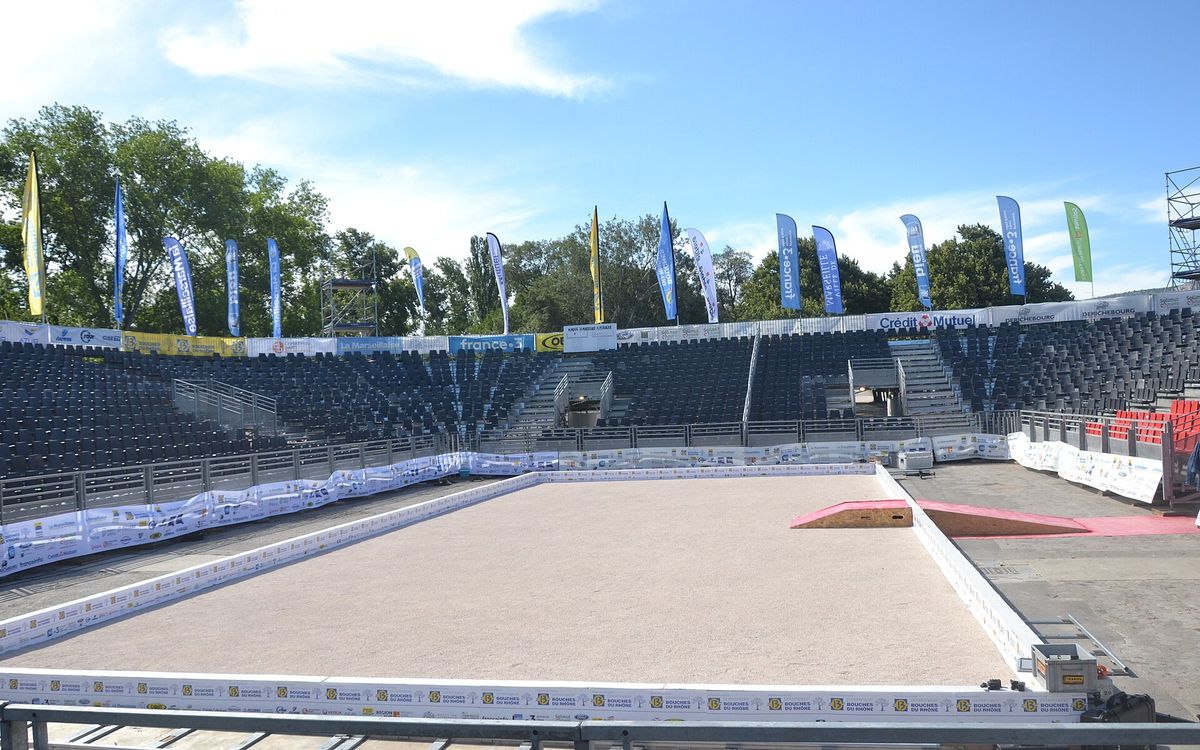
The terrain d'honneur for the finals of the Mondial la Marseillaise, Marseille, 2022.
A prepared championship pitch inside a stand: the kind of consistency the proposals ask for, and the opposite of the ground the game was made to be played on.
Marianne Casamance · CC BY-SA 4.0 · Wikimedia Commons
Where the growth is. The sport's institutional weight is French and its fastest-growing competitive nations are in Southeast Asia and Africa. Whether the federation's centre of gravity should follow is a question about power rather than about rules.