Breaking
A judging system invented for one Games, used once, and dropped before the next.
- Official
- Breaking
- Game category
- Outside this taxonomy
- Adjudication
- Judged
- Standing
- Admitted, dropped
- rule changes
- 4
- comparability break
- 1
- Olympic edition
- 1
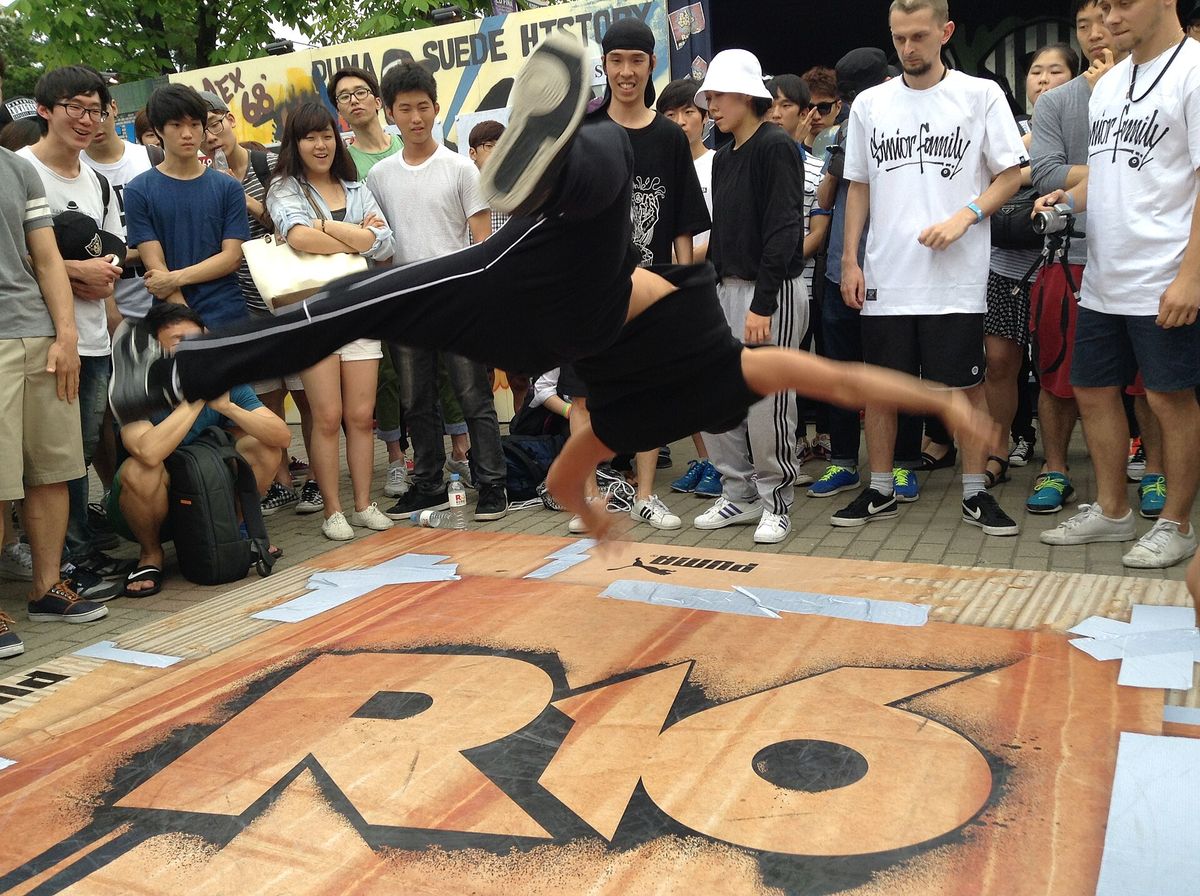
A b-boy in the cypher at R-16, South Korea, 2014 · gbern3 · CC BY-SA 3.0
- Governing body
- World DanceSport Federation
- Founded
- Emerged in the Bronx in the early 1970s. Governed for Olympic purposes by the World DanceSport Federation from 2017.
- Olympic status
- 1 edition
- not on the 2028 programme
- Also contested at
- Asian Games
Breaking was contested at one Olympic Games and is not on the next programme. What it leaves behind is the Trivium: a judging system built from nothing for a dance form that had never been scored, using comparative sliders rather than absolute marks. It is the only scoring system on this site designed for a single Games, and the only sport here whose community substantially did not want the Olympic recognition it received.
The gamewhat it is now · sections 1 to 5
01How it is played
Two dancers take turns to music they have not heard, and judges decide which one was better. Breaking's competitive rules are the youngest on this site and were written for a form that had spent forty years judging itself without any.
These figures were entered from the edition named above but have not been checked against its text line by line. Treat them as this site’s reading of the laws, not as a substitute for them.
The object of the battle
Be judged better than your opponent across five dimensions in a series of alternating rounds.
There is no score to accumulate and no target to reach. A battle produces a percentage split between two dancers, and that split is the entire result — a statement about a pairing rather than a measurement of either dancer.
The floor
A flat circular or square surface with room for the movements — footwork, power moves, freezes — and space for the opponent to wait. There is almost nothing to specify, which makes breaking one of the cheapest sports on this site to stage.
- Surface
- Flat, smooth
- Staging cost
- Among the lowest here
A b-boy in the cypher at R-16, South Korea, 2014.
The floor laid for the event: flat, smooth, and the only regulated surface the form has.
gbern3 · CC BY-SA 3.0 · Wikimedia Commons
Equipment
None specified. Dancers wear what they choose, and the only regulated elements are the surface and the sound system.
That absence is worth recording. Every other judged sport here specifies apparatus in detail, because the apparatus determines what is possible and therefore what a difficulty value means. Breaking has no difficulty table, so it has nothing to standardise apparatus for.
Dancers and judges
One against one at the Games, in B-Boys and B-Girls events. Judges are practitioners, which is the sport's continuity with its own tradition: battles have always been decided by people the scene respects.
What changed is that the judgement now has to be stated in parts and recorded, rather than delivered as a verdict.
- Format
- One against one
- Judges
- Practitioners
- Criteria
- 5
Format
Short alternating rounds — typically under a minute each — with dancers taking turns. A battle is a handful of rounds, and a full Olympic competition fits comfortably in a session.
Trivium
Five criteria: technique, vocabulary, execution, musicality and originality. For each, a judge moves a slider towards whichever dancer they thought was better, and the sliders aggregate into a percentage split of the round.
It is comparative rather than absolute, and that is the design's central choice. Gymnastics awards a mark against a published standard; diving multiplies a mark by a tabulated difficulty. Breaking had no standard to borrow, because forty years of battles had been judged holistically by practitioners, so the system asks only which of two dancers was better on each dimension.
The cost is that no breaking result is a measurement. A 62–38 split says one dancer beat another by that much on that day, and nothing more.
- Criteria
- 5
- Judging
- Comparative, not absolute
- Result
- Percentage split of a battle
This clause reads this way because of
The music
A DJ selects the music and the dancers do not hear it in advance. That is not an incidental staging detail — it is the sport's central constraint and the reason musicality is a judged criterion.
A dancer cannot choreograph. Every round is a response to a track chosen by somebody else, in real time, which makes breaking the only judged sport on this site where the performance cannot be planned.
Penalties
Deductions and penalties apply for crashes — failed moves — for repeating material within a battle, for exceeding the round, and for unsportsmanlike conduct towards an opponent.
Repetition is the interesting one. Vocabulary is a judged criterion, so reusing a move within a battle costs twice: once as a deduction and once in the comparative assessment.
Deciding the winner
The higher percentage across the rounds. There is no draw and nothing to carry into the next battle.
Everything above is current law. Everything below is how Breaking got here.
02Disciplines and events
Two Olympic events, contested once, at Paris in 2024. Breaking is not on the 2028 programme, and the decision to leave it off was taken in October 2023 — before its only Games had been held.
- Disciplines
- 1
- Olympic medal events
- 2
- Men’s and women’s counted separately.
- Contested elsewhere
- 1
- lapsed.
- Listed for context
- 1
- Not counted as this sport.
Breaking2
One against one, to music selected live.
- B-BoysContested at 2024 only.
- B-GirlsContested at 2024 only.
The form outside competition3
Listed because breaking's competitive circuit is a small part of it, and the part the community is most ambivalent about.
- Crew and solo battlesThe form's own competitive tradition, judged by respected practitioners without stated criteria.
- Cyphers and jamsWhere the form is actually transmitted.
- Youth Olympic Games 2018LapsedBreaking's first appearance under Olympic governance.
03Officiating and technology
Breaking's judging system is the most interesting recent invention on this site, and it deserves to be understood on its own terms rather than as a curiosity.
The problem. Every judged sport needs a scale, and a scale asserts what things are worth. Gymnastics can do this because it has spent a century agreeing what a Tkatchev is worth relative to a Kovacs. Diving can do it because degrees of difficulty are tabulated and uncontested. Breaking could not, because forty years of battles had been decided holistically by practitioners who did not need to say why.

B-boy Lilou on the jury of a Red Bull BC One qualifying cypher, Riga, 2011.
Practitioner judging, the tradition that ran for decades before anyone wrote it down: a champion of the form deciding battles without a stated scale.
Neva Micheva · CC BY-SA 3.0 · Wikimedia Commons
The answer. Trivium asks only which of two dancers was better, on each of five criteria — technique, vocabulary, execution, musicality, originality. A judge moves a slider towards one dancer, and the sliders aggregate into a percentage split.
Nobody has to say what a move is worth. The system only has to be able to say that this dancer did it better than that one, which is a judgement practitioners were already making.
The cost is that no result is a measurement. A 62–38 split describes a
pairing on a day. There is no personal best, no standard to reach, no series,
and nothing to chase — which is why this sport's series entry is impossible
rather than unpublished. There is no quantity anybody declined to publish.
That is a genuine trade, made deliberately, and it is the only place on this site where a federation chose not to invent a scale when it could have. Set against gymnastics pricing its elements, taekwondo pricing head kicks and climbing pricing holds, breaking's restraint is the outlier.
04Where it is played
Breaking has the widest and least institutional geography of any sport on this site, because it needs nothing and travels through culture rather than through federations.
Its origin is specific — the Bronx, the early 1970s, Black and Puerto Rican communities in New York — and it spread globally through film, music and video long before any governing body existed. By the 1990s there were established scenes in Japan, France, South Korea, Russia and across Europe and Latin America, none of them created by a federation and most of them unaware of one.
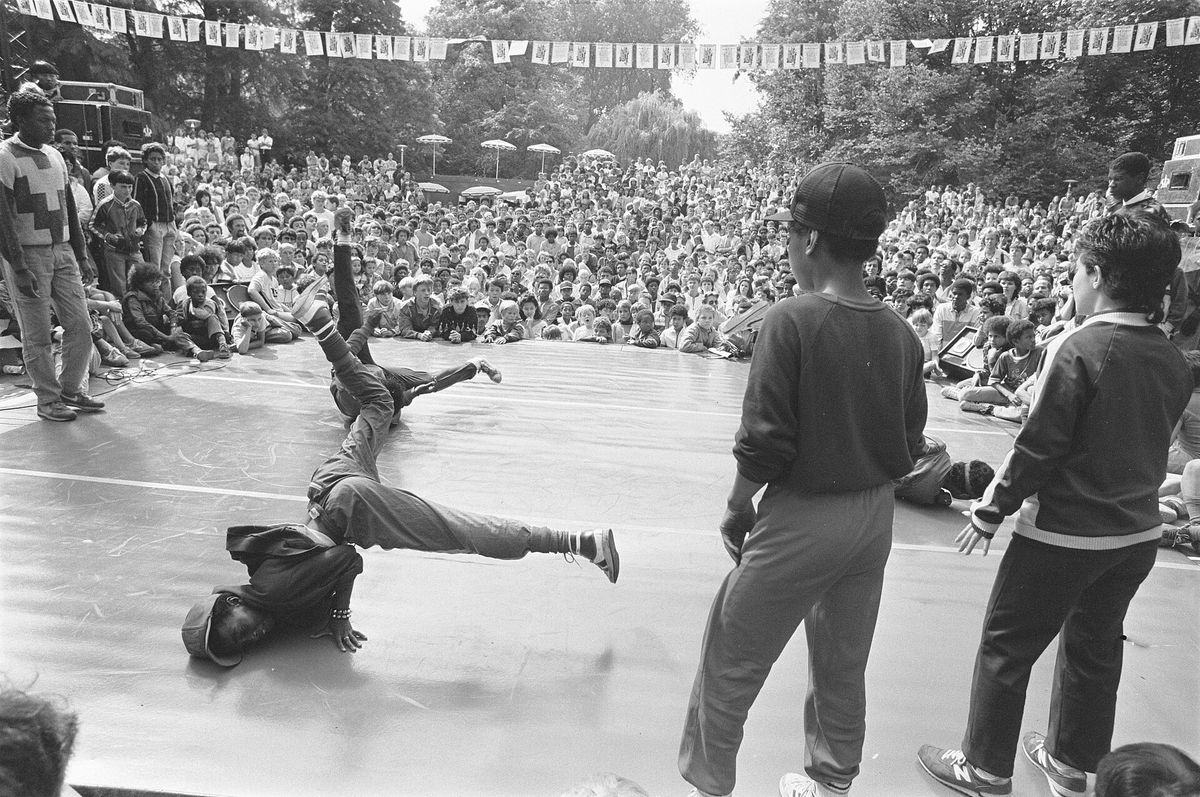
A breakdance contest in the Vondelpark, Amsterdam, August 1984.
A decade out of the Bronx and already competed across Europe, spread by film and music with no governing body anywhere near it.
Rob Bogaerts, for Anefo · CC0 · Wikimedia Commons
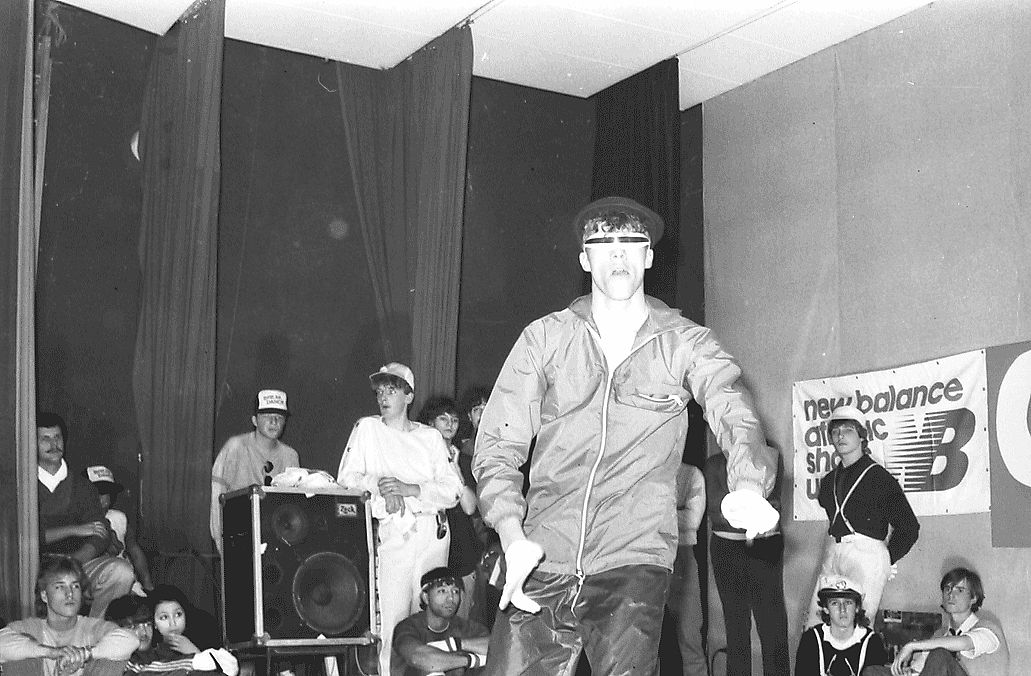
The first South Baden breakdance championship, Freiburg im Breisgau, March 1984.
A regional championship in West Germany the same year: scenes that built their own competitions long before the Olympic structures arrived.
Marlis Decker, Staatsarchiv Freiburg · CC BY 4.0 · Wikimedia Commons
Japan and France are the strongest competitive nations, and Japan's B-Girl scene in particular has been dominant. Neither is explicable by sports investment; both are explicable by decades of local scene-building.
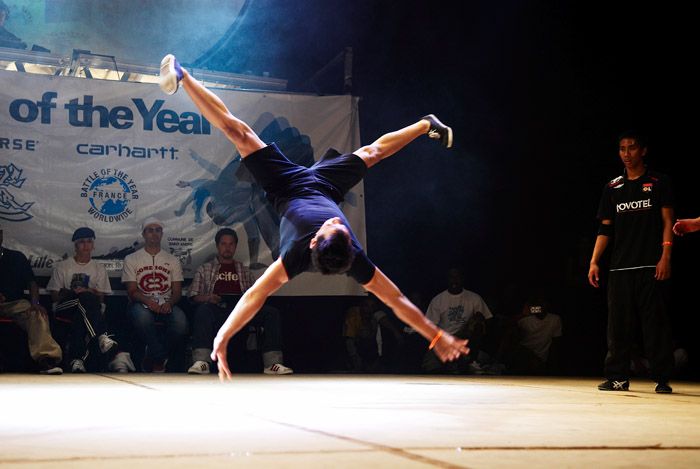
B-Boy Marcio of France doing an airflare in a battle, 2007.
France is one of the two strongest competitive nations, the product of decades of local scenes rather than of sports investment.
B2frison · CC BY-SA 4.0 · Wikimedia Commons
That produces a distribution nothing else here matches. There is no facility requirement, no equipment cost and no licensing, so breaking exists wherever young people have a floor and a speaker — which is everywhere.
The Olympic apparatus sat awkwardly on top of that. National federations had to be constructed in places where a scene already existed and had never needed one, and selection for Paris ran through structures that in some countries were months old.
The scenes remain, and are unaffected by the 2028 decision. Breaking's competitive life was never principally Olympic, which is both why the community was ambivalent about admission and why removal costs it less than it would cost almost any other sport here.
05Learning curve
The cheapest sport on this site to begin and one of the most physically punishing to be good at. Breaking needs a floor and a speaker, which is almost nothing, and its elite movements load the wrists, shoulders and neck in ways the body is not built for.
Editorial — the site’s reading, not a sourced claim
Barrier to entry
How hard is it to get to a real game?
A flat surface and music. Nothing else is required at all.
Breaking has the lowest material barrier of anything here. There is no equipment, no facility beyond a smooth floor, no opponent needed to practise, no coach required and no governing structure to join. It grew in public spaces precisely because it needed none of those.
It is also learned socially rather than institutionally. The form's transmission has always been through crews, jams and cyphers, which are free and open, and that has not changed because a federation now runs a competition.
That combination — no cost, no facility, no gatekeeper — is unique on this board.
Evidence
- Kit to startNoneobserved
- FacilityA flat floorobserved
- Coach neededNoestimateThe form is transmitted through crews rather than coaching structures.
- Partner requiredNoobserved
- Time to participateImmediateestimate
Barrier to the top
How hard is it to be good at?
Improvised to music nobody warned you about, on joints the movements are not kind to.
Elite breaking demands power moves that load the wrists, shoulders and cervical spine in ways few activities do — headspins and airflares are performed on structures not designed to bear them — and career-shortening injury is common and under-discussed.
The distinctive demand, though, is improvisation. A dancer does not hear the music in advance, so nothing can be choreographed. Every other judged sport on this site performs a prepared routine; breaking's competitors must generate material in real time, respond to a track chosen by a DJ, and avoid repeating themselves because vocabulary is a scored criterion.
And the ceiling itself has no fixed shape. Trivium is comparative, so there is no score to chase, no personal best and no standard to reach — only other dancers.
Evidence
- TriviumComparative, not absoluteruleNo score to chase, because a result describes a pairing rather than a dancer.2019 — the rule this rests on
- MusicNot known in advanceobservedThe only judged sport here where the performance cannot be prepared.
- Olympic statusOne Games, then droppedruleRemoved from the 2028 programme ten months before it was first contested.2028 — the rule this rests on
- Typical peak age20–30estimate
Why the two differ
Breaking has the widest gap available on this board — very low to very high — and it is the only sport here whose entry barrier is genuinely zero.
What makes it worth recording is the shape of the top. Every other judged sport on this site gives its athletes a standard: gymnastics has difficulty values, diving has a table, figure skating has elements. Breaking has none, by design, because the form had none to codify. A dancer's ceiling is not a score but the other dancers in the room.
And uniquely here, the ceiling was removed. Breaking was dropped from the 2028 Olympic programme in October 2023, ten months before it was first contested. Whatever the athletes did at their only Games could not have affected the decision — which is a fact about a sport's relationship with the Olympic movement, not about the sport.
The historyhow it got here · sections 6 to 10
06Origin and invention
Breaking is the only sport on this site that did not want to be one.
It emerged in the Bronx in the early 1970s, out of block parties, sound systems and the practice of dancing to the percussive break of a record extended by a DJ. It is one of hip-hop's founding elements alongside DJing, MCing and graffiti, and its transmission has always been through crews, cyphers and jams rather than through clubs, coaches or federations.

The entrance of 1520 Sedgwick Avenue, the Bronx, 2008.
The apartment building whose recreation room held the 1973 parties generally credited as hip-hop's beginning. Breaking came out of rooms and block parties like it, not out of a club or a federation.
Stephanie Morillo · CC BY-SA 2.0 · Wikimedia Commons
It has a competitive tradition of its own and always has: the battle, judged by respected practitioners, decided holistically and without stated criteria. That is a functioning adjudication system that ran for four decades before anyone wrote it down.
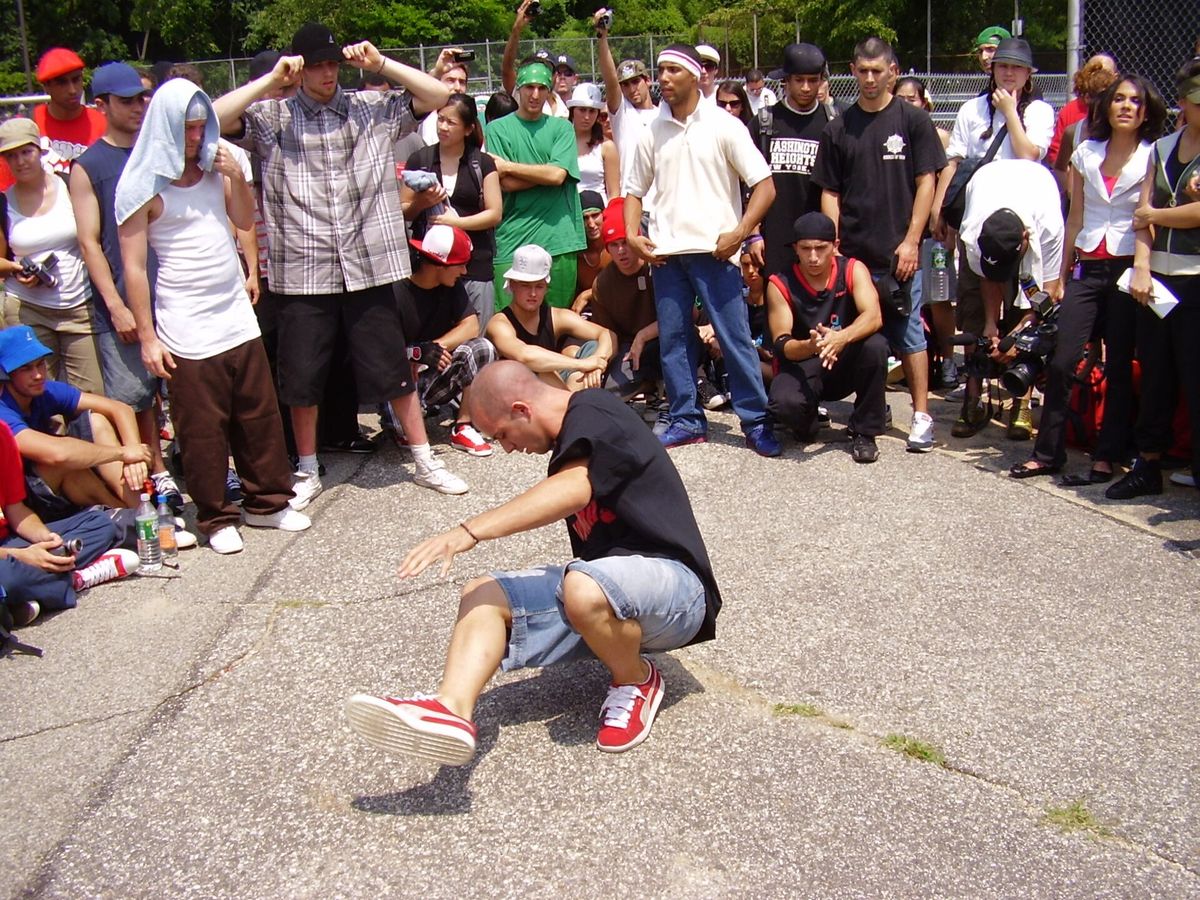
B-boy Pumba in the cypher at the Rock Steady Crew's 30th anniversary jam, the Bronx, July 2007.
The circle of dancers and onlookers through which the form has always been passed on and tested, decided by people who know it.
NexusMoves · CC BY-SA 3.0 · Wikimedia Commons
What it did not have was an international governing body, a scoring scale, or any interest in acquiring either. Both arrived from outside. The World DanceSport Federation — a ballroom-dance body — took breaking on for Olympic purposes in 2017, and the sport appeared at the Youth Olympic Games in 2018 and at Paris in 2024.
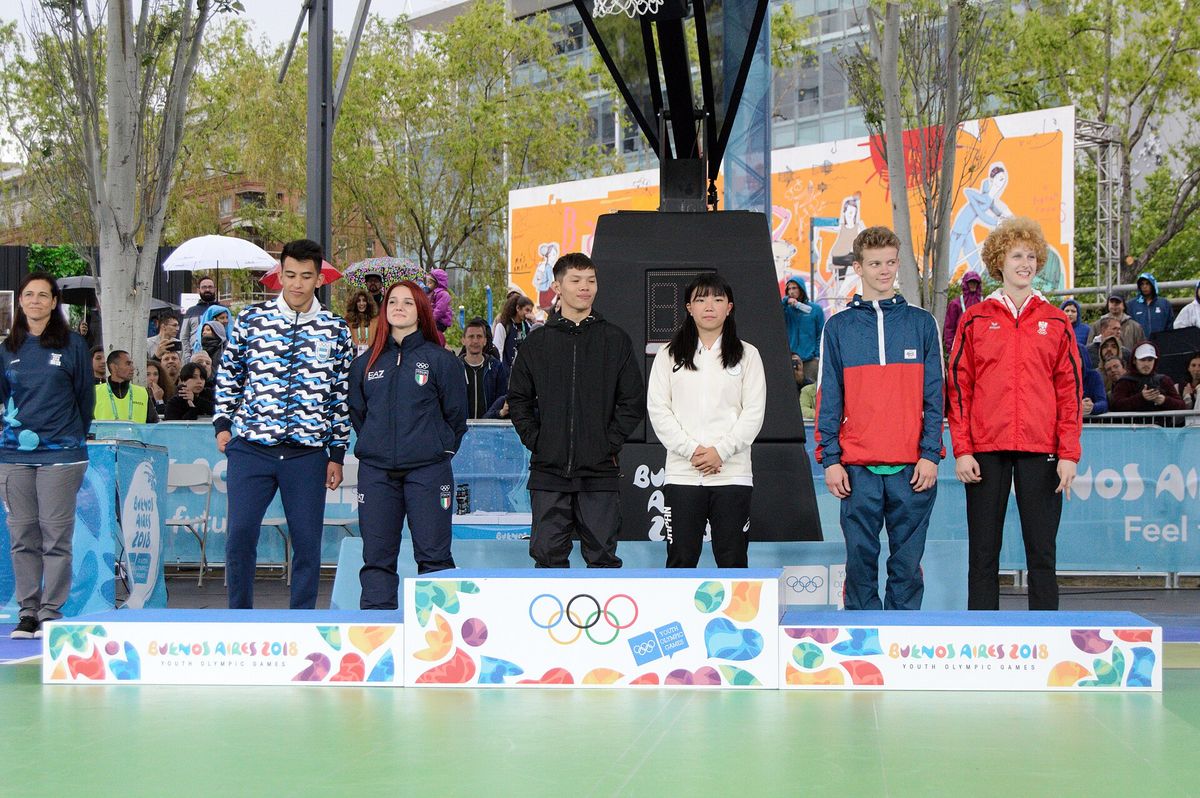
The podium of the mixed international breaking event at the 2018 Youth Olympic Games, Buenos Aires.
Breaking's first appearance under Olympic governance, a year after the World DanceSport Federation took it on.
BugWarp · CC BY-SA 4.0 · Wikimedia Commons
A substantial part of the breaking community objected throughout, on grounds that are unusually coherent: the form already had judging traditions, the federation had no standing in it, and codification would change the culture more than exposure would grow it.
This site records rule changes and their causes. Here the rules were written for a form that had not asked for them, and that is the cause.
07Rule timeline
The sport’s own lane, expanded. Every entry carries a cause from the closed vocabulary and a citation, and says so where the citation is incomplete.
- 2018Commercialalso participation and accessadopted 2017
Breaking was placed under the World DanceSport Federation for the purposes of international competition, and contested at the 2018 Youth Olympic Games. A street dance form with forty years of its own judging conventions, crews, jams and lineages acquired an international governing body it had not asked for.
Trigger and citationIncomplete — no confirmed article
Trigger
The IOC was seeking youth-facing, urban, gender-balanced and inexpensive additions to the programme, and breaking fitted every criterion. A federation with existing Olympic recognition was the available route.
A substantial part of the breaking community objected that the form had functioning judging traditions of its own, that an external ballroom-dance federation had no standing to codify them, and that competitive recognition would change the culture more than it would grow it. That objection was never resolved and is part of why the sport's Olympic appearance lasted one Games.
WDSF Breaking Competition Rules and the Trivium judging system · WDSF Breaking rules, 2018
- 2019Fairness and eligibilityalso integrityadopted 2019
The Trivium judging system was adopted. Judges score five criteria — technique, vocabulary, execution, musicality and originality — and do so comparatively rather than absolutely: for each criterion a judge moves a slider towards whichever dancer they think was better, and the sliders are aggregated into a percentage split of the round. That is a genuinely unusual instrument. Gymnastics, diving and figure skating all award absolute marks against a standard. Trivium asks only which of two dancers was better on each dimension, which removes the need for a scale that would have to be invented for a form that never had one.
Comparability break · Measurement scale changed
A comparative judging system produces a result about a pairing, not a measurement of a dancer. No breaking score means anything outside the battle it came from. See the series
Trigger and citationIncomplete — no confirmed article
Trigger
Breaking battles had always been judged by respected practitioners making a holistic call, often without stated criteria. Olympic competition required something transparent, reproducible and explicable to an audience, and no absolute scale existed to borrow.
Comparative judging is defensible and it has a cost: a Trivium result is a statement about two dancers on a day, not a measurement of either. No score from a breaking battle means anything outside that battle.
WDSF Breaking Competition Rules and the Trivium judging system · WDSF Trivium judging system, 2019
- 2024Commercialalso participation and accessadopted 2020-12
Breaking was added to the 2024 Olympic programme, with one B-Boys and one B-Girls event, contested as one-on-one battles to music the dancers do not hear in advance.
Trigger and citationIncomplete — no confirmed article
Trigger
Part of a wider programme strategy to add urban, youth-facing and gender-balanced events with low staging costs — the same strategy that brought in skateboarding, sport climbing and surfing.
WDSF Breaking Competition Rules and the Trivium judging system · IOC Session decision, 2020
- 2028Commercialadopted 2023-10
Breaking was not included on the 2028 programme. It was contested at one Games and dropped before the next, which no other sport on this site has experienced except karate.
Trigger and citationIncomplete — no confirmed article
Trigger
The Los Angeles organisers proposed a programme built around sports with established American commercial followings — flag football, squash, lacrosse, cricket, baseball and softball — and breaking was not among them. The decision was taken before the 2024 competition had been held.
That sequence is worth stating plainly. Breaking was removed from the 2028 programme in October 2023, ten months before it was first contested at Paris. Whatever the sport did at its only Games could not have affected the decision.
WDSF Breaking Competition Rules and the Trivium judging system · IOC Session decision, 2023
08Equipment evolution
There is none, and the absence is worth a section.
Breaking specifies no equipment at all. Dancers wear what they choose. The only regulated elements of a competition are the floor — flat and smooth — and the sound system. It is the cheapest sport on this site to stage and to enter, by a wide margin, and it grew in public spaces precisely because it required nothing.
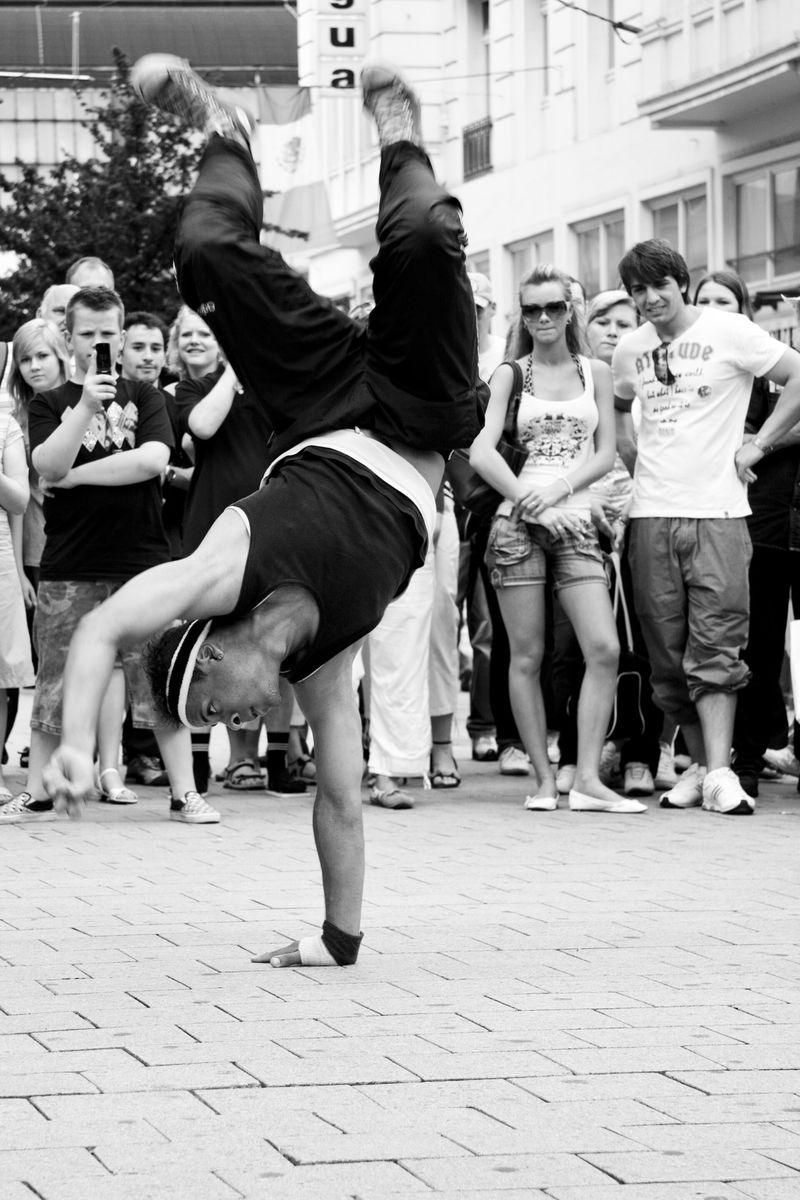
A breaker performing in the street, Hamburg, 2007.
Paving stones and a crowd. Nothing specified, nothing issued, nothing to buy: the reason the form grew in public spaces.
Jan Zimmermann · CC BY-SA 2.0 · Wikimedia Commons
The comparison with the other judged sports here is the point. Gymnastics specifies its apparatus in extraordinary detail, because the apparatus determines what movements are possible and therefore what a difficulty value means — change the vaulting table and every vault has to be repriced. Diving specifies the board and the height. Figure skating specifies the ice.
Breaking has no difficulty table, so it has nothing to standardise apparatus for. Its judging is comparative rather than absolute: judges say which of two dancers was better, not what either performance was worth. A system that never assigns an absolute value never needs a controlled environment to make those values mean the same thing twice.
The one thing that does function as equipment is the music, and it is deliberately not controlled. A DJ selects tracks the dancers have not heard, so the raw material of every performance is chosen by somebody else in real time.
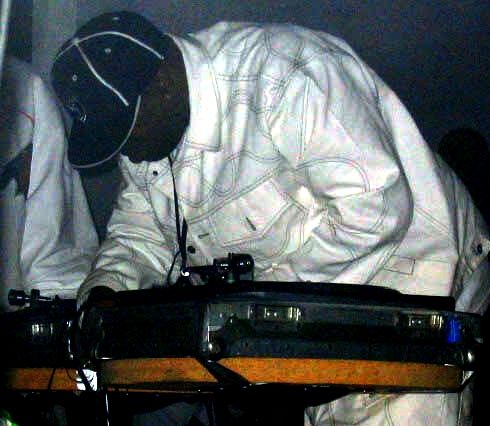
A DJ adjusting a turntable before a set, 2003.
The only thing in breaking that works like equipment. The DJ chooses tracks the dancers have not heard, so the raw material of every round is decided by somebody else in real time.
Amin Eshaiker · CC BY-SA 4.0 · Wikimedia Commons
That is the opposite of every other judged sport's arrangement, where the apparatus is fixed so the performance can be planned.
09Governing body politics
Breaking's governance is the most contested on this site, because the sport's own community largely did not consent to it.
The World DanceSport Federation is a ballroom-dance body with existing Olympic recognition. When the IOC sought youth-facing, urban, inexpensive and gender-balanced additions to the programme, breaking fitted every criterion, and the WDSF was the available route to admission because it already held recognition.
The objection from within breaking was not reflexive hostility to institutions. It was specific: the form had functioning judging traditions of its own, developed over forty years by practitioners; a ballroom federation had no standing in those traditions; and competitive codification would change what the culture valued more than Olympic exposure would grow it.
The federation's answer was Trivium — a judging system built with practitioner input, comparative rather than absolute, deliberately declining to invent a difficulty scale the form did not have. It is a genuinely thoughtful response to the objection, and it did not resolve it.
The sequence that followed is the part this site finds hardest to write neutrally. In October 2023 the IOC confirmed the 2028 programme without breaking. The sport was first contested at Paris in August 2024, ten months later.
Whatever breaking did at its only Games could not have influenced whether it returned. A community that was told codification was the price of Olympic recognition paid it, and the recognition lasted one Games.
10Controversies that forced rule changes
Codification itself. Breaking's central controversy is the existence of its competition rules. A form with forty years of judging tradition — battles decided by respected practitioners, holistically, without stated criteria — acquired an international federation, a criteria list and a scoring instrument, none of which its community requested.
The rules that resulted are careful. Trivium was built with practitioner involvement and it declines to do the obvious thing, which would have been to write a difficulty table. It judges comparatively because breaking had no absolute scale and inventing one would have asserted a standard the form did not hold.
That is the most restrained response to a codification problem anywhere on this site, and it did not settle the argument.
The scoring problem itself. Every other judged sport here awards an absolute mark. Gymnastics prices its elements; diving tabulates difficulty; figure skating defines its elements and their values. Each of those systems was built by the sport, over decades, on material the sport already agreed about. Breaking had no such agreement to codify, and the federation had two years.
October 2023. The 2028 programme was announced without breaking, ten months before the sport was contested at Paris. The Los Angeles organisers proposed a programme of sports with established American commercial followings, and breaking was not among them.
There is no rule change to record here. What there is, is the clearest example on this site of an Olympic decision being commercial rather than sporting, and of a community that gave up something to be admitted and was not kept.
Where it standsthe record, and what is still open · sections 11 to 12
11Series
No series can exist
Battle results
A Trivium result is a percentage split between two dancers in one battle. It is not a score either of them received. Gymnastics awards a difficulty value and an execution mark against a published standard, so a routine has a number of its own. Diving multiplies a judged mark by a tabulated degree of difficulty. Breaking does neither: a judge moves a slider towards whichever dancer they thought was better on each of five criteria, and the aggregate says who won and by how much. That means there is nothing to chart. A dancer who wins 62–38 in one battle and 55–45 in another has not produced two comparable performances; they have beaten two different opponents by two different margins. Comparative judging cannot generate a series by construction. This is a deliberate design decision rather than an oversight, and a defensible one. Breaking had no absolute scale to borrow, because forty years of battles had been judged holistically by practitioners. Inventing one would have meant asserting a standard the form did not have. The site records it as impossible rather than unpublished for that reason. There is no quantity here that anyone declined to publish.
2019Measurement scale changedA comparative judging system produces a result about a pairing, not a measurement of a dancer. No breaking score means anything outside the battle it came from.
12What is contested now
Recorded as unsettled.
Whether the Olympic project was worth it. Breaking gave up a great deal to be admitted: an external governing body, a codified judging system, national federations built to satisfy a selection process, and a competitive form shaped for a broadcast. It was contested once. The community that objected in 2017 has an obvious case to make now, and the people who argued that exposure would grow the form have their own — participation did rise.
Whether Trivium survives. The judging system was built for Olympic competition and is genuinely well designed. Whether a form that no longer needs it keeps using it, or reverts to holistic practitioner judging, is an open question about which parts of codification stick when the reason for them goes away.
Who governs breaking. The WDSF's mandate came from Olympic recognition. It is not obvious what that mandate is now, or whether the sport wants one at all.
The 2032 question. Breaking could return; skateboarding, climbing and surfing were all added and retained. What this site notes is that the 2028 exclusion was decided before the 2024 competition happened, which means the sport has never had the chance to be judged on its performance — and that is the fact its community is most likely to remember.