Cricket
Three formats of the same sport whose statistics were never meant to be compared, and one rule used once to decide a World Cup and then deleted.
- Official
- Cricket
- Game category
- Striking and fielding
- Adjudication
- Decided by score
- Standing
- Removed, restored
- rule changes
- 6
- comparability breaks
- 2
- Olympic editions
- 2
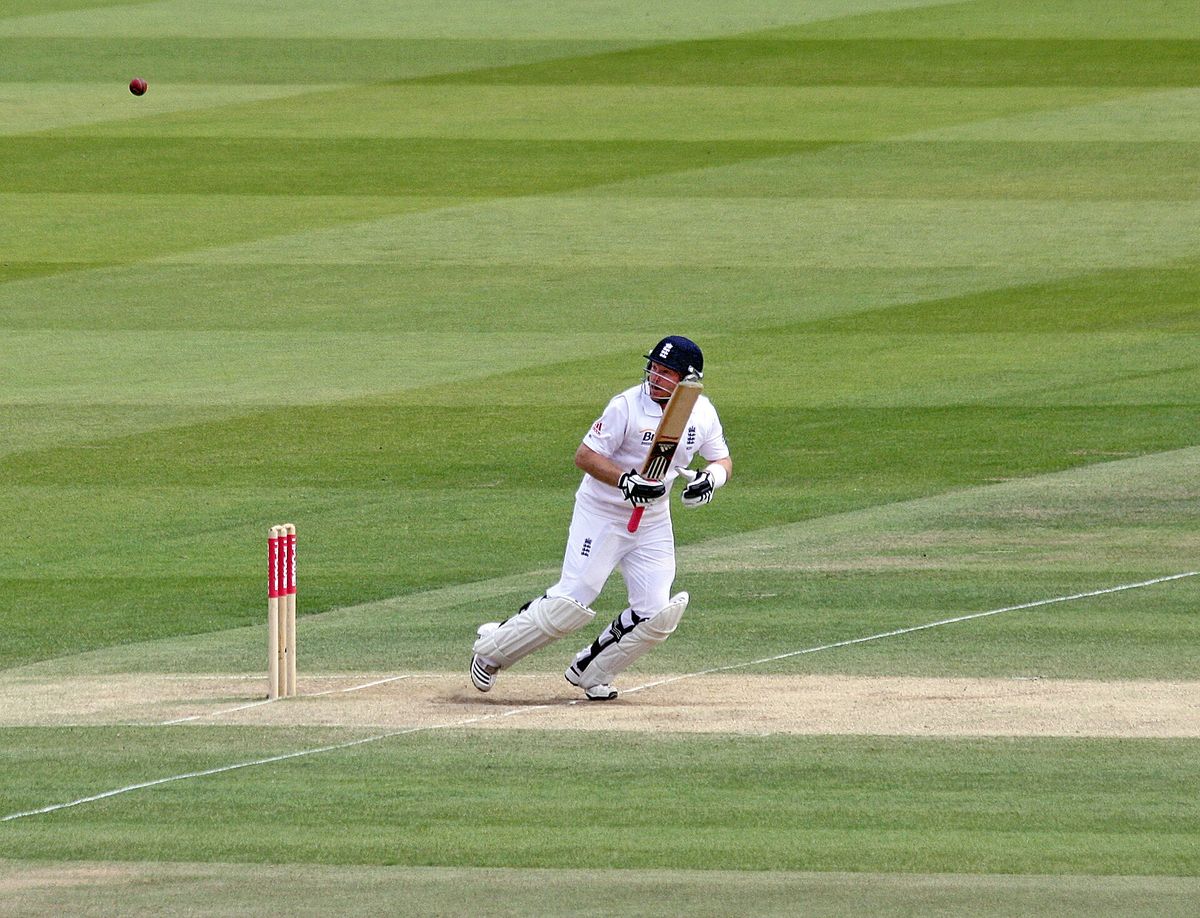
Ian Bell batting in a Test at Lord's, England against Sri Lanka, June 2011 · Gareth Williams · CC BY 2.0
- Governing body
- Marylebone Cricket Club owns the Laws; the International Cricket Council runs the international game.
- Founded
- MCC founded 1787 and first issued the Laws in 1788; the ICC founded 1909 as the Imperial Cricket Conference.
- Olympic status
- 2 editions
- on the 2028 programme
- Also contested at
- Asian Games
Cricket has the same governance split as football — a body that owns the Laws and a body that runs the sport — and a comparability problem neither football nor anything else here has: it invented two new formats without replacing the old ones, so the sport now plays three games under one name whose numbers are not interchangeable and were never claimed to be.
The gamewhat it is now · sections 1 to 5
01How it is played
Two teams of eleven, one bats while the other bowls and fields, and the batting side tries to score runs before losing ten wickets. What makes cricket structurally unlike every other sport here is that the two sides do not do the same thing at the same time: it is a sport of alternating roles rather than simultaneous ones, which is why an innings is the unit and why the formats can differ so much while the Laws barely change.
These figures were entered from the edition named above but have not been checked against its text line by line. Treat them as this site’s reading of the laws, not as a substitute for them.
The object of the game
Score more runs than the opposition. The batting side scores by running between the wickets or by hitting the ball to or over the boundary; the fielding side tries to dismiss the batters, and ten dismissals end the innings whatever the score.
Because the sides bat in turn rather than together, cricket has no equivalent of possession and no defence in the invasion-sport sense. The contest is between one bowler and one batter, repeated.
The ground
An oval field with no specified dimensions — grounds differ substantially in size, and the Laws set only a minimum boundary distance in playing conditions rather than in the Laws themselves. At the centre is a 22-yard pitch, and that is specified precisely.
- Pitch length
- 22 yd
- 20.12 m, between the wickets.
- Pitch width
- 10 ft
- Stumps
- 28 in high
- Ground size
- Not fixed
- Set by playing conditions, not by the Laws.
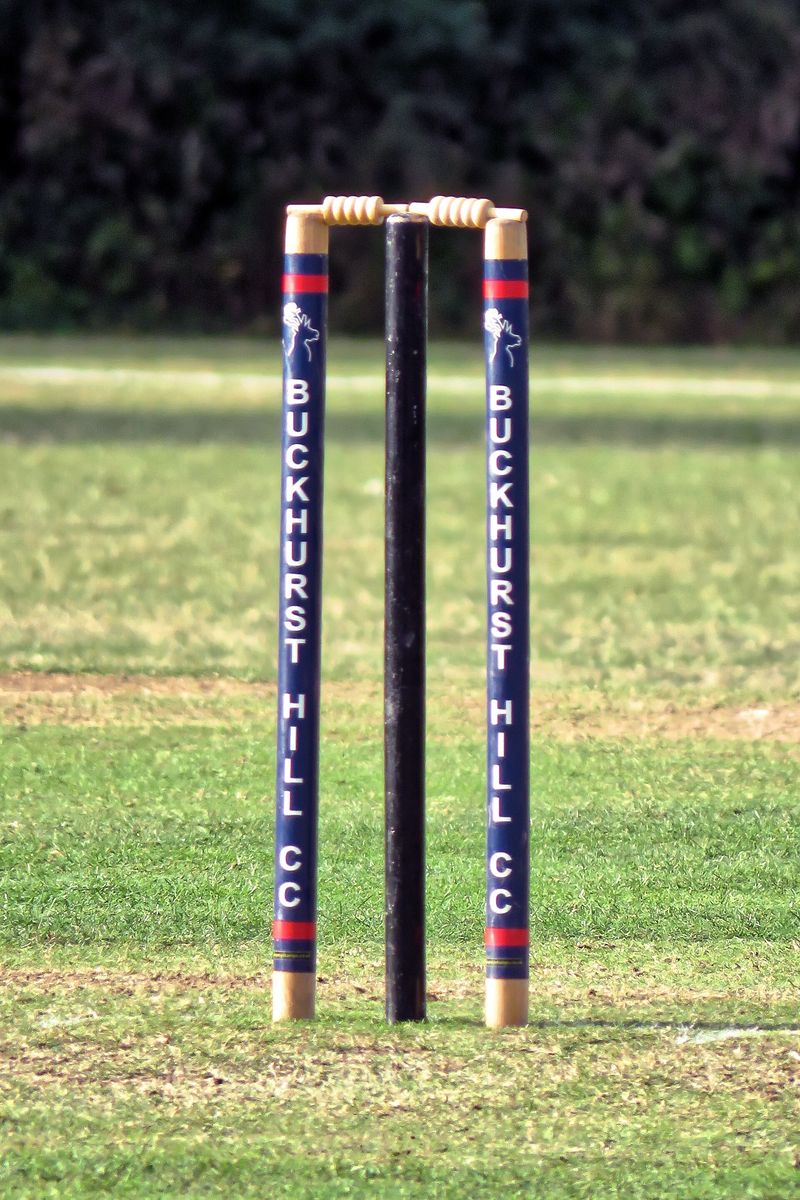
Stumps and bails at a club ground, 2018.
Twenty-eight inches high, with the bails resting in the grooves on top. Twenty-two yards from the other set.
Acabashi · CC BY-SA 4.0 · Wikimedia Commons
MCC Laws of Cricket, 2017 Code, with ICC playing conditions per format · Laws 6 and 8
Bat and ball
The ball is specified by weight and circumference and has barely changed. The bat was specified only by length and width for two centuries, and in 2017 gained limits on edge thickness and depth for the first time — because manufacturers had learned to press lighter timber into much thicker bats without adding weight, and mishits were carrying for six.
- Bat length
- 38 in max
- Bat width
- 4.25 in max
- Bat edge
- 40 mm max
- Limit introduced in 2017.
- Ball weight
- 155.9–163 g
This clause reads this way because of
MCC Laws of Cricket, 2017 Code, with ICC playing conditions per format · Law 5
Players and officials
Eleven a side. Two on-field umpires, a third umpire with access to replay, and a match referee. Cricket gave its officials technology earlier and more comprehensively than most sports here, and it did so through a player-initiated review rather than an official-initiated one.
The distinctive feature is umpire's call: where ball tracking shows a marginal outcome, the on-field decision stands. The technology informs the umpire rather than replacing them, which is a choice tennis made in the opposite direction.
This clause reads this way because of
Format
Three of them, and this is the sport's defining structural fact. A Test match is five days and may still be drawn. A one-day international is fifty overs a side. A Twenty20 is twenty overs a side and finishes in about three hours.
None replaced any other. Cricket added the one-day game in 1971 and the twenty-over game in 2003 and kept playing all three, so the same international players compete in three sports that share a rulebook and almost nothing else.
- Test
- 5 days
- One-day international
- 50 overs a side
- Twenty20
- 20 overs a side
- Formats retained
- All three
Scoring
Runs, scored in ones and twos by running or in fours and sixes by reaching the boundary. Extras are added for illegal deliveries. An innings ends after ten wickets or when the overs run out, depending on the format.
A batting average is runs divided by dismissals and a strike rate is runs per hundred balls, and both mean something different in each format — which is why the sport keeps three separate record books and has never combined them.
- Boundary along the ground
- 4
- Boundary in the air
- 6
- Wickets per innings
- 10
- Record books kept
- 3
Overs and innings
The game restarts constantly and by design. Six deliveries make an over, after which the bowling switches to the other end and a different bowler takes it. That rotation is why cricket is played from both ends and why field placings change every six balls.
A Super Over decides a tied limited-overs match. Between 2019 and its abolition later that year, a tied Super Over was resolved by counting boundaries — a rule used once, to decide a World Cup final, and removed within months.
This clause reads this way because of
Dismissals and illegal deliveries
Ten ways to be out, of which bowled, caught, leg before wicket, run out and stumped account for nearly all. LBW is the judgement-heavy one and the one the Laws have rewritten most: the 1980 Code extended it to a ball pitching outside off stump where the batter made no attempt to play, because padding away had become the safe option.
A no ball is an illegal delivery — overstepping the crease, above waist height on the full — and a wide is one the batter cannot reasonably reach. Both give a run and, in limited-overs cricket, another delivery.
This clause reads this way because of
Deciding the winner
More runs. A Test match can be drawn if neither side completes the task in five days, which makes cricket one of only two sports here where not finishing is a legitimate result — and unlike football's draw, cricket's is a consequence of running out of time rather than of parity.
Everything above is current law. Everything below is how Cricket got here.
02Disciplines and events
Two Olympic events for 2028, in a sport whose Olympic history is one match in 1900 and a 128-year absence. The format chosen for the Games is Twenty20 — the newest of the three, and the only one that fits an Olympic schedule.
- Disciplines
- 1
- Olympic medal events
- 2
- Men’s and women’s counted separately.
- Contested elsewhere
- 4
- world championship, professional.
- Listed for context
- 1
- Not counted as this sport.
On the 2028 programme2
Twenty20, six teams per event.
- Men's tournament
- Women's tournament
The three formats4
Each keeps its own record book. The sport has never combined them and has never suggested it should.
- Test cricketProfessionalFive days, and may be drawn. The oldest form; first played 1877.
- One-day internationalWorld championshipFifty overs a side. First played 1971, as an improvisation after a washed-out Test.
- Twenty20 internationalWorld championshipTwenty overs a side. Introduced domestically in 2003.
- First-class and domestic competitionProfessionalWhere most professional cricket is actually played.
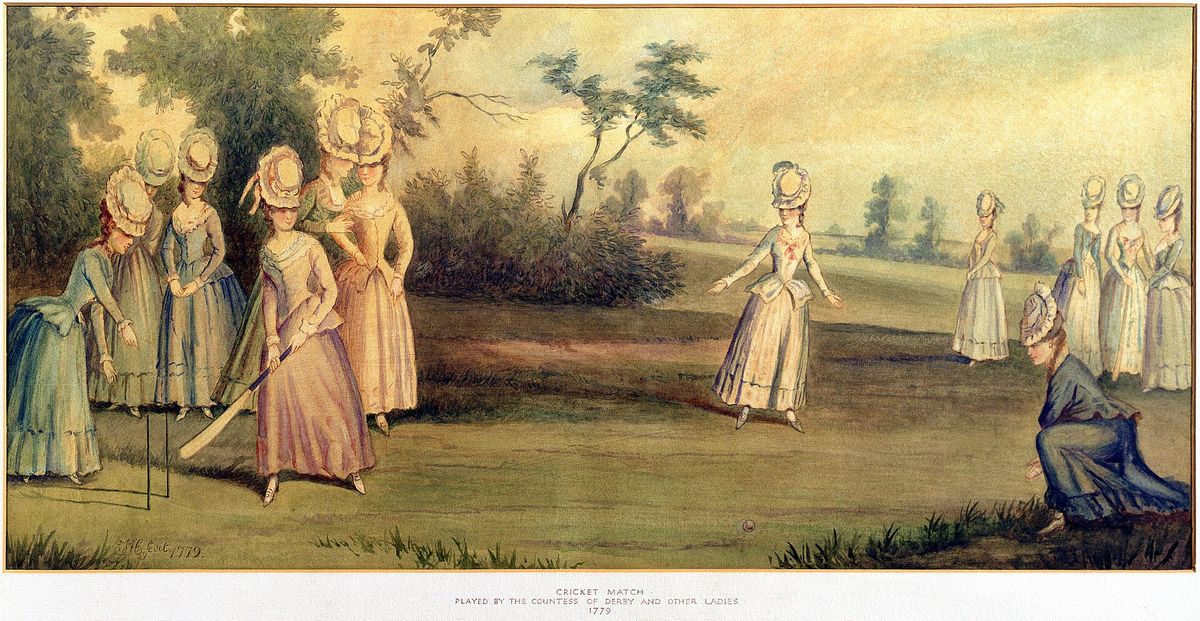
A cricket match played by the Countess of Derby and other ladies, 1779.
Women's cricket is nearly as old as the written laws. It reaches the Olympic programme alongside the men's game in 2028.
Artist unknown · Public domain · Wikimedia Commons
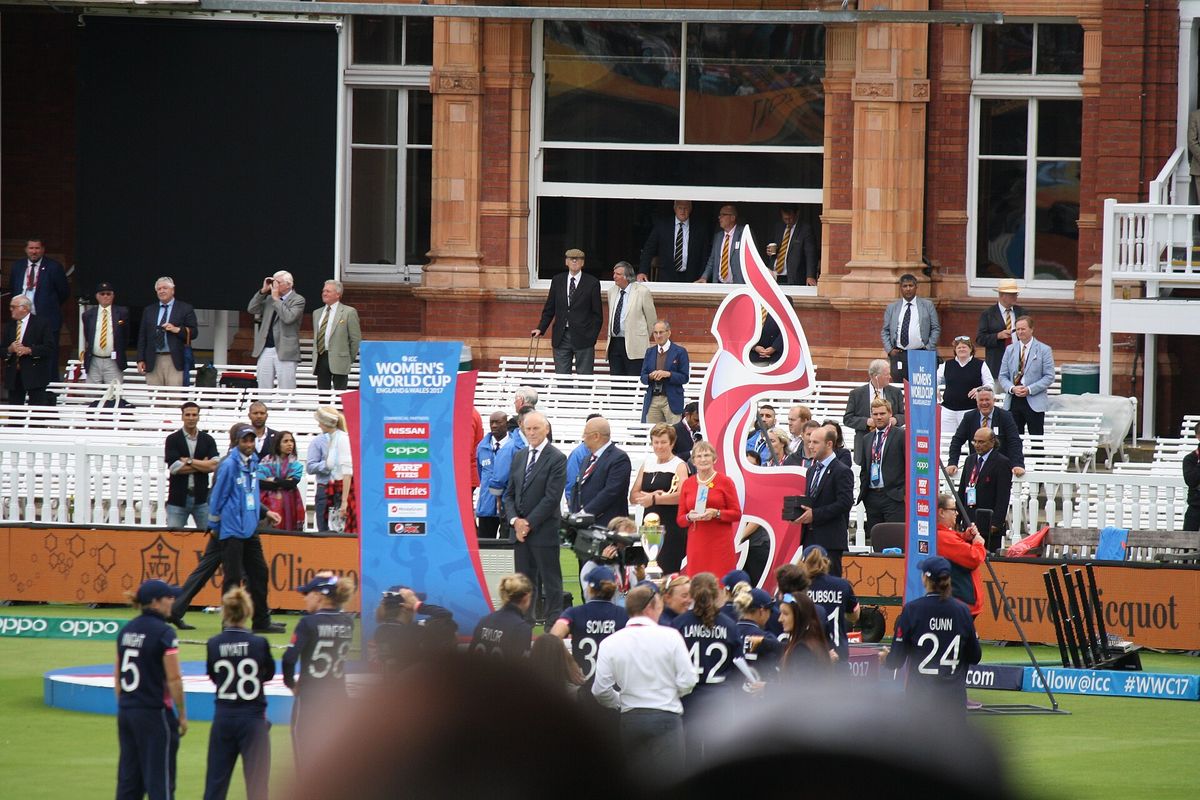
England's players at Lord's on the day of the 2017 Women's World Cup final.
A sold-out final at the home of the Laws, won by England against India.
Robert Drummond · CC0 · Wikimedia Commons
03Officiating and technology
Cricket adopted decision technology earlier and more thoroughly than most sports on this site, and it made one choice nobody else made.
The Decision Review System, from 2009, lets teams refer an umpire's decision to a third official with ball tracking, edge detection and replay. The reviewable questions are dismissals — was it out — which are mostly questions of fact.

An umpire giving a batter out, 2005.
The on-field decision that, under the review system, the third umpire checks — and that stands when ball-tracking shows a margin inside its own error.
Kroome111 · CC BY 3.0 · Wikimedia Commons
The distinctive part is umpire's call. Where ball tracking shows a marginal outcome, the on-field umpire's original decision stands. That means the identical delivery can be given out or not out depending on what was said first, and the sport is explicit that this is deliberate: the tracking system has a margin of error, and inside that margin the sport prefers the human.
No other sport here does this. Tennis removed its line judges entirely in 2025 because the machine was better. Football's VAR overrules the referee on facts. Cricket built the instrument's uncertainty into the rule and gave the benefit of it to the official.
Whether that is sophisticated or incoherent is genuinely argued. It produces outcomes that look arbitrary to a viewer, and it is the honest response to a prediction — ball tracking does not observe where the ball went, it computes where it would have gone.
Edge detection has the same character. Snickometer and hot spot are evidence rather than verdicts, and the third umpire weighs them. Cricket has more technology than almost any sport here and has been careful not to let it make the decision.
04Where it is played
Cricket has the most concentrated geography of any sport on this site and the clearest explanation for it: the map is the British Empire, and it has barely moved in a century.
Twelve nations play Test cricket. India, Australia, England, Pakistan, South Africa, New Zealand, Sri Lanka, Bangladesh, the West Indies, Zimbabwe, Ireland and Afghanistan. Outside that group the sport is played seriously almost nowhere, and several of the associate nations that do play it are largely sustained by expatriate populations.
Within that map the balance has inverted. Cricket's institutions were English and its money is now overwhelmingly Indian, and the sport's governance has restructured repeatedly to reflect that. The most-watched cricket in the world is a domestic Indian franchise competition that did not exist before 2008.
Afghanistan is the one genuine addition in decades, and it arrived through refugee camps in Pakistan rather than through any development programme — a route no federation designed.
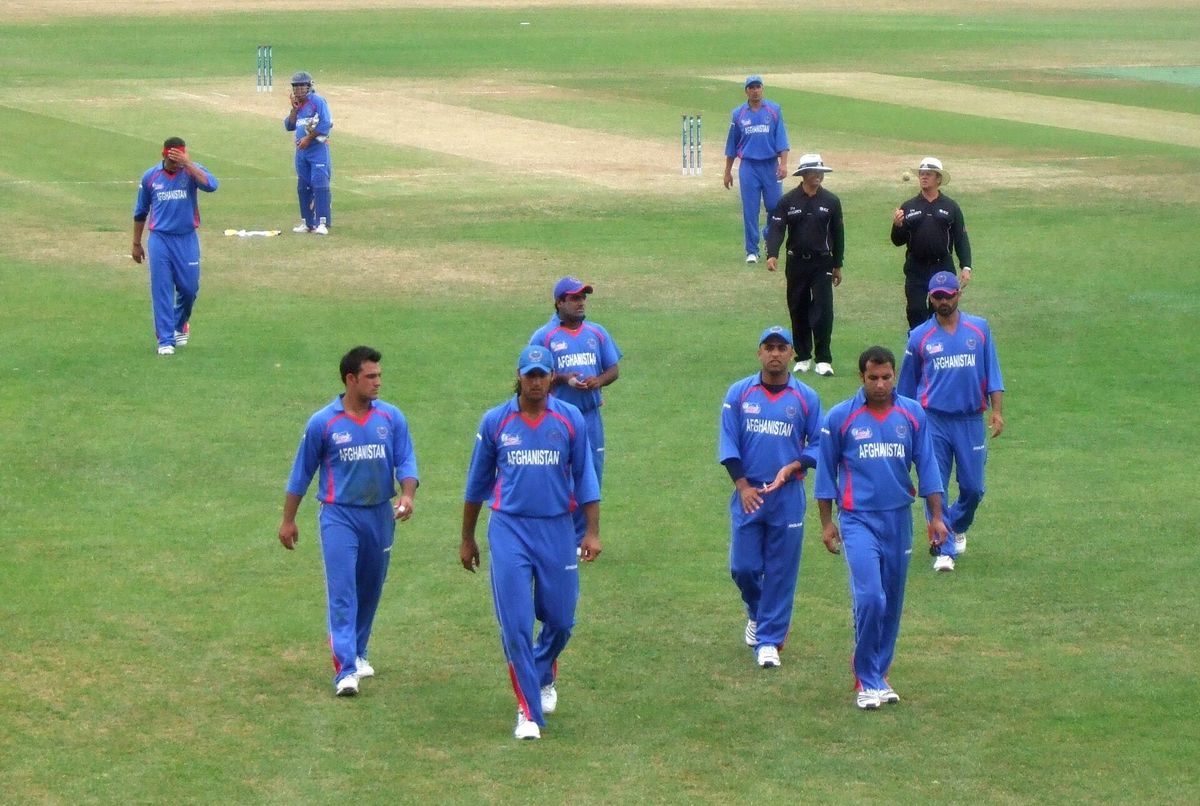
Afghanistan's team walking off after the first innings of a World Cricket League match against Ireland, Rotterdam, 2010.
The one genuine addition to cricket's map in decades, and one that arrived through refugee camps rather than a development programme.
Harrias · CC BY-SA 3.0 · Wikimedia Commons
The rule consequence is the format question. Twenty20 travels: it is short, needs less infrastructure, and is the format used for Olympic cricket in 2028 and for almost all associate-nation competition. Test cricket does not travel at all, requires five days and a prepared square, and is played by twelve countries. If cricket's map ever changes, the shortest format will be why — which makes the 2003 rule change a piece of geography as well as commerce.
05Learning curve
A sport whose rules are famously hard to explain and whose basic actions are not. Cricket's entry barrier is almost entirely comprehension and logistics rather than skill — and Twenty20 was, among other things, a deliberate attack on exactly that.
Editorial — the site’s reading, not a sourced claim
Barrier to entry
How hard is it to get to a real game?
Twenty-two people, a long afternoon, and a rulebook nobody can summarise.
Hitting a ball with a bat and throwing one are not hard. What is hard is everything around them: eleven a side, a match that historically took a day at minimum, ten ways of being dismissed, and fielding positions with names that carry no information to a newcomer.
The logistics compound it. A full game needs twenty-two people, a prepared strip, and hours. In countries where cricket is the national sport this is solved by infrastructure and by informal versions — street and tape-ball cricket across South Asia, beach cricket in the Caribbean and Australia — which are the real entry routes and require almost nothing.
Outside those countries, cricket is one of the least accessible sports here.
Evidence
- Players needed22observedThe most of any sport on this site.
- Shortest format3 hoursruleA format designed around the length of a working evening.2003 — the rule this rests on
- Ways of being dismissed10observed
- Kit to startA bat and a ballobservedThe informal versions need nothing else.
- Time to understand the gameWeeksestimateLonger than any other sport here.
Barrier to the top
How hard is it to be good at?
Three formats demanding contradictory skills, and a season with no off-season.
An elite international cricketer is asked to be good at three games whose requirements pull against each other. Test batting rewards leaving the ball and occupying the crease for hours; Twenty20 batting punishes exactly that. A bowler's economy rate matters enormously in one format and barely at all in another.
Very few players are elite in all three, and the sport's modern professional structure increasingly encourages specialising in one — which is a career decision made against a rulebook rather than against opponents.
The technical demands are individually extreme. Facing a ball at 145 km/h from twenty-two yards gives about half a second to decide and move, which is at the edge of human reaction; spin bowling asks for a repeatable release under fatigue over long spells.
Evidence
- Formats to be good at3ruleAnd their requirements contradict each other.2003 — the rule this rests on
- One-day cricket added1971rule1971 — the rule this rests on
- Review systemSince 2009ruleRemoved the marginal LBW as a source of luck, in both directions.2009 — the rule this rests on
- Bat edge limit40 mmrule2017 — the rule this rests on
- Typical peak age26–32estimateAmong the latest here.
Why the two differ
Cricket's gap is unusual because the bottom of it is intellectual rather than physical. Nothing about swinging a bat excludes anyone; the rules, the duration and the twenty-two people do.
The sport is also the only one here to have attacked its own entry barrier deliberately and successfully. Twenty20 was designed in 2003 around how long a person will stay after work, and it worked — it is the most commercially successful rule change in this collection. That it also fractured the sport's statistics into three incomparable sets was accepted from the start, and handled correctly by never merging them.
Compare volleyball, which invented a position to widen its physical door. Cricket invented a format to widen its temporal one.
The historyhow it got here · sections 6 to 10
06Origin and invention
Cricket is older than almost everything on this site and was codified earlier than all of it. References to the game exist from the sixteenth century, the first known written laws date from 1744, and the Marylebone Cricket Club took custody of them in 1788 and has held them ever since.
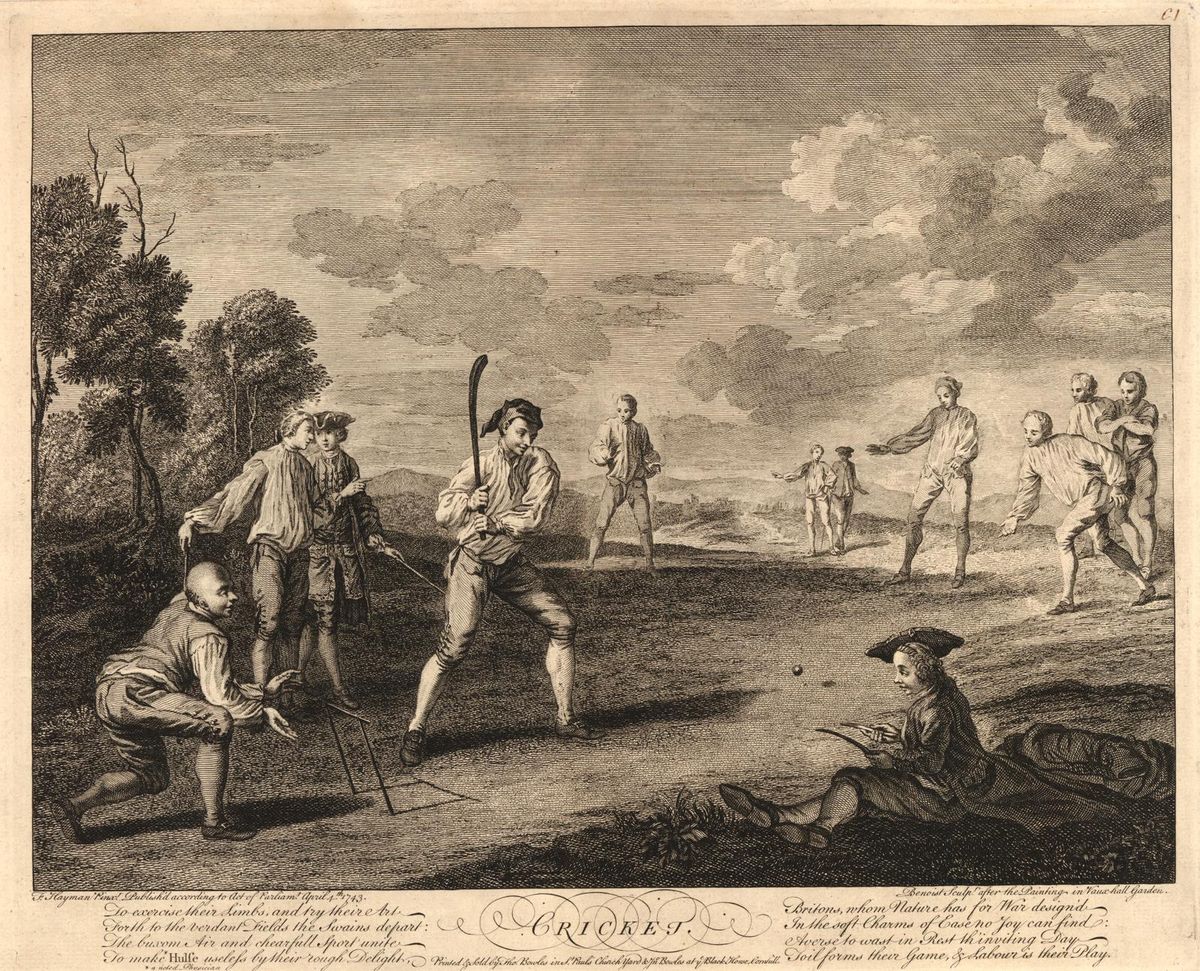
Cricket, an engraving of 1743 after Francis Hayman's painting for Vauxhall Gardens.
The game a year before the first known written laws: two stumps, a curved bat like a hockey stick, and a boy on the grass taking the score.
After Francis Hayman; engraved by Antoine Benoist · Public domain · Wikimedia Commons
That custody arrangement is the structurally interesting thing. MCC is a private members' club in London that owns the Laws of Cricket for the world. The International Cricket Council runs the international game and issues playing conditions on top of the Laws, but it does not own them.
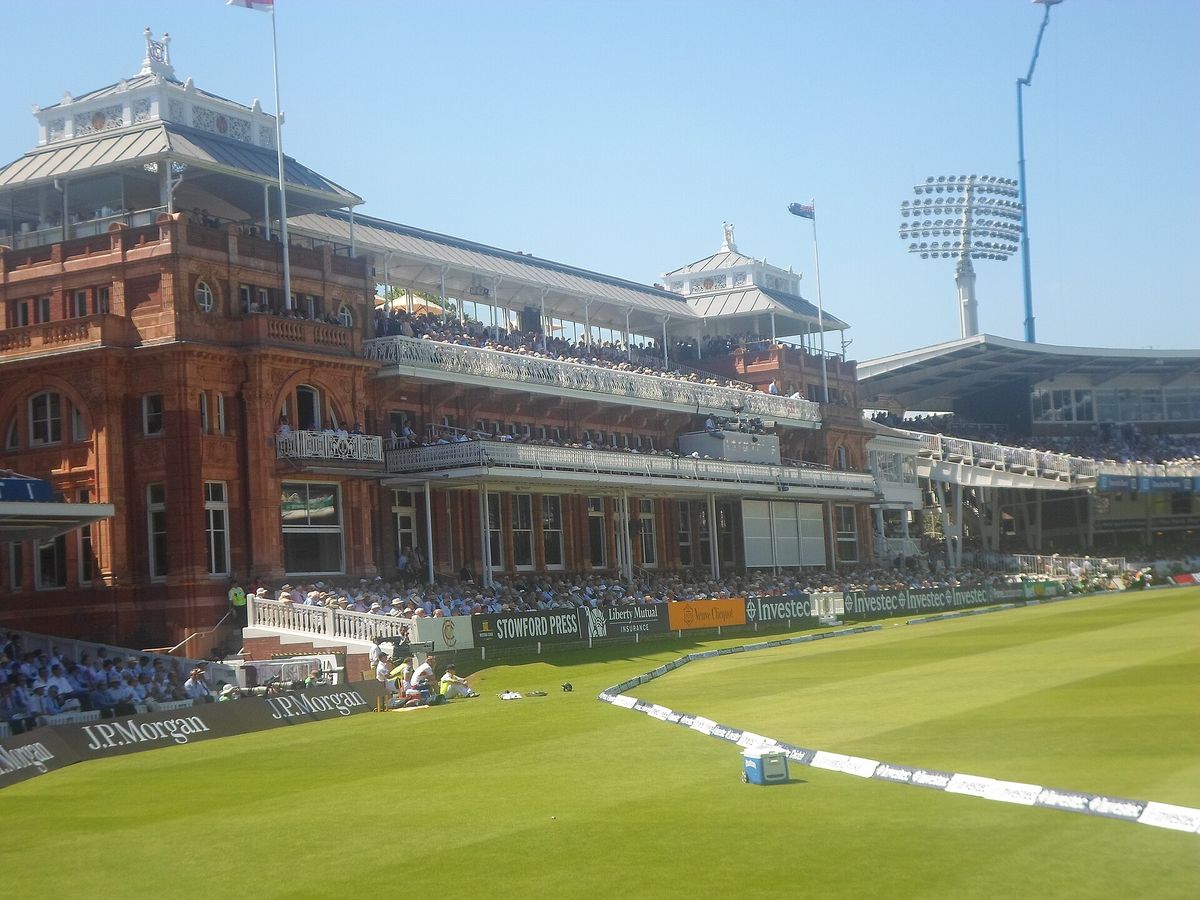
The Pavilion at Lord's, the home of the Marylebone Cricket Club.
The private members' club that has held the Laws of Cricket since 1788, and still does. The international game is run by a different body.
PaddyBriggs · CC BY-SA 3.0 · Wikimedia Commons
This is football's arrangement exactly — IFAB owns the Laws, FIFA runs the sport — and cricket arrived at it a century earlier and by a different route. In both cases the effect is the same: a rule change requires two bodies to agree, and the body that owns the rules is not the body with the money.
The sport spread through the British Empire, which is the whole of its geography and much of its politics. It is played seriously in about a dozen countries and barely at all outside them, and the map has not changed much in a century.
The one Olympic appearance before 2028 was in 1900: a single match, between Great Britain and France, the French side largely composed of expatriates. It was not repeated for 128 years.
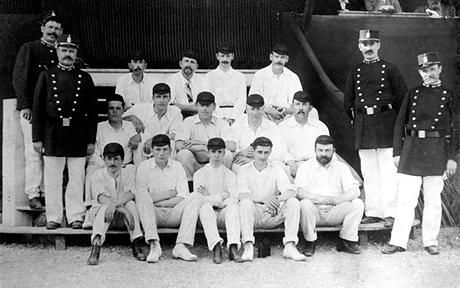
The Great Britain team that beat France at the 1900 Paris Games.
Actually a touring club, the Devon and Somerset Wanderers. It was cricket's only Olympic match until 2028.
Photographer unknown · Public domain · Wikimedia Commons
07Rule timeline
The sport’s own lane, expanded. Every entry carries a cause from the closed vocabulary and a citation, and says so where the citation is incomplete.
- 1971-01Commercialalso broadcast and pacingadopted 1971
A one-day international was played for the first time, with each side limited to a fixed number of overs and a result guaranteed in a day. It did not replace the five-day form; it was added alongside it, and the sport began keeping two sets of records that measure different games.
Comparability break · Scoped to one competition
One-day internationals began keeping their own records from the first match. The sport never attempted a combined figure. See the series
Trigger and citationIncomplete — no confirmed article
Trigger
The first ODI was improvised. A Test match in Melbourne was abandoned to rain, and rather than send the crowd away the authorities arranged a one-day exhibition on what would have been the final day. It drew a large crowd, and the format was adopted deliberately afterwards.
ICC Standard Playing Conditions · ICC playing conditions, one-day internationals
- 1980Fairness and eligibilityadopted 1979
The 1980 Code rewrote the leg before wicket Law, allowing a batter to be given out to a ball pitching outside off stump if they made no genuine attempt to play it. The rule stopped rewarding a batter for deliberately padding away a delivery they could have hit.
Trigger and citation
Trigger
Batters had learned that the safest response to a ball outside off stump was to push the pad at it and take no risk with the bat, which was legal and made large parts of a match uneventful.
The Laws of Cricket · Laws of Cricket, 1980 Code · article Law 36
- 2003-06Commercialalso broadcast and pacingadopted 2003
Twenty overs a side, a match inside three hours. Introduced as a domestic competition in England in 2003 and international within two years, adding a third format to a sport that already had two — again without replacing anything.
Comparability break · Scoped to one competition
A third format and a third set of records. A strike rate that is excellent in one is unplayable in another. See the series
Trigger and citationIncomplete — no confirmed article
Trigger
Domestic attendances in England had been falling for years, and the format was designed explicitly around the length of a working evening. It is the most commercially successful rule change on this site by a wide margin.
ICC Standard Playing Conditions · ICC playing conditions, Twenty20
- 2009Integrityadopted 2008
Teams were given the right to refer an umpire's decision to a third official using ball-tracking, edge detection and slow-motion replay, with a limited number of unsuccessful reviews per innings. Crucially the system retained the concept of umpire's call: where ball tracking shows a marginal outcome, the original decision stands.
Trigger and citationIncomplete — no confirmed article
Trigger
Television had been showing audiences ball-tracking predictions for years before players could use them, and a small number of visibly wrong decisions in high-profile matches made the gap untenable.
Umpire's call remains contested within the sport: it means the same delivery can produce opposite outcomes depending on what the umpire originally said, which critics regard as incoherent and defenders regard as a correct acknowledgement of the tracking system's margin of error.
ICC Standard Playing Conditions · ICC playing conditions, DRS
- 2017-10Equipment and technologyalso fairness and eligibilityadopted 2017
The 2017 Code set maximum bat dimensions for the first time — an edge thickness of 40 mm and a depth of 67 mm — where previously only the width and length had been constrained. Bats had grown enormously thick without gaining weight, because manufacturers were pressing lighter timber.
Trigger and citation
Trigger
Mishit shots were carrying for six, which shifted the balance between bat and ball measurably, and the change had happened entirely inside a specification that had never anticipated it.
The Laws of Cricket · Laws of Cricket, 2017 Code · article Law 5
- 2019-10Fairness and eligibilityadopted 2019-10
The rule that a tied Super Over be resolved by counting boundaries was abolished, replaced by repeated Super Overs until one side wins. It was removed within months of being used to decide a World Cup final.
Trigger and citationIncomplete — no confirmed article
Trigger
The 2019 World Cup final was tied, its Super Over was tied, and the title was awarded to England on the number of boundaries hit across the match. The reaction was close to universal disbelief that a world title had been settled by a tiebreak with no relationship to the contest, and the ICC removed the rule at the next opportunity.
ICC Standard Playing Conditions · ICC playing conditions, October 2019
08Equipment evolution
Cricket's equipment history is a bat that grew for two hundred years inside a specification that only measured two of its dimensions.
The Laws had constrained the bat's length and width since the eighteenth century — the width limit dates from an incident in 1771 in which a player arrived with a bat as wide as the wicket — and said nothing about how thick it could be. For most of that time this did not matter, because a thicker bat was a heavier bat and nobody wanted one.
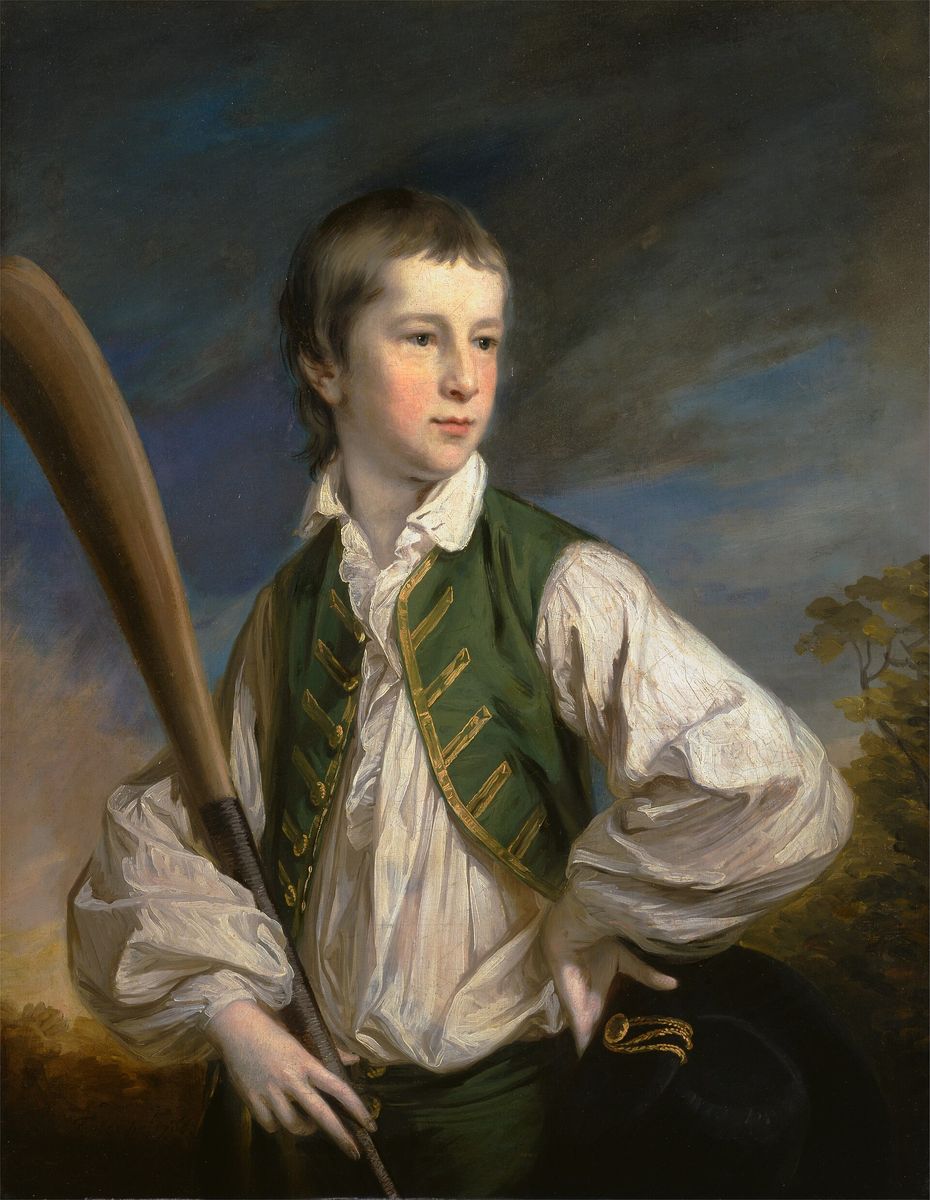
Francis Cotes, Charles Collyer as a Boy, with a Cricket Bat, 1766.
The curved bat, five years before the width limit of 1771. The Laws went on to constrain length and width, and nothing else, for more than two centuries.
Francis Cotes · Public domain · Wikimedia Commons
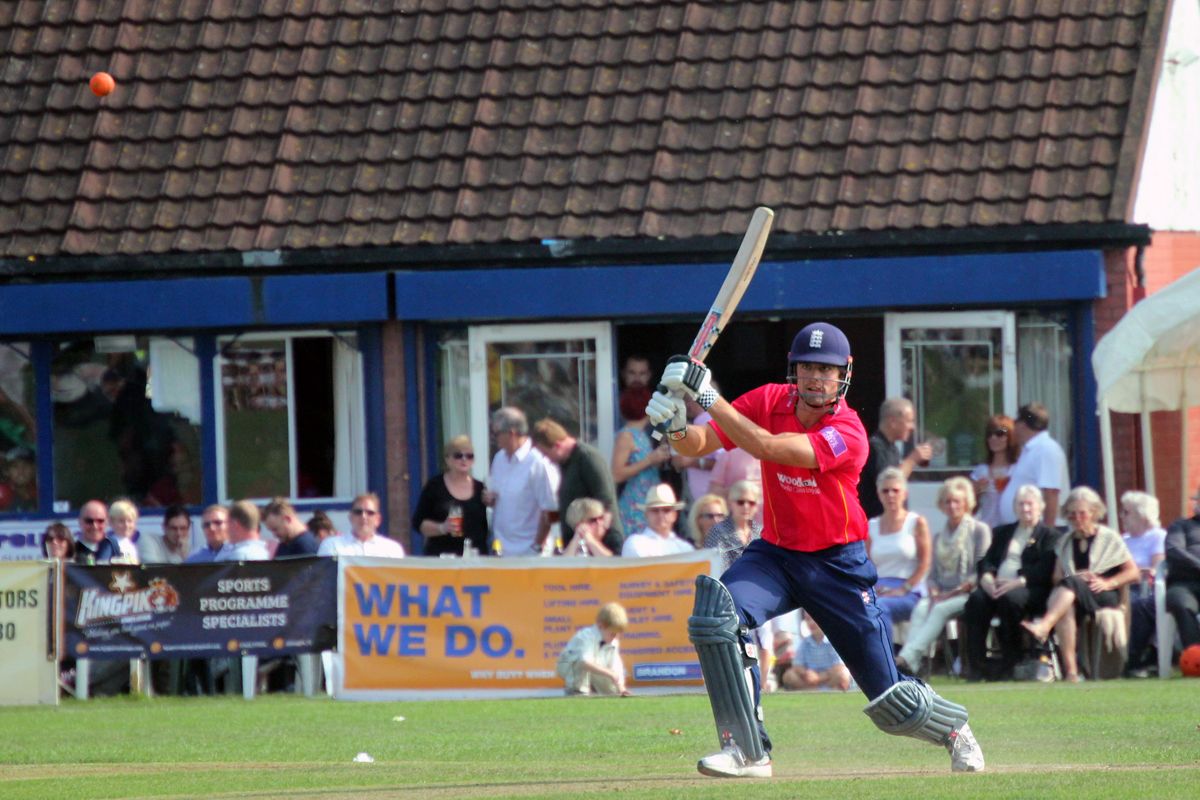
Alastair Cook batting for Essex, 2014.
The straight modern bat, still within length and width limits written in the eighteenth century. Its edges thickened at the same weight until the 2017 Code limited them.
Kroome111 · CC BY-SA 4.0 · Wikimedia Commons
Then manufacturers learned to press lighter timber. By the 2010s bats had edges around twice the thickness of a generation before at the same weight, and the consequence was measurable: mishit shots were carrying for six. The balance between bat and ball had moved without any rule changing, because the rule had never anticipated the variable that changed.
The 2017 Code added limits on edge thickness and depth. It is the first time in the sport's history that the shape of a bat was constrained in more than two dimensions.
The ball has barely moved: weight and circumference, specified for a century and a half. Protective equipment is the real safety story — helmets from the late 1970s, and after Phillip Hughes's death in 2014, neck protectors and revised helmet standards.
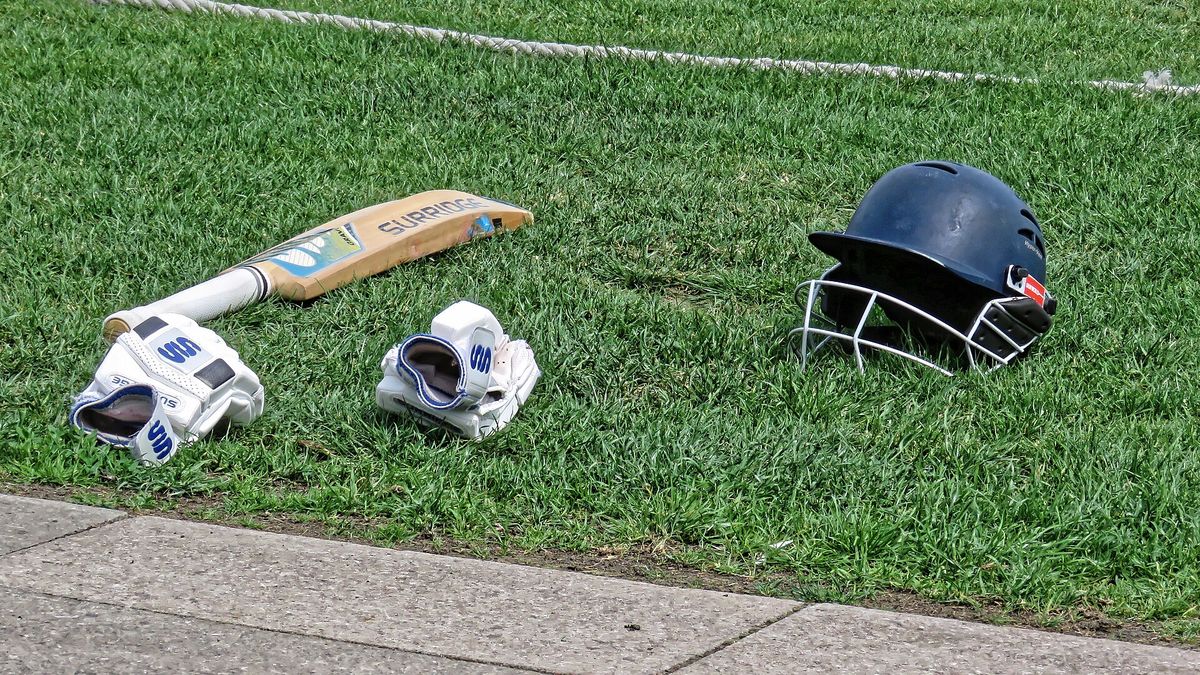
Gloves, bat and helmet on the grass during a club match, 2019.
Protective equipment is the real safety story: helmets from the late 1970s, and neck guards and tighter standards after Phillip Hughes's death in 2014.
Acabashi · CC BY-SA 4.0 · Wikimedia Commons
The pattern is the same one this site keeps finding. A loosely written specification tolerates gradual change until something visible happens, and then the specification has to grow a new dimension.
09Governing body politics
Two structural facts govern cricket, and both are unusual.
The Laws are owned by a private club. MCC has held them since 1788 and still issues the Codes. The ICC runs international cricket and writes playing conditions on top — which is where the formats, the review system and the tournament rules actually live. So cricket, like football, separates the ownership of the rules from the running of the sport, and a change can be a Law or a playing condition depending on which body made it. This site records which.
The money is concentrated in one member. India generates the large majority of world cricket's revenue, and the sport's governance has restructured around that fact repeatedly. Financial and administrative arrangements between the major boards have been rewritten more than once in the last fifteen years, and each version has been contested by the smaller members.
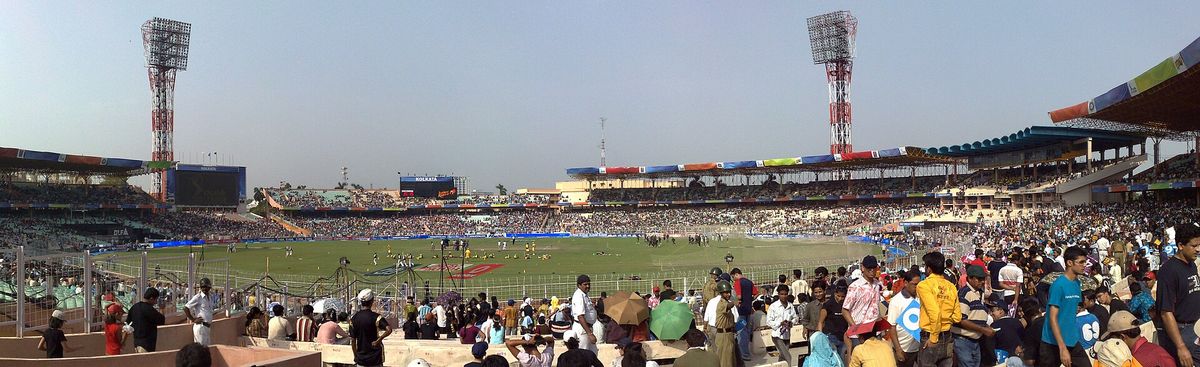
Eden Gardens, Kolkata, before an Indian Premier League match in May 2008.
The league's first season. The money in cricket is now overwhelmingly Indian, and this domestic franchise competition, which did not exist before 2008, is the most-watched cricket in the world.
Partha Bhaumik · CC BY-SA 2.0 · Wikimedia Commons
The format question runs through all of it. Twenty20 created a professional franchise market that now competes directly with international cricket for players' time, and the governing bodies have limited leverage over leagues they do not run. A sport that added a format for commercial reasons in 2003 now has a commercial structure that its governing bodies did not design and cannot fully control.
Cricket's return to the Olympic programme in 2028 is itself a governance decision of this kind: the format chosen is Twenty20, because it is the only one that fits, which means the Olympic version of cricket will be the newest and shortest of the three.
10Controversies that forced rule changes
The pad, and the 1980 Code. Batters had worked out that the safest response to a ball outside off stump was to push a pad at it and take no risk with the bat. It was legal, it was effective, and it made long passages of cricket uneventful. The 1980 Code extended leg before wicket to cover a ball pitching outside off where the batter made no genuine attempt to play. A rule was rewritten because the optimal tactic had become to do nothing.
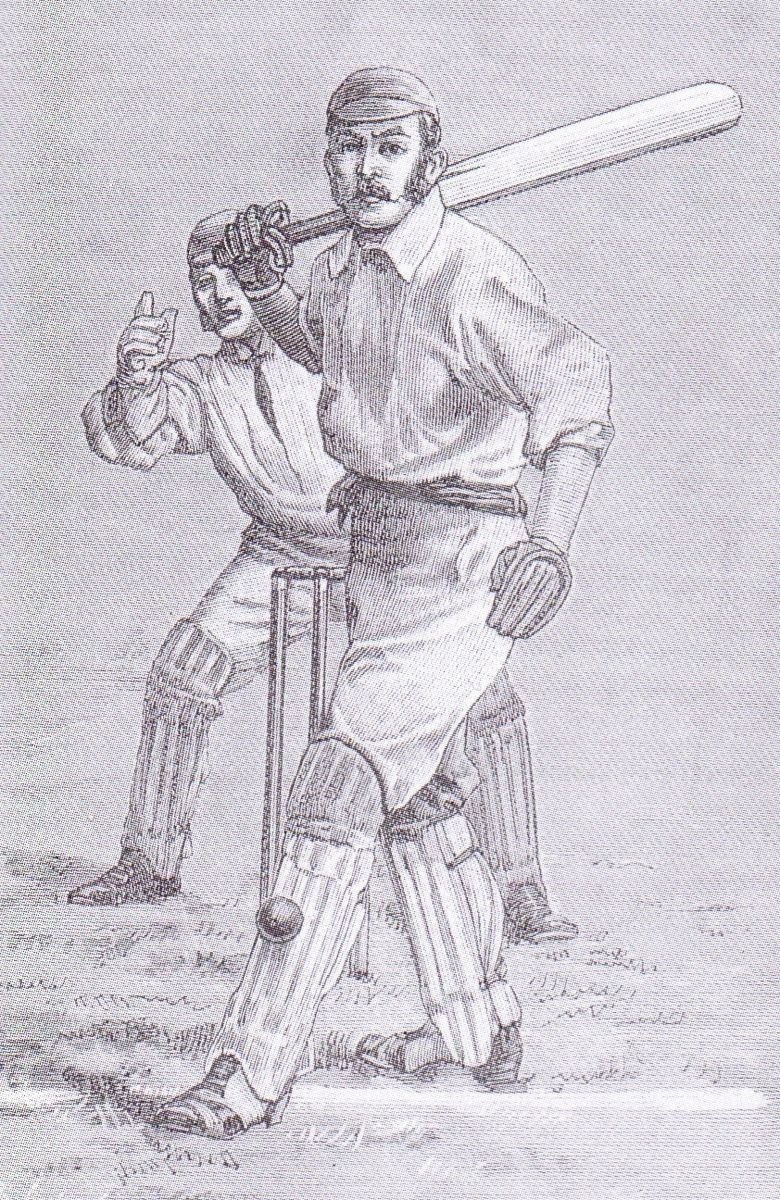
"A clear case": leg before wicket, from the Badminton Library's Cricket, 1904.
The law in its simple form. What the 1980 Code added was the harder case: a ball pitching outside off stump that the batter padded away without trying to play it.
Illustrator unknown · Public domain · Wikimedia Commons
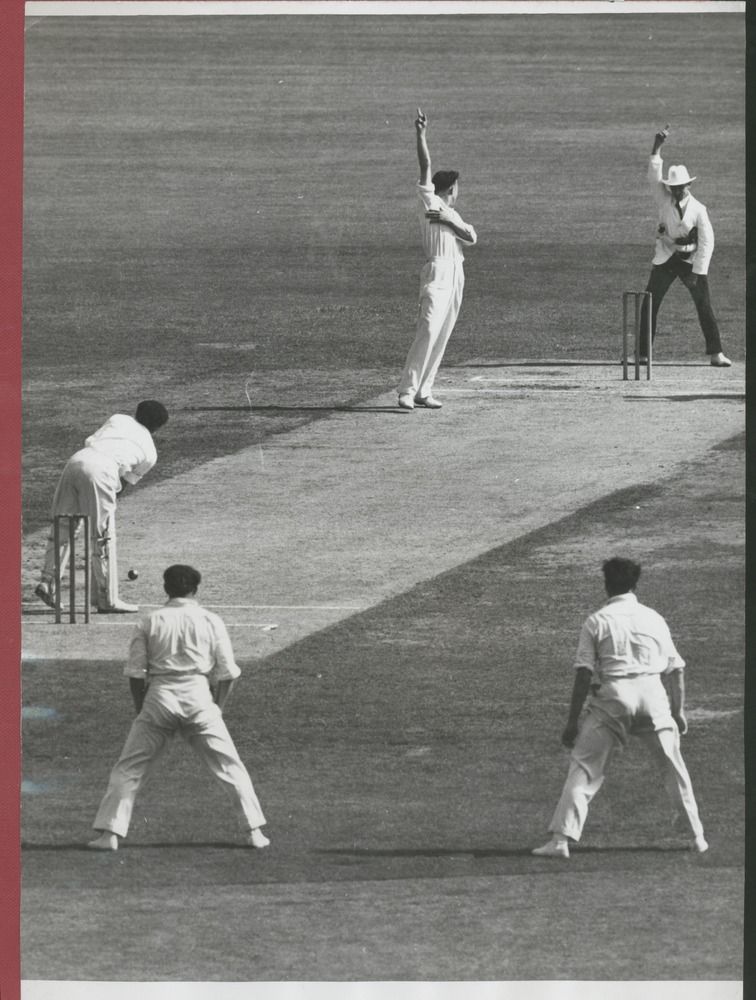
Hemu Adhikari out LBW to Bill Johnston for nought, Sydney, December 1947.
The umpire's arm is up: a judgement about where a ball would have gone, which is what ball-tracking now computes.
Herald and Weekly Times · Public domain · Wikimedia Commons
Melbourne, January 1971. A Test match washed out, a crowd already in the ground, and an improvised one-day exhibition on what would have been the final day. It drew forty-six thousand people. The one-day international existed by accident before it existed by design, and cricket has kept two record books ever since.
Falling attendances, 2003. Twenty20 was designed around a working evening, and it is the most commercially successful rule change on this site. It also gave the sport a third set of statistics, and this is the case this site finds most instructive: cricket knew from the start that the numbers would not be comparable, and simply never merged them.
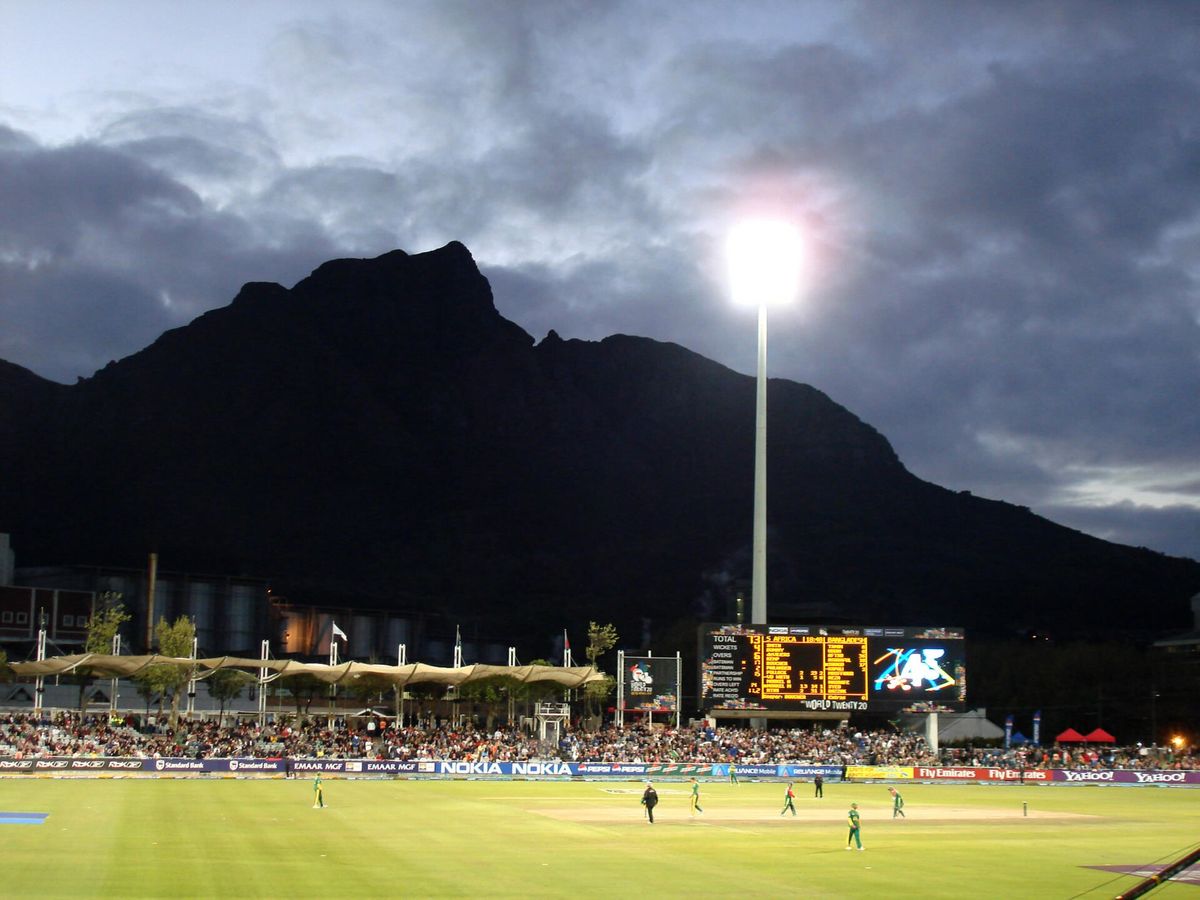
Bangladesh against South Africa at the first ICC World Twenty20, Cape Town, 2007.
Twenty20 under lights: the format designed in 2003 around a working evening, and a third set of statistics nobody tried to merge with the other two.
Warrenski · CC BY-SA 2.0 · Wikimedia Commons
Lord's, 14 July 2019. The World Cup final was tied. The Super Over was tied. England were awarded the title on the number of boundaries they had hit across the match — a tiebreak with no relationship to the contest, applied to decide a world championship. The reaction was close to universal, and the ICC removed the rule within months. It is the only rule on this site used exactly once, at the highest possible stakes, and then deleted.
Umpire's call. Still argued. The review system's tolerance means the same delivery can be out or not out depending on what the on-field umpire said first, which defenders call an honest acknowledgement of measurement error and critics call incoherent.
Where it standsthe record, and what is still open · sections 11 to 12
11Series
No series can exist
Batting records across the three formats
Cricket did not replace a format. It added two, and kept the first. A batting average in Test cricket measures how many runs a player scores before being dismissed, over five days, with no limit on how long they may take. The same statistic in a Twenty20 match measures something else entirely, because a batter who occupies twenty overs carefully has failed at the job. The sport knows this, which is why it keeps three separate sets of records and has never once claimed they are comparable. That makes cricket the clearest voluntary case on this site. Everywhere else, a governing body severed a series by accident or under pressure and then had to decide what to do about the record book. Cricket created the discontinuity deliberately, in 1971 and again in 2003, and handled it correctly from the start by never merging the lists. So there is no chart here, and there should not be one. A combined batting average across Tests, one-day internationals and Twenty20 would be an arithmetic operation on three different quantities — and unlike every other absence on this site, nobody in cricket has ever wanted it.
1971Scoped to one competitionOne-day internationals began keeping their own records from the first match. The sport never attempted a combined figure.
2003Scoped to one competitionA third format and a third set of records. A strike rate that is excellent in one is unplayable in another.
12What is contested now
Recorded as unsettled.
Whether Test cricket survives. Five days, twelve countries, and a professional market that increasingly pays better for three hours' work. The sport's oldest format is in genuine structural decline outside three or four nations, and every proposal to address it — two divisions, a shorter Test, a world championship — has been contested by whoever it disadvantages.
Ian Bell batting in a Test at Lord's, England against Sri Lanka, June 2011.
Five days, whites, a red ball: the oldest format, which does not travel and is played by twelve countries.
Gareth Williams · CC BY 2.0 · Wikimedia Commons
Umpire's call. Still the most argued piece of officiating on this site. Defenders say it correctly respects the tracking system's margin of error; critics say a sport should not produce opposite verdicts on identical evidence depending on who spoke first.
Franchise leagues against international cricket. Players increasingly choose club over country, boards cannot compel them, and the calendar has no authority co-ordinating it. This is a governance dispute created directly by a rule change: Twenty20 built a market the governing bodies do not run.
Bat and ball. The 2017 bat limits were a first attempt at rebalancing, and the argument that they did not go far enough is live, as is the counter-argument that shorter formats are supposed to favour batters.
The Olympic format. Cricket returns in 2028 as Twenty20, which means the version of the sport the largest global audience will see is the one that is twenty-two years old rather than the one that is a hundred and fifty. Whether that is a problem depends entirely on what a person thinks cricket is.