Cycling
Split its own record in two in 1997, ran both for seventeen years, then put them back together.
- Official
- Cycling
- Game category
- Performance
- Adjudication
- Measured
- Standing
- Never off
- rule changes
- 6
- comparability breaks
- 2
- Olympic editions
- 31
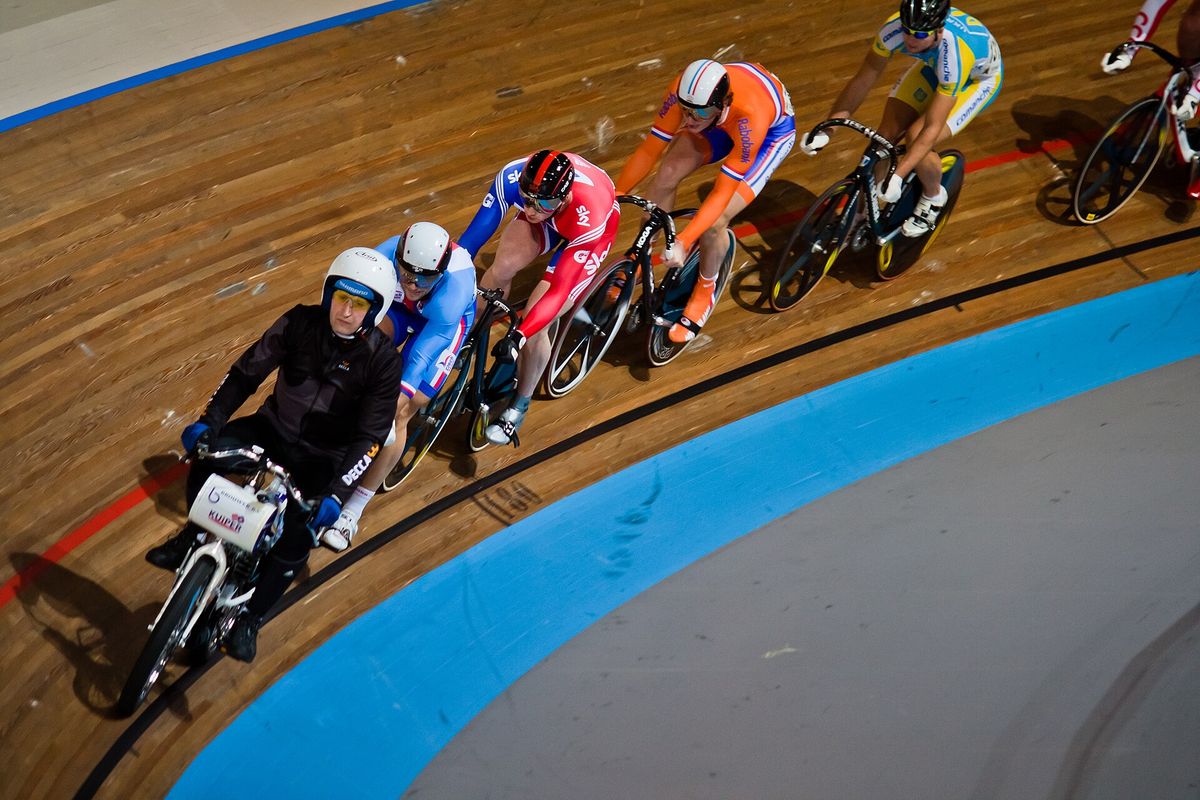
Riders behind the derny in a keirin, European Track Championships, Apeldoorn, 2011 · ...some guy · CC BY 2.0
- Governing body
- Union Cycliste Internationale
- Founded
- Union Cycliste Internationale founded 1900.
- Olympic status
- 31 editions
- on the 2028 programme
- Also contested at
- Asian Games
The hour record is the most instructive series on this site. Faced with equipment that had made old marks unreachable, the UCI did not reset the list and did not leave it alone — it split it, running an equipment-restricted record alongside an unrestricted one for seventeen years, and then reunified them in 2014. Athletics reset, swimming retained, cycling did both at once and then changed its mind. Nowhere else can those three answers be compared against the same problem.
The gamewhat it is now · sections 1 to 5
01How it is played
Cover the distance faster than everyone else, on a machine the federation will recognise as a bicycle. That second clause is the whole of cycling's rulebook. More than any other sport here, its regulations describe an object rather than a contest, because the object is where the advantage lives.
These figures were entered from the edition named above but have not been checked against its text line by line. Treat them as this site’s reading of the laws, not as a substitute for them.
The object of the events
Finish first, or cover the greatest distance in a set time, or the set distance in the least time. Road racing adds something no other sport on this site has: because drafting saves so much energy, the fastest way to ride is behind someone else, so a road race is a cooperative problem pretending to be a competitive one until the final kilometres.
Where it is raced
Track racing happens on a banked oval, usually 250 m for international competition. Road racing happens on public roads, which means the course is different every time and no road performance is comparable with another. BMX and mountain biking use purpose-built and natural terrain respectively.
- Olympic track length
- 250 m
- Track surface
- Timber, indoors
- Hour record venue
- Any UCI-approved track
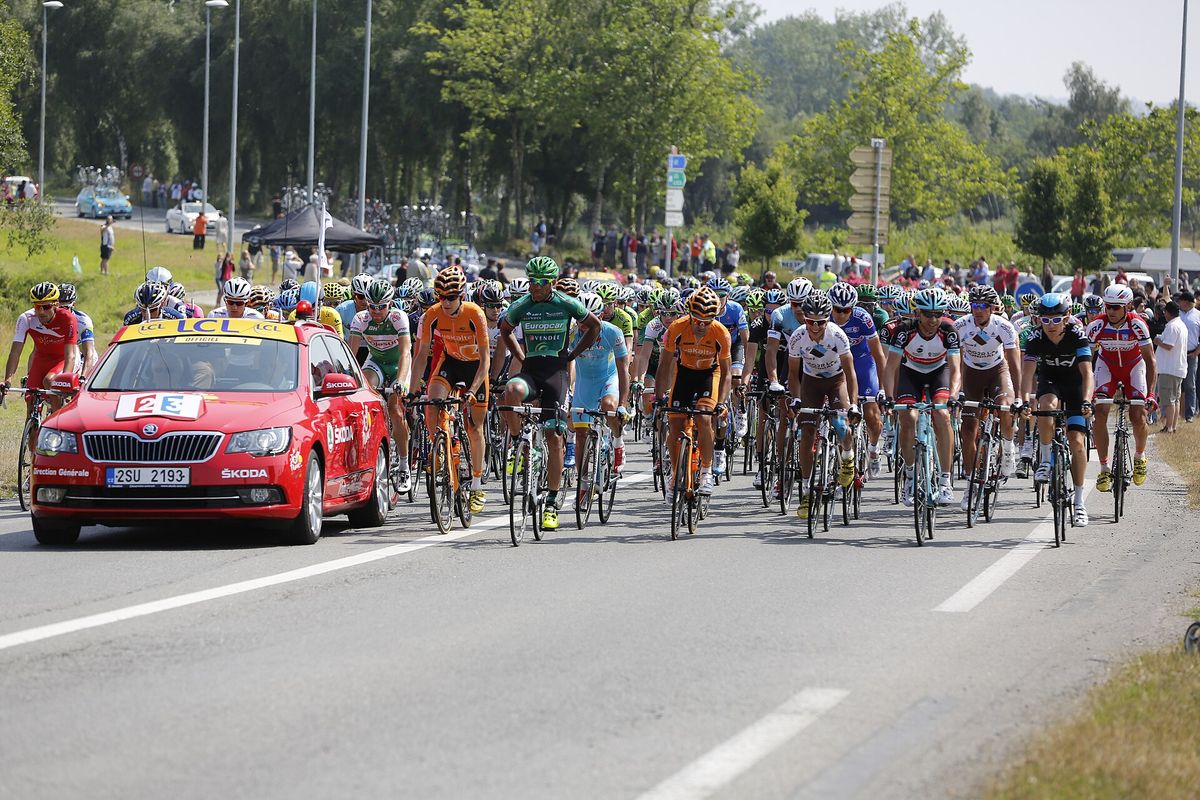
The peloton behind the race director's car at the start of a Tour de France stage, 2013.
Road racing's field of play is public road, closed for the race and never the same twice.
Pymouss · CC BY-SA 3.0 · Wikimedia Commons
UCI Cycling Regulations · Part 3, track · article not confirmed
The bicycle
The Lugano Charter, in force from 2000, decided that a bicycle is a shape rather than a function: a double-triangle frame of tubes within stated dimensions, a minimum weight, limits on wheel construction and on where the rider may sit relative to the bottom bracket.
The rules that produced it were written against individuals. Graeme Obree's tucked position was banned in 1994 and his second invention, the Superman, in 1996. Both had been legal, both were faster, and both were arrived at by a rider building his own machine rather than by a manufacturer.
- Minimum weight
- 6.8 kg
- Frame
- Double triangle, tubed
- Handlebar extension
- Limited ahead of the bottom bracket
- Concealed motors
- Prohibited since 2016
This clause reads this way because of
- 2000 — A general specification for the racing bicycle: a double-triangle frame of tubes within stated…
- 1994 — The tucked riding position developed by Graeme Obree, arms folded beneath the chest…
- 1996 — The "Superman" position — arms extended straight forward on long tri-bars — was banned…
- 2016 — Concealed motors were explicitly prohibited under a new offence of technological fraud…
UCI Cycling Regulations · 1.3.020
Riders and officials
Road races are contested by teams whose members are not trying to win individually — most of a team's riders exist to shelter one of them from the wind. Track events are individual or small-team. Commissaires officiate, and their modern remit includes equipment inspection and, since 2016, scanning frames for concealed motors.
This clause reads this way because of
Format
The hour record is exactly one hour and is the purest format in the sport. Track events run from a 200 m flying start to a 50 km points race. Road races run from a one-day classic to a three-week stage race scored on cumulative time.
There is no clock management and no stoppage. Cycling is the only sport on this site whose events can last three weeks and whose margin of victory can be a few seconds.
Measurement
Time, distance, or position. What makes cycling different from athletics as a measured sport is that its most famous number depends on a machine the federation defines, so the sport has had to decide repeatedly what counts as the same performance done twice.
It answered that question three different ways in forty years: leave the record alone as equipment improved, split it in two in 1997, and merge it back in 2014.
- Hour record
- One hour, greatest distance
- Timing
- To one thousandth on the track
This clause reads this way because of
Starts
Track pursuit and time trial events use a starting gate that holds the bicycle upright. Mass-start races begin on the line with no gate. The hour record begins from a standing start and the clock does not stop.
Infringements
On the track: leaving the sprinter's lane to obstruct, and irregular riding in a sprint. On the road: drafting behind a vehicle, holding onto one, and taking a supply outside the permitted zones. Across the sport: equipment outside the specification, and technological fraud, which since 2016 is a named offence with its own sanctions and its own detection programme.
This clause reads this way because of
Deciding the winner
First across the line, or the greatest distance, or the lowest cumulative time. Records are ratified centrally, and the hour record's ratification history is the reason this sport is on the site: the same federation has ruled three different ways on what a record is for.
This clause reads this way because of
Everything above is current law. Everything below is how Cycling got here.
02Disciplines and events
Five Olympic disciplines under one federation, which is unusual: road, track, mountain bike, BMX racing and BMX freestyle share a governing body and almost nothing else. The IOC counts them as one sport, and this is the clearest case on the site of the official taxonomy grouping things that have very little in common.
- Disciplines
- 4
- Olympic medal events
- 22
- Men’s and women’s counted separately.
- Contested elsewhere
- 3
- world championship, federation only.
- Listed for context
- 1
- Not counted as this sport.
Road4
- Road race
- Individual time trial
Track12
The discipline the hour record belongs to, though the record itself is not an Olympic event.
- Sprint
- Team sprint
- Keirin
- Team pursuit
- Omnium
- Madison
Mountain bike2
- Cross-country
BMX4
- BMX racing
- BMX freestyle parkJudged, not measured — a judged event inside a measured sport.
Contested away from the Games3
- The hour recordFederation onlyA ratified world record, contested whenever a rider chooses. Not an event at any championship.
- Cyclo-crossWorld championship
- Individual pursuitWorld championshipDropped from the Olympic programme after 2008; still a world championship event.
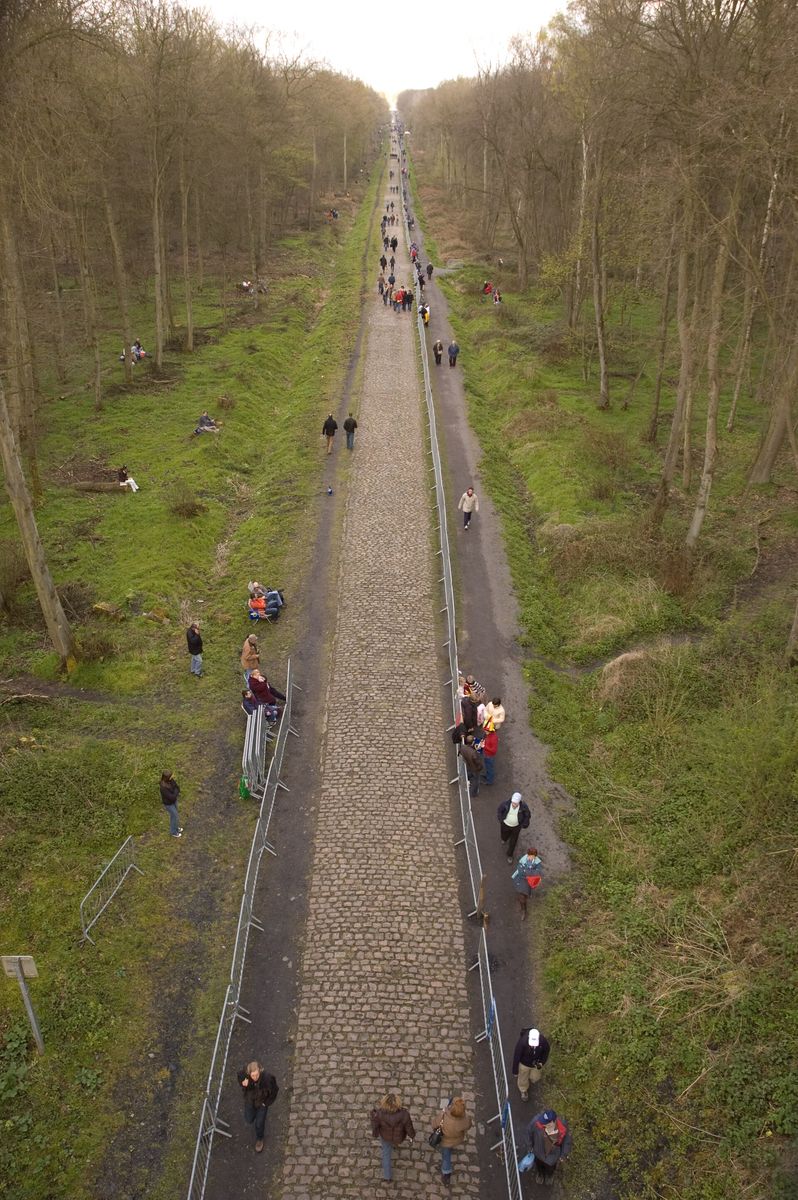
The cobbled Trouée d'Arenberg during Paris–Roubaix, 2008.
Another newspaper's race, and one that still keeps its cobbles because they are the point.
Jack Thurston · CC BY-SA 2.0 · Wikimedia Commons
Riders behind the derny in a keirin, European Track Championships, Apeldoorn, 2011.
A track event with a pacing motorbike that pulls off before the sprint.
...some guy · CC BY 2.0 · Wikimedia Commons
03Officiating and technology
Cycling's officiating divides cleanly into two jobs that have almost nothing in common.
Timing and placing are fully instrumented and barely contested. Track events are timed electronically to a thousandth of a second, photo finishes settle a sprint, and transponders track riders on the road. These are measurements with correct answers.
Equipment compliance is the other half, and it is where the sport puts its effort. Commissaires measure bicycles before events — frame geometry, saddle position, handlebar reach, weight — against the Lugano Charter's numbers. This is closer to a customs inspection than to refereeing, and no other sport on this site does anything like it at this scale.
Since 2016 that inspection includes scanning for concealed motors, using magnetic resonance devices and thermal cameras at races. The sport now routinely x-rays its own equipment for the presence of a machine that would be undetectable by eye.
The interesting officiating gap is on the road, where much of what riders do cannot be observed. Drafting behind a team car, taking a supply outside the permitted zone, holding onto a vehicle on a climb — these happen inside a moving convoy, spread over 200 kilometres, watched by a small number of officials on motorcycles. Cycling has the same enforceability problem swimming had with the breaststroke dolphin kick, and it has not resolved it the way swimming did.
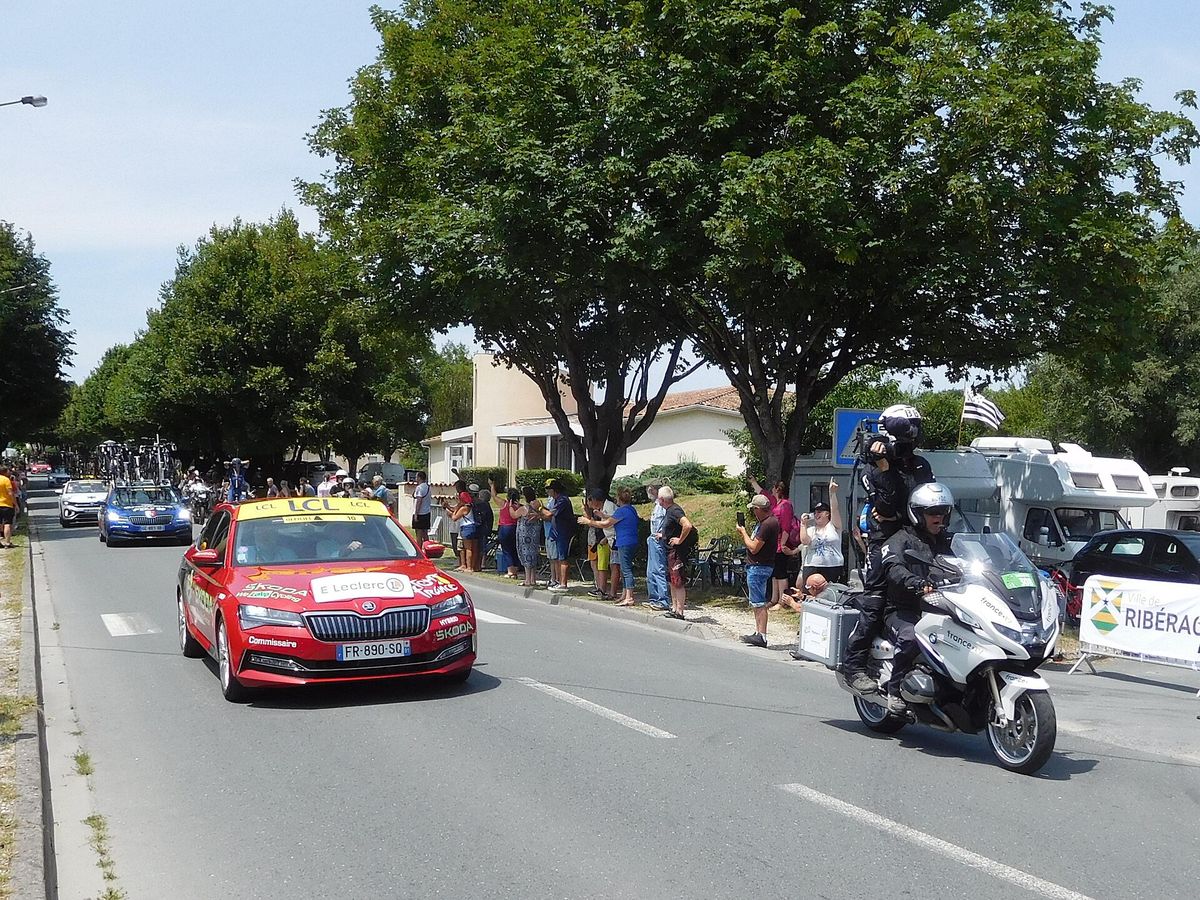
Race vehicles including a commissaire's car behind the peloton, Tour de France, 2023.
The road's officials ride in a moving convoy spread over 200 kilometres, which is why much of what riders do there cannot be seen.
Cjp24 · CC BY-SA 4.0 · Wikimedia Commons
04Where it is played
Cycling's participation is close to universal and its elite geography is narrowly European, and the gap between those two facts is larger than in any sport here except swimming.
Bicycles are the most widely owned piece of sports equipment on earth, and in much of the world they are transport rather than recreation. But competitive road cycling is concentrated in a belt running from Belgium and the Netherlands through France, Italy and Spain, with Britain, Denmark, Colombia, Australia and Slovenia as significant additions in the last two decades.
The reason is infrastructure of a particular kind: not facilities but a race calendar. A young rider needs a dense programme of amateur races within travelling distance, a club structure to enter them through, and roads that can be closed. Colombia's emergence rests on altitude and a domestic racing culture; Britain's rests on a track programme funded from lottery money in the late 1990s, which is one of the most legible examples anywhere of money producing medals.
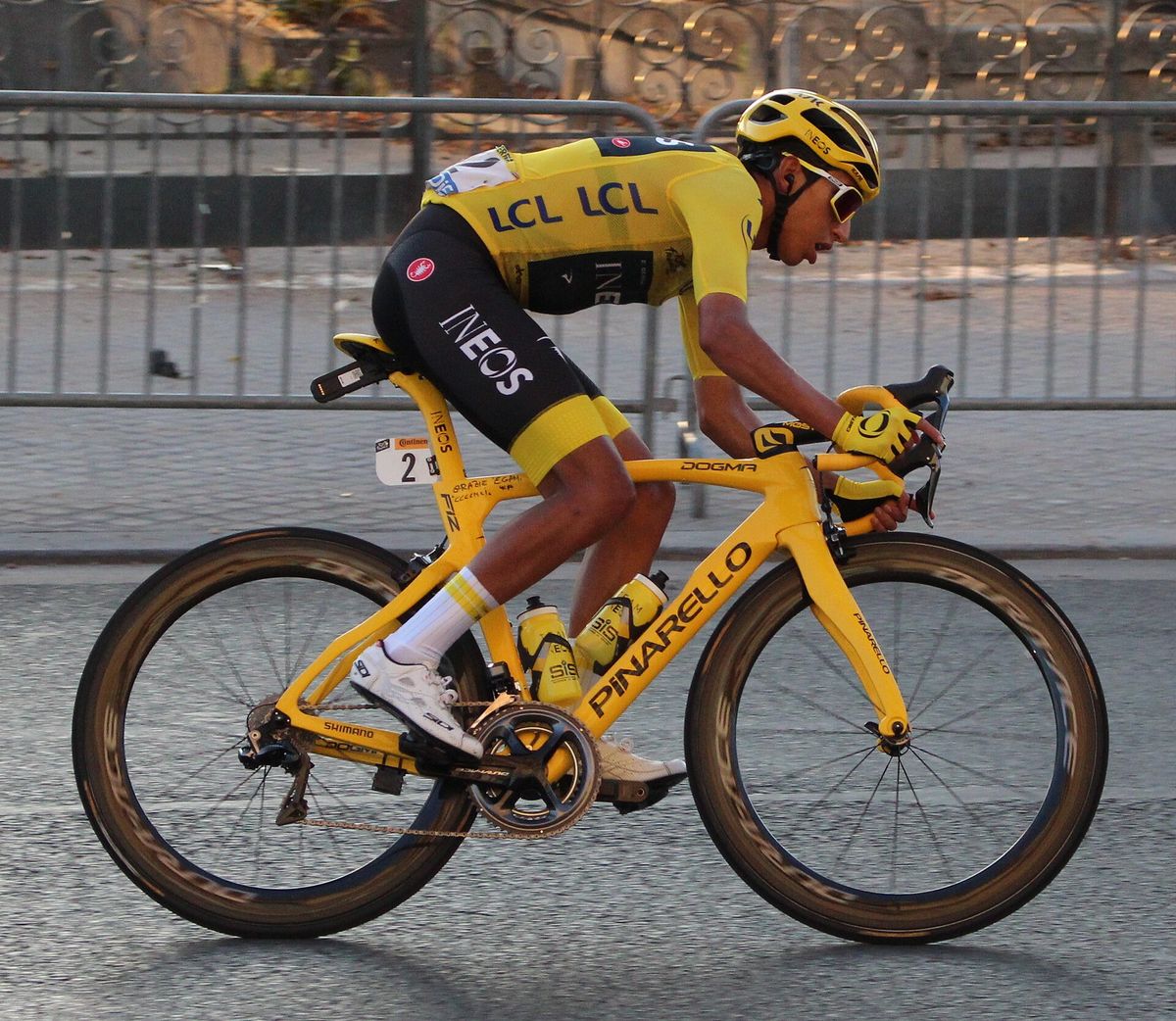
Egan Bernal of Colombia in the yellow jersey on the final stage of the 2019 Tour de France, Paris.
The first Colombian winner of the Tour, and the clearest evidence of the country's emergence from altitude and a domestic racing culture.
Chabe01 · CC BY-SA 4.0 · Wikimedia Commons
The track discipline is different again, and its geography is a map of velodromes. There are few of them, they are expensive, and countries that built them win.
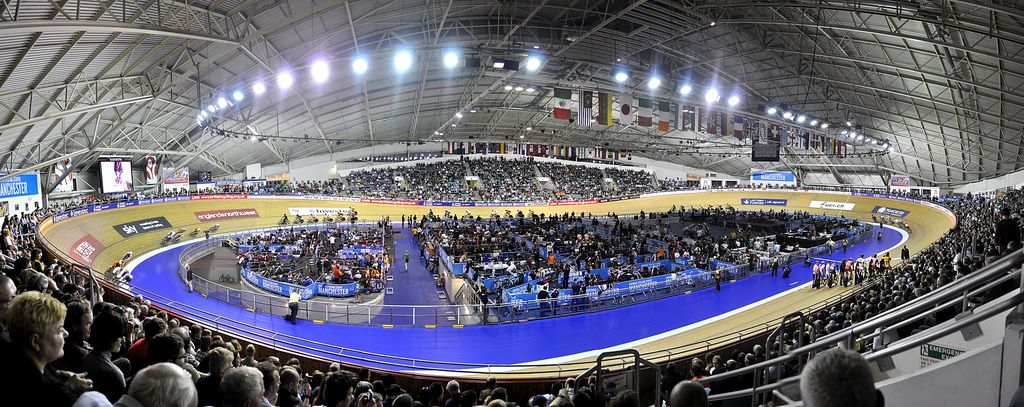
The Manchester Velodrome during a men's keirin, 2011.
Opened in 1994 and the base of the British track programme that lottery funding from the late 1990s turned into medals. Track cycling's map is a map of buildings like this.
Andrew Last · CC BY 2.0 · Wikimedia Commons
The hour record has no geography at all, which is part of its appeal. It requires one rider, one track and one hour, and it has been set in Mexico City, Manchester, Grenchen and Roubaix by riders from six countries.
05Learning curve
Most people on earth can already do the thing. Cycling is the only sport here whose basic skill is a form of transport, learned in childhood by people with no interest in racing, which makes its entry barrier close to zero and its competitive barrier almost entirely about equipment and physiology.
Editorial — the site’s reading, not a sourced claim
Barrier to entry
How hard is it to get to a real game?
If you can ride a bike, you can enter a race this weekend.
There is no technique to acquire before competing. A club road race, a time trial or a sportive will accept a rider who has never trained, and the sport's entry-level events are genuinely continuous with commuting.
What stands between a beginner and the sport is money rather than skill. A competitive road bicycle costs more than the equipment of every other sport on this site combined, and the difference between a cheap bicycle and an expensive one is measurable in a way that a cheap racket and an expensive one mostly is not.
Evidence
- Prerequisite skillRiding a bicycleobserved
- Facility neededA roadobserved
- Minimum bicycle weight6.8 kgruleA floor, not a ceiling — the rule exists to stop the arms race going further, not to make bicycles cheap.2000 — the rule this rests on
- Time to a first raceOne weekendestimate
- Cost of a competitive machineThe highest hereestimate
Barrier to the top
How hard is it to be good at?
A physiological outlier on equipment the rules have spent thirty years constraining.
Elite endurance cycling selects for a narrow range of measurable physiology as hard as any sport in the world, and the numbers involved are published and unambiguous. There is very little technique to hide behind.
The equipment half is what makes this sport's ceiling unusual. Because a bicycle can be improved almost without limit, the governing body has spent thirty years deciding how much of the improvement to allow — the position bans in 1994 and 1996, the Lugano Charter in 2000, and the hour record split in 1997. Each of those was a decision about how much of the performance should belong to the rider.
The hour record is the clearest illustration anywhere on this site of a ceiling that moved because a rule moved. Chris Boardman's 56.375 km stood as the furthest distance for twenty-six years, not because nobody was strong enough, but because the equipment that produced it was banned and then the record it belonged to was abolished.
Evidence
- Superman positionBanned 1996ruleWorth several km/h for no additional power.1996 — the rule this rests on
- Hour record split1997ruleRolled the target back 25 years, to a distance 7 km short of the best ever ridden.1997 — the rule this rests on
- Hour record reunified2014ruleReopened the ceiling. It took eight more years to beat a 1996 ride.2014 — the rule this rests on
- Typical peak age26–31estimateLater for grand tours
- Typical age of specialisation14–18estimateLate by the standards of every other sport here.
Why the two differ
Cycling's gap is the least about skill of any sport on this site. Almost nobody is prevented from starting, and almost nobody can approach the top, and the thing in between is not a technique that can be learned.
What makes it worth recording here is the equipment half, which no other sport shows as clearly. In athletics the shoe rules changed what a record means; in swimming the suit rules did. In cycling the machine is so determinative that the federation had to answer the question three separate ways within twenty years — leave it, split it, merge it — and the ceiling moved each time. A rider in 1999 and a rider in 2015 were chasing different numbers for reasons that had nothing to do with either of them.
The historyhow it got here · sections 6 to 10
06Origin and invention
Cycling as a sport is exactly as old as the bicycle that made it possible, and both arrived in a rush. The safety bicycle of the 1880s — two equal wheels, a chain drive, a diamond frame — was the first machine that ordinary people could ride fast, and racing on it began almost immediately. The Union Cycliste Internationale was founded in 1900.
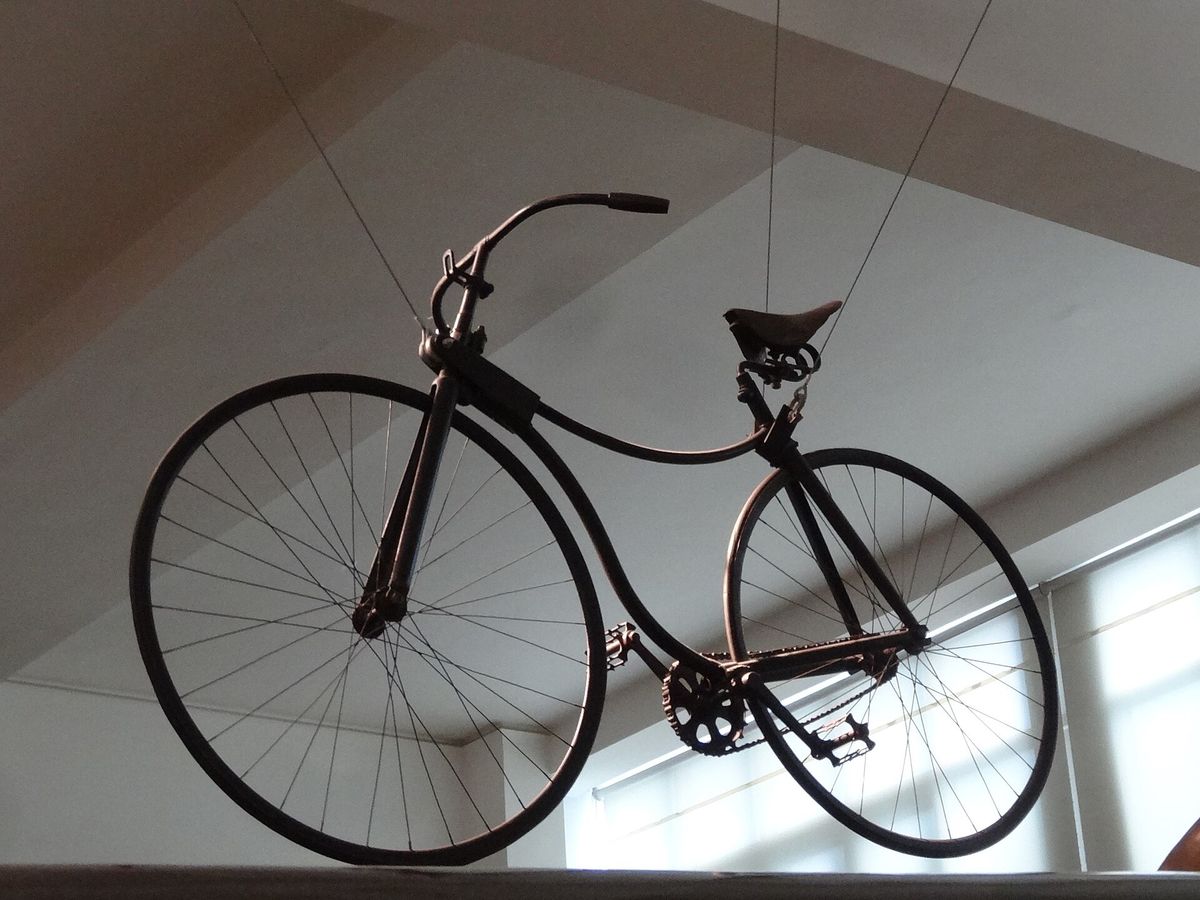
A Rover safety bicycle of 1885, in the Science Museum, London.
Two wheels of near-equal size, a chain to the rear wheel: the machine ordinary people could ride fast, and on which racing began almost at once.
Jonathan Cardy · CC BY-SA 3.0 · Wikimedia Commons
What is unusual about cycling's origin is that its greatest events were invented by newspapers as circulation devices. The Tour de France was created in 1903 by a sports paper trying to outsell a rival; Paris–Roubaix and the Giro d'Italia have similar parentage. The sport's calendar was shaped by media before broadcast existed, which puts cycling ahead of every other sport on this site in being commercially designed from the start.
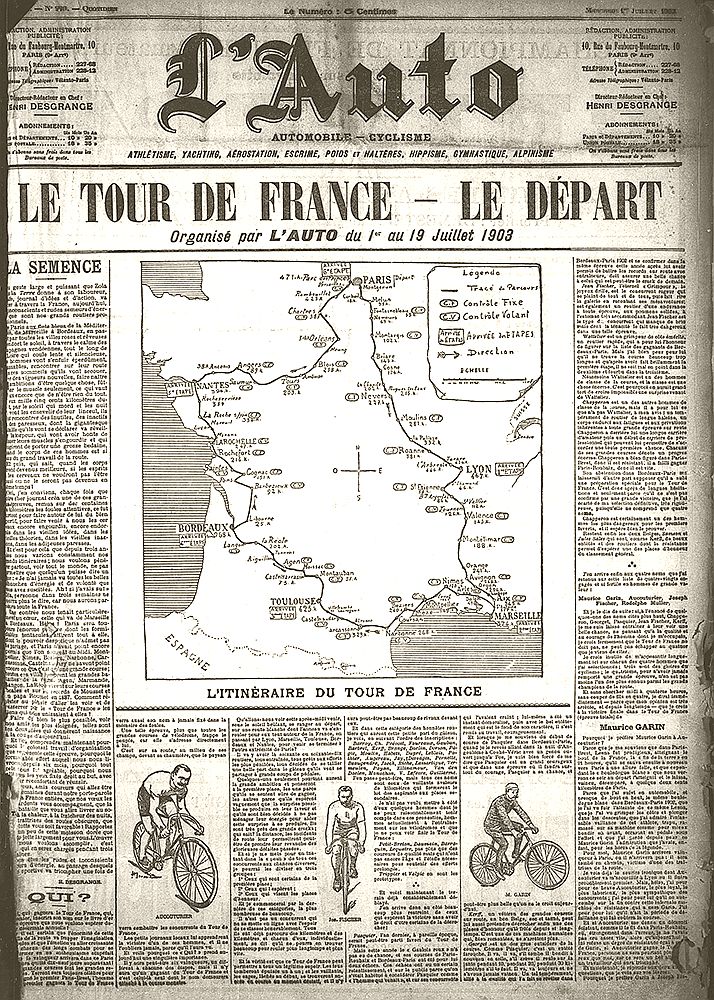
The front page of L'Auto on 1 July 1903, announcing the start of the first Tour de France.
A sports paper's route map on its own front page. The race was invented to sell the paper, and it did.
L'Auto · Public domain · Wikimedia Commons
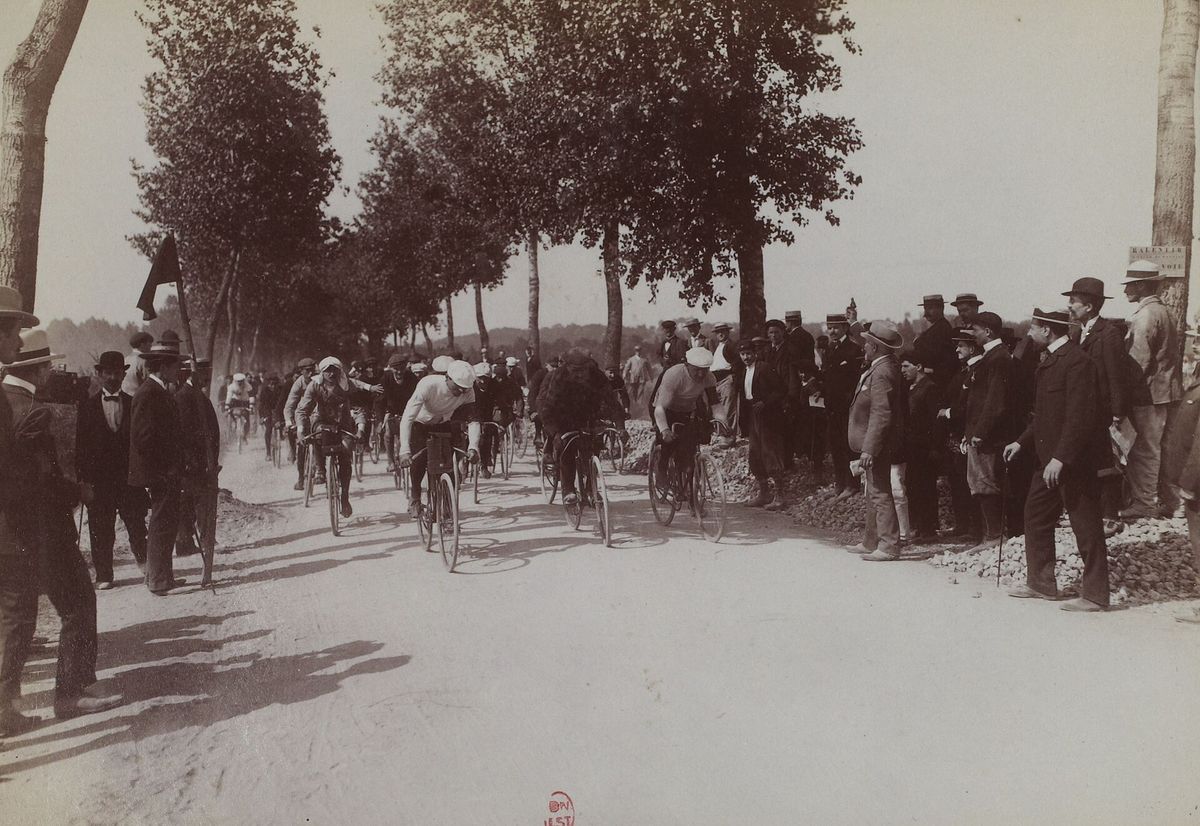
The start of the first stage of the first Tour de France, Villeneuve-Saint-Georges, July 1903.
A crowd on a country road and riders setting off on a stage of several hundred kilometres. The event and its calendar were designed by a newspaper before broadcasting existed.
Jules Beau · Public domain · Wikimedia Commons
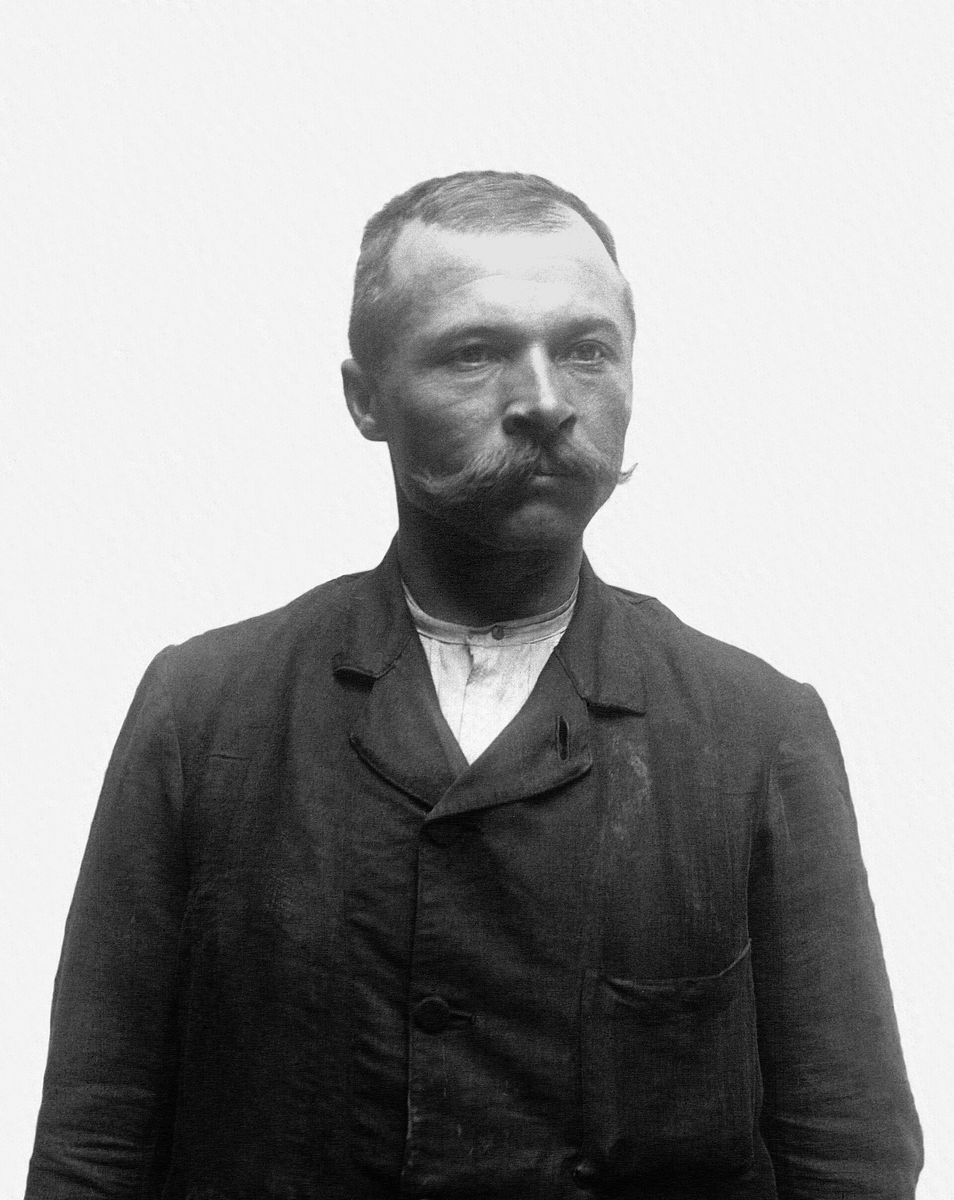
Maurice Garin, winner of the first Tour de France, photographed by the Meurisse agency.
He won Paris–Roubaix in 1897 and 1898 and the first Tour in 1903 — races created by newspapers, which the sport's calendar is still built around.
Agence Meurisse · Public domain · Wikimedia Commons
The hour record predates all of it. Riding as far as possible in an hour needs no opponent, no course and no organisation — just a track and a clock — and it has been contested since the 1870s. That simplicity is why it became the sport's purest measure and why it has been so difficult to govern: there is nothing in it to regulate except the machine.
07Rule timeline
The sport’s own lane, expanded. Every entry carries a cause from the closed vocabulary and a citation, and says so where the citation is incomplete.
- 1994Equipment and technologyalso safetyadopted 1994
The tucked riding position developed by Graeme Obree, arms folded beneath the chest on a bicycle he had built himself, was prohibited by a rule requiring a minimum separation between the saddle and the handlebars.
Trigger and citationIncomplete — no confirmed article
Trigger
Obree set the hour record in 1993 on a machine assembled partly from washing-machine bearings, in a position nobody had used before. The UCI cited safety and the definition of a bicycle; Obree's response was to invent a second position, which is what produced the 1996 rule.
It is widely read as a governing body legislating against an outsider who had beaten the sport's institutions with a homemade machine. Both readings are recorded.
UCI Cycling Regulations · UCI Regulations, 1994
- 1996Equipment and technologyadopted 1996
The "Superman" position — arms extended straight forward on long tri-bars — was banned by limiting how far the handlebar extensions may reach ahead of the bottom bracket. Chris Boardman had used it to set an hour record of 56.375 km, a distance that would stand as the furthest ridden in an hour for a quarter of a century.
Trigger and citationIncomplete — no confirmed article
Trigger
The position was worth several kilometres an hour and required no additional power, so the record had become a test of aerodynamic innovation rather than of riders. The federation's concern was that the bicycle was ceasing to be recognisable as one.
UCI Cycling Regulations · UCI Regulations, 1996
- 1997Equipment and technologyalso disputedadopted 1997
The hour record was divided in two. The "UCI Hour Record" was restricted to equipment substantially equivalent to that available to Eddy Merckx in 1972 — a conventional round-tubed steel frame, spoked wheels, drop handlebars, no aerodynamic extensions. Everything set on modern aerodynamic machines was moved to a separate list called the Best Human Effort. The effect was to roll the headline record back from Chris Boardman's 56.375 km to Merckx's 49.431 km, set twenty-five years earlier.
Comparability break · Record book reset
The record was not annulled and not left alone. It was split: everything set on aerodynamic equipment was moved to a separate list, and the headline record rolled back twenty-five years to Merckx. A rider in 1998 was chasing 49.431 km while the furthest anyone had ridden in an hour was 56.375 km, and both numbers were official. See the series
Trigger and citationIncomplete — no confirmed article
Trigger
Between 1984 and 1996 the record had advanced by more than seven kilometres, almost entirely through position and equipment. The stated aim was to restore the record as a measure of the rider.
Critics described it as the federation retrospectively annulling performances that were legal when set, and specifically as a response to Obree and Boardman having beaten the sport at its own game. Both readings are recorded, and the 2014 reversal is evidence that the federation itself did not regard the question as closed.
UCI Cycling Regulations · UCI Regulations, 1997
- 2000Equipment and technologyalso fairness and eligibilityadopted 1996
A general specification for the racing bicycle: a double-triangle frame of tubes within stated dimensions, minimum weight, limits on wheel design and on the rider's position relative to the bottom bracket. The Lugano Charter is the document that decided a bicycle is a shape rather than a function.
Trigger and citation
Trigger
The federation's stated case was that unrestricted development would make the sport a contest between manufacturers and price out riders and teams without the same resources.
UCI Cycling Regulations · UCI Regulations, Part 1, Chapter III · article 1.3.020
- 2014-05Commercialalso equipment and technologyadopted 2014-05
The two lists were merged. The hour record was reopened to any bicycle legal for endurance track events under current rules — which means aerodynamic frames, disc wheels and tri-bars — and the mark to beat was set at the best distance ridden under the restricted rules, not at Chris Boardman's 1996 figure. Seventeen years of the Merckx-equipment record were folded into the modern list, and the Best Human Effort list was retired.
Comparability break · Two lists merged back into one
The two lists were merged, and this is the only reunification anywhere in this collection. The mark to beat was taken from the restricted list rather than from Boardman's 1996 ride, so the sport resumed from 49.700 km with modern equipment — which is why the third segment climbs so fast and why it took until 2022 to pass a distance ridden in 1996. See the series
Trigger and citationIncomplete — no confirmed article
Trigger
The restricted record had produced almost no attempts in seventeen years. The federation's stated aim was to make the record attractive to riders and sponsors again by letting them use the equipment they already train and race on.
It is also read as an admission that the 1997 split had failed on its own terms: it was meant to restore a pure test of the rider and instead produced a record nobody wanted to attempt.
UCI Cycling Regulations · UCI Regulations, Part 3, track records
- 2016-01Integrityadopted 2015
Concealed motors were explicitly prohibited under a new offence of technological fraud, with magnetic-resonance scanning of frames introduced at races and sanctions running to years of suspension and substantial fines.
Trigger and citationIncomplete — no confirmed article
Trigger
A concealed motor was found in a bicycle at the 2016 cyclo-cross world championships, the first confirmed case in competition after years of rumour. The rule had to define an offence that had previously been unthinkable enough not to need naming.
UCI Cycling Regulations · UCI Regulations, technological fraud provisions, 2016
08Equipment evolution
No sport on this site has a closer relationship between its equipment and its rules, because in cycling the equipment is most of the performance.
The 1980s and the disc wheel. Francesco Moser's 1984 hour record used disc wheels and a radically low position, and added more than a kilometre and a half to a mark that had stood for twelve years. Almost none of it came from the rider.
Graeme Obree. In 1993 an amateur Scot built a bicycle partly from washing-machine bearings, invented a tucked position nobody had used, and took the hour record. The UCI banned the position in 1994. He invented a second one — arms extended straight ahead, the Superman — and Chris Boardman used it in 1996 to ride 56.375 km. The UCI banned that too. Two rules, written against one man's ideas, both of which had been entirely legal.
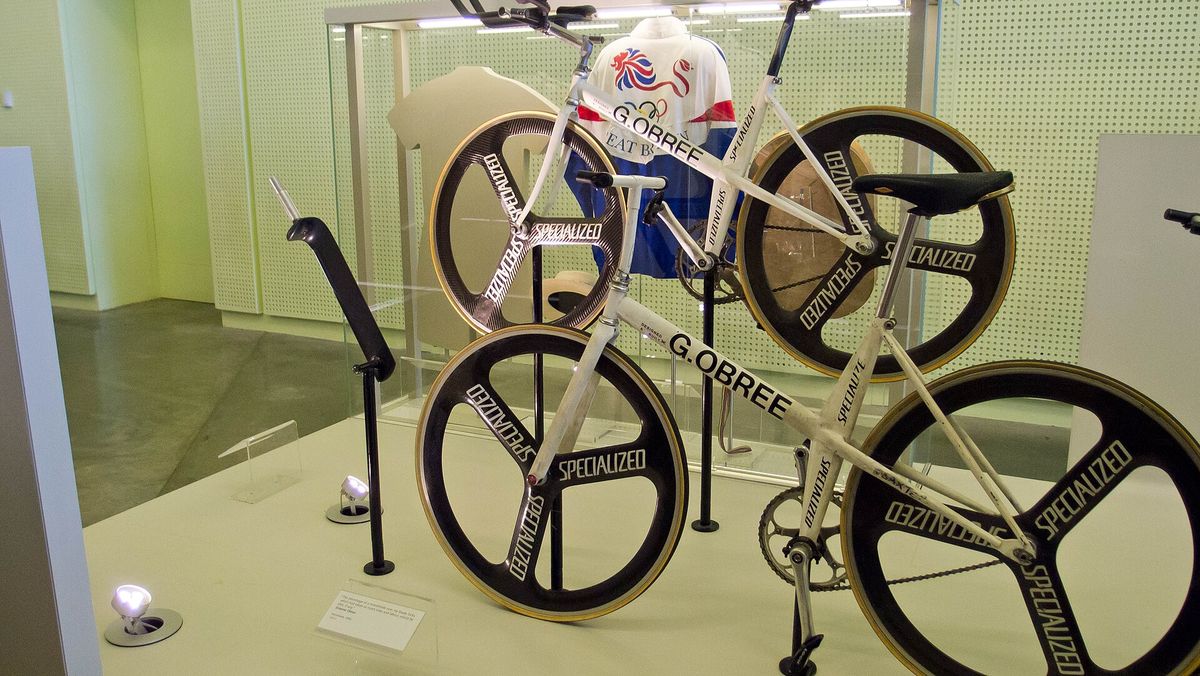
Graeme Obree's bicycles on display at the Riverside Museum, Glasgow.
Built by an amateur and ridden in positions nobody had tried. The first position was banned in 1994, and the second after Chris Boardman rode it in 1996; neither had broken any rule when it was first used.
Ed Webster · CC BY 2.0 · Wikimedia Commons
The Lugano Charter. In force from 2000, it settled the underlying question by defining a bicycle as a shape: a double-triangle frame of tubes within stated dimensions, a minimum weight of 6.8 kg, limits on where the rider may sit. Cycling decided that a bicycle is a thing that looks like a bicycle, and everything since has been an argument about the edges of that definition.
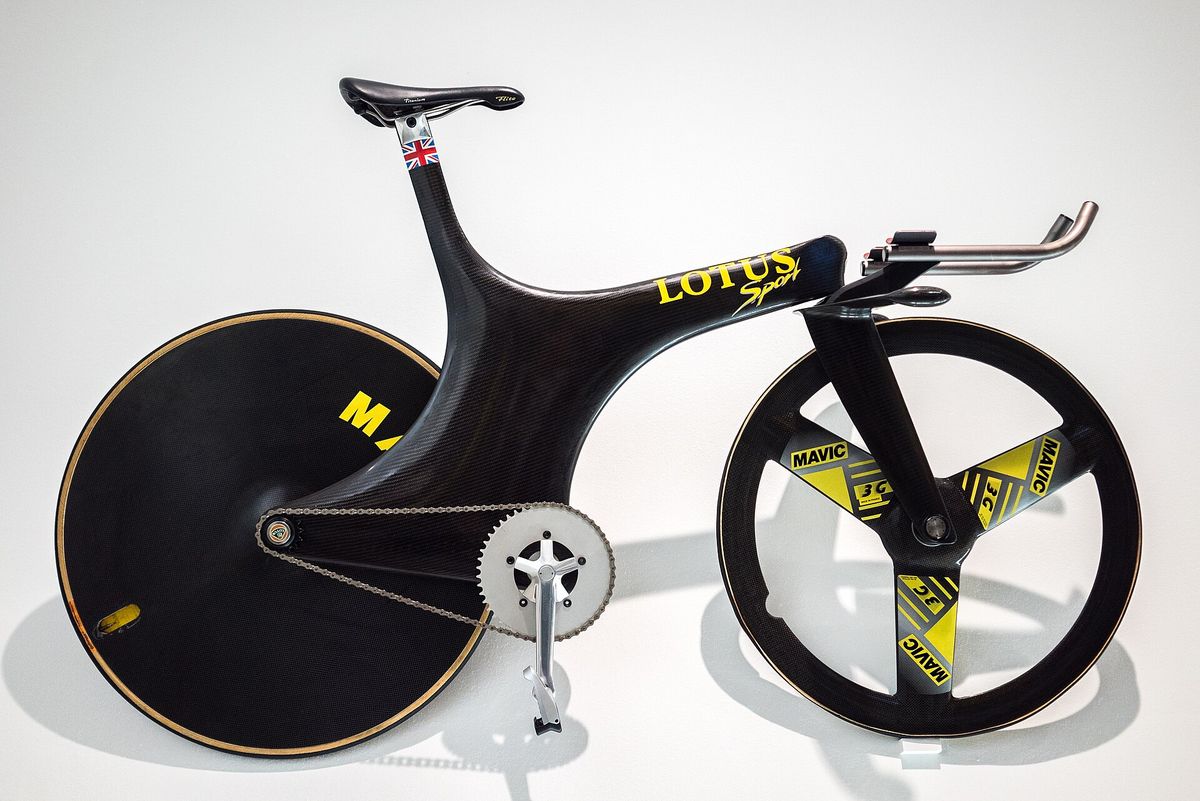
The Lotus 108, the one-piece carbon bicycle Chris Boardman rode to Olympic pursuit gold in 1992.
No tubes and no double triangle: exactly the kind of machine the Lugano Charter's definition of a bicycle excluded from 2000.
Paul Hudson · CC BY 2.0 · Wikimedia Commons
Concealed motors. The one equipment problem the sport did not see coming. A motor found in a frame at the 2016 cyclo-cross world championships forced the UCI to define technological fraud as an offence and to start scanning frames — an equipment rule about an object that is not supposed to be there at all.
09Governing body politics
Cycling's governance has been dominated for thirty years by doping, and it would be dishonest to write this section without saying so. The sport's credibility collapse in the 2000s, the retrospective stripping of results, and the reconstruction of anti-doping under an independent body are the central facts of its modern administration.
This site does not cover doping rules, and the reason is worth stating: doping regulation is not sport-specific. It is administered under a common code across almost every sport here, so it tells you nothing about what distinguishes one sport's rulebook from another's. Cycling's equipment rules do.
The equipment politics are genuinely cycling's own, and they have a consistent shape: an individual or a manufacturer finds an advantage inside the rules, and the federation writes a rule against it afterwards. Obree in 1994 and 1996, disc wheels and low positions before that, frame shapes after. The Lugano Charter was an attempt to stop legislating case by case by defining the object once, and it has largely worked.
The hour record is where that politics is most visible, because the federation had to decide not only what equipment was legal but what the record was for. Its answer in 1997 was that the record should measure the rider; its answer in 2014 was that a record nobody attempts measures nothing. Both are defensible and they contradict each other, which is the most honest thing in this sport's rulebook.
10Controversies that forced rule changes
Obree's bicycle, 1993. An amateur built a machine in his kitchen, rode it in a position nobody had tried, and took the sport's oldest record. Within a year the position was illegal. Within three years his second invention was illegal too. Nothing either machine did was against any rule at the time, and both were faster.
The federation's stated grounds were safety and the definition of a bicycle. The competing reading is that a governing body was embarrassed by an outsider and legislated him out. This site records both, and notes that a rule written to exclude one person's idea is a recognisable pattern here — basketball did it repeatedly to Wilt Chamberlain.
Boardman's 56.375 km, 1996. The Superman position produced a distance so far beyond what a conventional bicycle could achieve that it effectively ended the record as a contest. The UCI's response the following year was the most drastic act in this collection: it split the record in two, moved every aerodynamic mark to a separate list, and reinstated Eddy Merckx's 1972 distance as the target.
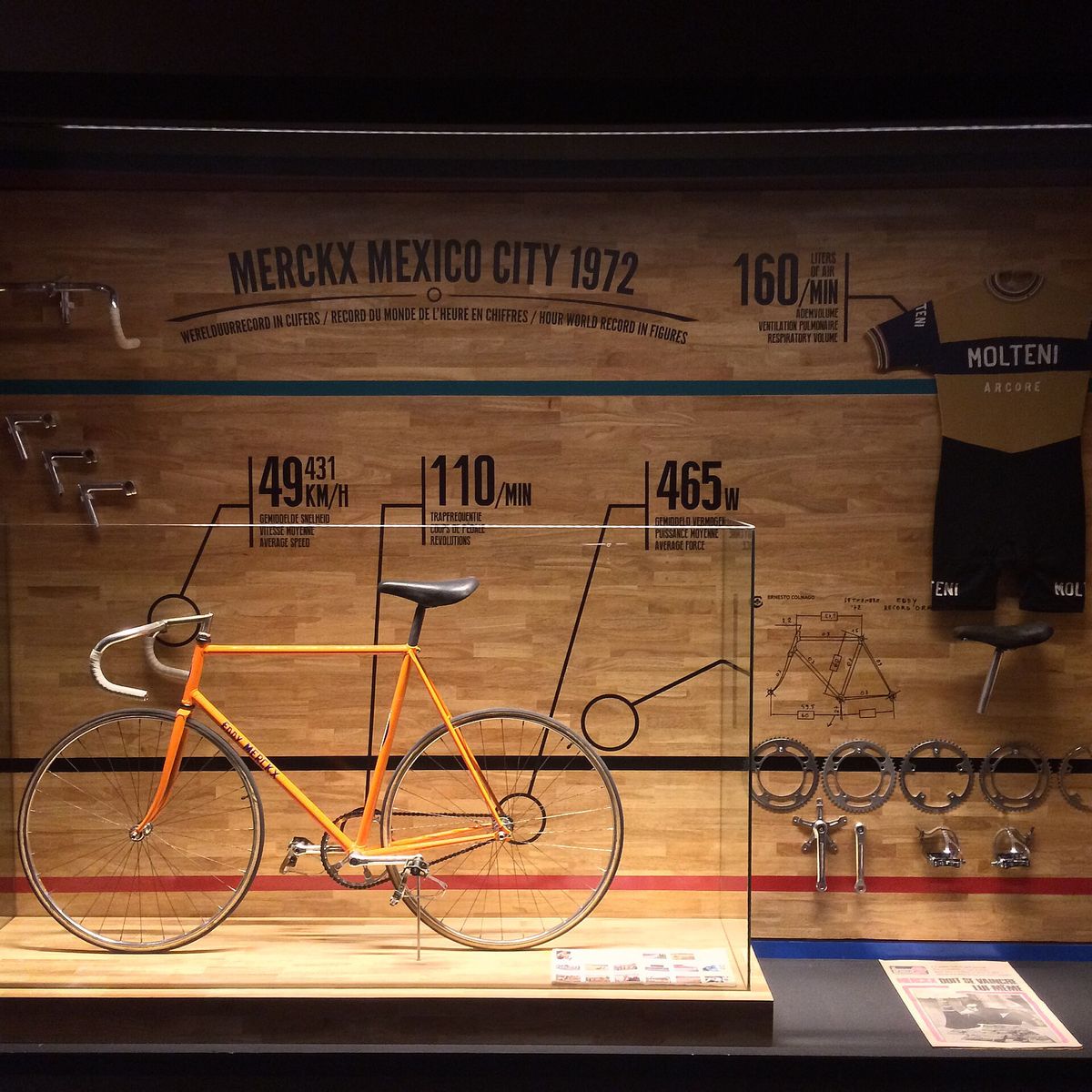
The bicycles Eddy Merckx used for his hour record in Mexico City, 1972.
A steel frame of the ordinary shape, round tubes and spoked wheels. In 1997 the federation made this the benchmark again, moved every aerodynamic mark to a separate list, and asked riders to beat Merckx on equipment like this.
eugenio.baccarini · CC BY-SA 4.0 · Wikimedia Commons
For seventeen years the sport had two official answers to how far a person had ridden in an hour, differing by seven kilometres. Almost nobody attempted the restricted one.
Reunification, 2014. The federation reversed itself. The restricted record had produced two rides in seventeen years, and the reason was obvious: riders were being asked to train and attempt on equipment they never otherwise used. Merging the lists brought attempts back immediately — five in the following five years — and the mark passed Boardman's 1996 distance in 2022, twenty-six years later.
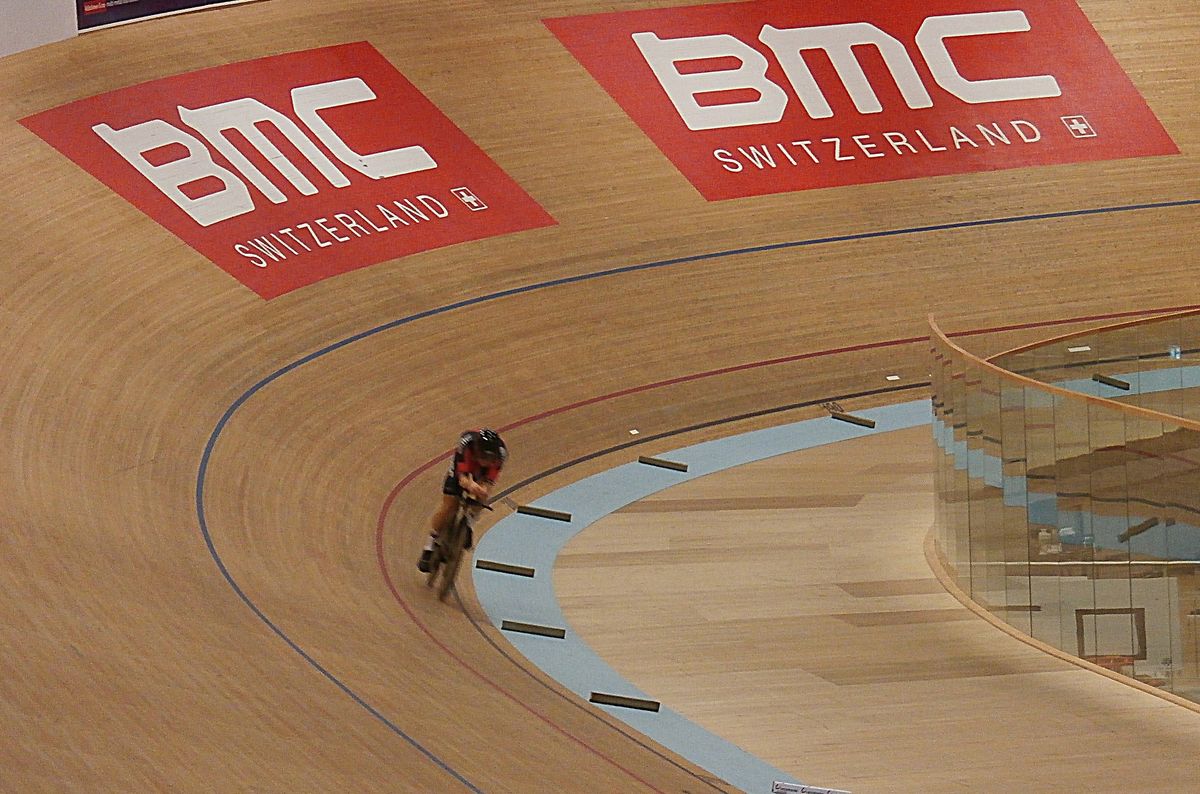
Rohan Dennis during his hour record in Grenchen, Switzerland, February 2015.
One of the rides that followed the 2014 reunification of the two records, on a modern aerodynamic bicycle — attempts came back as soon as riders were allowed to use the equipment they raced on.
Christophe95 · CC BY-SA 4.0 · Wikimedia Commons
The motor, 2016. A concealed motor was found in a bicycle at a world championship. The sport had spent two decades arguing about frame tubes and handlebar reach, and the thing that finally arrived was an engine.
Where it standsthe record, and what is still open · sections 11 to 12
11Series
Hour record, men
Measured in km. Broken at 1997 (record book reset) and 2014 (two lists merged back into one).
1997–2014 Seventeen years, two marks. Almost nobody attempted a record whose equipment they neither trained nor raced on.
- 1972–1997
- 49.43 → 56.38
- spans 6.94 km
- 1997–2014
- 49.44 → 49.70
- spans 0.26 km
- 2014–2026
- 51.12 → 56.79
- spans 5.68 km
1997 Record book reset. The record was not annulled and not left alone. It was split: everything set on aerodynamic equipment was moved to a separate list, and the headline record rolled back twenty-five years to Merckx. A rider in 1998 was chasing 49.431 km while the furthest anyone had ridden in an hour was 56.375 km, and both numbers were official.
2014 Two lists merged back into one. The two lists were merged, and this is the only reunification anywhere in this collection. The mark to beat was taken from the restricted list rather than from Boardman's 1996 ride, so the sport resumed from 49.700 km with modern equipment — which is why the third segment climbs so fast and why it took until 2022 to pass a distance ridden in 1996.
12What is contested now
Recorded as unsettled.
Whether the 1997 split should ever have happened. The federation reversed it in 2014, which is close to an admission, but the underlying question is open in every sport here: when equipment makes old marks unreachable, is the right answer to reset, to retain, or to split? Cycling is the only sport that has tried all three, and it has not said which it thinks was right.
Where the equipment line sits. The Lugano Charter defined a bicycle as a shape, and the argument has moved to the edges of that shape — tube profiles, wheel depth, skinsuit fabrics, chain lubricants, tyre construction. Each is legal until it is not, and the pattern of the last thirty years suggests the federation will keep legislating case by case whatever the Charter says.
The minimum weight. The 6.8 kg floor dates from 2000 and manufacturers have been able to build safely below it for years. Lowering it would advantage teams that can afford the newest frames; keeping it means the rules require bicycles to carry ballast, which is difficult to defend as a sporting principle.
Detection. Technological fraud has been an offence since 2016 and confirmed cases remain very rare, which is either evidence that the problem is small or evidence that detection is poor. Nobody in the sport agrees which, and the honest position is that the data cannot currently distinguish the two.