Equestrian
The only sport where half the competitors cannot be asked whether they consent.
- Official
- Equestrian
- Game category
- Performance
- Adjudication
- Judged
- Standing
- Removed, restored
- rule changes
- 5
- comparability break
- 1
- Olympic editions
- 28
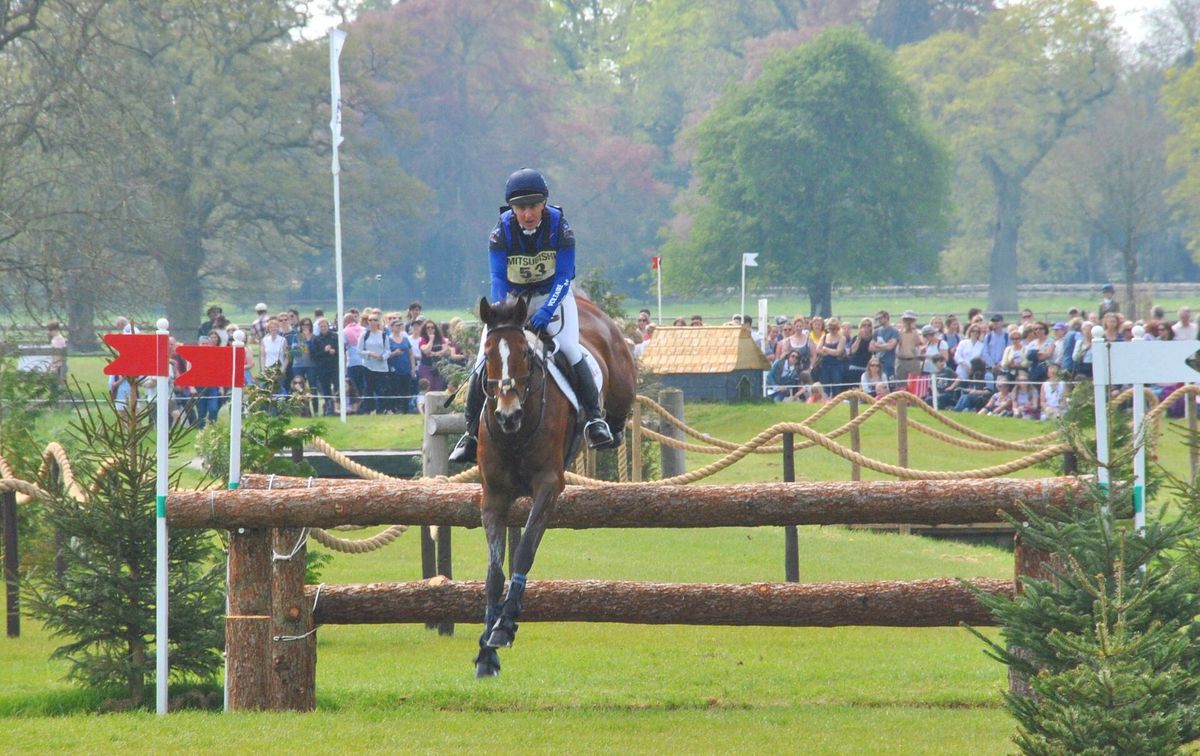
Cross-country at Badminton Horse Trials, 2016 · Ray Bird · CC BY-SA 2.0
- Governing body
- Fédération Equestre Internationale
- Founded
- Fédération Equestre Internationale founded 1921.
- Olympic status
- 28 editions
- on the 2028 programme
- Also contested at
- Asian Games
Two things make equestrian unlike anything else on this site. It is the only Olympic sport in which men and women compete directly against each other in every event, and it is the only one whose competitor is a person and an animal registered together — polo also plays horses, and rotates a string of them through a match, so no single animal there is the competitor. The second fact now dominates its rulemaking: after riding was removed from modern pentathlon in 2022, the same welfare argument arrived at equestrian's door, and the federation's own commission has told it that public consent for the sport cannot be assumed.
The gamewhat it is now · sections 1 to 5
01How it is played
Three disciplines, one partnership. Dressage is judged on the quality of movement, jumping is measured in faults and seconds, and eventing runs both plus a cross-country course. That split is why equestrian sits awkwardly in this site's adjudication lens: it is a judged sport and a measured one at the same time, and the lens can only hold one answer.
These figures were entered from the edition named above but have not been checked against its text line by line. Treat them as this site’s reading of the laws, not as a substitute for them.
The object of the competition
In jumping, complete a course without knocking a fence down or exceeding the time. In dressage, perform a prescribed sequence of movements as well as a panel of judges thinks it can be done. In eventing, do both and add a cross-country course between them.
In all three the competitor is a partnership, and only one half of it chose to be there. That fact is not sentimental — it is the basis of every rule change on this page since 2005.
Arena and course
A dressage arena is a rectangle marked with lettered points, and the test is performed to those markers. A jumping course is a set of numbered obstacles with a designed route and an optimum time. A cross-country course runs over natural terrain with fixed obstacles.
- Dressage arena
- 60 × 20 m
- Jumping obstacles
- Fall on contact
- Cross-country obstacles
- Fixed
- A frangible-pin standard now applies to many of them.
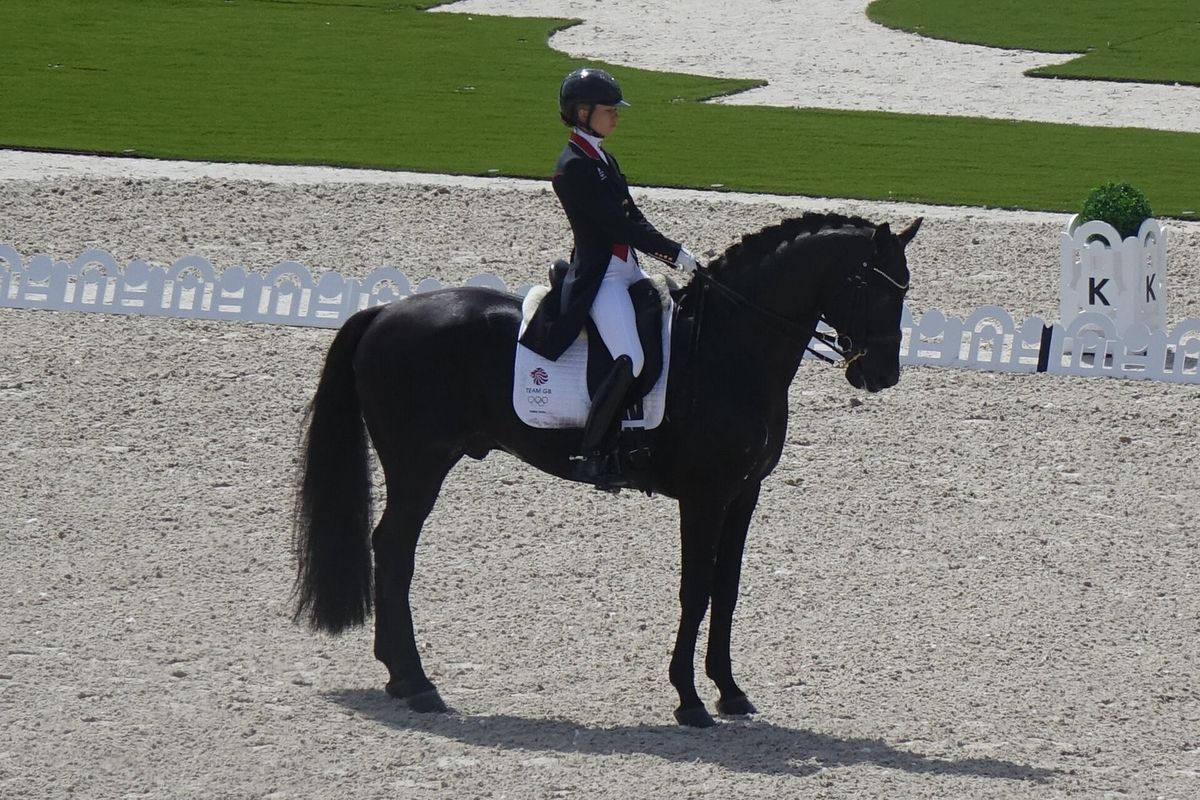
Charlotte Fry and Glamourdale in the dressage arena at Paris 2024.
The arena's lettered markers — K is behind them — fix where each movement of a test must be ridden, and the judges sit at stated points round it.
Eponimm · CC BY 4.0 · Wikimedia Commons
Tack and permitted equipment
This is where the sport's welfare rules mostly live. Bits, nosebands, spurs, whips and boots are each specified, and the specification has tightened repeatedly — noseband tightness is now measured, whip use is limited and stewarded, and equipment permitted in the warm-up arena is regulated as closely as equipment in competition.
A helmet is compulsory in jumping and cross-country. Body protectors are compulsory in cross-country.
- Noseband tightness
- Measured
- Whip use
- Limited and stewarded
- Blood on the horse
- Elimination
- Helmet
- Compulsory in jumping and cross-country
Riders, horses and officials
Men and women compete against each other in every event. Equestrian is the only sport on the Olympic programme where this is true, and it has been since women were admitted — dressage in 1952, jumping in 1956, eventing in 1964.
The horse is a competitor with its own passport, its own eligibility and its own veterinary record. It is inspected before competition and may be withdrawn by a veterinary panel over the rider's objection, which makes the veterinary delegate the only official on this site who can remove a competitor for reasons unrelated to the rules of play.
- Mixed-gender
- In every event
- Team size
- 3
- Reduced from four, with no drop score, from 2021.
- Horse inspection
- Before and during competition
Format
Dressage and jumping run as qualifying rounds and finals. Eventing runs over several days: dressage, then cross-country, then jumping.
Until 2005 eventing's endurance day included roads and tracks and a steeplechase before the cross-country. Those phases were removed, which shortened the competition and changed what its score measures.
This clause reads this way because of
Scoring
Jumping counts faults — four for a fence down, penalties for a refusal, one for each second over the time — and the lowest total wins. This is a measurement.
Dressage is scored by a panel awarding marks out of ten for each movement, converted to a percentage. This is a judgement, with all the apparatus judged sports need: multiple judges at different positions, published guidelines, and statistical review of scoring patterns.
Eventing adds them together, which means the sport routinely sums a judgement and a measurement into one number.
- Fence down
- 4 faults
- Over the time
- 1 fault per second
- Dressage
- Percentage of available marks
- Eventing
- Penalties across three phases
Refusals and retirement
A refusal is penalised and, after a set number, eliminates. A rider may retire at any point, and the rules increasingly encourage it — the federation's welfare position is that a horse in difficulty should be pulled up rather than persuaded.
That sits directly against the 2021 reduction to teams of three with no drop score, which makes retiring cost a team its whole competition. The federation has acknowledged the tension and answered it with substitution rules rather than by restoring the fourth rider.
This clause reads this way because of
Elimination
Blood on the horse. Excessive whip use. Equipment outside specification. Marks indicating harsh use of spurs or bit. Failure at a veterinary inspection. Three refusals. A fall of horse or rider in cross-country.
Almost every item on that list concerns the horse rather than the contest, which is not true of any other prohibitions section on this site.
Deciding the winner
Fewest faults in jumping, highest percentage in dressage, lowest penalty total in eventing. Ties in jumping are settled by a jump-off against the clock, which is the one place in the sport where speed decides a medal outright.
Everything above is current law. Everything below is how Equestrian got here.
02Disciplines and events
Six Olympic events across three disciplines, and every one of them is contested by men and women together. No other sport on the programme has a single mixed event, let alone six.
- Disciplines
- 3
- Olympic medal events
- 6
- Men’s and women’s counted separately.
- Contested elsewhere
- 5
- paralympic, world games, world championship, lapsed.
- Listed for context
- 1
- Not counted as this sport.
Jumping2
Measured in faults and seconds. The flagship Olympic discipline.
- Individual
- Team
Dressage2
Judged by a panel on the quality of prescribed movements.
- Individual
- Team
Eventing2
Dressage, cross-country and jumping across several days. Until 2005 the endurance day also included roads and tracks and a steeplechase.
- Individual
- Team
Contested away from the Games5
- DrivingWorld championshipWorld GamesCarriage driving, with world championships.
- EnduranceWorld championshipLong-distance racing, and the discipline with the sport's worst welfare record.
- VaultingWorld championshipWorld Games
- ReiningLapsed
- Para dressageParalympic
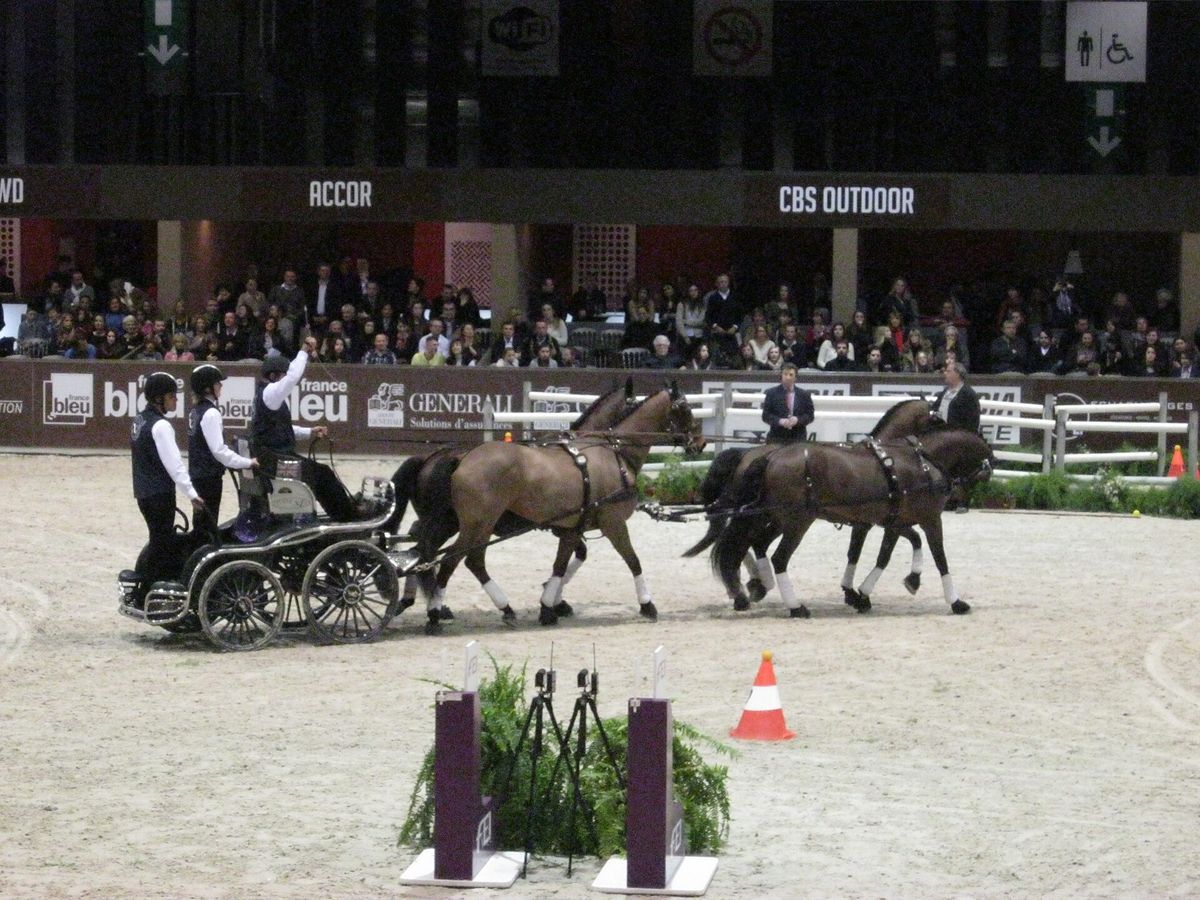
Boyd Exell of Australia with his four-in-hand at the World Cup driving final, Bordeaux, 2013.
Carriage driving, one of the disciplines contested away from the Games, with world championships of its own.
Prométhée33 · CC BY-SA 3.0 · Wikimedia Commons
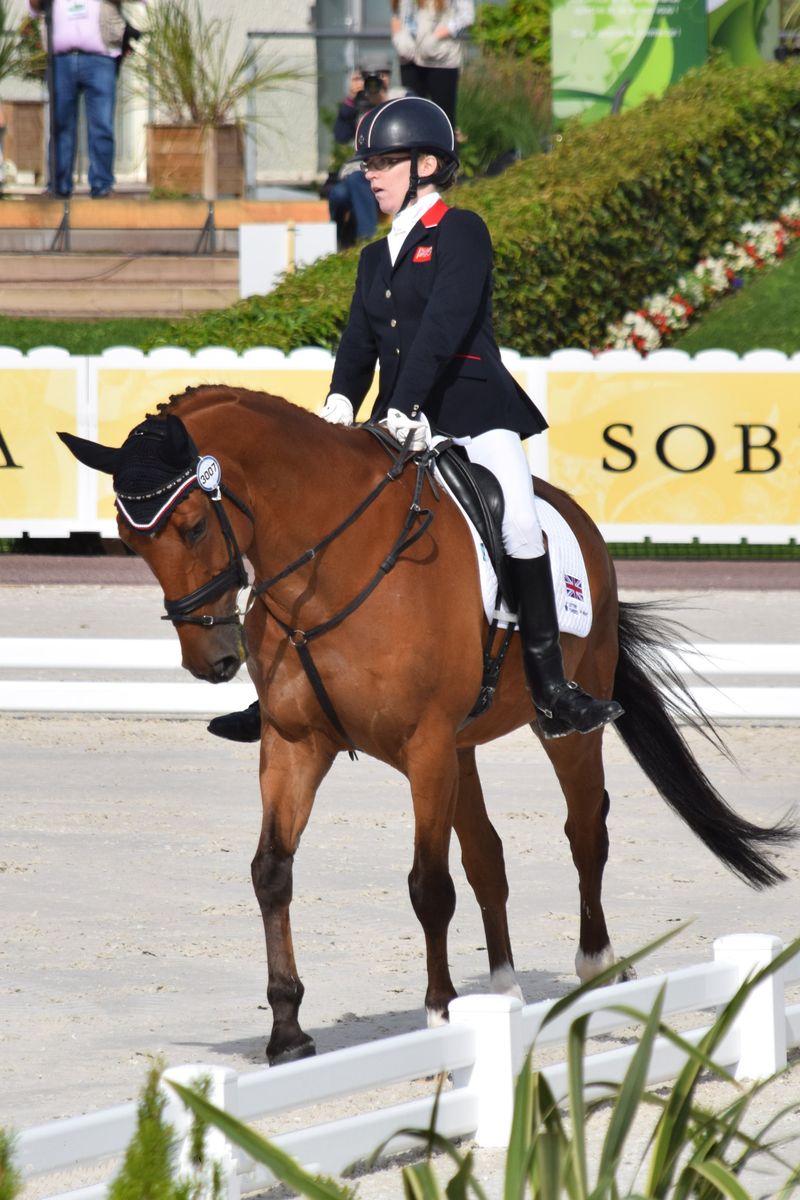
Sophie Christiansen and Janeiro 6 in para dressage at the 2014 World Equestrian Games.
Para dressage, on the Paralympic programme.
Florence.Skowron · CC BY-SA 4.0 · Wikimedia Commons
03Officiating and technology
Equestrian officiates two different kinds of thing at once, and it is the only sport here with a third category of official who can remove a competitor for reasons unrelated to the contest.
Jumping is measured. A fence is down or it is not; the clock is a clock. There is almost nothing to dispute, and video review handles the little there is.
Dressage is judged, and it has the full apparatus of a judged sport: a panel positioned at different points around the arena, published guidelines for what each movement should look like, and statistical review of scoring patterns to identify judges whose marks diverge from the panel. It is gymnastics' problem in a different arena, and the sport has arrived at gymnastics' answers.
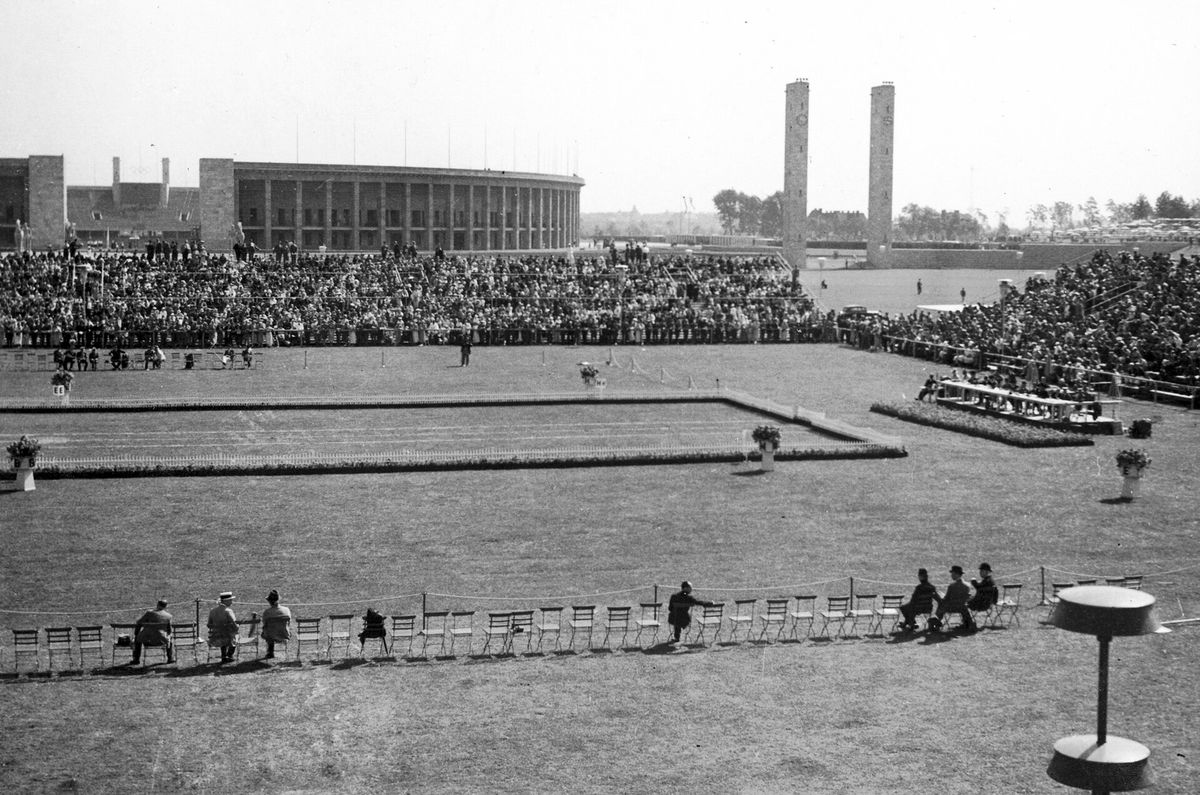
The dressage arena on the Maifeld during the 1936 Olympics, with the Olympic Stadium behind.
The same 60 by 20 metre rectangle, marked out on grass, that dressage is still ridden in.
Fortepan (donor Károly Vass) · CC BY-SA 3.0 · Wikimedia Commons
Veterinary officials are the category nothing else here has. A veterinary delegate can withdraw a horse from competition over the rider's objection, at an inspection before the event or during it. That is an official empowered to end a competitor's participation for the competitor's own protection, and it has no equivalent in any other sport on this site — the closest is boxing's referee stopping a bout, which is a judgement about the same person who chose to be there.
Stewards police the warm-up arena, and the sport treats that as competition officiating rather than crowd control, because the warm-up is where the practices that damage the sport occur.
The measurement worth noting is the noseband gauge. A rule about how tightly a strap may be fastened, enforced with an instrument, is welfare converted into a number — and converting judgements into numbers is what this whole site keeps watching federations do.
04Where it is played
Equestrian has the narrowest social base of any sport on this site and a geography that follows wealth almost exactly.
Germany, Great Britain, the Netherlands, France, Sweden, the United States, Australia and New Zealand account for most international results, with Japan and several Gulf states investing heavily more recently. What those have in common is not a riding culture in any romantic sense but the ability to sustain horses: land, stabling, veterinary infrastructure and enough disposable income for an expensive animal to be a hobby.
The purchase question makes it different from every other sport here. In athletics or judo, money buys coaching and facilities and thereby improves an athlete. In equestrian, money can buy a horse that is already capable, and the sport is candid that this happens. The rider still has to ride it — but the ceiling of what a rider can achieve is bounded by what they can acquire.
This is also why the welfare argument lands so hard. A sport that is expensive, socially narrow and involves animals is unusually exposed when public attitudes to animals in sport shift, because it has a small constituency and a visible subject.
The Gulf states are the recent variable, with substantial investment in endurance and in jumping. Endurance is also the discipline with the sport's worst welfare record, and the FEI has had to regulate it separately and repeatedly — which is a geography problem and a governance problem arriving together.
05Learning curve
The most expensive sport on this site to enter and one of the few where the competitor's own ability is not the whole barrier — you also need a horse capable of the job, and at the top that is a purchase rather than an achievement.
Editorial — the site’s reading, not a sourced claim
Barrier to entry
How hard is it to get to a real game?
A horse, its upkeep, a facility to ride in, and years before any of it is competitive.
Riding well takes years, and none of those years are possible without access to a horse. Horses are expensive to buy, more expensive to keep, and require land and stabling that exist only where the sport already exists. Riding schools lower the barrier for learning; they do not lower it for competing.
This is the same barrier that got riding removed from modern pentathlon in 2022, and the federation's own case for that removal was largely about cost and access. Equestrian cannot make the same argument about itself.
Evidence
- Kit to startA horseobservedEverything else follows from it.
- FacilityStablingobserved
- PartnerAn animalobservedThe only sport here where the other half of the competitor must be acquired.
- Time to competitive levelYearsestimate
Barrier to the top
How hard is it to be good at?
A partnership, a purchase, and a sport arguing about whether it should exist.
Elite equestrian requires a rider at the top of a difficult craft and a horse capable of the same, and the second is bought as often as it is made. That is a real and unusual feature of this sport's ceiling: money buys competitive quality more directly here than anywhere else on this site, which is why the sport's elite is drawn from a narrower social band than any other.
The peak window is also the longest here, because it does not depend on a young human body. Riders compete at the highest level into their fifties and beyond, which nothing else on this board comes close to.
And the ceiling now has a question mark over it that no other sport's has. The federation's own commission has reported that public consent for equestrian sport cannot be assumed, and modern pentathlon has already demonstrated that an equestrian discipline can be removed from the Olympic programme within a year of a bad afternoon.
Evidence
- Social licenceFormally questioned, 2023ruleThe federation accepted its own commission's finding rather than contesting it.2024 — the rule this rests on
- Teams of three, no drop scoreSince 2021ruleOne elimination ends a team, which pushes against the welfare rule to retire early.2021 — the rule this rests on
- Blood on the horseEliminationrule2013 — the rule this rests on
- Typical peak age30–50estimateBy far the widest window on this site.
- Mixed-gender competitionEvery eventrule1952 — the rule this rests on
Why the two differ
Equestrian is very high at both ends and the reason is money at one end and a purchase at the other, which makes it the least meritocratic learning curve on this board — and the sport does not really dispute that.
It is also the only entry here whose mastery section has to discuss whether the sport will continue to exist. That is not hyperbole and it is not this site editorialising: the federation's own Equine Ethics and Wellbeing Commission reported in 2023 that a significant share of the public does not believe horses in sport are well treated, and modern pentathlon lost its riding discipline in 2022 within a year of a televised incident. A young rider is training towards a ceiling whose existence is a live question.
The historyhow it got here · sections 6 to 10
06Origin and invention
Equestrian sport descends directly from cavalry training, and the three Olympic disciplines are three cavalry skills with the army removed.
Dressage is the schooling that made a horse controllable in formation and under pressure. Jumping is the ability to cross obstructed country. Eventing was explicitly a test of a military charger: obedience on the first day, endurance and courage across country on the second, and soundness enough to jump on the third.
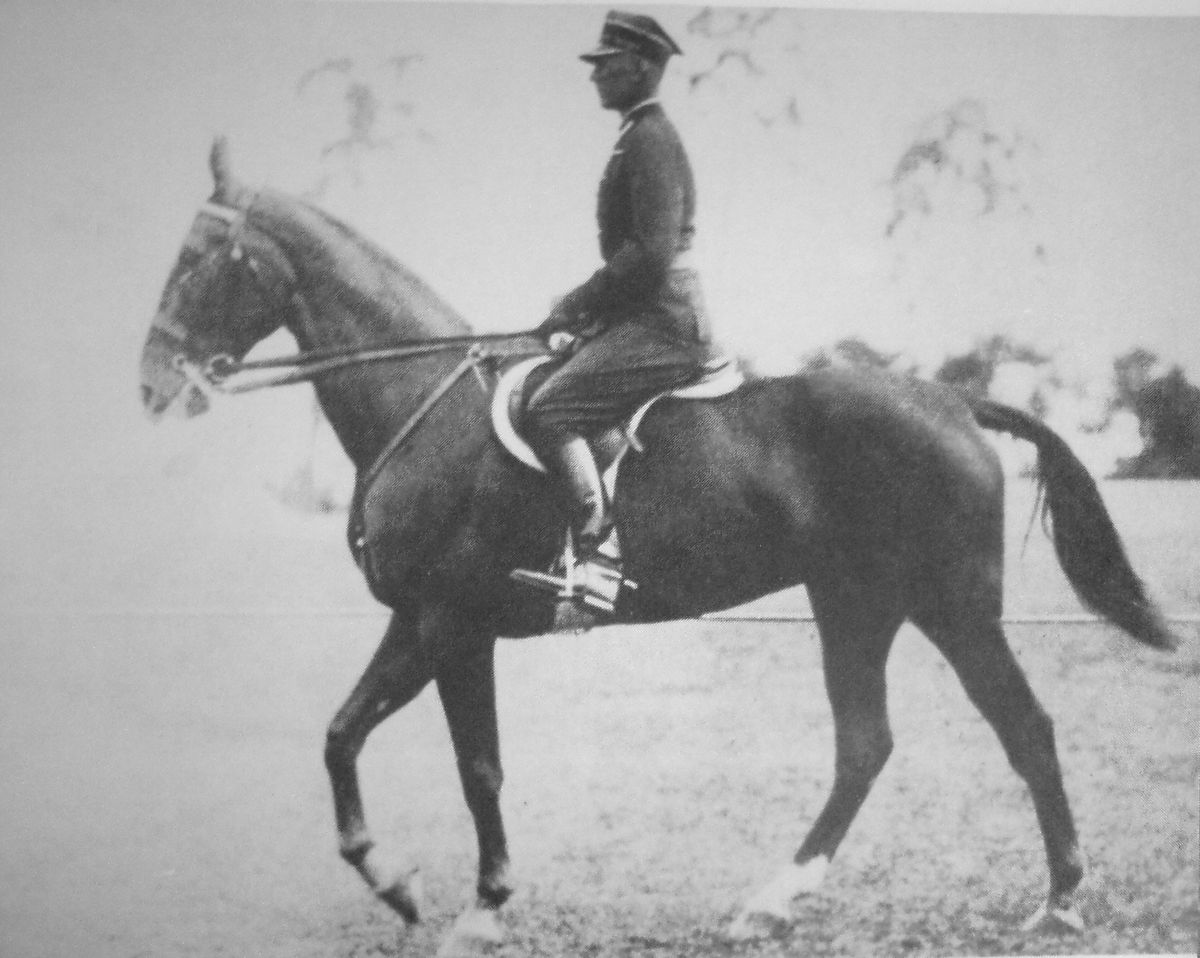
Captain Henryk Roycewicz of the 25th Greater Poland Uhlans on Arlekin III in the eventing dressage test, Berlin 1936.
A serving cavalry officer in uniform: until 1948 Olympic equestrian events were open only to commissioned officers.
Photographer unknown · Public domain · Wikimedia Commons
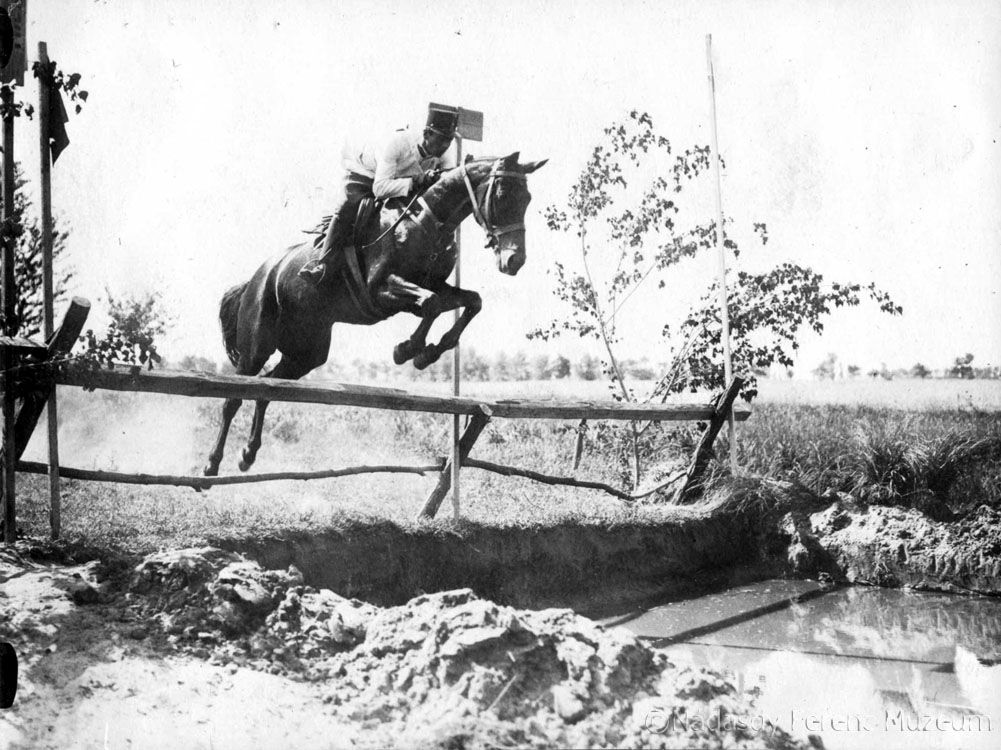
Ágoston Endrődy of Hungary on the cross-country phase of the eventing competition, Berlin 1936.
The "military", as the competition was then called: a test of a cavalry charger across obstructed country.
Photographer unknown · Public domain · Wikimedia Commons
That origin was not incidental. Until 1948 the Olympic equestrian events were restricted to commissioned military officers, which is why the sport has no women in its early results — not by a rule about women, but by a rule about rank. Civilians and women were admitted to dressage for 1952, jumping in 1956 and eventing in 1964.
The consequence is the fact this sport is best known for. Because the restriction was lifted without anyone deciding to create separate categories, equestrian became the only sport on the Olympic programme in which men and women compete directly against each other in every event, and it has been so for sixty years. It happened by omission rather than by design, which makes it no less real.
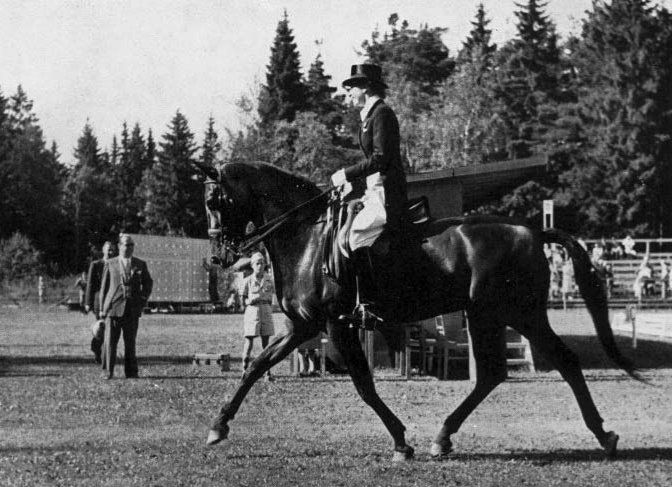
Lis Hartel of Denmark and Jubilee in the dressage at Helsinki, 1952.
The first Games open to civilians and women in dressage. She won the individual silver against men, and men and women have competed against each other in every equestrian event since.
IOC photographer · Public domain · Wikimedia Commons
The FEI was founded in 1921. The cavalry it was built around had effectively ceased to exist within thirty years, and the sport has spent the century since working out what it is a test of.
07Rule timeline
The sport’s own lane, expanded. Every entry carries a cause from the closed vocabulary and a citation, and says so where the citation is incomplete.
- 1952Participation and accessadopted 1951
Civilian riders and women were admitted to Olympic dressage. Until 1948 the equestrian events had been restricted to commissioned military officers, which excluded women entirely. Jumping followed in 1956 and eventing in 1964, after which equestrian became the only sport on the Olympic programme in which men and women compete against each other in every event.
Trigger and citationIncomplete — no confirmed article
Trigger
The military restriction had made the sport a contest between armies at a point when cavalry had ceased to exist, and the federation opened it to civilians. Admitting women was a consequence of that rather than its stated purpose.
FEI Rules for Equestrian Events · FEI General Regulations, 1952
- 2005Safetyalso commercialadopted 2004
The long format of three-day eventing was abolished. Phases A, B and C — roads and tracks, a steeplechase, and a second roads and tracks section — were removed, leaving the cross-country phase alone. A discipline that had tested a horse's endurance over most of a day became one that tests it over a single cross-country course.
Comparability break · Measurement scale changed
Roads and tracks and the steeplechase were removed. The remaining phases are the same, and the total they add up to is not. See the series
Trigger and citationIncomplete — no confirmed article
Trigger
A run of horse and rider fatalities in eventing through the late 1990s focused attention on the cumulative fatigue the long format produced, and the endurance phases were the part hardest to justify on welfare grounds.
The change also removed the phases that were most expensive to stage and least watchable, and it arrived while the sport's Olympic position was under review. Traditionalists argued that the long format was the test and that what remains is a different discipline. Both readings are recorded.
FEI Rules for Equestrian Events · FEI Eventing Rules, 2005
- 2013Safetyalso integrityadopted 2012
Blood anywhere on a horse became grounds for elimination, tightened from a judgement about severity to something much closer to an absolute. A rider whose spur or bit marks a horse is out, regardless of intent or of how the round was going.
Trigger and citationIncomplete — no confirmed article
Trigger
A visible mark on a horse in a televised competition is indefensible whatever its cause, and the previous discretionary standard produced inconsistent decisions and public damage.
FEI Rules for Equestrian Events · FEI Veterinary Regulations and discipline rules, 2013
- 2021Commercialalso participation and accessadopted 2017
Olympic teams were reduced from four riders with a discarded score to three riders with every score counting. One elimination now ends a team's competition, where previously a team could absorb a bad round.
Trigger and citationIncomplete — no confirmed article
Trigger
The IOC required a smaller athlete quota and more competing nations. Cutting teams to three achieved both, and the drop score went with it.
Riders argued that removing the drop score creates pressure to continue a round that should be retired, which is a welfare argument against a rule adopted for quota reasons. The federation introduced a substitution mechanism in response rather than restoring the fourth rider.
FEI Rules for Equestrian Events · FEI Olympic Regulations, 2021
08Equipment evolution
Equestrian equipment rules are welfare rules wearing a different name, and the sport has stopped pretending otherwise.
Tack. Bits, nosebands, spurs and whips are each specified, and the specifications have tightened steadily. The noseband is the clearest example: a tight one restricts a horse's ability to open its mouth and can mask resistance, and it is now measured with a gauge at competition. That is a measurement replacing a judgement, the same move badminton made with its service height — except here the thing being measured is discomfort.
Whips are limited in length, in how they may be used, and in how many times. Stewards police the warm-up arena as closely as the competition arena, because the warm-up is where the problems occur.
Safety equipment for riders followed injury and death: helmets became compulsory, then body protectors for cross-country, then air jackets became common without being mandated.
Frangible obstacles are the most consequential change and the least visible. Cross-country fences are fixed by definition — that is what makes them dangerous — and the introduction of pins and devices designed to give way under a specific load has reduced rotational falls, which are the mechanism behind most eventing fatalities.
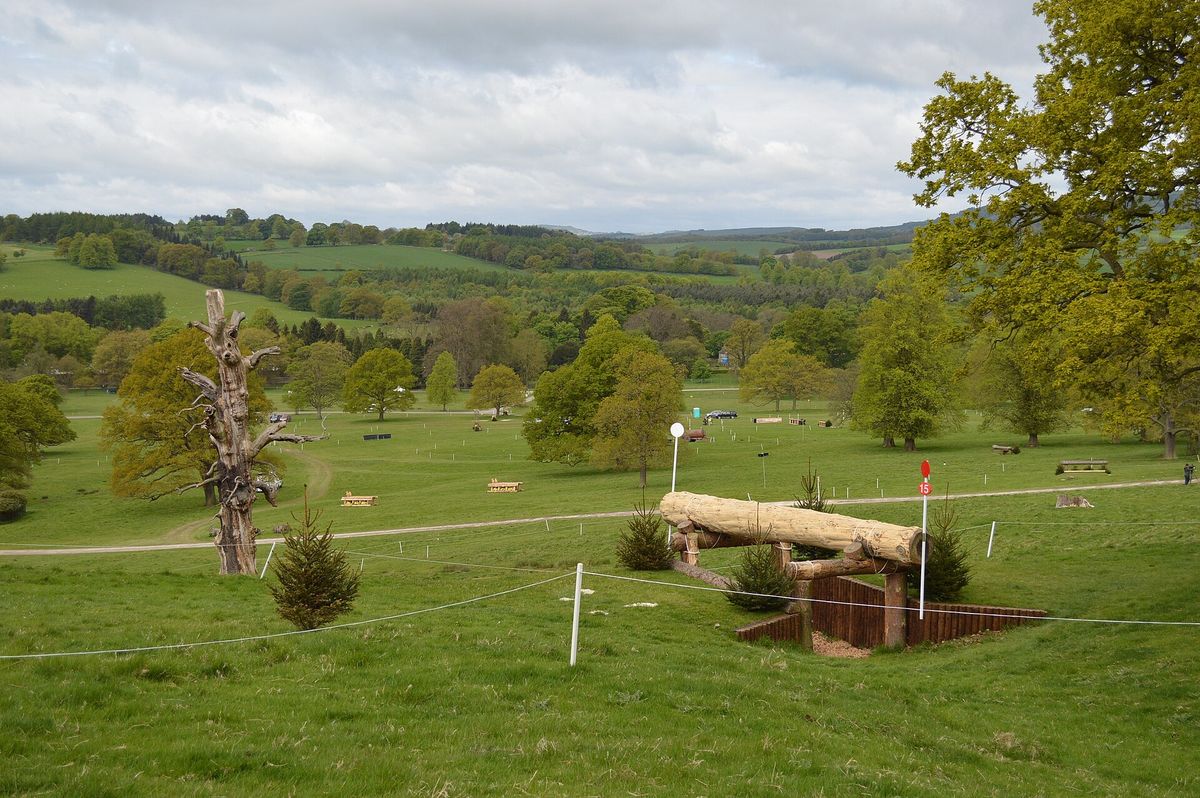
A cross-country fence at the Chatsworth Horse Trials, 2015.
Solid timber set into open country: cross-country fences are fixed by definition, which is what makes them a test and what makes them dangerous.
Jonathan Hutchins · CC BY-SA 2.0 · Wikimedia Commons
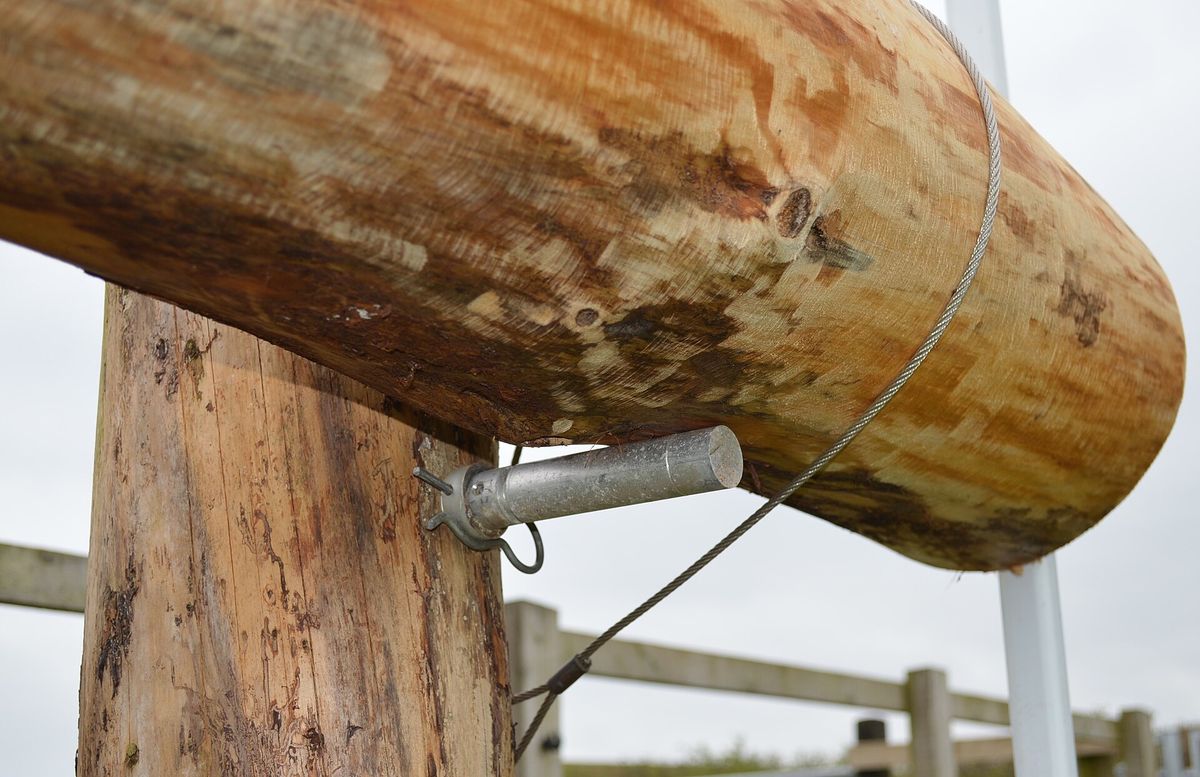
A frangible pin on a cross-country fence, Kelsall Hill Horse Trials, 2015.
The metal pin under the rail is designed to give way under a specific load, so the fence can collapse instead of rotating a horse over it. Pins were first introduced into eventing in 2002.
Jonathan Hutchins · CC BY-SA 2.0 · Wikimedia Commons
The pattern across all of it is unlike any other sport here. Elsewhere, equipment rules exist to keep competition fair or to stop the numbers running away. In equestrian they exist because one of the two competitors cannot complain.
09Governing body politics
The FEI's central political problem has no equivalent anywhere else on this site: it must justify the sport's existence to people who are not interested in it.
In 2023 its own Equine Ethics and Wellbeing Commission reported. The framing it introduced — a social licence to operate — is now the sport's governing concept, and it means something specific: equestrian sport continues because the public tolerates it, that tolerance is measurable, and the measurements are not reassuring. A substantial share of the surveyed public was not confident horses in sport are well treated, and a significant minority opposed the sport outright.
A federation commissioning that work and accepting the finding is unusual. Most governing bodies on this site respond to external pressure by contesting the evidence. The FEI's response was to tighten training and equipment rules and to tell its own membership that the question is real.
The reason it moved is a year old and one sport over. Modern pentathlon lost its riding discipline in 2022, nine months after a televised incident, and the demonstration effect was immediate: an equestrian discipline can be removed from the Olympic programme very quickly if the footage is bad enough.
The other live governance tension is internal and specific. The IOC's quota reduction produced teams of three with no drop score from 2021, which means a rider whose horse is struggling must weigh retiring — which the welfare rules encourage — against ending their team's competition. The federation created that conflict itself, for quota reasons, in the same period it was tightening welfare rules everywhere else.
10Controversies that forced rule changes
Eventing deaths. Through the late 1990s a run of horse and rider fatalities in eventing made the long format indefensible. Horses arrived at the cross-country course having already completed roads and tracks and a steeplechase, and the fatigue that produced was the mechanism nobody could argue with. The endurance phases were removed for 2005.
That is the same kind of act modern pentathlon performed in 2022 and the same kind of loss: a component removed for welfare reasons, and a score that no longer means what it meant. Traditionalists argued then, and still argue, that the long format was the test and what remains is a different discipline.
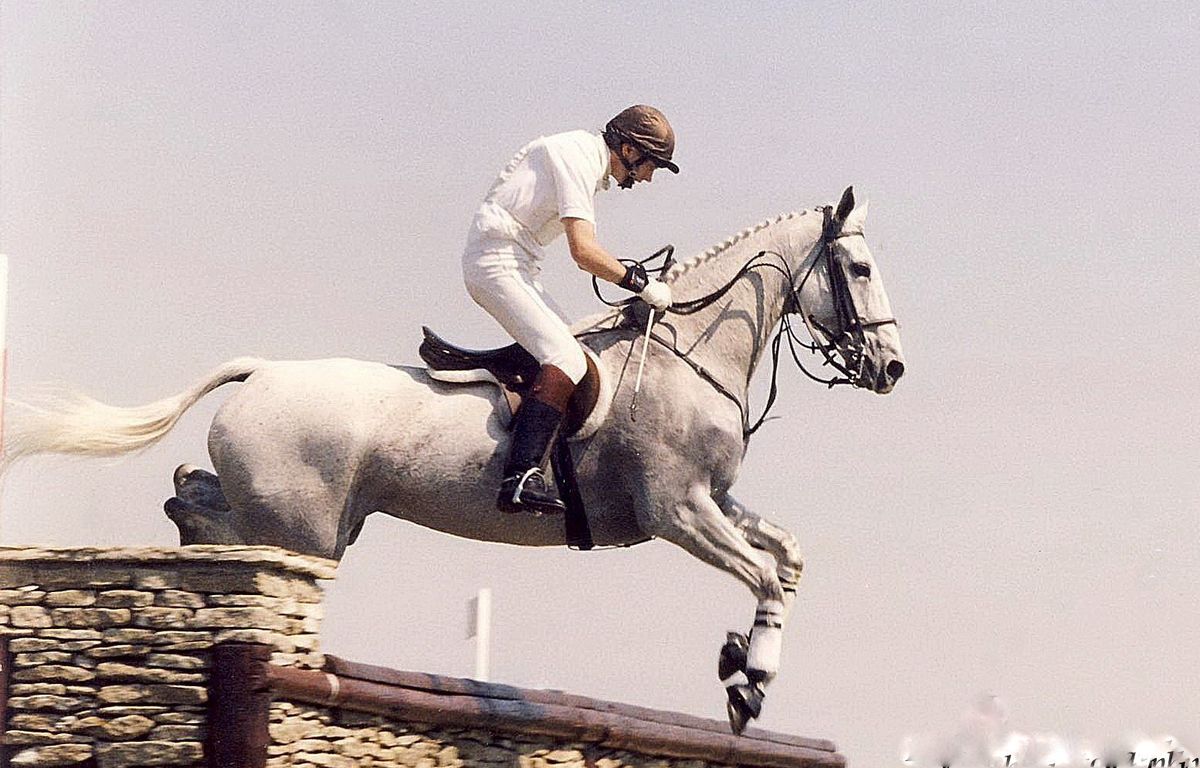
A horse and rider over a fence at Badminton Horse Trials, 1990.
The long-format era, when the cross-country came after roads and tracks and a steeplechase. The endurance phases were removed for 2005.
Ray Bird · CC BY-SA 2.0 · Wikimedia Commons
Cross-country at Badminton Horse Trials, 2016.
The short format: the horse arrives at the cross-country fresh, without the preceding endurance phases.
Ray Bird · CC BY-SA 2.0 · Wikimedia Commons
Blood. A mark on a horse is indefensible in a televised competition whatever caused it, and the discretionary standard produced inconsistent decisions and repeated public damage. Elimination for blood, tightened from 2013, removed the discretion.
Tokyo, 2021 — the other sport. The incident that transformed equestrian's politics did not happen in equestrian. It happened in modern pentathlon, and it ended riding in that sport within nine months. Every FEI decision since has been taken in the knowledge of how fast that went.
Warm-up arena practices. Periodic footage of training methods — rollkur in dressage, and various practices in jumping warm-ups — has produced successive tightenings of what stewards may inspect and what equipment is permitted. This is the sport's recurring controversy and the one most directly responsible for the 2023 changes.
Teams of three. Not a scandal, and included because the sport created a rule that pushes against its own welfare position. A rider with a struggling horse now knows that retiring ends their team's competition.
Where it standsthe record, and what is still open · sections 11 to 12
11Series
No series can exist
Eventing scores across the format change
An eventing score is a penalty total across the phases of the competition. In 2005 three of those phases were removed. Before the change a horse arrived at the cross-country course having already covered roads and tracks twice and a steeplechase in between; the score recorded performance under accumulated fatigue. Afterwards it records performance on a fresh horse over one course. The dressage and jumping phases did not change, but the quantity they are added to did. So a penalty total from 2003 and one from 2007 are not two values of one thing. The sport did what modern pentathlon did seventeen years later — removed a component and kept the name — and the score stopped meaning what it had meant. This is worth stating alongside pentathlon's entry, because the two are the only cases here of a sport changing what it is composed of. Eventing did it for welfare reasons in 2005 and pentathlon did it for welfare reasons in 2022, and both removed the phase involving a horse.
2005Measurement scale changedRoads and tracks and the steeplechase were removed. The remaining phases are the same, and the total they add up to is not.
12What is contested now
Recorded as unsettled, and one of these questions is whether the sport continues.
The social licence. The FEI's own commission reported that public consent for equestrian sport cannot be assumed. Nobody inside the sport disputes that the finding is real; what is disputed is what follows from it. One position is that welfare reform is the price of continuing and should be pursued aggressively. Another is that no amount of reform satisfies people who object to horses in sport in principle, and that the federation is negotiating with a constituency that cannot be satisfied.
Whether dressage can be defended. The discipline attracts the most criticism, because its training methods are the least visible and its appearance the most stylised. Rollkur and related practices have been restricted repeatedly and the argument has not closed.
Teams of three. The sport's own rule pushes a rider to continue when its own welfare position says stop. The federation added substitutions rather than restoring the fourth rider, and riders continue to argue that this is the wrong fix.
Endurance. The discipline with the worst record, regulated separately and repeatedly, and still producing the incidents that damage the whole sport.
Whether the short format was right. Twenty years on, eventing still argues about whether removing the endurance phases made the sport safer or simply made it a different sport that is easier to stage.