Gymnastics
The sport that abolished its own maximum, and with it any possibility of a continuous series.
- Official
- Gymnastics
- Game category
- Performance
- Adjudication
- Judged
- Standing
- Never off
- rule changes
- 5
- comparability break
- 1
- Olympic editions
- 31
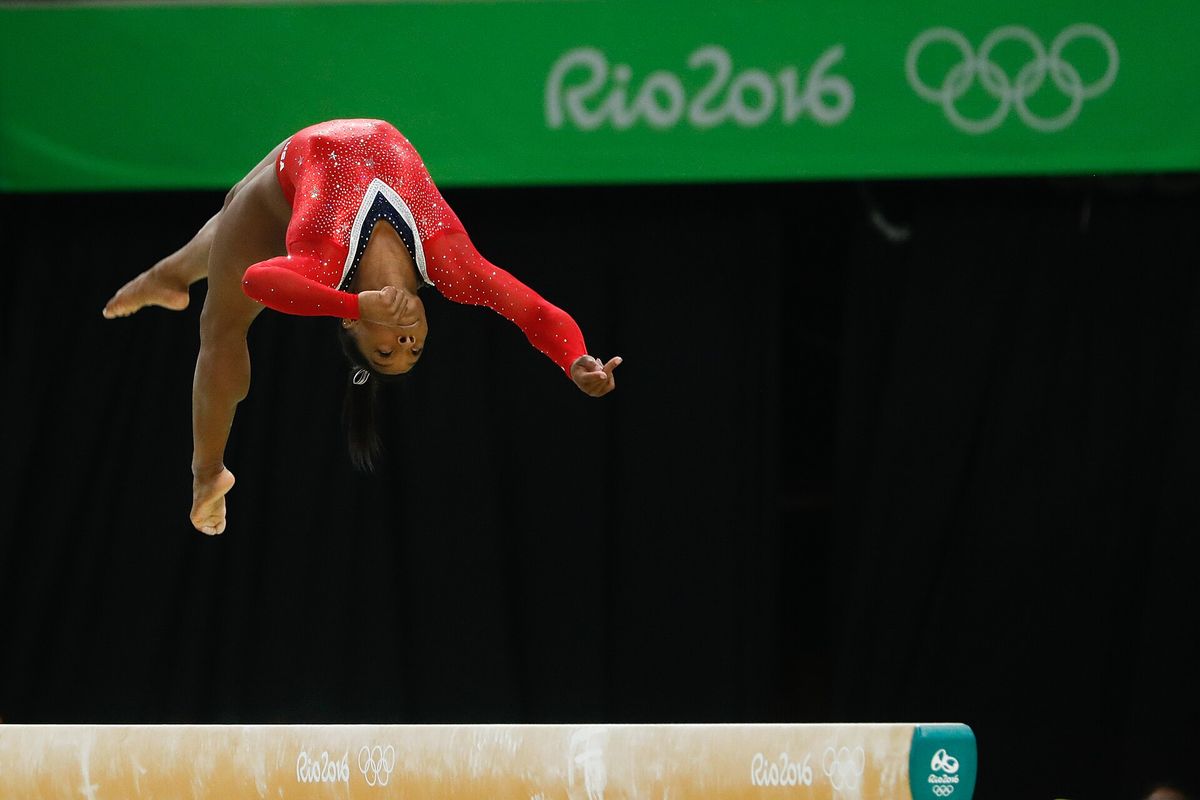
Simone Biles in the beam final at the 2016 Rio Olympics · Fernando Frazão / Agência Brasil · CC BY 2.0
- Governing body
- Fédération Internationale de Gymnastique
- Founded
- Founded 1881 as the Bureau des Fédérations Européennes de Gymnastique, the oldest international federation of any sport.
- Olympic status
- 31 editions
- on the 2028 programme
- Also contested at
- Asian Games, World Games
In a judged sport the rule is the scoring scale itself, so a rule change does not sever a series — it replaces the units the series was measured in. The 2006 Code of Points removed the 10.0 maximum and split the score into difficulty and execution. There is no mapping from a score before it to a score after it, and this site does not draw one.
The gamewhat it is now · sections 1 to 5
01How it is played
Perform a routine on an apparatus and be given a number for it. Gymnastics is the only sport here whose rulebook is not a set of prohibitions but a pricing system: the Code of Points lists the elements, says what each is worth, and says what comes off for doing it badly. The rule and the score are the same document.
These figures were entered from the edition named above but have not been checked against its text line by line. Treat them as this site’s reading of the laws, not as a substitute for them.
The object of the competition
Assemble a routine from catalogued elements and perform it well enough that the deductions are small. A gymnast is not trying to beat an opponent's action, and there is nothing an opponent can do to them — which makes this a judged sport rather than a contest, and makes the composition of the routine a strategic decision taken weeks in advance.
The apparatus
Men contest six apparatus, women four, and they are different sports in almost every respect except the scoring system. The vaulting table replaced the vaulting horse in 2001 after a review found the horse's small contact area left no margin for a hand placed slightly wrong.
- Men's apparatus
- 6
- Floor, pommel horse, rings, vault, parallel bars, horizontal bar.
- Women's apparatus
- 4
- Vault, uneven bars, beam, floor.
- Floor area
- 12 × 12 m
- Beam width
- 10 cm
- Beam height
- 125 cm
- Beam length
- 5 m
Simone Biles in the beam final at the 2016 Rio Olympics.
Ten centimetres wide, 125 centimetres high, five metres long.
Fernando Frazão / Agência Brasil · CC BY 2.0 · Wikimedia Commons
This clause reads this way because of
FIG Code of Points, current cycle · FIG Apparatus Norms · article not confirmed
Equipment
Grips, chalk and tape are permitted and largely unregulated. What matters far more is the apparatus itself, which is specified centrally, and the landing surface, which has deepened over decades and quietly made possible most of the difficulty that broke the old scoring scale.
This clause reads this way because of
Gymnasts and judges
A senior international gymnast must turn sixteen in the calendar year of the competition — raised from fifteen in 1997, and from fourteen before that.
Judging is split across two panels that work independently. The D panel determines the difficulty of what was performed; the E panel scores how well it was performed. Splitting them is what makes a disputed score attributable to one panel rather than to a single composite number.
- Minimum senior age
- 16
- In the calendar year of the competition.
- Judging panels
- 2
- D for difficulty, E for execution.
This clause reads this way because of
FIG Code of Points, current cycle · FIG Technical Regulations · article not confirmed
Format
Qualification, then team final, all-around final and apparatus finals, with a cap on how many gymnasts one country may put into a final. Compulsory exercises — a set routine performed identically by everyone — were removed in 1997, which halved the length of a championship and deleted the half of the competition that most directly compared gymnasts on the same material.
This clause reads this way because of
Scoring
A score is a difficulty value plus an execution score. The difficulty value is built from the elements performed and their connections and has no upper limit. The execution score starts at 10 and deductions are taken from it for form, control and landing.
There is no maximum. The 10.0 that stood in one form or another from 1949 ceased to exist in 2006, and a perfect routine no longer has a number. This is why there is no chart on this page's series section: scores before and after 2006 are not two values of one quantity.
- Score
- D + E
- Difficulty ceiling
- None
- Execution starts from
- 10.0
- Maximum possible score
- Undefined
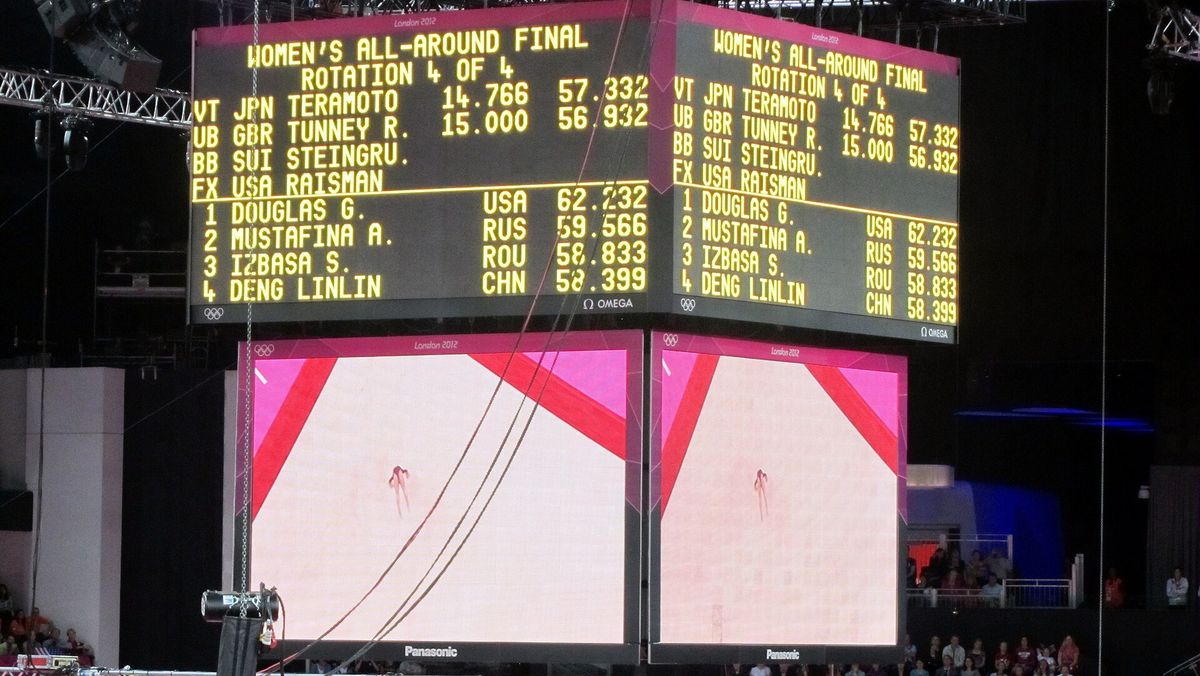
The scoreboard at the end of the women's all-around final at the 2012 London Olympics.
Scores like 15.000 and totals like 62.232: an open-ended sum, not a mark out of ten.
David Jones · CC BY 2.0 · Wikimedia Commons
This clause reads this way because of
FIG Code of Points, current cycle · FIG Code of Points, current cycle
Performing the routine
A gymnast salutes, performs once, and salutes again. There is no restart and no second attempt except in vault, where two vaults are performed in apparatus finals and averaged. A fall costs a fixed deduction and the routine continues; the clock on beam and floor continues through it.
- Attempts
- 1
- Two in a vault final, averaged.
- Fall deduction
- Fixed
Deductions and penalties
Almost nothing is forbidden outright; nearly everything is priced. Stepping outside the floor area, exceeding the time limit, an incorrect number of elements, a coach's presence on the podium where it is not allowed — each carries a stated deduction rather than a disqualification.
That is the structural difference between this sport and every other one here. Football has fouls, swimming has disqualifications, athletics has invalid attempts. Gymnastics converts nearly every infringement into arithmetic.
Deciding the winner
The highest total. Ties are broken by the execution score, on the principle that between two routines of equal difficulty the better performed one should win — which is the closed system's logic surviving inside the open-ended one.
This clause reads this way because of
Everything above is current law. Everything below is how Gymnastics got here.
02Disciplines and events
Three Olympic disciplines under one federation, and they share a scoring philosophy rather than any apparatus. Artistic is split into men's and women's programmes that have four apparatus in common between them only in the loosest sense — vault and floor — and are otherwise different sports.
- Disciplines
- 4
- Olympic medal events
- 18
- Men’s and women’s counted separately.
- Contested elsewhere
- 3
- world games, world championship.
- Listed for context
- 1
- Not counted as this sport.
Artistic, men8
Six apparatus, plus the all-around and the team event.
- Team all-around
- Individual all-around
- Floor exercise
- Pommel horse
- Rings
- Vault
- Parallel bars
- Horizontal bar
Artistic, women6
Four apparatus, plus the all-around and the team event.
- Team all-around
- Individual all-around
- Vault
- Uneven bars
- Balance beam
- Floor exercise
Rhythmic2
Women only on the Olympic programme, with hand apparatus.
- Individual all-around
- Group all-around
Trampoline2
- Men's individual
- Women's individual
Contested by the federation but not at the Games3
The FIG also governs disciplines that have never been on the Olympic programme, which is why its rulebook is larger than the Games suggests.
- Acrobatic gymnasticsWorld championshipWorld Games
- Aerobic gymnasticsWorld championshipWorld Games
- ParkourWorld championshipWorld Games
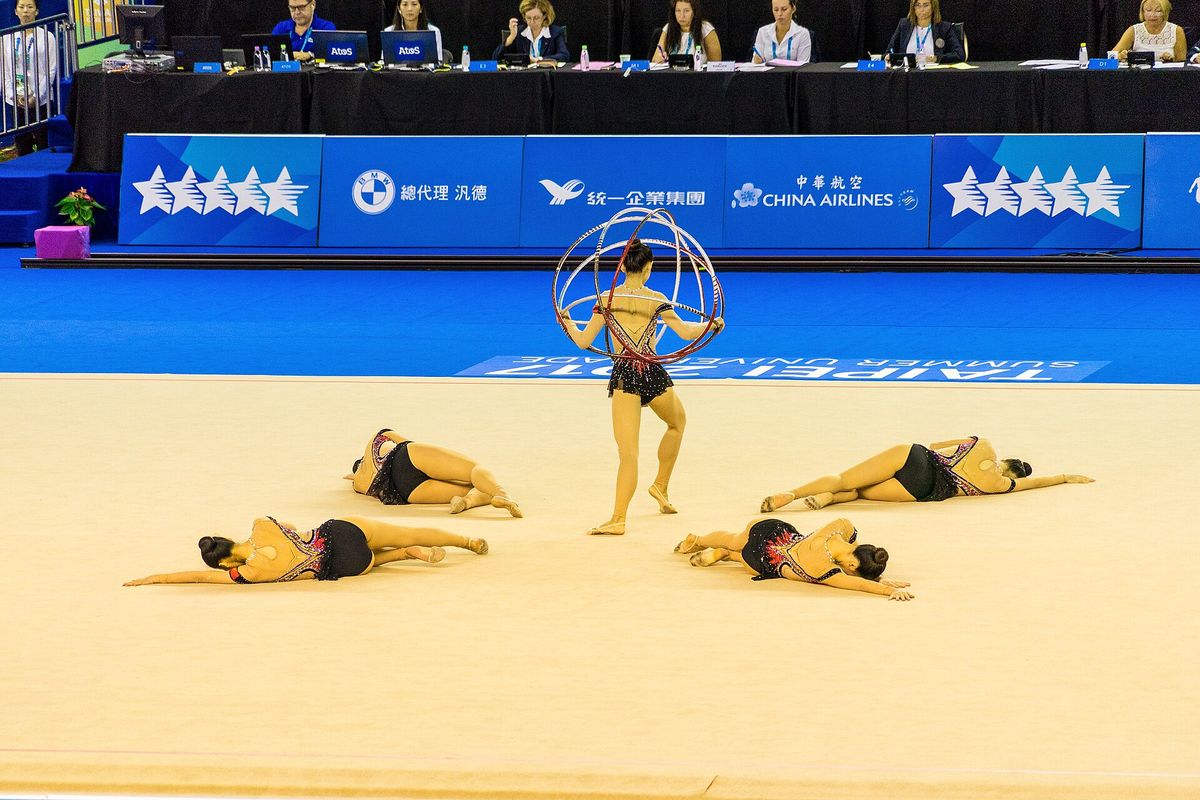
A rhythmic gymnastics group routine with hoops at the 2017 Summer Universiade, Taipei.
Artistic, rhythmic, trampoline and the other disciplines the FIG governs.
Wei-Te Wong · CC BY-SA 2.0 · Wikimedia Commons
03Officiating and technology
Gymnastics has the hardest officiating problem on this site, because it must certify a judgement rather than record a fact. There is no equivalent of a touchpad or a goal line. The score is a set of opinions, and the sport's entire credibility rests on those opinions being seen to be impartial.
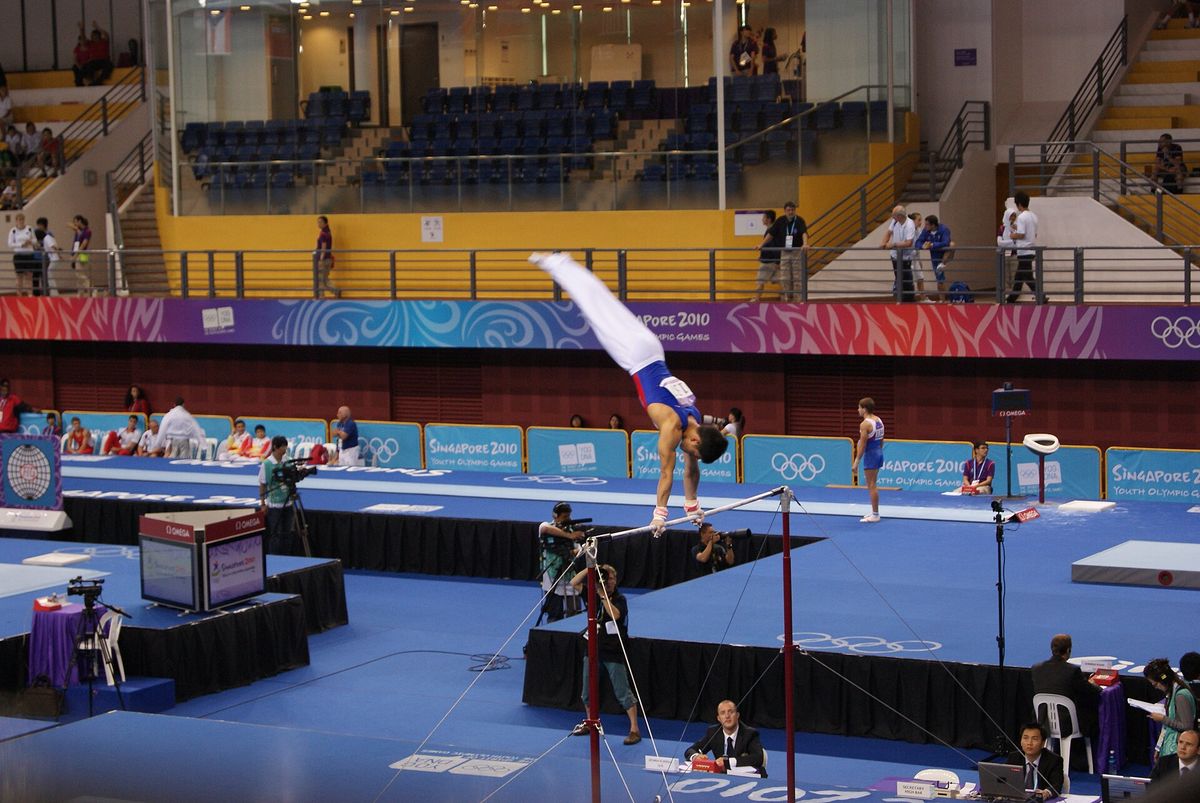
Judges' tables around the horizontal bar during men's qualification at the 2010 Youth Olympics, Singapore.
Panels at every apparatus, working independently of each other.
Jacklee · CC BY-SA 3.0 · Wikimedia Commons
The countermeasures have escalated for a century. Discard the highest and lowest scores. Anonymise the panel. Evaluate each judge statistically against the panel median and remove the outliers. And, from 2006, the largest structural change: split the panel in two, so that a D panel determines difficulty and an E panel scores execution, working independently.
Splitting them is not a technology fix, but it does the thing technology usually does — it makes a decision auditable. A single composite score cannot be challenged, because there is nowhere to point. Two scores from two panels can be, because a disputed result can now be attributed to one panel and, within it, to the arithmetic of a difficulty sum that is either right or wrong.
The video review that exists here is an inquiry: a coach may formally query the difficulty score, within a short window, and the D panel reconsiders. Note what is reviewable. Difficulty is a sum of catalogued elements, so it has a correct answer. Execution is a judgement, and it is not open to inquiry at all.
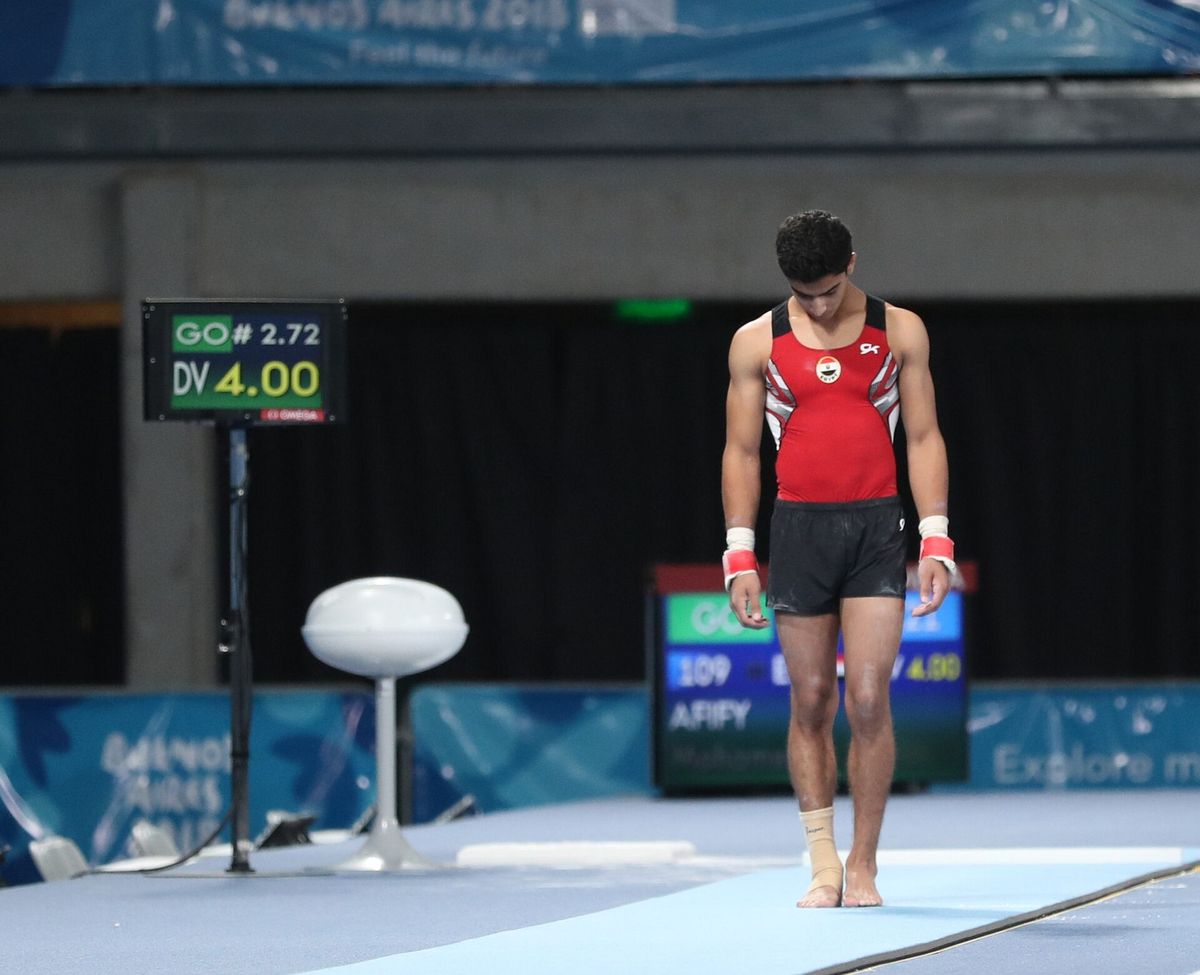
Mohamed Afify of Egypt after a vault in qualification at the 2018 Youth Olympics, the difficulty value, DV 4.00, on the board beside him.
Difficulty is a catalogued number, so it can be displayed, queried and checked.
Martin Rulsch · CC BY-SA 4.0 · Wikimedia Commons
Athens 2004 is why this shape exists. An error in one start value changed the medal order in the men's all-around, the judges were suspended, and the result stood. The sport's response was to make difficulty into arithmetic that could be checked, and to leave the part that cannot be checked to people whose work is now statistically monitored instead.
04Where it is played
Gymnastics has the smallest and most concentrated elite population of any sport on this site, and it is concentrated by infrastructure rather than by climate or culture. The sport requires a specialised hall, apparatus, deep matting, a foam pit and a qualified coach. Countries with those in quantity produce gymnasts and countries without them do not, almost without exception.
The historical map is a map of state sports systems: the Soviet Union, Romania, East Germany, Hungary, Czechoslovakia, and later China. Centrally funded programmes could identify children at six or seven and put them in residential training, which is exactly what a sport with this specialisation age rewards. The United States and Japan reached the same place by other routes — a dense private club system in one case, and sustained federation investment in the other.
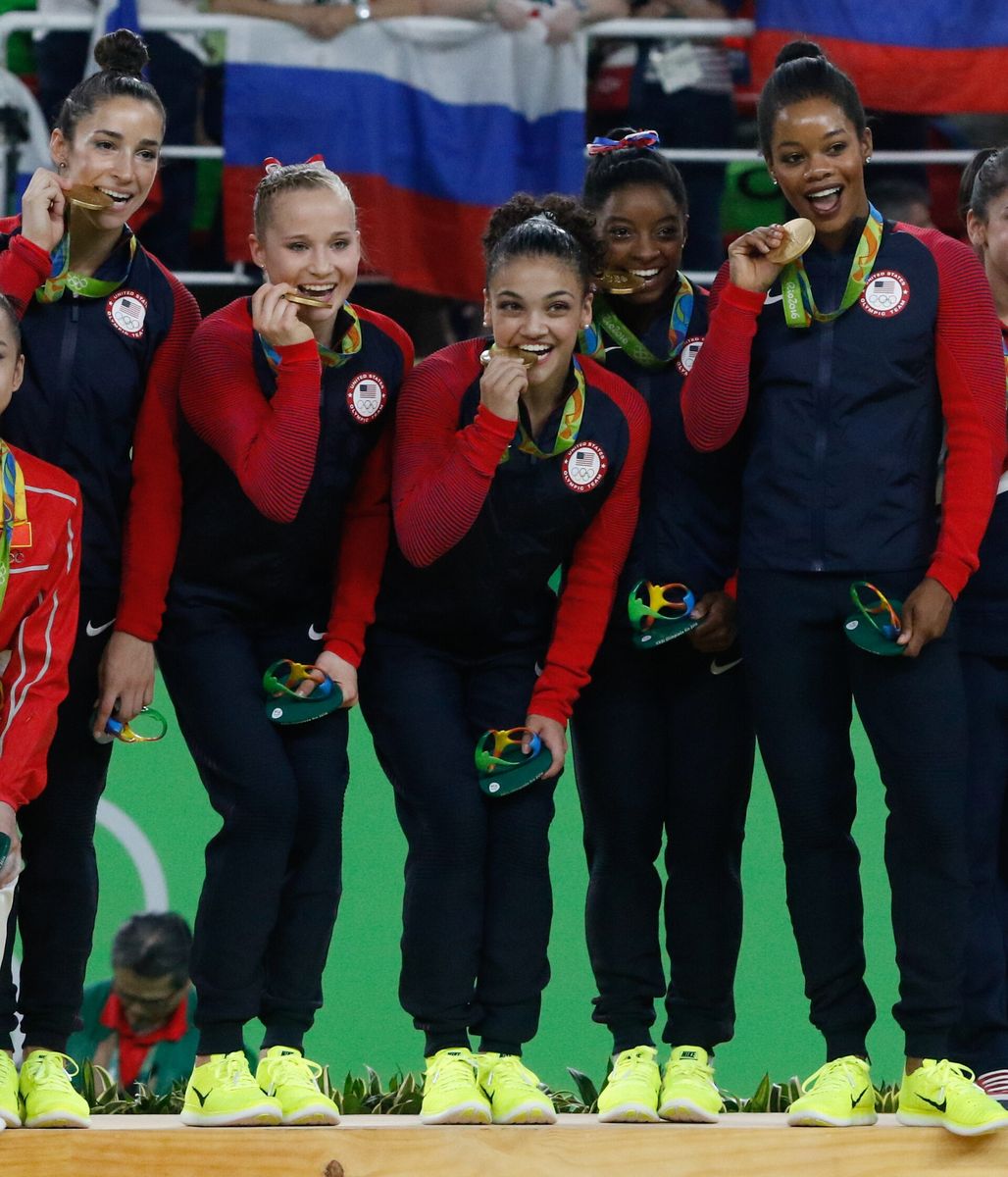
The United States women with their team gold at the 2016 Rio Olympics.
A dense private club system, reaching the same place by another route.
Fernando Frazão / Agência Brasil · CC BY 2.0 · Wikimedia Commons
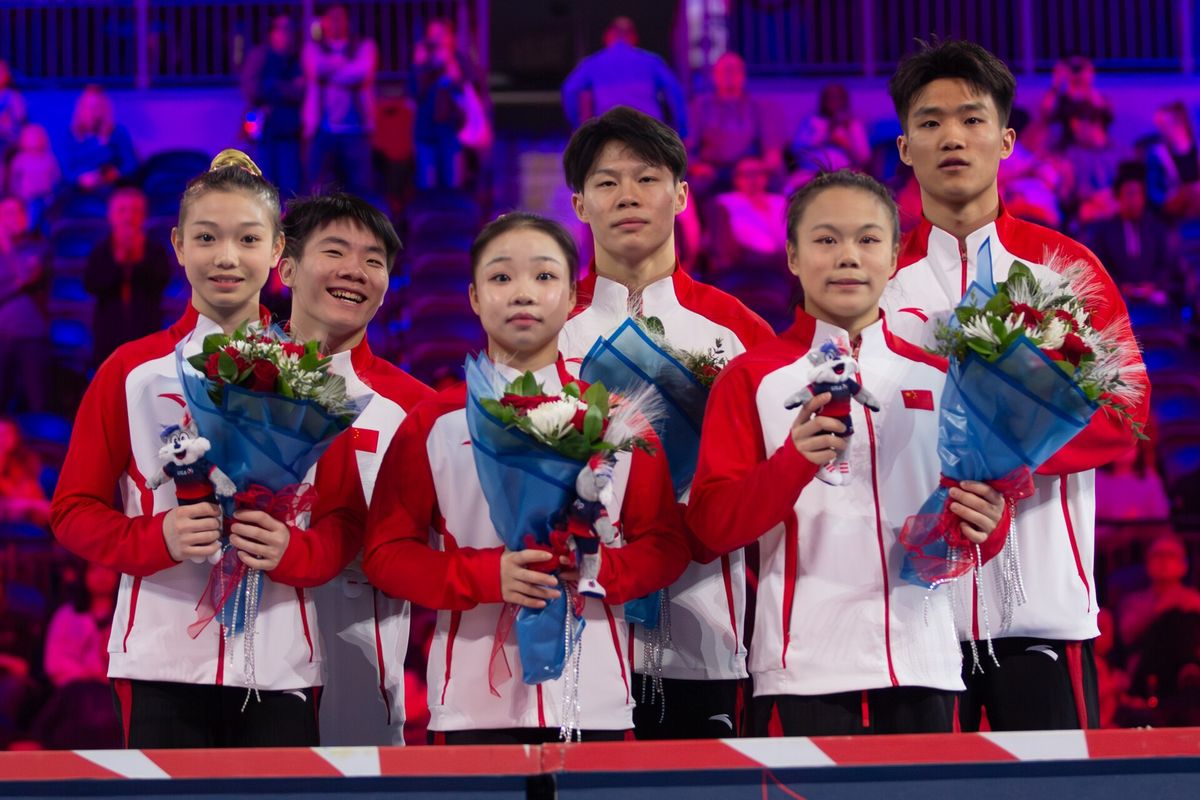
The Chinese national team at the 2026 American Cup.
China, the later addition to the map.
SpiritedMichelle · CC BY-SA 4.0 · Wikimedia Commons
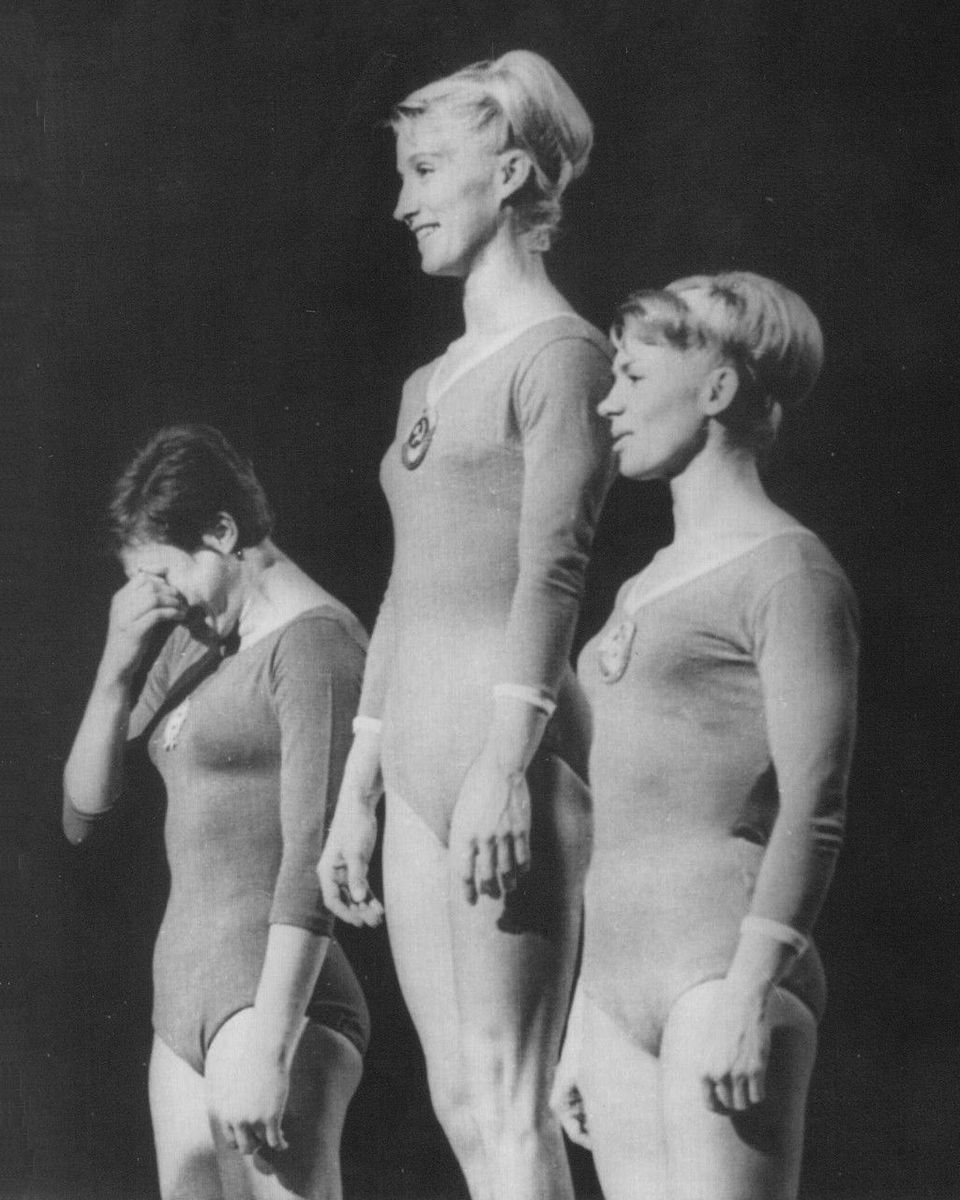
Katalin Makray of Hungary with Polina Astakhova and Larisa Latynina of the Soviet Union on an Olympic podium in Tokyo, 1964.
The state sports systems of the Soviet Union and Hungary on one podium.
Associated Press · Public domain · Wikimedia Commons
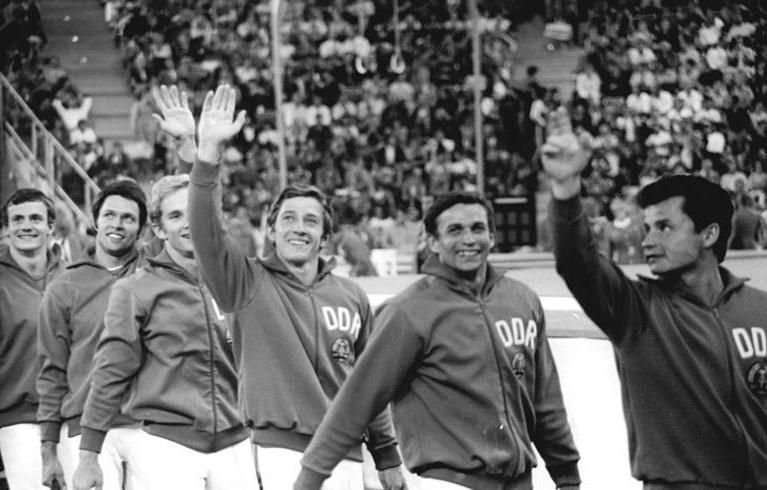
The East German men's team leaving the arena after winning team bronze at the 1972 Munich Olympics.
Another centrally funded programme on the historical map.
Ulrich Kohls / Bundesarchiv · CC BY-SA 3.0 de · Wikimedia Commons
Two rule changes on this page are legible as responses to that concentration.
The minimum age, raised to fifteen in 1981 and sixteen in 1997, was a response to a recruitment pattern that the strongest programmes had established and that others copied. It is a safeguarding rule, and it is also a rule about which training systems the sport is willing to reward.
Judging blocs — the accusation that judges from allied nations score each other's gymnasts favourably — is a geography problem before it is an integrity problem. Anonymised panels, discarded outliers and statistical monitoring of judges all exist because the pool of qualified international judges is drawn from the same small set of countries as the gymnasts.
05Learning curve
The only sport here that is hard at both ends, and the only one whose rulebook has removed the definition of the top. Since 2006 the difficulty score has had no upper limit, so there is no longer a score that means a routine could not have been better — mastery in this sport has no stated end point, as a matter of law.
Editorial — the site’s reading, not a sourced claim
Barrier to entry
How hard is it to get to a real game?
A beginner cannot perform the sport at all until months of preparation are done.
Almost every other sport on this site can be played badly on day one. Gymnastics cannot. Its most basic competitive elements — a handstand held still, a back handspring, a swing to handstand on bars — require strength and body awareness that do not exist in an untrained adult and are built over months, and attempting them early is how people get hurt.
Access is the other half. It needs a specialised hall, sprung floor, pits and matting, and a qualified coach spotting. There is no informal version: you cannot do gymnastics in a park with a friend the way you can play football or hit a shuttle.
Evidence
- Facility neededA specialised gymobservedSprung floor
- Coach neededYesestimateSpotting is a safety requirement
- Men's apparatus6observed
- Women's apparatus4observed
- Time to a first competitive routineMonths to yearsestimate
Barrier to the top
How hard is it to be good at?
Specialisation begins before the athlete can consent to it, and the ceiling is undefined by rule.
The elite window is short and it opens early. Gymnasts train seriously from an age at which other sports are still play, peak young by the standards of every other sport here, and are gone by an age at which a footballer is entering their best years. The federation's own minimum age exists because the sport was recruiting below it.
Then there is the ceiling, which is a rule rather than a fact of the body. Until 2006 a routine could be worth 10.0 and no more, so perfection was defined and reachable. The open-ended Code removed the maximum: difficulty is now a sum with no cap, and there is always a harder routine. The sport legislated away its own finish line.
Evidence
- Minimum senior age16ruleIn the calendar year of the competition; raised from 15 in 1997 and from 14 before that.1997 — the rule this rests on
- Maximum possible scoreUndefinedruleThere has been no perfect score since 2006. Mastery has no stated end point because the Code no longer provides one.2006 — the rule this rests on
- Compulsory routinesAbolished 1997ruleRemoved the shared material that let two gymnasts be compared directly.1997 — the rule this rests on
- Typical age of specialisation6–8estimate
- Typical peak age16–22estimateThe youngest of any sport recorded here.
Why the two differ
The gap here is the narrowest on the site, and that is the finding. Every other sport is much easier to start than to master; gymnastics is hard immediately, because the first competitive skill and the hundredth are the same kind of thing — a controlled, dangerous movement performed on apparatus — and only the difficulty value differs.
It is also the only sport whose mastery verdict rests partly on a rule rather than on the body. Between 1949 and 2005 a gymnast could be perfect, and the perfect 10 was a public, legible end of the scale. The 2006 Code bought accountability and the ability to reward difficulty, and the price was the finish line. That trade is recorded elsewhere on this page as a comparability break; here it shows up as the reason the ceiling cannot be described.
The historyhow it got here · sections 6 to 10
06Origin and invention
Gymnastics is the oldest governed sport in this collection — the federation now called the FIG was founded in 1881, before the modern Olympic movement existed — and for most of its early life it was not a competitive sport at all. It was a system of physical education, in two rival traditions: the German Turnen movement of Friedrich Jahn, built around apparatus, and the Swedish system of Per Henrik Ling, built around free exercise and posture.
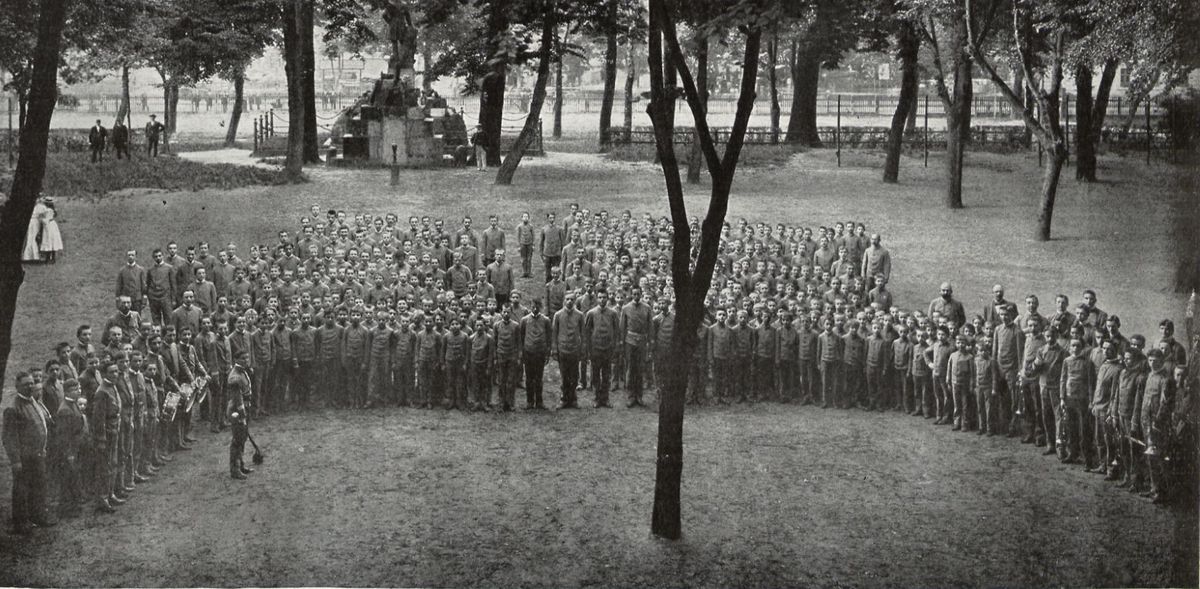
Pupils of the Friedrich-Gymnasium on the Turnplatz in the Hasenheide, Berlin, 1903, with the monument to Jahn behind them.
Jahn's Turnen, on the ground where he opened his first open-air gymnastics field: the apparatus tradition.
Unknown photographer · Public domain · Wikimedia Commons
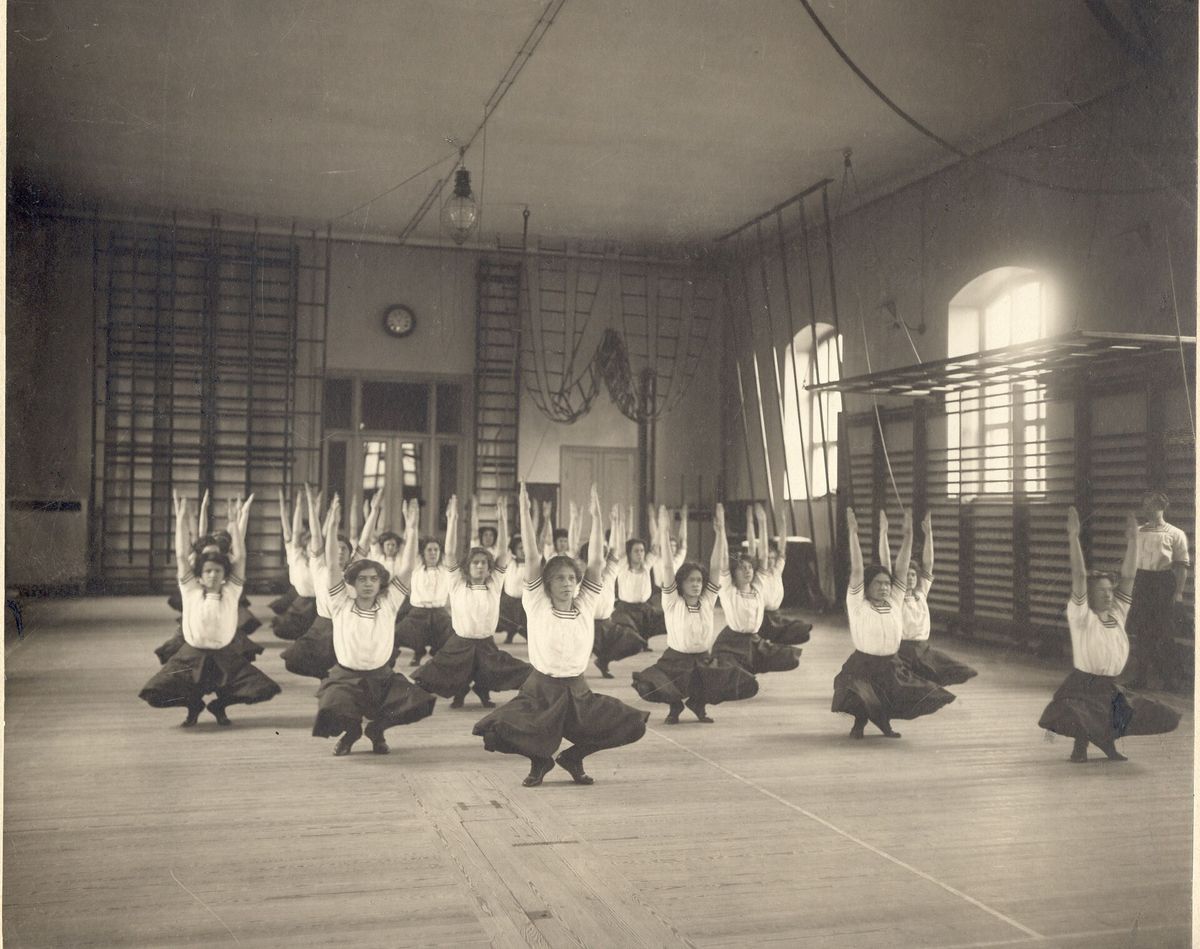
Swedish gymnastics at the Royal Gymnastics Central Institute, Stockholm, around 1910.
Ling's system: free exercise and posture, performed in unison.
Unknown photographer · Public domain · Wikimedia Commons
The apparatus tradition won, which is why the sport is organised by apparatus. But the education tradition left its mark in a way that matters enormously here: the point of the exercise was to perform a prescribed movement correctly. That is a fundamentally different object from a race or a throw, and it produced a fundamentally different kind of rule.
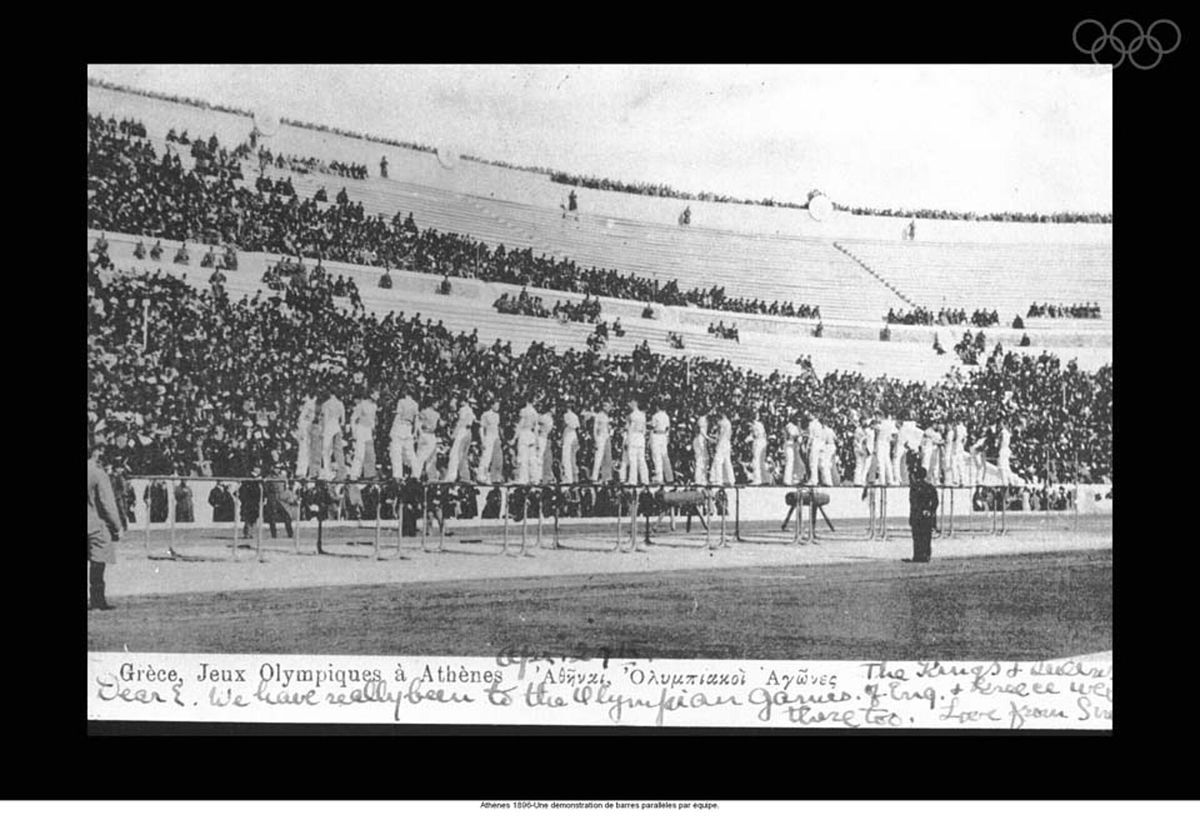
A team demonstration on the parallel bars at the 1896 Athens Olympics.
The apparatus tradition on the first modern Olympic programme.
Unknown photographer · Public domain · Wikimedia Commons
In a measured sport the rules constrain the conditions and the number takes care of itself. In gymnastics the rules are the number. The Code of Points does not describe how to compete; it defines what a score is. Which means that in this family, and only in this family, changing the rules and changing the units are the same act.
07Rule timeline
The sport’s own lane, expanded. Every entry carries a cause from the closed vocabulary and a citation, and says so where the citation is incomplete.
- 1997-01-01Safetyalso fairness and eligibilityadopted 1996
The minimum age for senior international competition was raised to sixteen in the calendar year of the competition, up from fifteen, which had itself been raised from fourteen in 1981.
Trigger and citationIncomplete — no confirmed article
Trigger
A sustained pattern through the 1970s and 1980s of competitors reaching the elite level before puberty, at a point where the sport's demands fell on a growing skeleton, together with several widely reported cases of federations misstating ages.
Code of Points · FIG Technical Regulations, 1997
- 1997-01-01Broadcast and pacingalso commercialadopted 1996
Compulsory exercises — a set routine performed identically by every competitor alongside their optional routine — were removed from international competition, leaving optionals only. Half the competition, and the half that most directly compared gymnasts against each other on the same material, was deleted.
Trigger and citationIncomplete — no confirmed article
Trigger
Competitions ran to two full sessions per phase and compulsories were regarded as unwatchable for a general audience. The change roughly halved the length of a championship.
Code of Points · FIG Code of Points, 1997–2000
- 2001Safetyalso equipment and technologyadopted 2000
The vaulting horse was replaced by the vaulting table, a wider and longer sloped platform with a much larger contact area. The apparatus a gymnast pushes off was redesigned outright, and every vault difficulty value was reissued for the new apparatus.
Trigger and citationIncomplete — no confirmed article
Trigger
At the 2000 Games the vaulting horse was set five centimetres below the required height for a full rotation of the women's competition before the error was found. Gymnasts crashed, some withdrew, and the resulting review found that the horse's small contact area left no margin for a hand placed slightly wrong.
Code of Points · FIG Apparatus Norms, 2001
- 2006-01-01Disputedalso integrityadopted 2005
The Code of Points was rewritten so that a routine's score is the sum of a difficulty score, which has no upper limit and is built from the elements performed, and an execution score out of 10 from which deductions are taken. The 10.0 maximum, in place in one form or another since 1949, ceased to exist. A perfect routine no longer has a number.
Comparability break · Measurement scale changed
The measurement scale itself was replaced. Scores before and after 2006 are not the same kind of number, and no mapping exists in either direction. See the series
Trigger and citationIncomplete — no confirmed article
Trigger
The federation's stated reason was that the closed system had run out of room: as difficulty rose, more and more routines started from 10.0 and the score could only distinguish them by execution, so the sport could no longer reward a harder routine.
The change is very widely read as a response to the 2004 men's all-around final, where an error in the start value assigned to Yang Tae-young's parallel bars routine altered the medal order and the federation suspended the judges responsible. On that reading the open-ended code is an attempt to make difficulty an auditable arithmetic sum rather than a panel's judgement. The sources do not agree on which consideration drove the decision, and both are recorded here rather than one being chosen.
Code of Points · FIG Code of Points, 2006–2008
- 2006-01-01Integrityadopted 2005
Judging was split into two panels operating independently: a D panel determining the difficulty score and an E panel scoring execution. The two tasks had previously been performed by one panel producing one number, and separating them made it possible to identify which panel a disputed score came from.
Trigger and citationIncomplete — no confirmed article
Trigger
Adopted together with the open-ended code and for the accountability half of the same argument. A single composite score cannot be audited; two scores from two panels can.
Code of Points · FIG Code of Points, 2006–2008
08Equipment evolution
Gymnastics apparatus changed continuously and mostly quietly: fibreglass rails on the uneven bars, sprung floors, foam landing surfaces of increasing depth, and the raising and separating of the uneven bars from a shape a gymnast could straddle to one they swing between. Each of these enabled skills that were previously impossible, and each therefore fed the difficulty inflation that eventually broke the 10.0 scale.
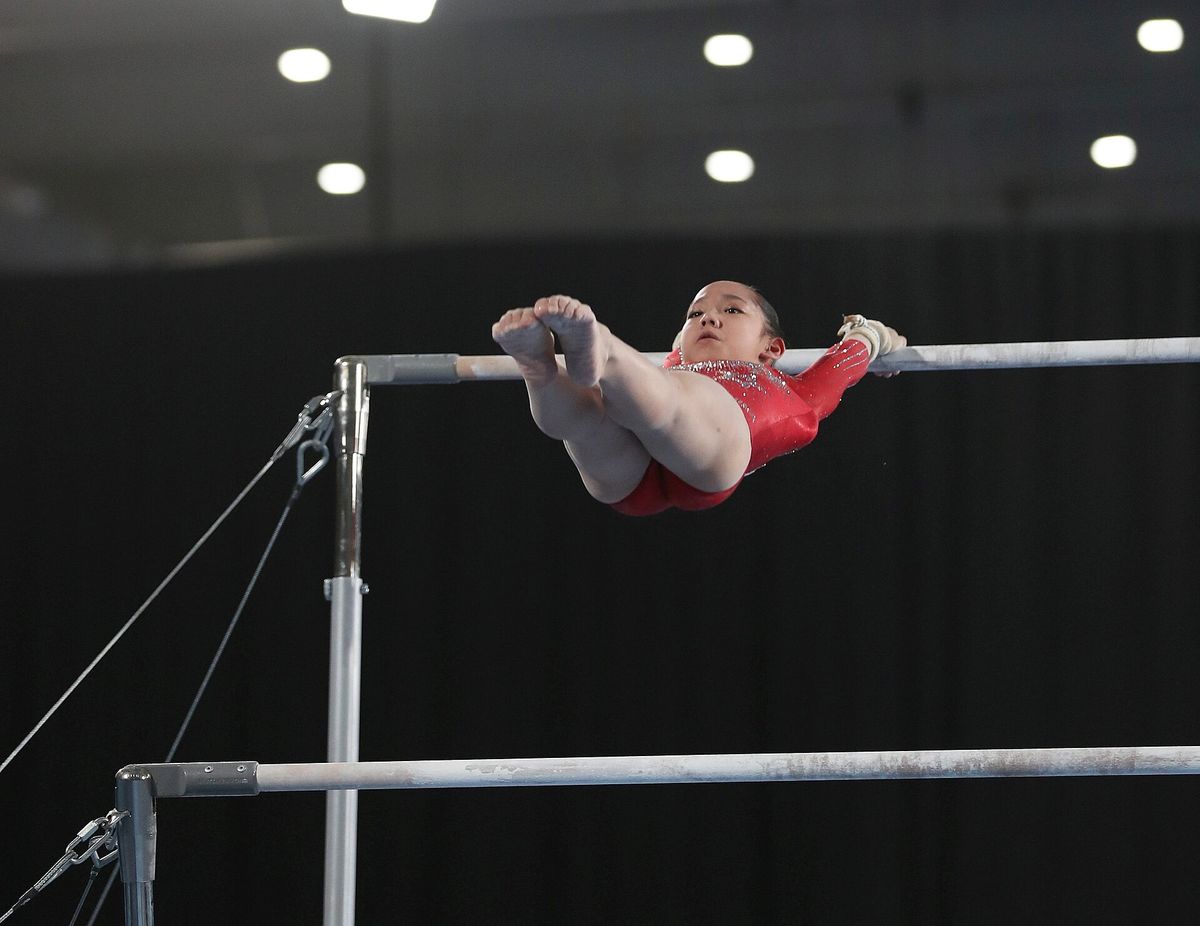
Tang Xijing of China in the uneven bars final at the 2018 Youth Olympics, Buenos Aires.
Bars set far enough apart to swing between, on fibreglass rails.
Martin Rulsch · CC BY-SA 4.0 · Wikimedia Commons
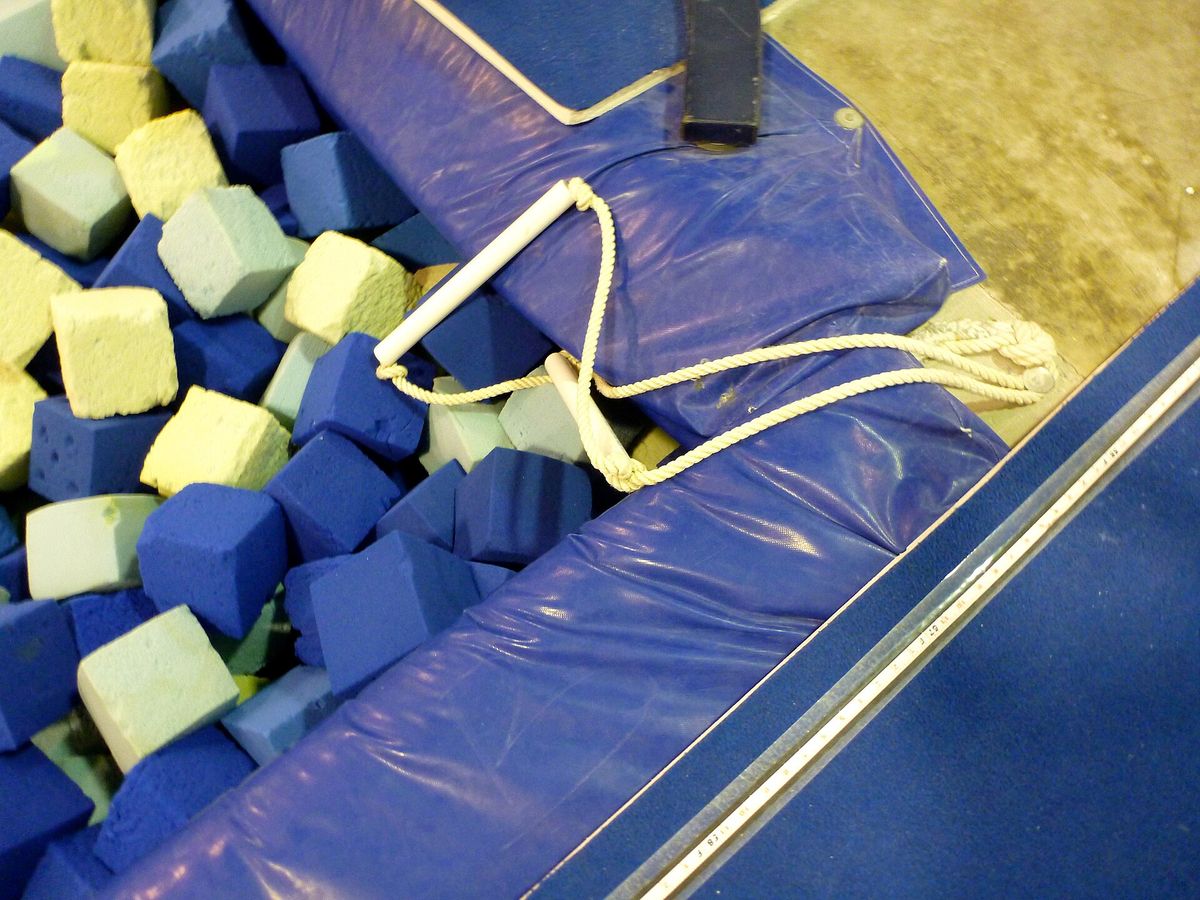
The rope for hauling yourself out of a foam pit, Black Hills Gymnastics, Washington.
Deep foam landings let gymnasts learn skills that would otherwise be too dangerous to attempt.
Rick McCharles · CC BY 2.0 · Wikimedia Commons
One apparatus change is a rule change with a date and a cause. In 2001 the vaulting horse was replaced by the vaulting table — wider, longer, sloped, with a much larger contact area. The horse was a piece of nineteenth-century gymnasium furniture that gymnasts were now hitting at sprint speed while rotating, and the surface a hand could safely land on was the width of two hands.
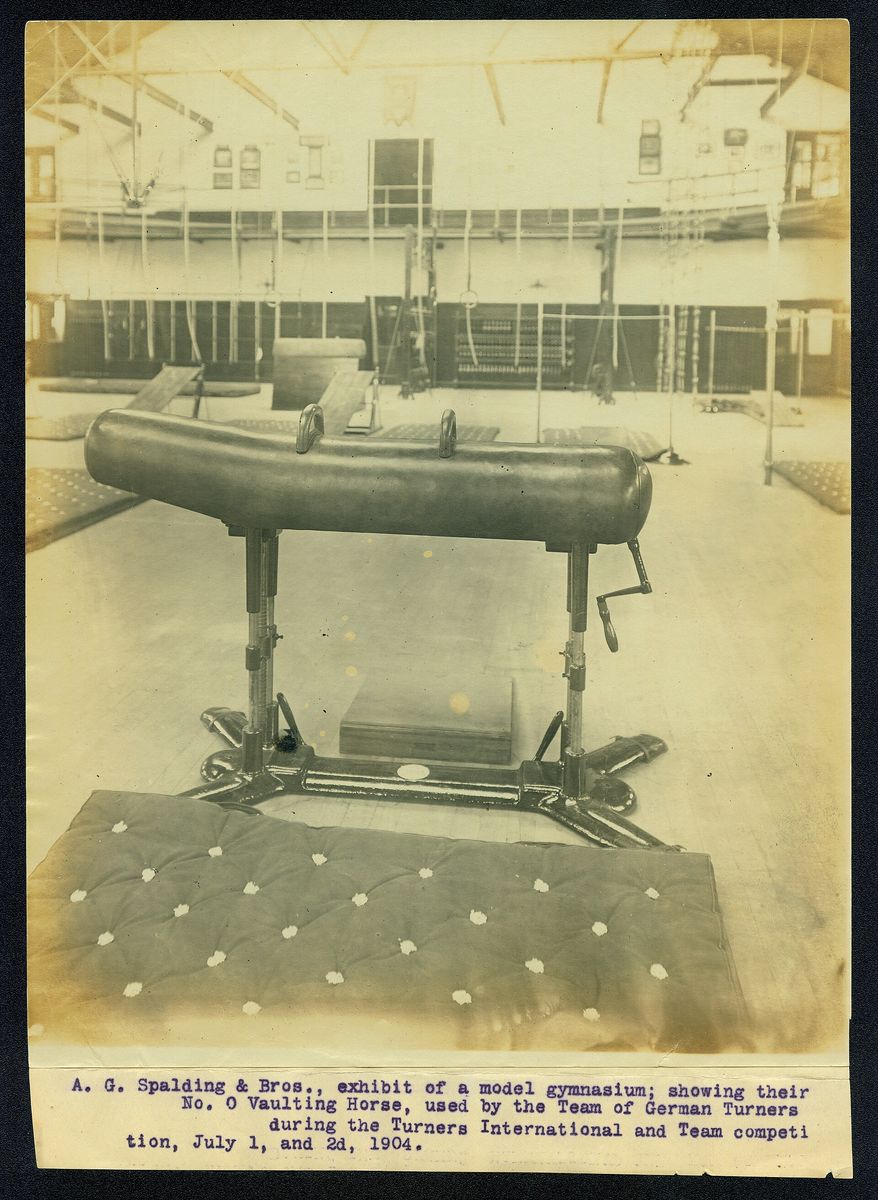
A. G. Spalding's No. 0 vaulting horse, used by the German Turners at the 1904 international competition, shown in a model gymnasium.
Nineteenth-century gymnasium furniture, and still the vault apparatus until 2001.
Unknown photographer · Public domain · Wikimedia Commons
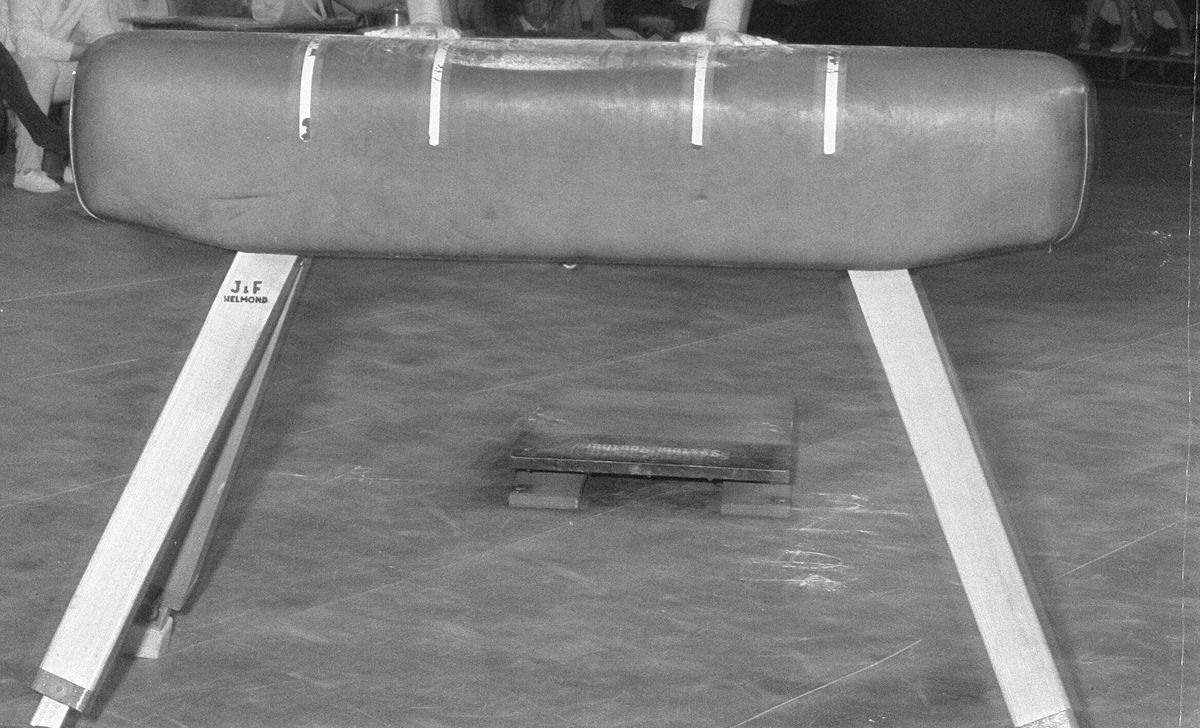
The vaulting horse at the Dutch women's championships, Leiden, 1959.
A long, narrow, rounded body: the surface a hand could safely land on was the width of two hands.
Harry Pot / Anefo · CC0 · Wikimedia Commons
The trigger was Sydney in 2000, where the horse stood five centimetres too low for an entire rotation of the women's competition. Gymnasts who had trained a vault to a known height found the apparatus was not where their body expected it to be. Some crashed, some withdrew, and the review that followed asked why the apparatus had so little tolerance for error in the first place. The answer was the contact area, and the table was the response.
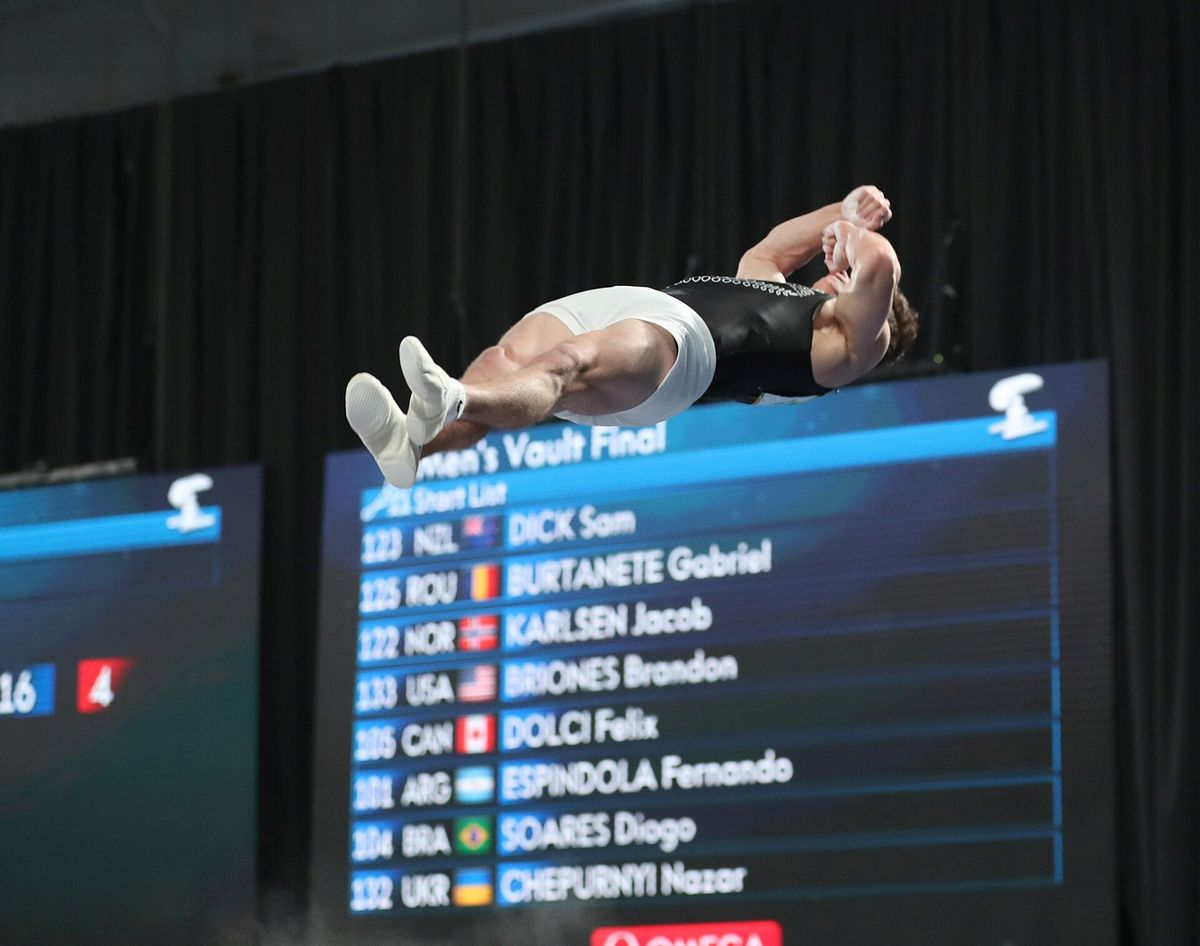
Sam Dick in the air above the vaulting table in the vault final at the 2018 Youth Olympics, Buenos Aires.
The table that replaced the horse in 2001: wider, longer, sloped, with a much larger contact area.
Martin Rulsch · CC BY-SA 4.0 · Wikimedia Commons
Every vault difficulty value was reissued for the new apparatus. This is quietly a comparability break of its own, and a smaller one than 2006 only because nobody was keeping a vault-score series across it.
09Governing body politics
The FIG's defining structural problem is that it must certify subjectivity. A measured federation ratifies a number produced by an instrument; a judged federation ratifies a number produced by people, and its entire credibility rests on those people being seen to be impartial. Every significant governance episode in the sport's modern history is a version of that problem.
Judging blocs — the recurring accusation that judges from allied nations score each other's gymnasts favourably — are older than television. The federation's countermeasures have escalated correspondingly: discarding the highest and lowest scores, then anonymising panels, then separating difficulty from execution in 2006, then statistical evaluation of judges against the panel median. Each measure is an attempt to make a judgement auditable without making it mechanical.
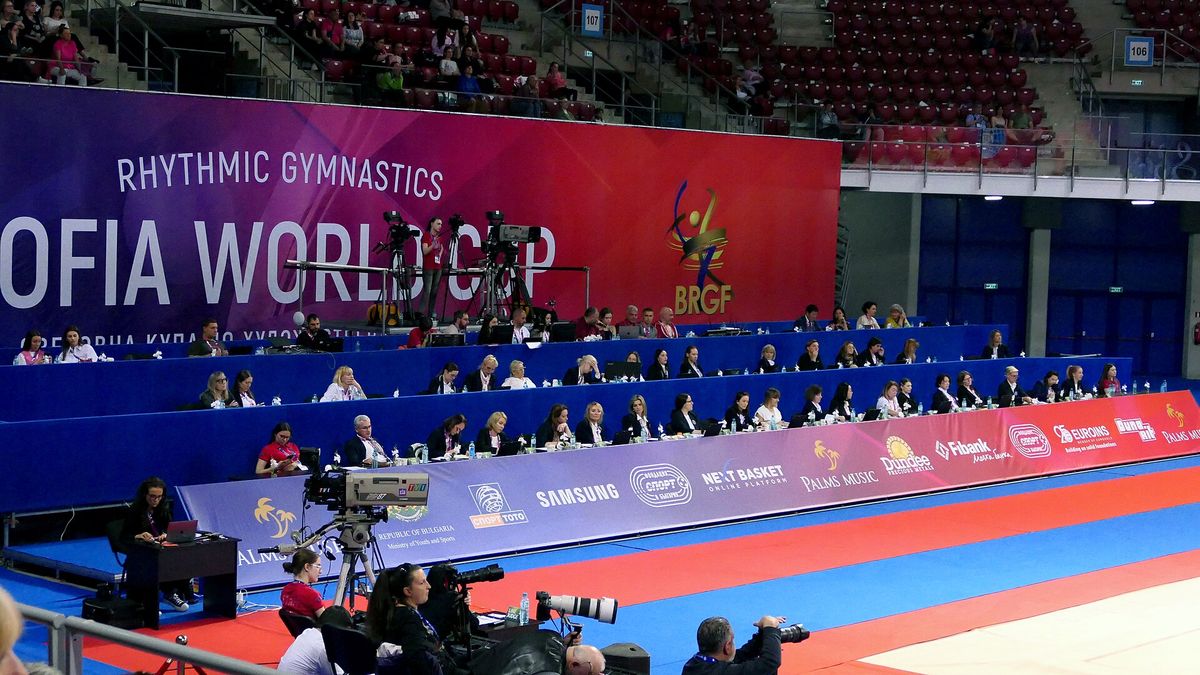
The judges' tables at the 2024 rhythmic gymnastics World Cup in Sofia.
A judged sport's credibility sits at this table, and the federation's countermeasures are all aimed at it.
FloweringDagwood · CC BY 4.0 · Wikimedia Commons
The 2006 Code is the largest of those measures, and it is telling that the federation presented it as a competitive reform — the sport had run out of room above 10.0 — rather than as an integrity reform. Both descriptions are true and the entry records both, because which one drove the decision is exactly the kind of question the sources cannot settle.
The other long-running politics is age. The minimum went from fourteen to fifteen in 1981 and to sixteen in 1997, against a background of federations misstating ages, and it remains contested: raising it protects children and also removes competitors at the point where the sport's demands and a small body most favourably coincide.
10Controversies that forced rule changes
Athens, 2004, men's all-around. Yang Tae-young's parallel bars routine was assigned a start value one tenth too low. He finished third; Paul Hamm won by 0.049. The federation acknowledged the error, suspended the three judges responsible, and declined to alter the result. Two years later the Code of Points was rewritten so that difficulty is an arithmetic sum of the elements performed, produced by a panel that does nothing else and can be checked.
Whether Athens caused that rewrite is genuinely contested. The FIG's stated case was that the 10.0 ceiling had become unusable: as difficulty climbed, too many routines started from 10.0 and only execution could separate them, so the code could no longer reward a harder routine. That argument predates Athens by years. Both readings are in the entry, and neither is presented as settled.
Sydney, 2000, the vault. The apparatus was set five centimetres too low for an entire rotation of the women's competition. The error is what people remember; the review's finding is what changed the sport. The horse had almost no tolerance for a hand placed slightly wrong, and it was replaced.
Montreal, 1976. Not a controversy and not a rule change, but the reason the 2006 entry costs the sport something. Nadia Comăneci scored 10.0 on the uneven bars and the scoreboard, which had been built on the assumption that no one ever would, displayed 1.00. For thirty years afterwards the perfect 10 was one of the few numbers in sport that needed no explanation to anyone. It does not convert into the current scale. It has no equivalent. It is simply gone, and that absence is what the empty chart on this page is recording.
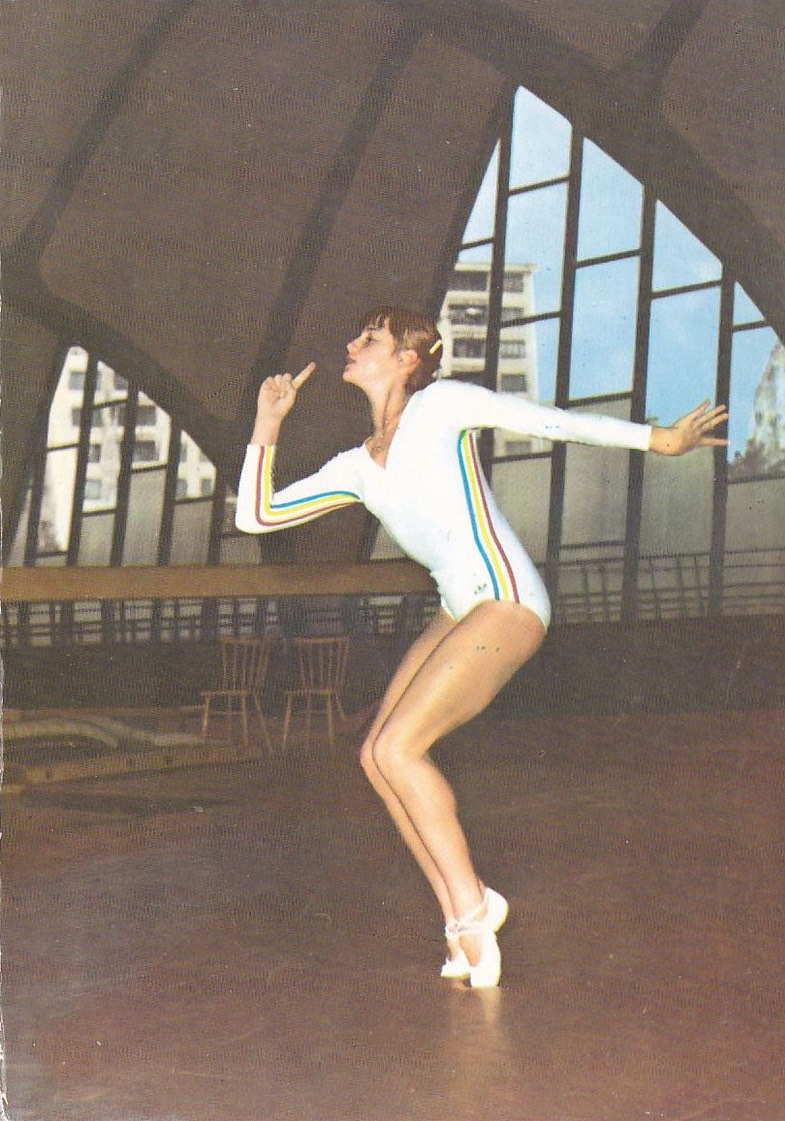
Nadia Comăneci, three-time Olympic champion, 1976.
A contemporary Romanian postcard. Her 10.0 in Montreal is the number the 2006 Code made unreachable — not by raising the bar, but by removing the top of the scale it was measured against.
I.P. „Filaret” · Public domain · Wikimedia Commons
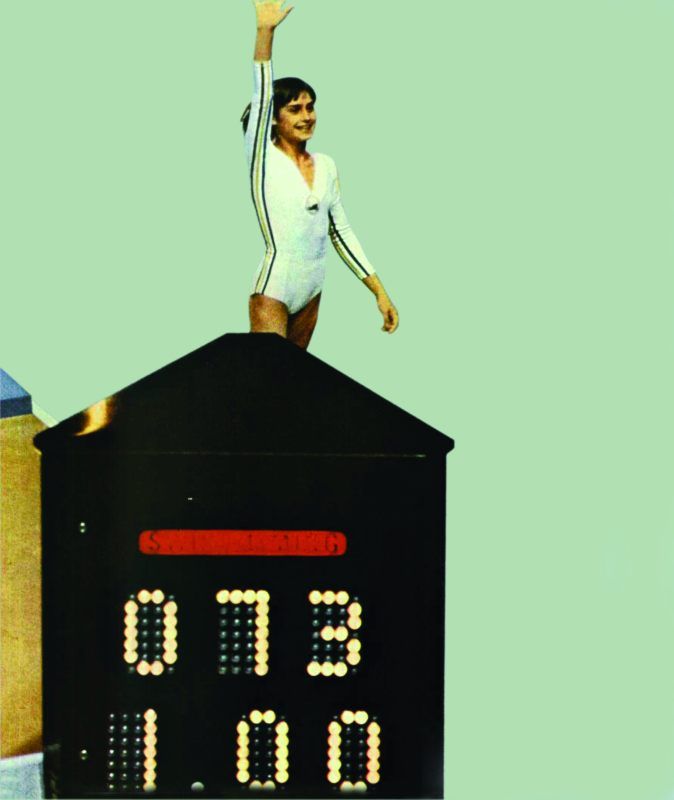
Nadia Comăneci at the 1976 Montreal Olympics, above a scoreboard reading 1.00.
The board had no room for a perfect 10.
Unknown photographer (Romanian Olympic and Sports Committee) · Public domain · Wikimedia Commons
Where it standsthe record, and what is still open · sections 11 to 12
11Series
No series can exist
Artistic gymnastics scores across the 2006 Code
There is no chart here, and there is not going to be one. Until 2006 a routine was scored against a maximum of 10.0. From 2006 the score is a difficulty value with no upper bound plus an execution score out of 10, and the two numbers are added. A 9.85 and a 15.633 are not two values of one quantity. They are values of two different quantities that happen to share the word "score", and no conversion between them exists — not an approximate one, not a rough one, not one good enough for a dotted line. This is a stronger claim than the one made about the javelin. There, two incomparable series each measure a real distance in metres, and a chart of each is meaningful even though a chart across them is not. Here the quantity itself was replaced. Nadia Comăneci's 10.0 in 1976 does not sit lower than a modern 15.7; it sits outside it. The vertical axis a chart would need cannot be constructed. It is also worth saying what was lost. Between 1949 and 2005 gymnastics had a public, legible, unambiguous top of the scale, and the perfect 10 became one of the few numbers in sport that a general audience understood without explanation. The 2006 Code bought accountability and the ability to reward difficulty, and it paid for them with that.
2006Measurement scale changedThe measurement scale itself was replaced. Scores before and after 2006 are not the same kind of number, and no mapping exists in either direction.
Why there is no chart here
Two scales, and no way between them
The two rulers are drawn with different baselines and different spacings on purpose. Putting them on one axis would be the exact claim this page refuses: a 9.85 does not sit below a 15.633, it sits outside it. The left scale had a real ceiling, which is what made the perfect 10 legible to people who knew nothing else about the sport; the right one has no maximum to draw.
12What is contested now
Recorded as unsettled.
Whether the open-ended Code was worth it. Two decades on, the argument that began in 2006 has not closed. The Code rewards difficulty without limit, and the predictable result is that gymnasts are incentivised towards skills at the edge of what a body can land safely. Periodic revisions have adjusted the difficulty values of the most dangerous elements — down, to remove the incentive — which is the federation using its pricing system as a safety instrument. Whether that is sufficient, or whether an open-ended difficulty score is inherently a safety problem, is genuinely disputed within the sport.
The lost audience. The counter-argument is not about safety at all. The perfect 10 was legible to people who knew nothing about gymnastics, and the current score is not. Whether the sport traded its general audience for its accountability is an argument that this site can record but not settle — and it is the reason the series section of this page has an essay where a chart would be.
The minimum age. Raising it protects children and also removes competitors at exactly the point where the sport's demands and a small, light body most favourably coincide. Proposals to raise it again, and counter-arguments that sixteen already excludes athletes at their physical best, both circulate.
Safeguarding. The most serious open question in the sport is not a rule of play. Inquiries in several countries have found abusive coaching cultures in programmes that were producing results, and the governance response — what a federation owes athletes it does not directly employ — is unresolved.