Hockey
The only major invasion sport to abolish offside outright, and the only one whose surface change priced half the world out.
- Official
- Hockey
- Game category
- Invasion
- Adjudication
- Decided by score
- Standing
- Removed, restored
- rule changes
- 5
- comparability breaks
- 3
- Olympic editions
- 26
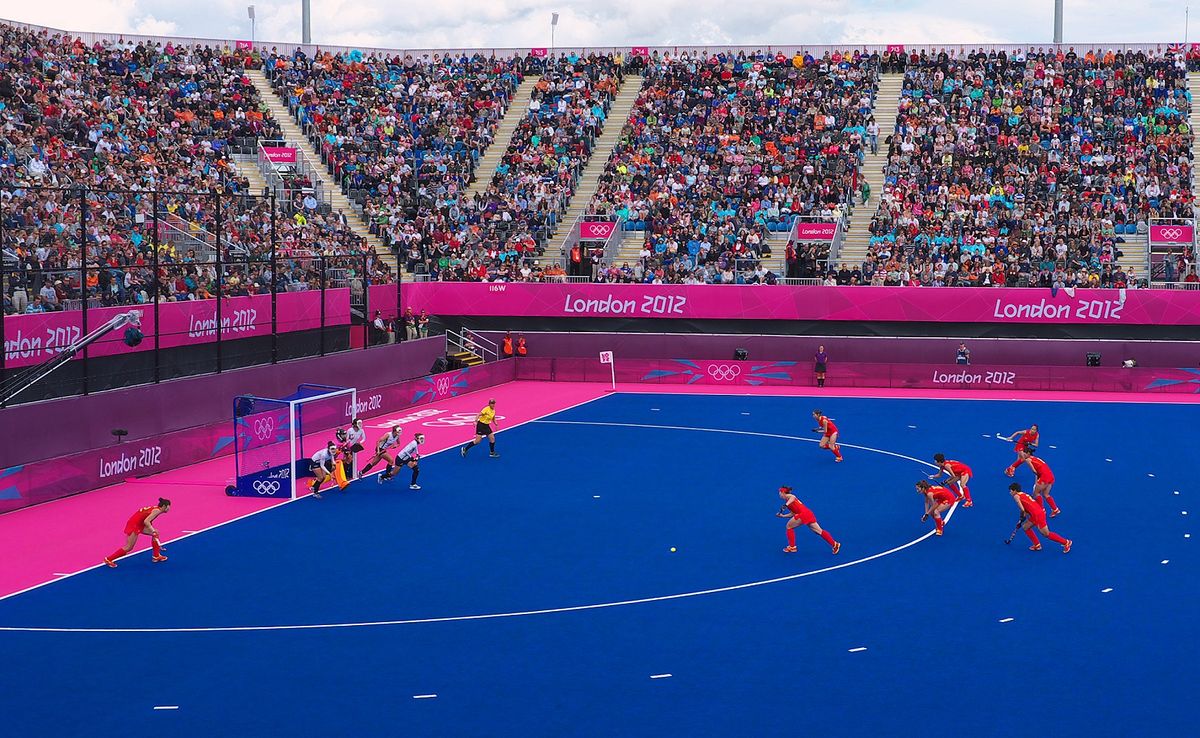
A penalty corner for China against Korea at the 2012 London Olympics, played around the circle · The Hammer · CC BY-SA 3.0
- Governing body
- International Hockey Federation
- Founded
- Fédération Internationale de Hockey founded 1924.
- Olympic status
- 26 editions
- on the 2028 programme
- Also contested at
- Asian Games
Football's 1925 offside change is the most cited rule amendment in sport. Hockey did something no other invasion sport has ever done and simply removed offside altogether in 1998. The larger change was earlier and quieter: from 1976 the sport moved onto artificial turf, which made it faster, changed every skill in it, and turned a game playable on any field into one requiring a facility that costs more than most national federations have.
The gamewhat it is now · sections 1 to 5
01How it is played
Eleven a side, a curved stick, a hard ball, and a goal that can only be scored from inside a semicircle. That last restriction is hockey's defining rule and the reason the sport looks the way it does: everything decisive happens in a small, crowded area, which is also why almost all of its officiating technology points there.
These figures were entered from the edition named above but have not been checked against its text line by line. Treat them as this site’s reading of the laws, not as a substitute for them.
The object of the game
Score more goals. A goal counts only if the ball is played by an attacker inside the shooting circle — a semicircle about fifteen metres from goal — so a shot from distance is worth nothing however well struck.
That single rule concentrates the entire sport into two small areas of the pitch and produces the penalty corner, which is hockey's most distinctive set piece and its largest source of goals.
The pitch
Artificial turf, and this is the most consequential fact about modern hockey. Grass made the ball bobble; synthetic surfaces make it run true and fast, which changed every skill in the sport when the switch happened from 1976.
It also made the sport expensive. A water-based pitch costs more than most national federations can find, and the competitive map narrowed accordingly.
- Pitch
- 91.4 × 55 m
- Surface
- Artificial turf
- Shooting circle
- 14.63 m radius
- Goal
- 3.66 × 2.14 m
This clause reads this way because of
Stick and ball
A stick with one flat face — the ball may only be played with that side, which is the sport's oldest constraint and the reason the reverse-stick technique had to be invented. The ball is hard and solid.
Goalkeepers wear extensive protective equipment; outfield players wear almost none, with mouthguards and shin pads usual and face masks permitted for penalty corner defence.
- Stick
- One flat face only
- Ball
- 156–163 g, solid
- Goalkeeper
- Full protective kit
Players and officials
Eleven a side with rolling substitutions — players may come on and off continuously, which no other sport on this site permits so freely.
Two umpires, one per half of the pitch, plus a video umpire. Referrals are limited to incidents in the circle and each team keeps a successful referral, which is the same structure cricket uses.
- On pitch
- 11
- Substitutions
- Rolling, unlimited
- Umpires
- 2, plus video
This clause reads this way because of
Time
Four quarters of fifteen minutes, with the clock stopped for penalty corners and after goals. Until 2015 it was two halves of thirty-five minutes with a running clock.
Stopping the clock removed time-wasting as a tactic and the quarters added three guaranteed breaks, which is a broadcast structure rather than a sporting one — the same change basketball made internationally in 2000.
- Quarters
- 4 × 15 min
- Clock
- Stopped for corners and goals
This clause reads this way because of
Scoring
One goal, one point, and only from inside the circle. Field goals, penalty corners and penalty strokes all count the same.
The penalty corner is the sport's signature and its statistical engine: a set piece awarded for defensive infringements in the circle, taken from the backline, with the attacking team injecting the ball out and the defence running from the goal line. A large share of international goals come from it.
- Goal
- 1
- Valid only from
- Inside the circle
- Penalty stroke
- From 6.4 m
Free hits and the self-pass
Since 2009 a player awarded a free hit may play the ball to themselves and continue, rather than being required to pass. That removed most of the dead time free hits used to create without removing the sanction.
Play restarts from the halfway line after a goal, and a penalty corner is taken from the backline with defenders behind the goal line.
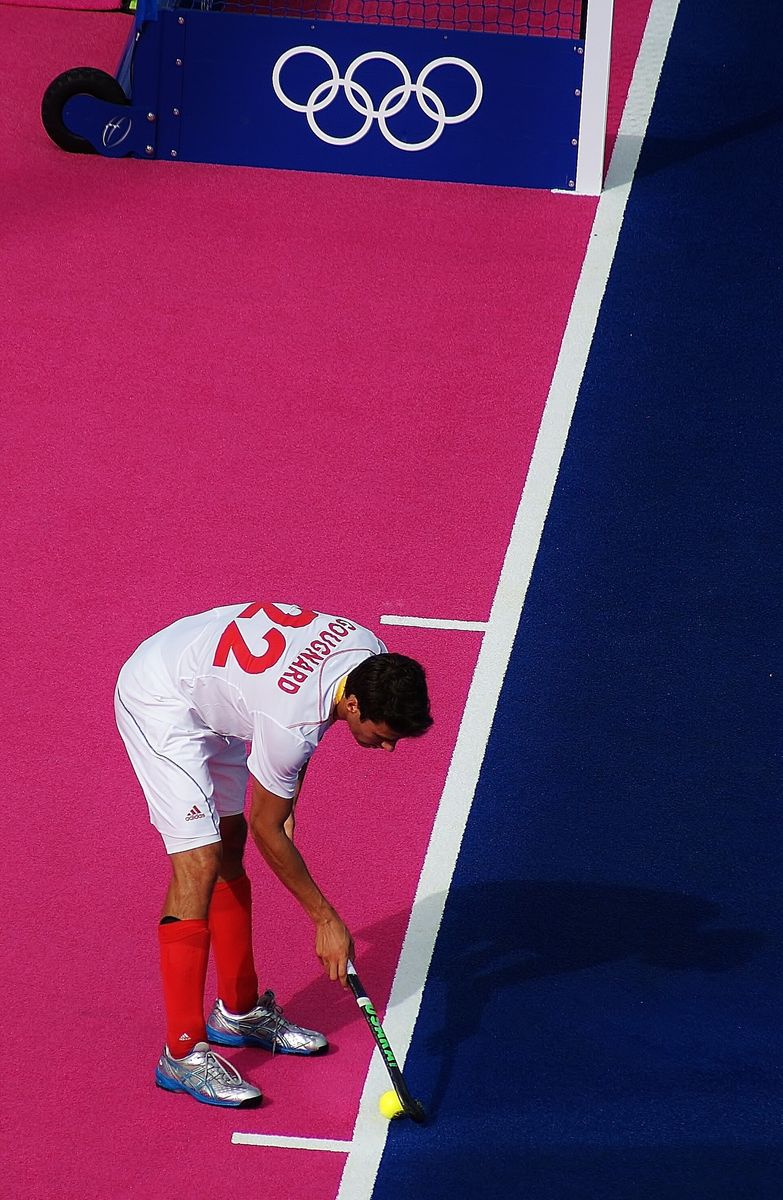
Simon Gougnard of Belgium preparing to inject a penalty corner at the 2012 London Olympics.
The injection from the backline mark that starts the sport's signature set piece.
Rega Photography · CC BY-SA 2.0 · Wikimedia Commons
This clause reads this way because of
Infringements
Playing the ball with the rounded side of the stick; playing it with the body; obstruction — placing yourself between an opponent and the ball without playing it; dangerous play; and raising the ball dangerously.
What is not here is offside. Hockey abolished it in 1998 and is the only major invasion sport to have done so, so an attacker may stand anywhere, including behind the last defender.
- Offside
- Abolished 1998
- Rounded side of stick
- May not play the ball
- Obstruction
- A foul
This clause reads this way because of
Deciding the winner
More goals. A draw stands in pool play; in knockout matches a tie goes straight to a shoot-out, in which an attacker has eight seconds to score one-on-one against the goalkeeper — a format designed to be more skill-dependent than a penalty stroke and more watchable than either.
Everything above is current law. Everything below is how Hockey got here.
02Disciplines and events
Two Olympic events, in a sport with an unusually long unbroken Olympic history — hockey has been contested at every Games since 1928 apart from 1924, and the women's tournament since 1980.
- Disciplines
- 1
- Olympic medal events
- 2
- Men’s and women’s counted separately.
- Contested elsewhere
- 2
- world championship.
- Listed for context
- 1
- Not counted as this sport.
Field hockey2
- Men's tournament
- Women's tournament
Contested away from the Games2
- Hockey5sWorld championshipFive a side on a smaller pitch, developed for cheaper staging and youth competition.
- Indoor hockeyWorld championshipSix a side, with boards; a separate world championship.
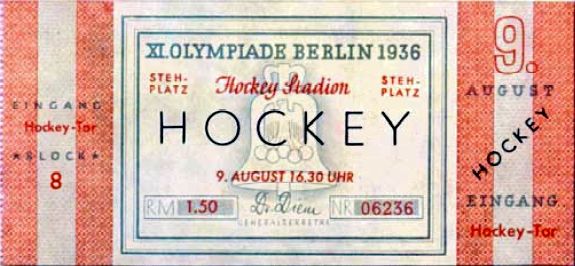
A ticket to the hockey stadium at the 1936 Berlin Olympics, 9 August.
Men's hockey has been on every Olympic programme since 1928, and women's since 1980.
IOC · Public domain · Wikimedia Commons
03Officiating and technology
Hockey concentrates its officiating problem into two semicircles and points almost all of its technology there.
Two umpires cover the pitch, one per half, which is fewer than the area suggests — the reason it works is that a goal can only be scored from inside the circle, so the decisions that matter are geographically constrained.
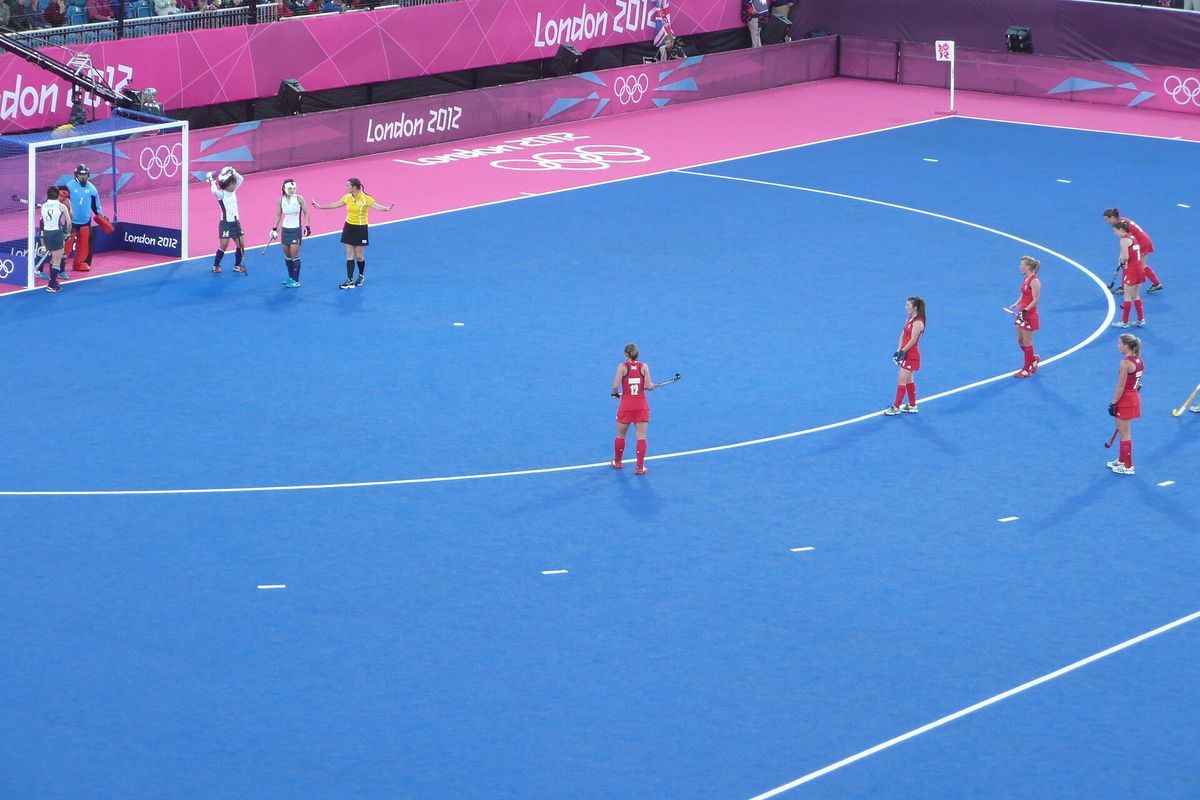
Great Britain against Japan at the 2012 London Olympics, an umpire by the circle.
Two umpires, one per half, work because the decisions that matter happen near the circles.
Paul Stephenson · CC BY 2.0 · Wikimedia Commons
Video referral, from 2011, is limited to incidents in the circle. A team refers, keeps the referral if successful, and the video umpire answers questions of fact: was the ball played by an attacker's stick, did it touch a foot, did it cross the line, was there a foul in the build-up to a goal. It is the same structure cricket uses and it works for the same reason.
What the umpires kept is obstruction, and it is hockey's equivalent of football's handball. Obstruction is placing your body between an opponent and the ball without playing it, and judging it means deciding whether a player was playing the ball or shielding it — a judgement about purpose, not position, and therefore not automatable.
Dangerous play is the other, and it is harder here than in most sports because the ball is solid and travels fast. Whether a raised ball was dangerous depends on who was near it and how, which is a judgement made in a fraction of a second.
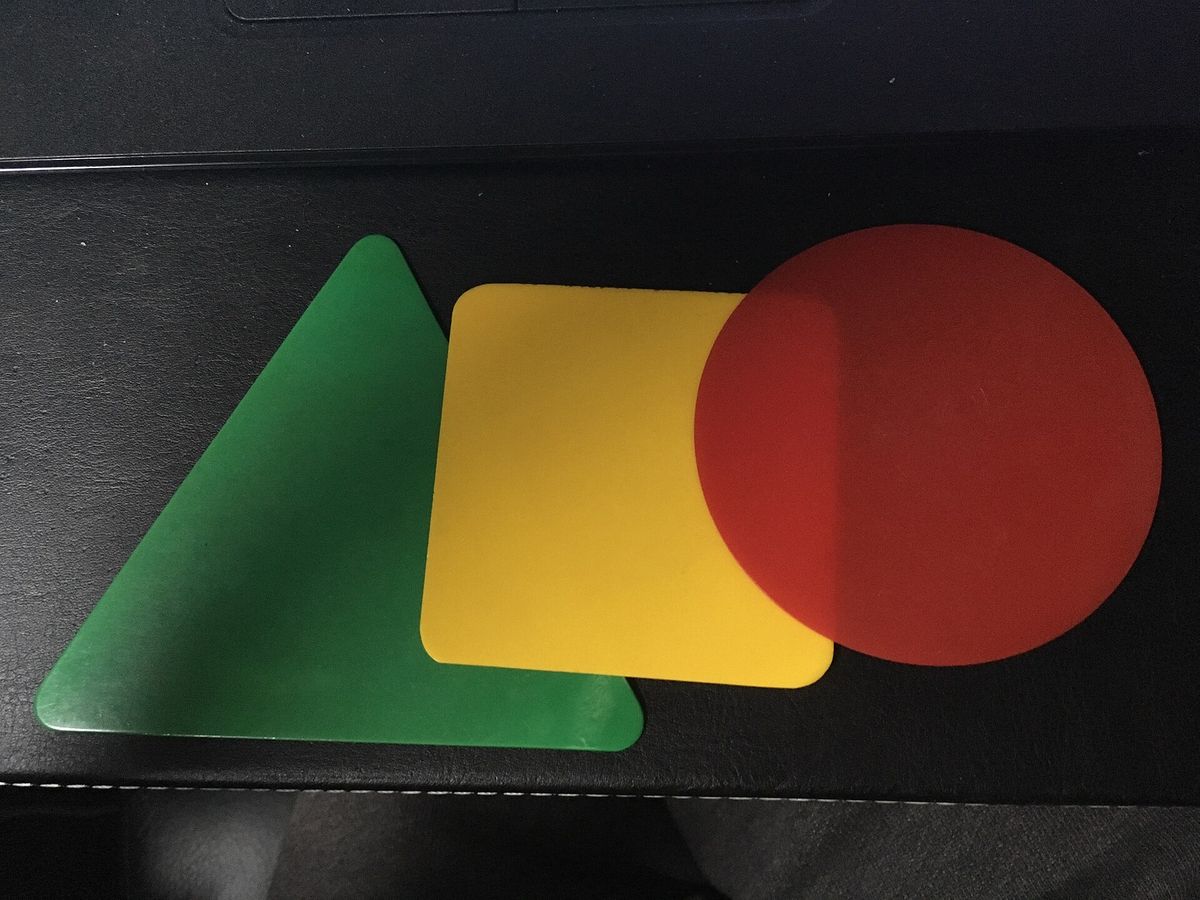
Hockey's green, yellow and red cards.
Green, yellow and red: escalating sanctions for the judgements the umpires kept.
Redmar · CC BY-SA 3.0 · Wikimedia Commons
The removal of offside in 1998 deserves recording as an officiating decision as much as a sporting one. It deleted the sport's most disputed call by deleting the rule, which is a solution available to any federation and taken by almost none.
04Where it is played
Hockey has the most abruptly redrawn competitive map of any sport on this site, and the date is 1976.
Before it: India and Pakistan, overwhelmingly. India won six consecutive Olympic titles from 1928 to 1956 and eight in total; Pakistan won three. Their game was built on a grass surface where the ball did not run true and close stickwork decided everything.
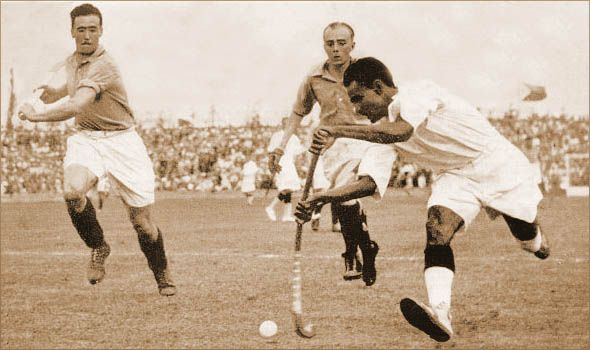
Dhyan Chand with the ball against France in the 1936 Olympic semi-final, Berlin.
Close control on grass, the game India built.
Unknown photographer · Public domain · Wikimedia Commons
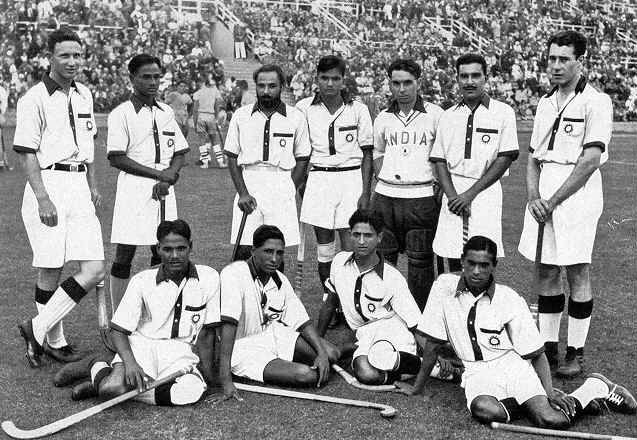
India's team at the 1936 Berlin Olympics, Dhyan Chand standing second from left.
Gold in 1936: the third of six in a row.
Unknown photographer · Public domain · Wikimedia Commons
After the switch to artificial turf: the Netherlands, Australia, Germany, Belgium, Great Britain, Argentina and Spain. Neither India nor Pakistan has won an Olympic title since 1984.
The mechanism is not mysterious and it is not entirely about technique. A water-based pitch is a facility with a construction cost and an irrigation requirement, and the countries that built them in quantity were wealthy ones. A sport that had grown through the Commonwealth acquired a capital barrier overnight.
India's recent return to Olympic medals, after a forty-year absence from them, followed sustained investment in exactly that infrastructure.
The women's game has a somewhat different map with the Netherlands dominant, and Argentina is the outlier worth noting — sustained success from a much smaller facility base than its rivals.
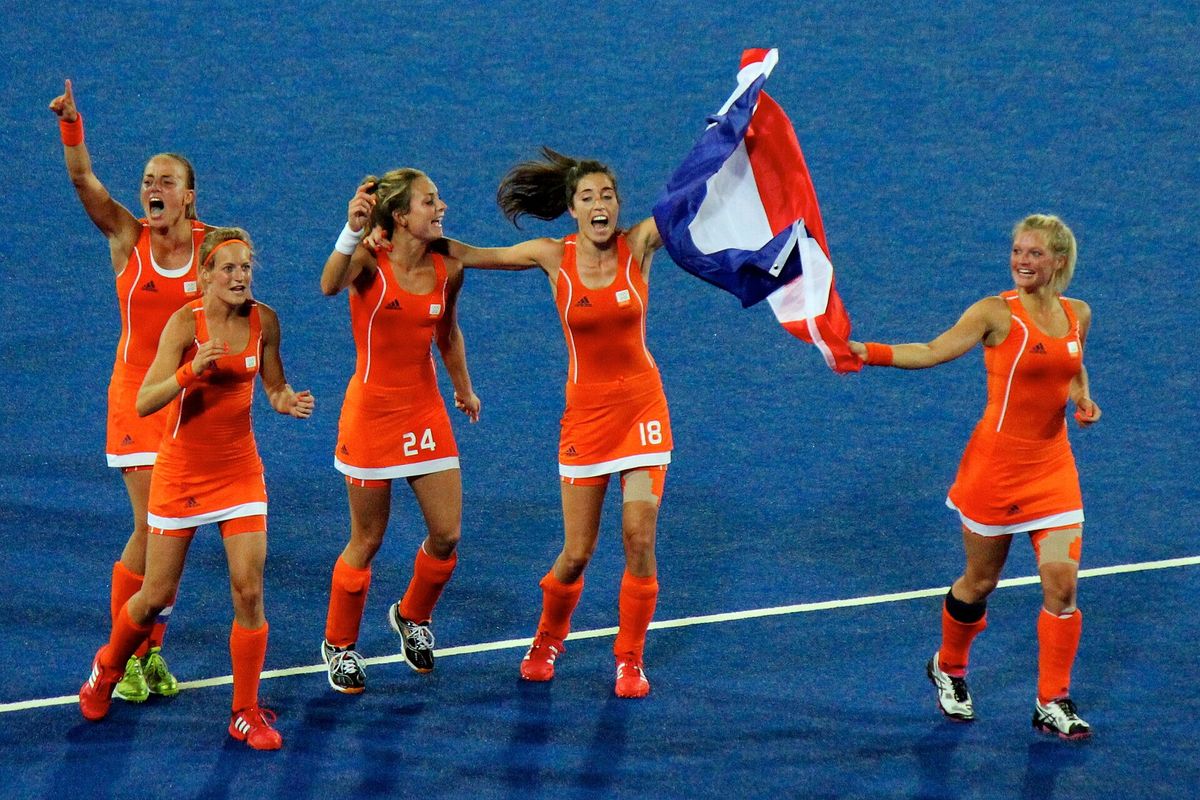
The Netherlands celebrating women's Olympic gold, London 2012.
The dominant power of the women's game.
Ross Huggett · CC BY 2.0 · Wikimedia Commons
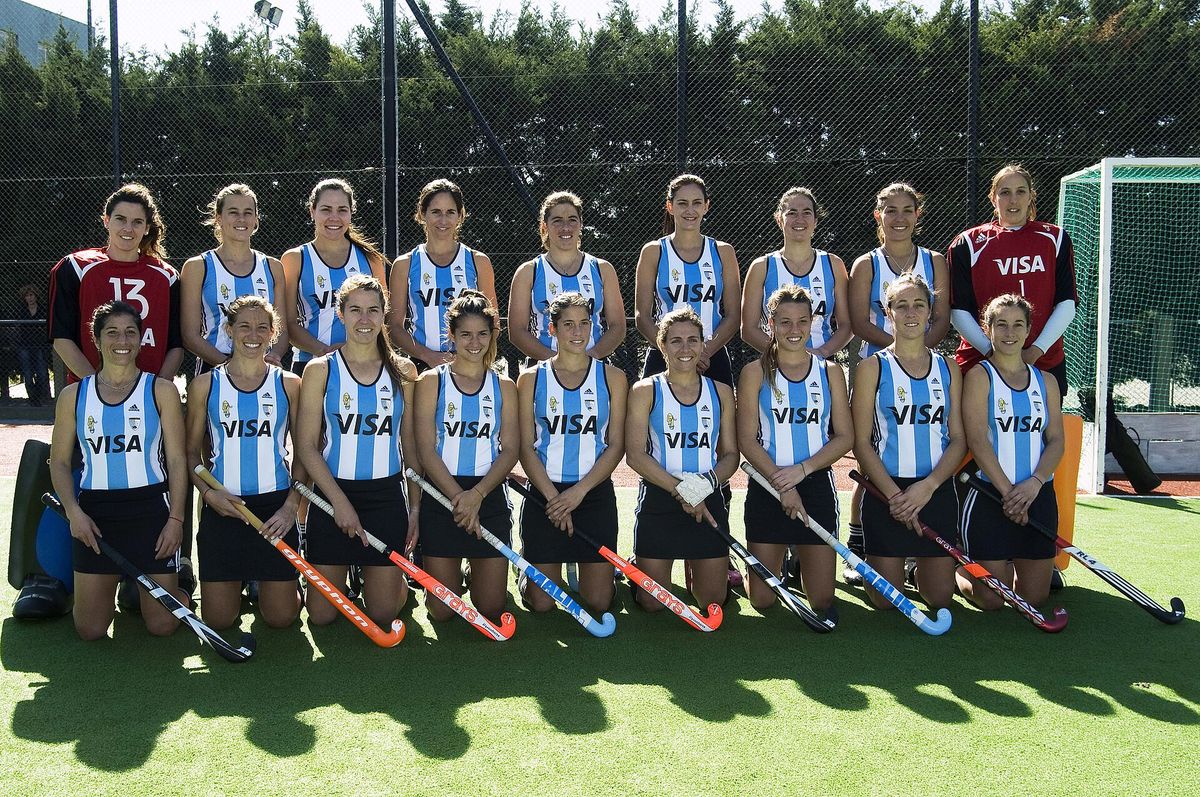
Argentina's women, Las Leonas, before the 2010 World Cup in Rosario.
Sustained success from a smaller facility base than its rivals.
Luis Oviedo Ortiz · CC BY-SA 2.0 · Wikimedia Commons
Hockey5s and reduced-water turf specifications are the federation's attempts to undo a barrier it created, which makes hockey the only sport here actively legislating to reverse its own geography.
05Learning curve
A sport whose entry barrier moved sharply in one direction in 1976 and has stayed there. Hockey used to be playable on any grass field; it is now played on a surface that costs more to build than most clubs have, and its competitive map narrowed to match.
Editorial — the site’s reading, not a sourced claim
Barrier to entry
How hard is it to get to a real game?
A stick, a ball and a pitch you probably do not have.
The skills are learnable and the sport is well organised through schools in the countries that play it. A stick and a ball are cheap and the basic actions are approachable.
The barrier is the surface. Since 1976 competitive hockey has been played on artificial turf, which is a facility rather than a field. A water-based pitch is expensive to build and to irrigate, and a country or a club either has one or plays a different game on grass that no longer prepares anyone for the real one.
That is the same shape as swimming's pool problem and gymnastics' hall problem, and it arrived suddenly rather than being inherent to the sport.
Evidence
- Kit to startA stick and a ballobserved
- FacilityArtificial turfruleA grass pitch no longer prepares a player for the competitive game.1976 — the rule this rests on
- Players needed22observed
- Time to a real gameWeeksestimate
Barrier to the top
How hard is it to be good at?
A fast ball, one usable stick face, and a sport reshaped three times in thirty years.
Elite hockey demands stick skill at a speed few sports match, on a surface that removes the excuse of a bad bounce, using a stick with only one legal face — so half the natural movements are illegal and the reverse-stick technique has to be built from nothing.
The tactical demand changed fundamentally in 1998 when offside was removed. Defences had to be reinvented, and the sport that a player trained for in 1996 is not the one they played in 1999.
The penalty corner is the specialist's problem: a set piece producing a large share of international goals, defended by players running at a drag flick struck from fifteen metres.
Evidence
- Offside abolished1998ruleThe only major invasion sport to remove it entirely.1998 — the rule this rests on
- SurfaceArtificial turf since 1976ruleChanged every skill in the sport without changing a rule of play.1976 — the rule this rests on
- Self-passSince 2009rule2009 — the rule this rests on
- Stick faces usable1observed
- Typical peak age24–30estimate
Why the two differ
Hockey's gap is moderate to very high, and what makes it worth recording is that its entry barrier was raised by a decision rather than inherited from the sport.
Football's Laws are loose precisely so the game works on packed earth. Hockey went the other way: it standardised its surface, gained a faster and better game, and priced out the countries that could not build one. India and Pakistan dominated hockey for half a century on grass and have never fully recovered from the switch.
That is the clearest case on this site of a rule change redistributing a sport geographically, and nobody legislated for it.
The historyhow it got here · sections 6 to 10
06Origin and invention
Stick-and-ball games are ancient and appear across most of the world, but modern hockey is a Victorian English codification, from the same decades and the same impulse that produced football's Laws. The Hockey Association's rules date from 1886; the international federation from 1924.
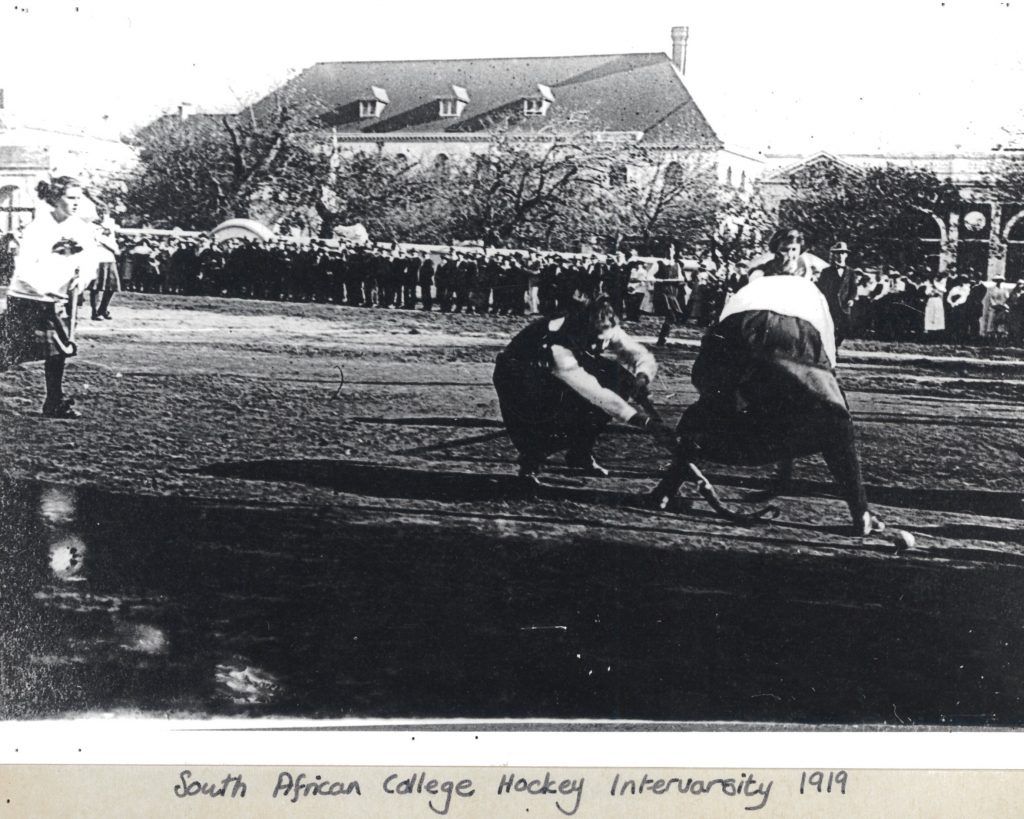
The South African College intervarsity ladies' hockey team in play, 1919.
Hockey spread through the British Empire.
Unknown photographer · Public domain · Wikimedia Commons
Two decisions from the original code still define the sport, and both are restrictions rather than permissions.
The ball may only be played with one face of the stick. The stick has a flat side and a rounded side, and touching the ball with the rounded side is a foul. That single rule is why hockey looks unlike any other stick sport: half the natural movements are illegal, and the reverse-stick technique had to be invented to work around it.
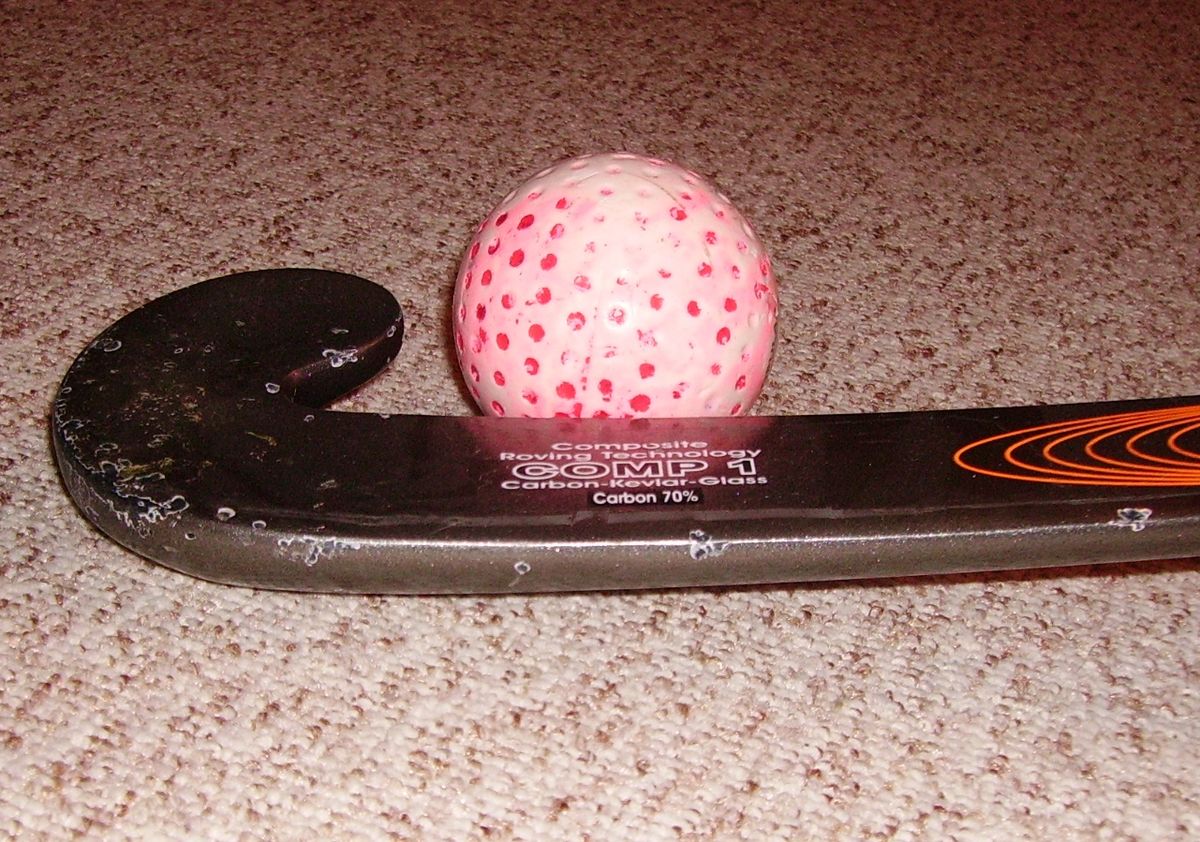
A composite stick with a hockey ball resting against its flat face.
Only this side may play the ball. Touching it with the rounded side is a foul, which is why reverse-stick technique had to be invented.
Sigma1981 · Public domain · Wikimedia Commons
A goal counts only from inside the circle. A shot from anywhere else is worth nothing, which concentrates the entire sport into two small semicircles and produces the penalty corner.
A penalty corner for China against Korea at the 2012 London Olympics, played around the circle.
A goal counts only from inside the semicircle, which concentrates the sport into two small areas.
The Hammer · CC BY-SA 3.0 · Wikimedia Commons
Hockey spread through the British Empire, and its early competitive history is almost entirely Indian and Pakistani: India won six consecutive Olympic titles from 1928 to 1956 on grass, with a stickwork tradition suited to a surface where the ball did not run true.
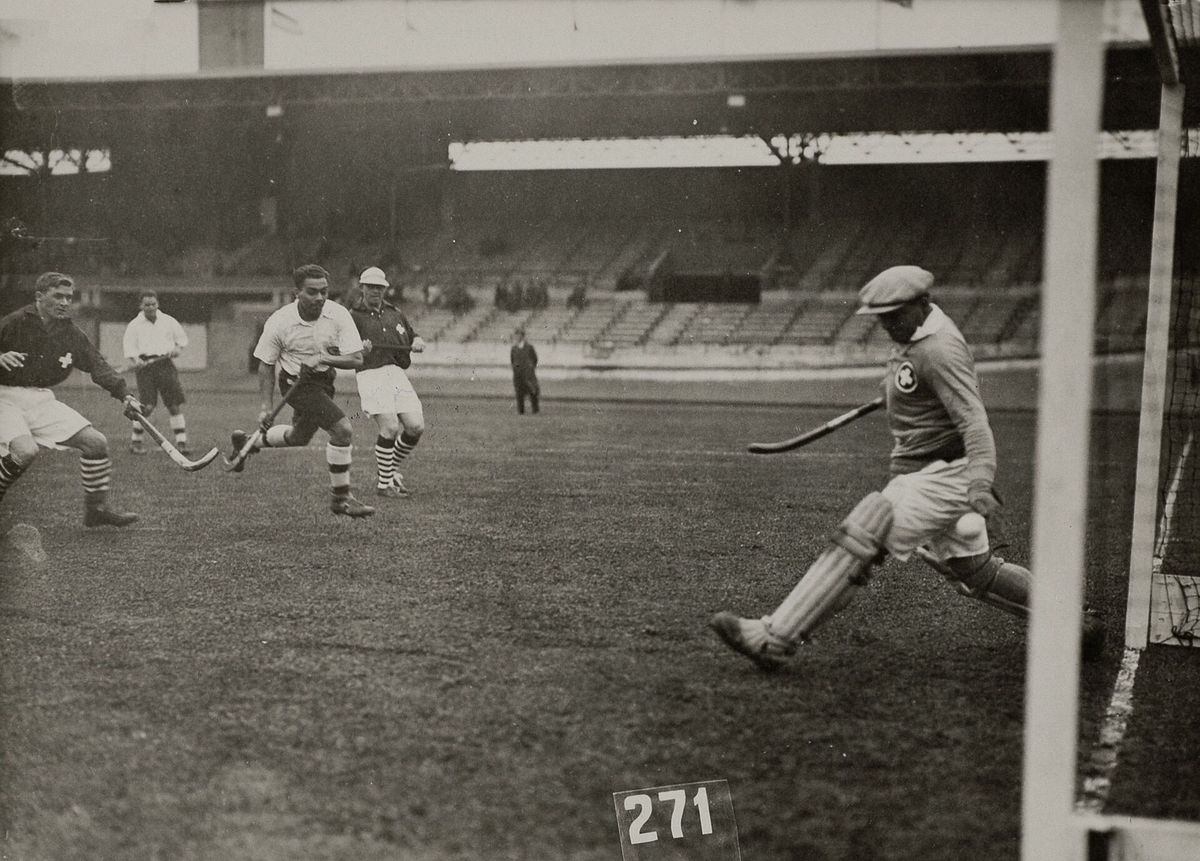
India scoring against Switzerland, 6–0, at the 1928 Amsterdam Olympics.
The first of India's six consecutive Olympic titles, won on grass.
Unknown photographer (Spaarnestad) · Public domain · Wikimedia Commons
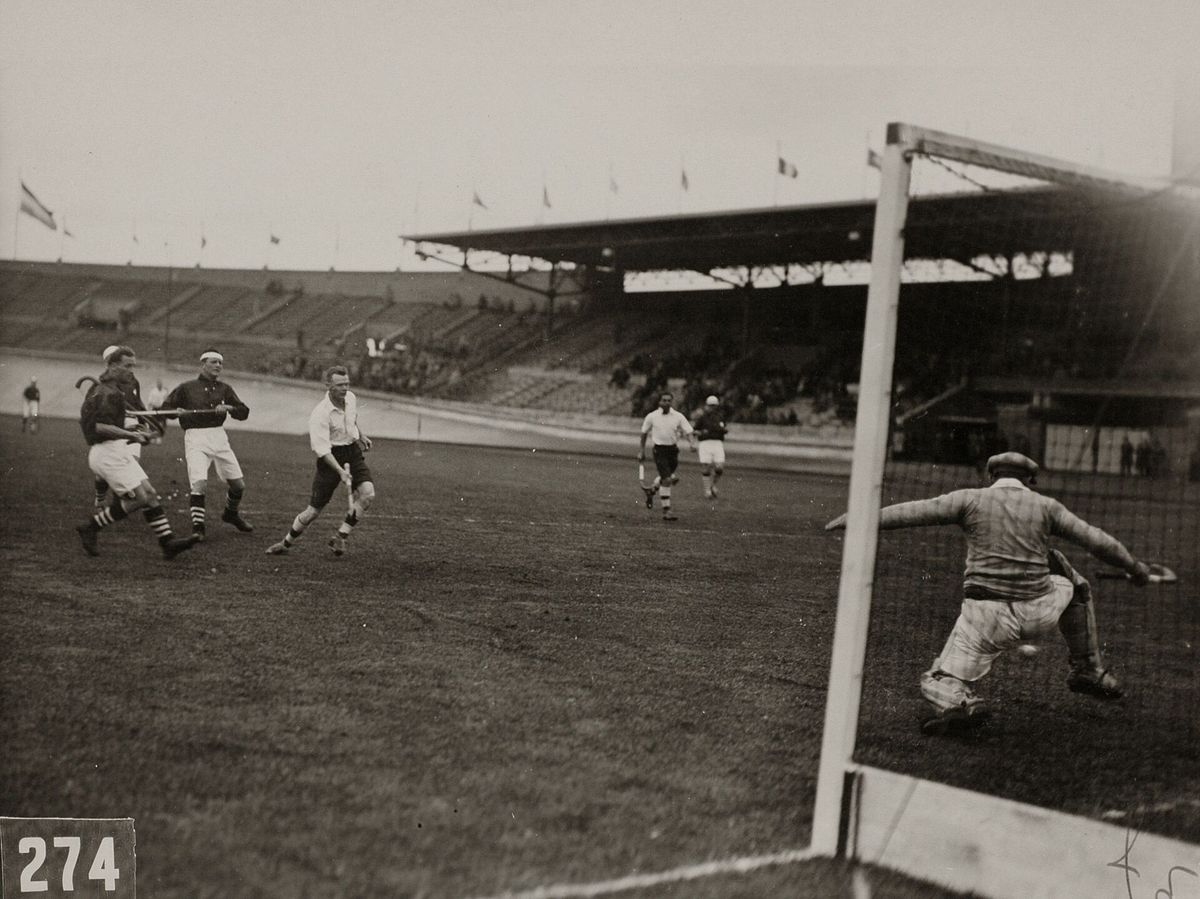
An attack on the Swiss goal during India against Switzerland, Amsterdam, 1928.
A grass pitch, where the ball did not run true and close stickwork decided everything.
Unknown photographer (Spaarnestad) · Public domain · Wikimedia Commons
That era ended when the surface changed, which is the subject of the next section and the largest thing that has ever happened to this sport.
07Rule timeline
The sport’s own lane, expanded. Every entry carries a cause from the closed vocabulary and a citation, and says so where the citation is incomplete.
- 1976Equipment and technologyalso broadcast and pacingadopted 1975
Olympic hockey moved onto artificial turf. The ball runs true and fast on a synthetic surface where grass had made it bobble, so the sport's technique changed completely: the reverse stick, the drag flick and close-quarters stickwork all became possible, and aerial and long-hitting play became less necessary. It is the largest change to how hockey is played in the sport's history and it was made by changing the ground rather than the rules.
Comparability break · Scoped to one competition
The surface changed, not the laws. Every skill in the sport and every scoring pattern moved with it, which makes this the only comparability break here caused by the ground. See the series
Trigger and citationIncomplete — no confirmed article
Trigger
Synthetic surfaces produced a faster, more consistent game that suited television, and removed the dependence on grass quality that had made international results partly a function of the host's groundskeeping.
The consequence nobody legislated for was cost. A water-based hockey pitch is expensive to build and to maintain, and nations that could not afford one fell away from the top of the sport within a generation. The federation has been trying to address that ever since, most recently by approving surfaces that do not require irrigation.
Rules of Hockey · FIH Rules of Hockey, 1976
- 1998Broadcast and pacingadopted 1997
Offside was abolished. An attacker may stand anywhere, including behind the last defender, with no restriction at all. No other major invasion sport has done this. Football, rugby, handball and lacrosse all retain some version of a rule limiting where attackers may wait, and hockey removed its entirely.
Comparability break · Scoped to one competition
Offside removed outright. Attackers may stand anywhere, and scoring rose accordingly. See the series
Trigger and citationIncomplete — no confirmed article
Trigger
Offside had made the game congested in midfield and difficult to officiate on a small pitch with a fast ball. Removing it stretched play, raised scoring, and eliminated the sport's most disputed decision at a stroke.
Coaches argued it would make defending impossible and produce basketball on grass. It did not — defences reorganised within a season — and the change is now regarded inside the sport as straightforwardly successful, which makes it unusual on this page.
Rules of Hockey · FIH Rules of Hockey, 1998
- 2009Broadcast and pacingadopted 2007
A player awarded a free hit may play the ball to themselves and dribble away rather than being required to pass it. The stoppage that a free hit used to create largely disappeared.
Trigger and citationIncomplete — no confirmed article
Trigger
Free hits were the sport's principal dead time — a stoppage, a repositioning, and a pass. The self-pass removed the pause without removing the sanction.
Rules of Hockey · FIH Rules of Hockey, 2009
- 2011Integrityadopted 2010
A team may refer a decision inside the attacking or defending circle to a video umpire, retaining the referral if successful. Umpires may also refer on their own initiative.
Trigger and citationIncomplete — no confirmed article
Trigger
Almost everything decisive in hockey happens inside a small semicircle, with a hard ball at speed and bodies between the umpire and the incident. The reviewable questions are questions of fact.
Rules of Hockey · FIH Rules of Hockey, 2011
- 2015Broadcast and pacingalso commercialadopted 2014
Two halves of thirty-five minutes became four quarters of fifteen, with the clock stopped for penalty corners and goals. A sixty-minute match became a sixty-minute match with three extra breaks and a stopped clock.
Comparability break · Scoped to one competition
Quarters and a stopped clock. The same sixty minutes now contains more play. See the series
Trigger and citationIncomplete — no confirmed article
Trigger
Quarters create guaranteed commercial breaks and coaching intervals, and stopping the clock for penalty corners removed the incentive to waste time. Basketball made the same change to its international game in 2000 for the same reason.
Rules of Hockey · FIH Rules of Hockey, 2015
08Equipment evolution
Hockey's decisive equipment change was not equipment at all. It was the ground.
From 1976 Olympic hockey was played on artificial turf. On grass the ball bobbles and the game rewards close control, deft touch and the ability to manage an unpredictable bounce. On a synthetic surface the ball runs true and fast, which made possible techniques that had barely existed: the drag flick, sustained reverse-stick play, and passing at speeds a grass field would not carry.
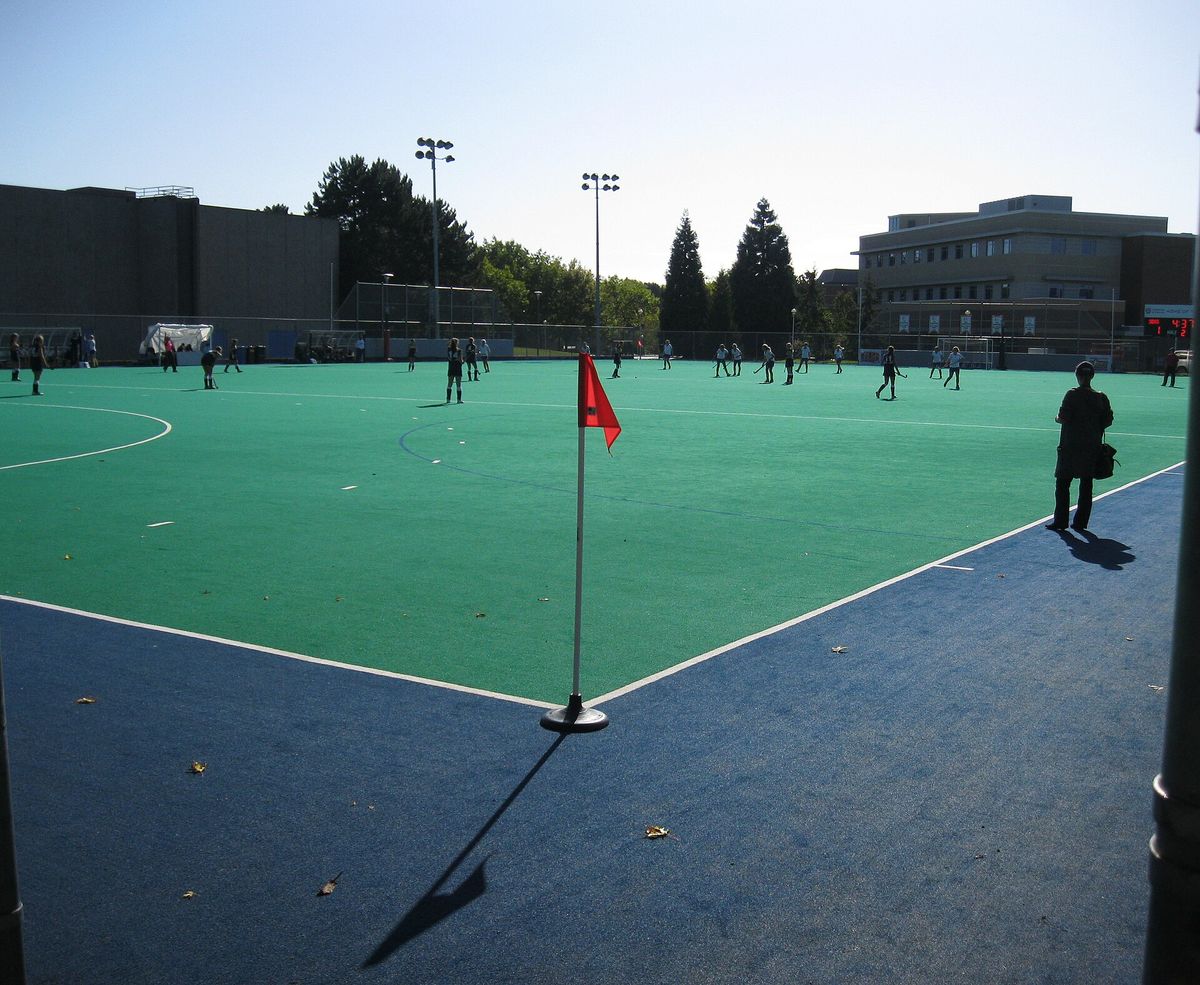
An artificial-turf hockey pitch in Saanich, British Columbia.
A pitch that is a facility: a construction cost, and for water-based turf an irrigation requirement.
John Newcomb · CC BY 3.0 · Wikimedia Commons
Every skill in the sport moved. So did the balance of power. India and Pakistan had dominated hockey for half a century with a game built for grass, and neither has won an Olympic title since 1984. That is the clearest instance on this site of a rule change — and it was a rule change, mandated by the federation — redistributing a sport geographically.
The cost consequence was not legislated for and was probably not foreseen. A water-based pitch is expensive to build and requires irrigation, and hockey went from a sport playable on any field to one requiring a facility. Nations that could not build them fell away, and the FIH has spent the last decade approving surfaces that need less water partly to reverse it.
Sticks went from wood to composite, which raised drag-flick speeds substantially and produced limits on stick shape and on the curvature of the head. Protective equipment followed injury: mouthguards, shin pads, and face masks permitted for penalty corner defence, where a defender runs at a flick struck from fifteen metres.
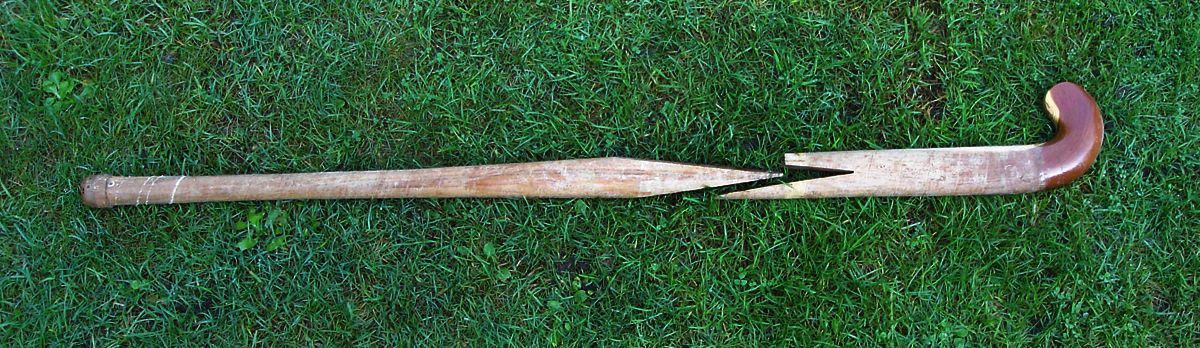
A broken wooden hockey stick with no protective wrapping.
The material composites replaced, raising the speed of a drag flick.
Papanugue · CC BY-SA 3.0 · Wikimedia Commons
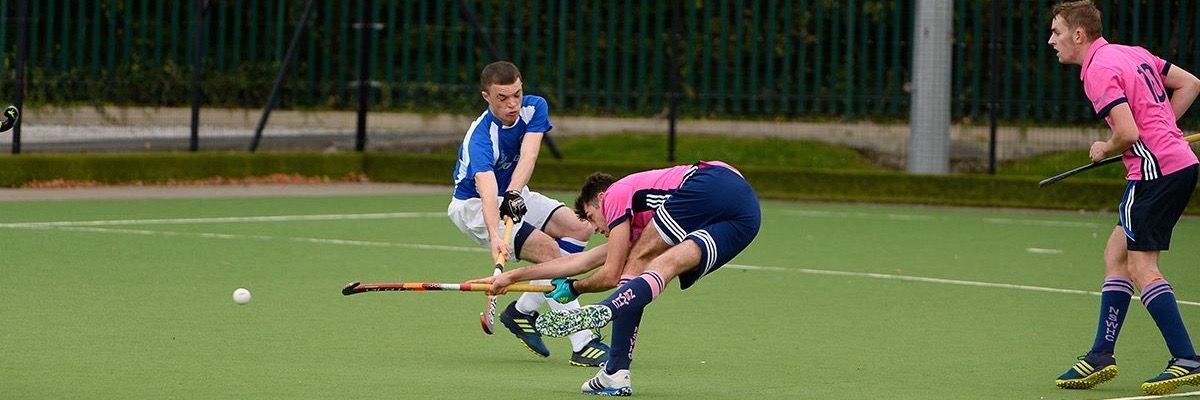
A drag flick at a club match at Neston, 2017.
The technique a true-running synthetic surface made possible.
AJBUSH1963 · CC BY-SA 4.0 · Wikimedia Commons
09Governing body politics
The FIH's defining decision was the surface, and its defining problem for forty years has been what that decision did to the sport's geography.
Moving to artificial turf in 1976 produced a faster, more televisable game and removed the dependence on host groundskeeping that had made international results partly a matter of grass quality. It also priced out most of the world. A federation that had grown through the Commonwealth found its strongest nations unable to afford the facility its rules now required.
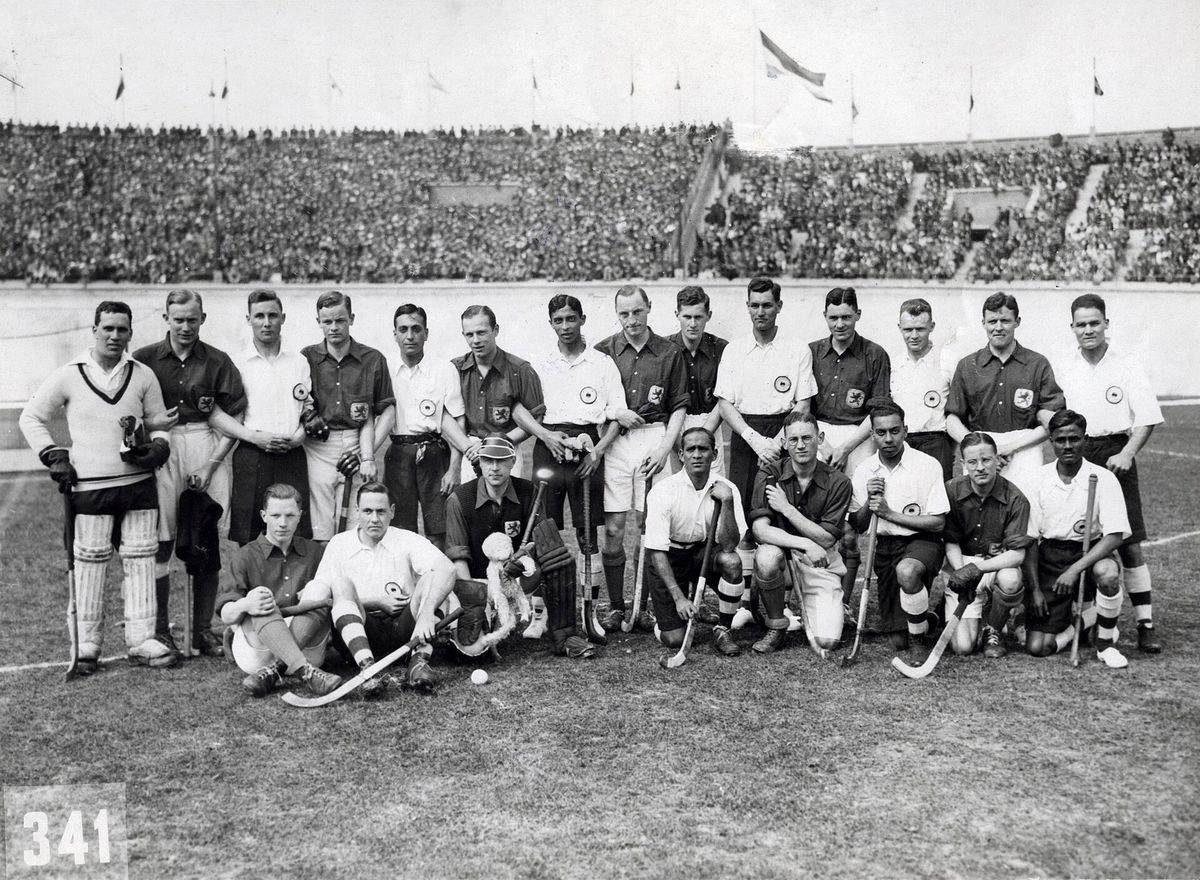
The Netherlands and British India teams posing together in a full Olympic Stadium, Amsterdam, 1928.
Hockey's early international game grew through the Commonwealth.
Unknown photographer (Spaarnestad) · Public domain · Wikimedia Commons
Everything since has been an attempt to manage that. Hockey5s — five a side on a smaller pitch — exists to be stageable cheaply. Turf specifications have been revised to approve surfaces needing less water. The federation's development programme is unusually prominent for a sport of its size, and the reason is that its own rule created the problem.
The other governance thread is a willingness to legislate that is rare on this site. Hockey removed offside entirely in 1998, introduced the self-pass in 2009, and restructured its match into quarters in 2015. Most federations here amend cautiously; the FIH runs a mandatory experiment programme and adopts changes quickly.
That has largely worked. The offside abolition is regarded within the sport as straightforwardly successful, which is a sentence this site has not been able to write about many rule changes.
10Controversies that forced rule changes
1976, and the end of an era. Not a scandal, and the largest thing in this sport's history. Olympic hockey moved to artificial turf, and a game built over fifty years for grass ceased to exist. India, six-time consecutive Olympic champions, and Pakistan, its principal rival, both declined at the top level within a decade and neither has won since 1984.
There was no incident and no villain. A federation chose a faster, more watchable surface, and the sport's competitive geography reorganised around who could afford it.
Congestion, and the end of offside. By the 1990s offside on a small pitch with a fast ball had produced a congested midfield and the sport's most disputed decision. The FIH removed the rule entirely in 1998.
Coaches predicted it would make defending impossible. It did not — defences reorganised inside a season — and hockey became the only major invasion sport without an offside law. Football, rugby, handball and lacrosse all still have one.
Dead time. Free hits used to mean a stoppage, a repositioning and a pass. The self-pass in 2009 let the player simply carry on. Quarters and a stopped clock in 2015 removed time-wasting entirely.
The circle. Almost everything decisive in hockey happens inside a small semicircle with a hard ball at speed and bodies between the umpire and the incident. Video referral, introduced in 2011, is limited to that area for exactly that reason.
Where it standsthe record, and what is still open · sections 11 to 12
11Series
No series published
Goals per game — Olympic tournaments
Hockey changed the ground under its own game in 1976, removed offside in 1998, and stopped the clock in 2015. Each of those moved scoring, and the first two moved it substantially. A goals-per-game figure spanning them would be measuring three different sports. On grass the ball did not run true; on turf it does. With offside, attackers could not wait behind the defence; without it, they can. With a running clock, a leading team could waste time; with a stopped one, it cannot. The series is scoped to Olympic tournaments because, as in football, there is no body that keeps a continuous quantitative series for hockey as a whole and domestic competitions adopted these changes at different times. The figures are not entered because they have not been taken from a cited source. When they are, the chart appears here in segments — and the caption will have to say that the 1976 break is a change of surface rather than of rules, which is a distinction nothing else on this site has had to draw.
1976Scoped to one competitionThe surface changed, not the laws. Every skill in the sport and every scoring pattern moved with it, which makes this the only comparability break here caused by the ground.
1998Scoped to one competitionOffside removed outright. Attackers may stand anywhere, and scoring rose accordingly.
2015Scoped to one competitionQuarters and a stopped clock. The same sixty minutes now contains more play.
12What is contested now
Recorded as unsettled.
The surface, still. Fifty years on, the cost of a competitive hockey pitch remains the sport's largest structural problem. Reduced-water and dry turf specifications are being approved, and the argument inside the sport is whether they play well enough to be used at the top or will simply create a second tier of surface with a second tier of nations on it.
The penalty corner. A large share of international goals come from one set piece, defended by players running at a drag flick from fifteen metres. It is both the sport's signature and its main injury risk, and proposals to change the defending numbers, the injection rules or the sanction itself recur constantly.
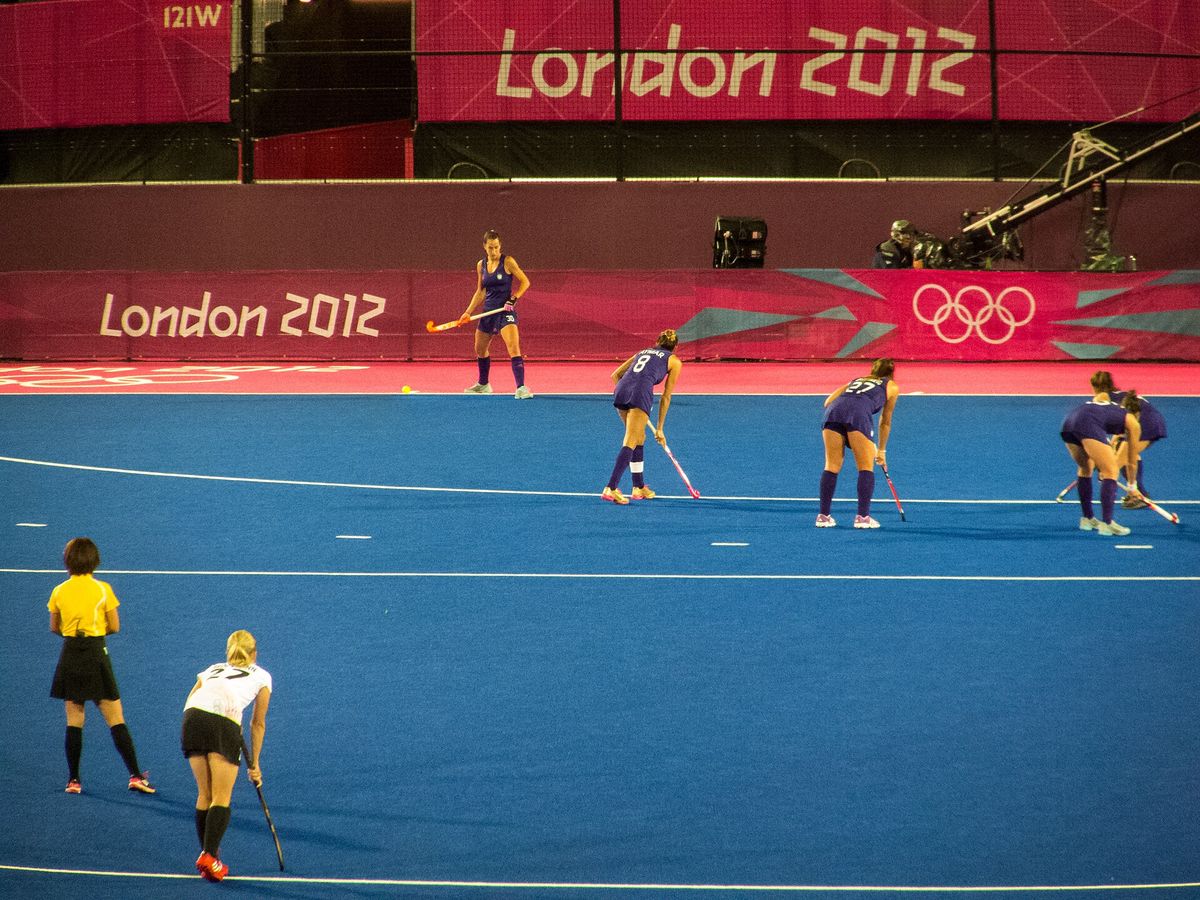
Argentina preparing to defend a penalty corner against Germany, London 2012.
One set piece, a large share of international goals, and defenders running at the flick.
Simon Q · CC BY 2.0 · Wikimedia Commons
Whether more should be removed. Having abolished offside successfully, hockey has an appetite for simplification that other federations lack. Obstruction is the usual candidate — it is the sport's least consistent call and the only one asking an umpire about purpose rather than position — and it has survived every review so far.
Hockey5s. A cheaper five-a-side format with its own rules, and a live question about whether it is a development tool or a rival. Rugby and lacrosse both got onto the Olympic programme with reduced formats, which the FIH has noticed.