Ju-jitsu
A combat sport that legislates the sequence of ranges — strike, throw, ground — and another event where two athletes from the same team fight nobody at all.
- Official
- Ju-jitsu
- Game category
- Outside this taxonomy
- Adjudication
- Combat
- Standing
- Never Olympic
- rule changes
- 4
- comparability break
- 1
- Olympic editions
- 0
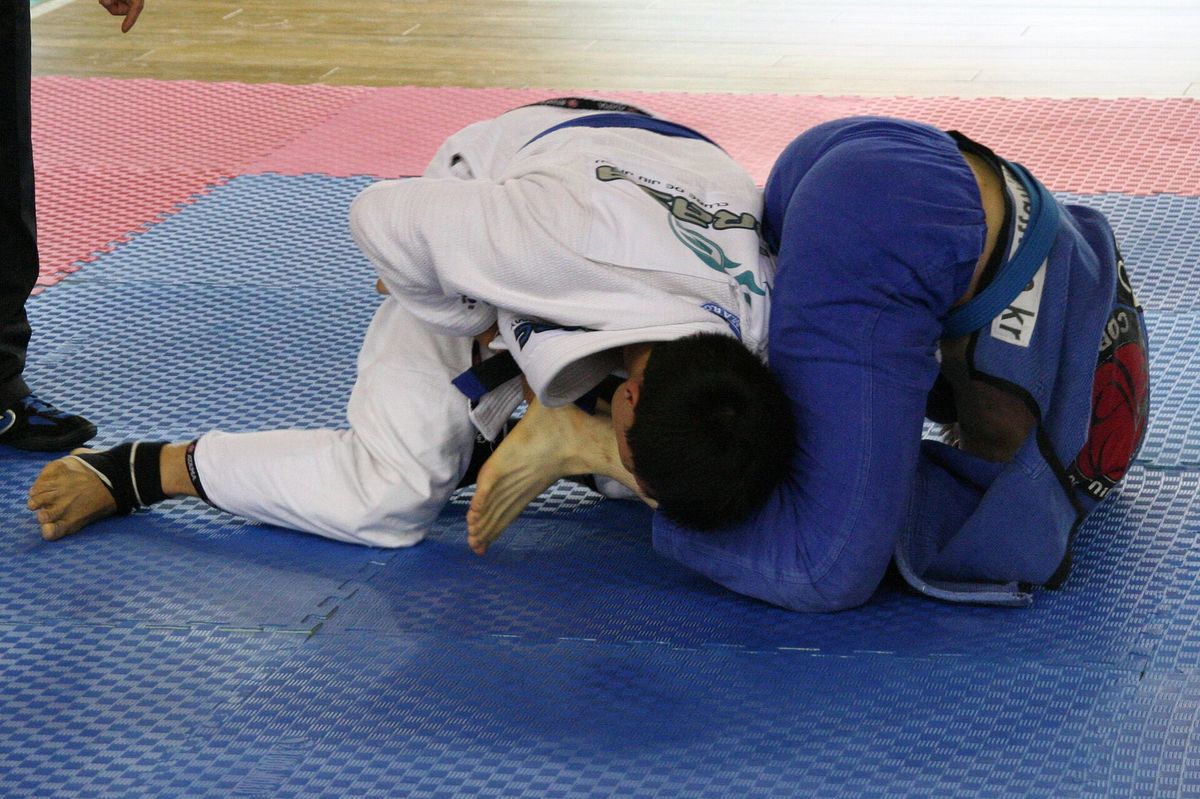
An armbar in a gi grappling competition · parhessiastes · CC BY-SA 2.0
- Governing body
- Ju-Jitsu International Federation
- Founded
- Descended from Japanese battlefield grappling systems; the modern competitive sport was assembled by European federations from the 1970s, with the Ju-Jitsu International Federation taking its present form in 1998.
- Olympic status
- Not on the Olympic programme
- Also contested at
- Asian Games, World Games
The Fighting system runs a bout through three phases in a fixed order — striking at distance, then throwing, then groundwork — which makes it the only combat sport covered here that legislates the range the fight happens at. The Duo system goes further: two athletes from the same team perform defences against called attacks, judged, with no opponent. It is the parent art of judo, competing as a sport younger than its own descendant.
The gamewhat it is now · sections 1 to 5
01How it is played
Three competitive systems under one federation. Fighting runs a bout through striking, throwing and groundwork in that order. Ne-waza is groundwork alone. Duo is a judged, cooperative demonstration with no opponent.
These figures were entered from the edition named above but have not been checked against its text line by line. Treat them as this site’s reading of the laws, not as a substitute for them.
The object of the game
In Fighting, score more points across the three phases, or end the bout with a full score or a submission. In Ne-waza, advance position and submit the opponent. In Duo, be marked higher than the other pair for the realism and effectiveness of your defences.
The three are different enough that an athlete is normally a specialist in one, which is unusual for a single sport rather than a federation of several.
The mat
A matted competition area with a marked safety border, as in judo. The same surface serves all three systems, which is part of why the sport is cheap to stage.
- Area
- Matted, with a safety border
- Same mat
- Used by all three systems
Equipment
A gi, and coloured belts or sashes to distinguish the contestants. In Fighting, gloves, shin protection and a mouthguard, because the first phase contains strikes.
Duo requires nothing extra. Ne-waza is contested in a gi and, in some categories, without one — the presence or absence of a jacket changes grappling so completely that they are effectively separate events.
- Gi
- Required in Fighting and gi Ne-waza
- Gloves and shin guards
- Fighting only
- No-gi
- A separate category in Ne-waza
Competitors and officials
One against one in Fighting and Ne-waza, in weight categories. In Duo, a pair from the same team performs together — one attacking, one defending — against another pair, judged by a panel.
That makes Duo the only event covered on this site where two people on the same side compete against two other people on their own side, with nobody opposing anybody.
- Fighting and Ne-waza
- One against one, by weight
- Duo
- A pair from one team, judged
This clause reads this way because of
Time
Fighting bouts run a few minutes; the three phases happen inside that single clock rather than being timed separately. Ne-waza bouts are longer, as positional grappling needs time to develop. Duo performances are a short sequence of called attacks.
- Fighting
- One clock, three phases within it
- Duo
- A sequence of called attacks
Scoring
In Fighting, points are scored within each phase — a controlled strike that lands, a clean throw, a hold or submission — and a full score in a phase advances the bout to the next.
In Ne-waza, points for positional advancement, with submission ending the bout.
In Duo, judges mark each defence for realism, control, speed and effectiveness, and the pair with the higher aggregate wins. It is a judged score inside a combat sport, which puts it in the same category as karate's kata.
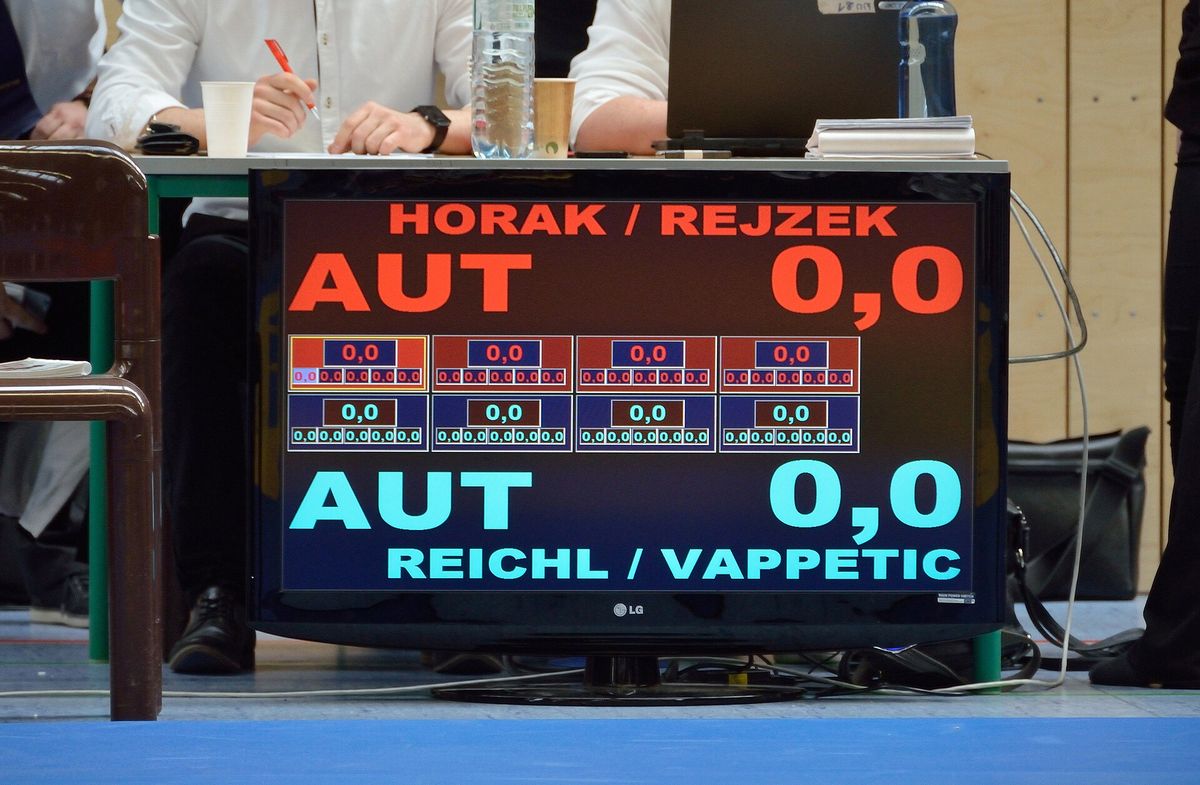
The scoreboard at the Lower Austrian ju-jitsu championships, 2017, showing two pairs.
Duo is scored pair against pair, series by series.
Herzi Pinki · CC BY-SA 4.0 · Wikimedia Commons
This clause reads this way because of
Phases and restarts
The Fighting bout's phase structure is itself the restart mechanism: the referee moves the contest from striking to gripping to the ground as the conditions for each are met, rather than returning the athletes to a neutral start.
In Duo, the referee calls each attack from the defined list and the pair performs it; there is no continuous action to interrupt.
Infringements
In Fighting: uncontrolled contact in the striking phase — the strikes are required to be controlled rather than damaging — plus the standard combat-sport prohibitions on strikes to the spine, throat and joints, and on dangerous throws.
In Ne-waza: locks and strangles are permitted by age and grade, with heel hooks, neck cranks and some joint attacks restricted at lower levels.
In Duo: an attack performed unconvincingly, or a defence performed without control, is marked down rather than penalised.
Deciding the winner
Points, submission, or a judged decision depending on the system. The three systems produce winners by three different mechanisms, which is part of why the sport is hard to present as one thing.
Everything above is current law. Everything below is how Ju-jitsu got here.
02Disciplines and events
No Olympic events. Ju-jitsu is on the World Games programme, was contested at the 2018 Asian Games, and holds world championships across three systems that have very little in common with each other.
- Disciplines
- 3
- Olympic medal events
- 0
- Men’s and women’s counted separately.
- Contested elsewhere
- 10
- asian games, world games, world championship, federation only.
- Listed for context
- 1
- Not counted as this sport.
Fighting10
Three phases in order — striking, throwing, groundwork — in weight categories.
- Men's weight categoriesWorld GamesAsian GamesWorld championship
- Women's weight categoriesWorld GamesAsian GamesWorld championship
Ne-waza10
Groundwork alone, gi and no-gi. Added as a discipline in 2015.
- Men's weight categoriesWorld GamesWorld championship
- Women's weight categoriesWorld GamesWorld championship
Duo4
A pair from the same team demonstrating defences against called attacks, judged by a panel. No opponent.
- Duo menWorld GamesWorld championship
- Duo womenWorld GamesWorld championship
- Duo mixedWorld GamesWorld championship
- Duo showWorld championshipA freer form, marked on presentation as well as technique.
The same name, governed elsewhere3
"Ju-jitsu", "jujutsu" and "jiu-jitsu" name a Japanese art, a Brazilian grappling sport, and hundreds of independent schools. This federation governs one competitive code among them.
- Brazilian jiu-jitsuFederation onlyA separate and much larger grappling sport with its own federations and its own competitive structure.
- Traditional Japanese schoolsFederation onlyClassical lineages that do not compete at all.
- JudoDerived from ju-jitsu in the 1880s by removing most of its techniques — and on the Olympic programme since 1964, while its parent art is not.
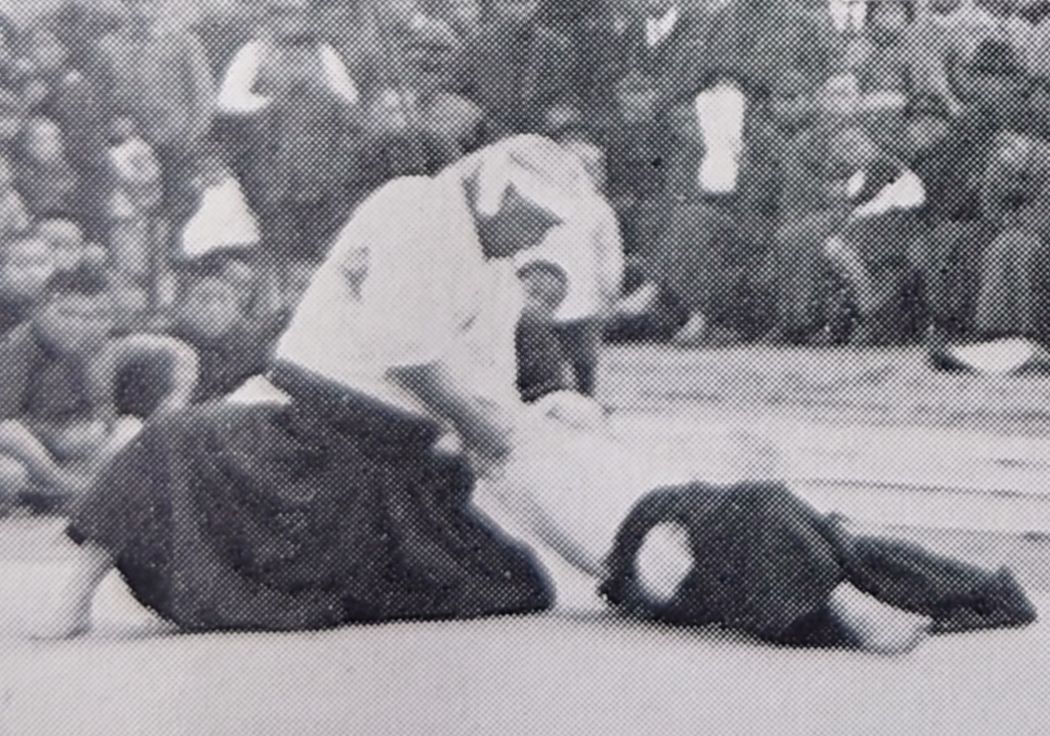
A demonstration of Yōshin Koryū.
A classical school that uses the name and does not compete.
川内鉄三郎 · Public domain · Wikimedia Commons
03Officiating
Three systems, three completely different officiating jobs, one federation.
Fighting. The referee manages the phase structure, which is an administrative task no other combat sport has: deciding when the conditions for moving from striking to gripping, and from gripping to the ground, have been met, and moving the bout accordingly. Get that wrong and an athlete is either denied the range they are strongest in or dragged out of it early.
Within the phases, the referee is judging control. Strikes in part one must land with control rather than damage, which is the same judgement karate makes and the same difficulty: a technique that is clearly effective and clearly restrained is a fine distinction made at speed.
Ne-waza. Positional scoring and submission recognition, plus the safety judgement every grappling sport needs — when a lock has been applied and the athlete has not submitted, how long before the referee stops it.
Duo. A judging panel marking a cooperative performance on realism, control, speed and effectiveness. The paradox is explicit here: a pair is rewarded for making an attack look genuine and for defending it without hurting anybody, and the judges are marking the gap between those two things.
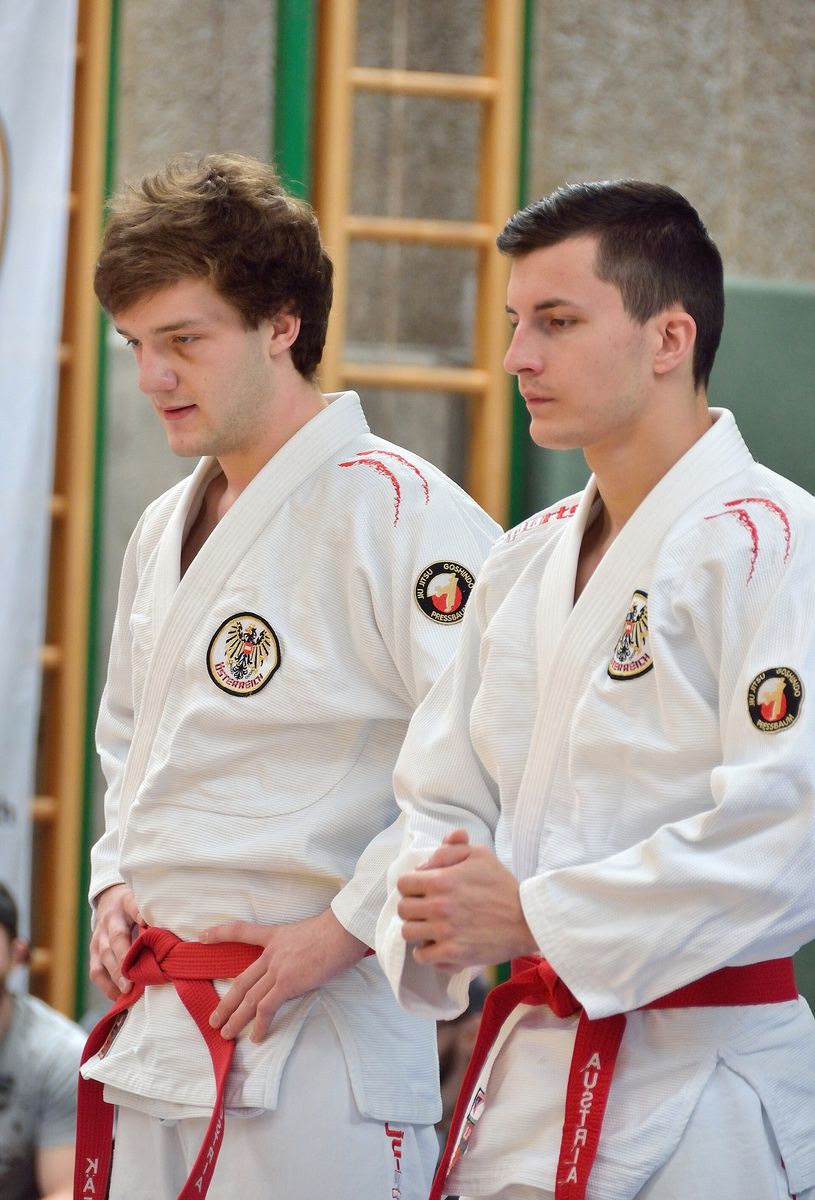
Matthias Käfer and Mark Hendrich-Szokol at the Lower Austrian ju-jitsu championships, 2017.
Duo is contested by a pair from one team, judged together.
Herzi Pinki · CC BY-SA 4.0 · Wikimedia Commons
None of this is instrumented. Taekwondo put sensors in the socks and fencing wired the weapons; ju-jitsu judges controlled contact, positional advantage and the realism of a demonstration entirely by eye, which no available technology would help with.
04Where it is played
Competitive ju-jitsu under this federation is a European sport with an Emirati patron and an Asian foothold.
Europe is the competitive core, and specifically the countries where the sport was assembled: Germany, the Netherlands, Belgium, Austria, France, Italy, Sweden, Russia and Ukraine. The JJIF grew out of European federations and its world championships still reflect that.
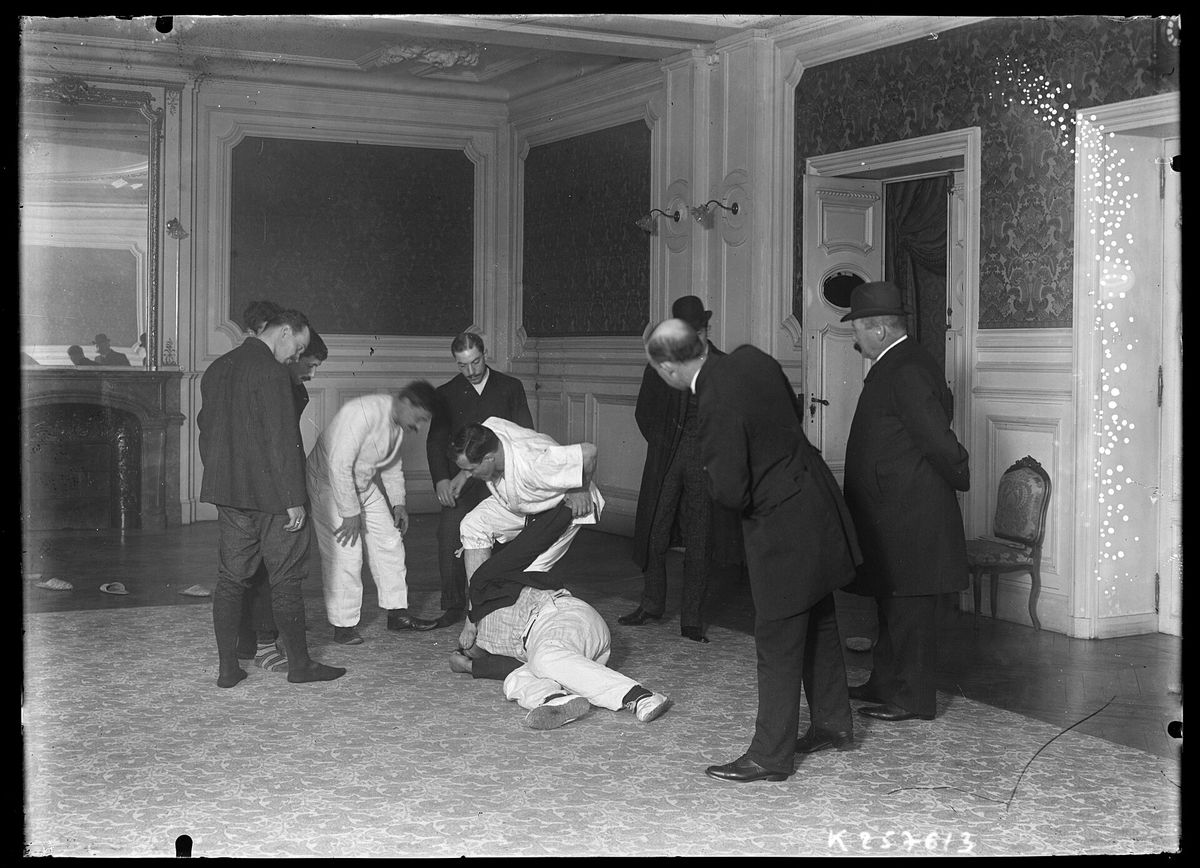
A jiu-jitsu demonstration at the Paris Préfecture de Police, November 1905.
Jiu-jitsu reached Europe as self-defence long before it was reassembled there as a sport.
Agence Rol · Public domain · Wikimedia Commons
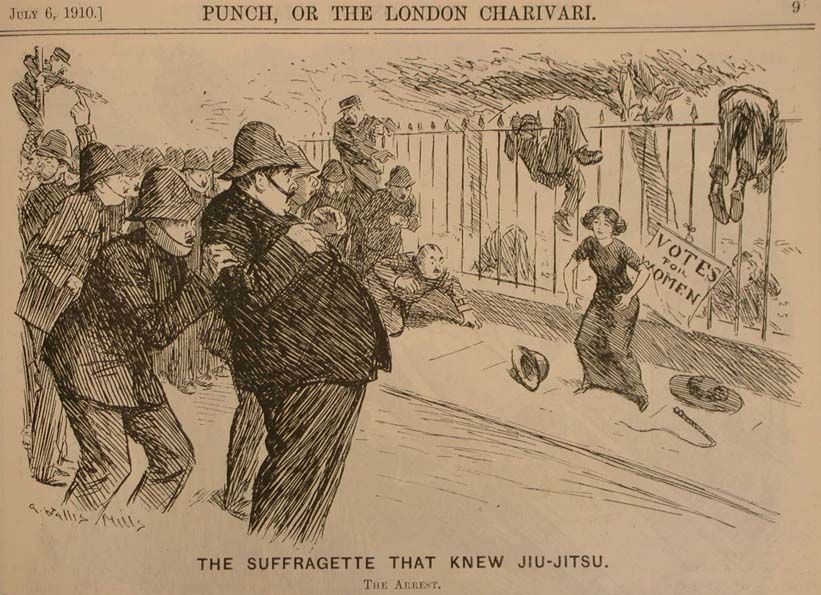
"The Suffragette that Knew Jiu-Jitsu": Punch, 6 July 1910.
Edith Garrud taught ju-jitsu to suffragettes in London, and the name was already public property.
Arthur Wallis Mills · Public domain · Wikimedia Commons
The United Arab Emirates is the outlier and the most consequential development in the sport's recent history. Abu Dhabi has invested very heavily in grappling — hosting major events, funding programmes, and putting jiu-jitsu into the school curriculum — and the UAE is now a genuine power. It is the clearest case on this site of a small country buying itself into the top of a combat sport, and it worked.
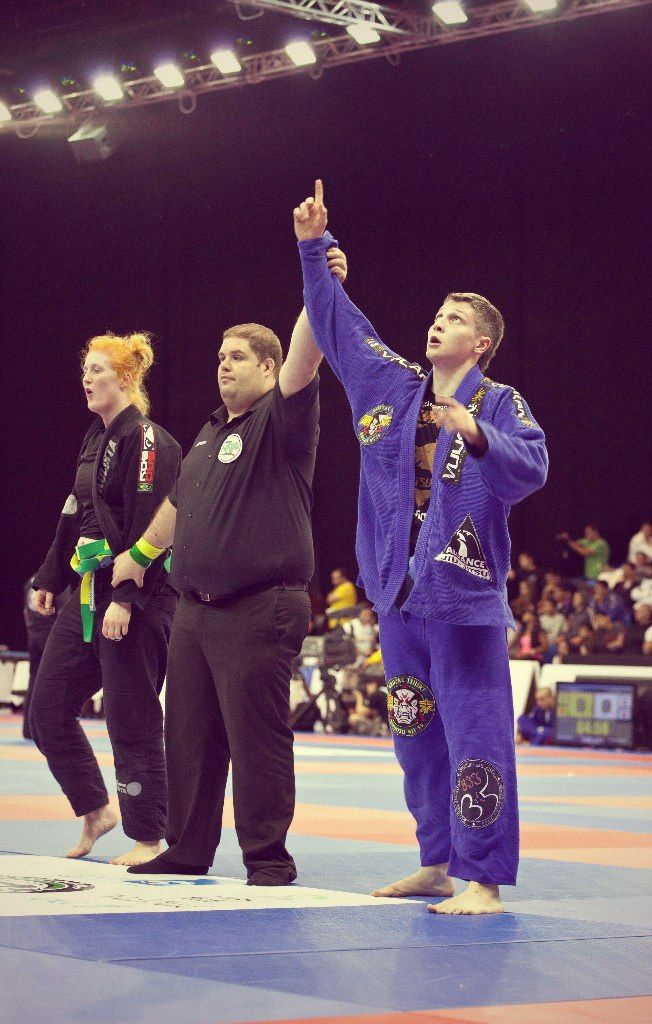
Satricia Knake and Elena Zenkevich at the result of their bout, World Professional Jiu-Jitsu Championship, Abu Dhabi, 2012.
Abu Dhabi's investment in grappling, which made the UAE a power.
Profigrappling · CC BY-SA 4.0 · Wikimedia Commons
Asia followed the money and the Asian Games appearance in 2018: Kazakhstan, Mongolia, Vietnam, Uzbekistan and Iran all compete.
What the map does not show is the sport's actual population. Far more people train grappling under the Brazilian codes, in Brazil, the United States and across Europe, than compete under the JJIF — and most of them would say they do jiu-jitsu. The federation's competitive geography and the activity's global distribution are almost unrelated, which is a stranger situation than any other sport covered here has.
05Learning curve
Clubs are everywhere and a beginner is on the mat immediately, which is the easy part. The hard part is that competing well means being competent in three ranges that are separate sports elsewhere.
Editorial — the site’s reading, not a sourced claim
Barrier to entry
How hard is it to get to a real game?
A gi and a club. There are clubs under this name in most towns in Europe.
The entry route is a martial arts club, which is one of the most widely distributed pieces of sporting infrastructure that exists. A beginner trains on a mat from the first session, with graded belts giving structured progress, and the equipment is a gi.
Ne-waza in particular is a forgiving place to start: groundwork can be trained at full resistance without striking anybody, so a beginner gets genuine competitive practice early and safely.
What keeps it at low rather than very low is that the name is a maze. A person looking for this sport will find traditional Japanese schools, Brazilian grappling academies and independent organisations all using it, most of which do not compete under the federation's rules.
Evidence
- Kit to startA giobserved
- FacilityA club with matsobserved
- GradingColoured beltsobserved
- Finding the right clubGenuinely confusingruleThe name is used by many unrelated organisations.1998 — the rule this rests on
- Time to a first competitionMonthsestimate
Barrier to the top
How hard is it to be good at?
Striking, throwing and groundwork at competitive standard, because the rules require all three in one bout.
The Fighting system's phase structure is the reason the ceiling here is so high. A bout passes through striking, then throwing, then the ground, and an athlete cannot avoid a range they are weak in — the referee will take them there.
Elsewhere on this site, each of those ranges is somebody's entire sport. Boxing is the first phase. Judo is the second. The grappling arts are the third. A ju-jitsu fighter is asked to be competent at all three against opponents who may be specialists, and the phase that follows arrives whether or not they won the previous one.
Duo is a different very high ceiling with the same difficulty as karate's kata: performing techniques at speed with total control, judged on realism, where anything genuinely convincing is also genuinely dangerous to a team-mate.
The ceiling is institutionally capped. There is no professional layer, the sport is at the World Games rather than the Olympics, and the largest grappling constituency in the world competes under other federations entirely.
Evidence
- Three phases, in orderStriking, throwing, groundruleAn athlete cannot avoid the range they are weakest in.1998 — the rule this rests on
- DuoJudged, with a team-materuleConvincing execution and complete control at the same time.1998 — the rule this rests on
- Ne-waza added2015ruleA third distinct competitive specialism under one federation.2015 — the rule this rests on
- Typical peak age24–32estimate
Why the two differ
Low to very high, and the sport is the site's clearest example of a ceiling raised by refusing to specialise.
Judo took ju-jitsu's throwing, removed most of the rest, and became an Olympic sport. Brazilian grappling took the groundwork, removed the rest, and became a global activity with its own federations. Boxing had the striking already. Each of those is easier to be excellent at than ju-jitsu's Fighting system, because each of them lets an athlete build a career in one range.
Ju-jitsu kept all three and legislated that a bout must pass through them. That is a coherent decision about what the art is, and it means its athletes are measured against specialists in every phase of every bout.
The Duo system sits outside that comparison entirely. It is a cooperative, judged event contested at a world championship of a combat sport, and there is nothing else quite like it on this site.
The historyhow it got here · sections 6 to 10
06Origin and invention
Ju-jitsu is the parent art, competing as a sport younger than its own child.
The Japanese systems that the name covers were battlefield methods for a warrior who had lost or could not use a weapon: throwing, joint locking, strangling, striking, and defending against all of those, often against an armoured opponent. They were taught in schools — ryū — each with its own curriculum, and there were many of them.
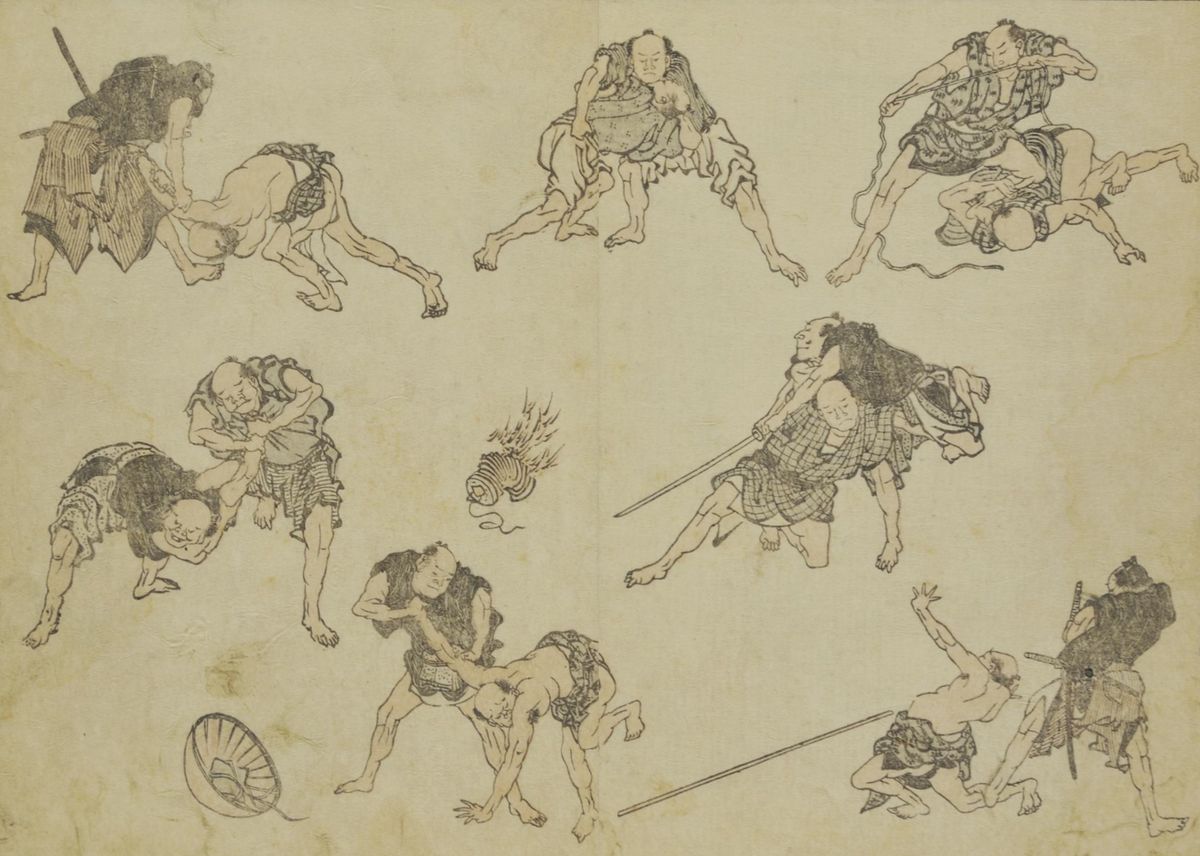
Jujutsu from the Hokusai Manga: throws, holds and locks, some against an armed opponent.
The old systems as an Edo-period artist saw them: many techniques, few of them safe to practise at full resistance.
Katsushika Hokusai · Public domain · Wikimedia Commons
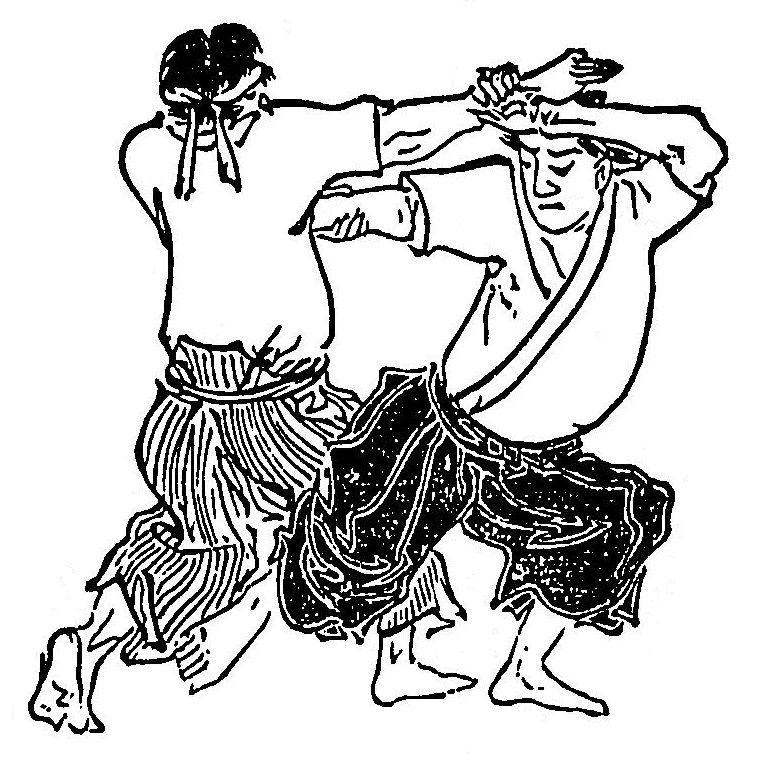
A throw from the Tenjin Shinyō-ryū, illustrated by Yoshida Chiharu.
One of the many ryū, each with its own curriculum.
Yoshida Chiharu · Public domain · Wikimedia Commons
In the 1880s Jigoro Kano took a subset of that material, removed the techniques that could not be practised at full resistance without injury, and built judo. That subtraction is the whole point: judo works as a sport precisely because Kano took out the parts that do not survive contact. It entered the Olympic programme in 1964.
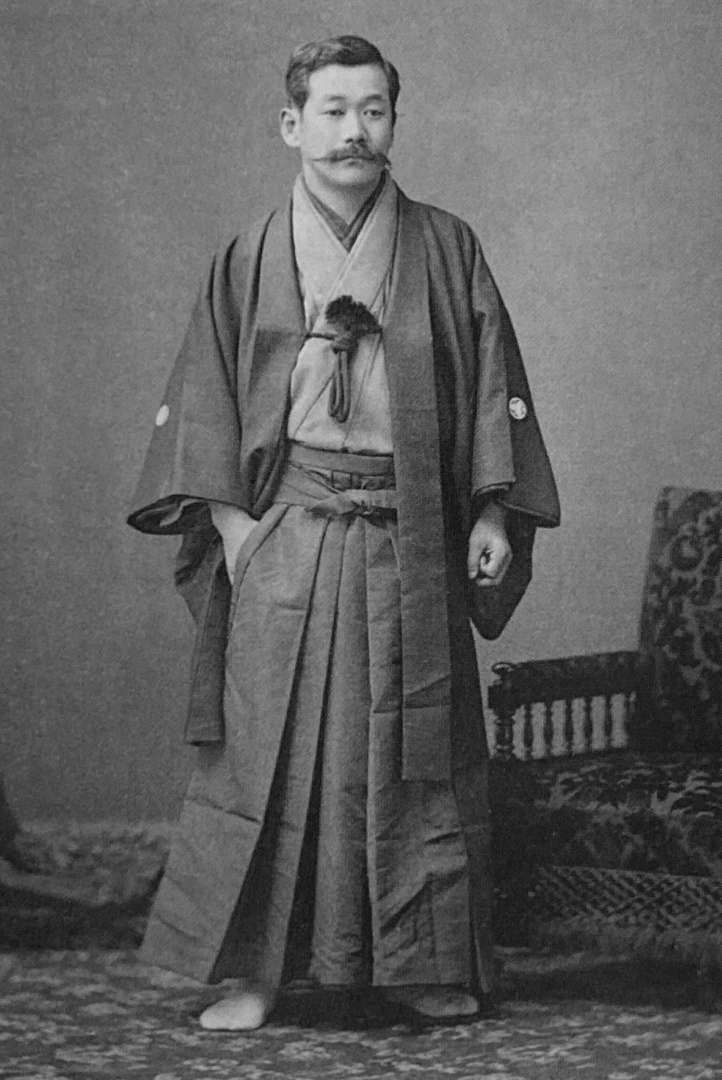
Kanō Jigorō, aged about 32, around 1892.
Judo's founder, who took a subset of the old material and removed what could not be practised at full resistance.
Unknown photographer · CC BY-SA 4.0 · Wikimedia Commons
Competitive ju-jitsu is a much later reconstruction, assembled by European federations from the 1970s, and it faced the opposite problem. If judo already owns the throwing, and the grappling arts own the ground, what is a ju-jitsu competition for?
Its answer is the Fighting system: a bout that passes through striking, then throwing, then groundwork, in that order, so that no phase can be avoided. And alongside it the Duo system, in which the techniques too dangerous to apply to a resisting opponent are performed cooperatively with a team-mate and judged.
The Ju-Jitsu International Federation took its present form in 1998. It governs a name that also belongs to classical Japanese schools that do not compete at all, and to a Brazilian grappling sport far larger than itself.
07Rule timeline
The sport’s own lane, expanded. Every entry carries a cause from the closed vocabulary and a citation, and says so where the citation is incomplete.
- 1998Fairness and eligibilityadopted 1998
The Fighting system divides a bout into three phases in a fixed order. Part one is striking at distance — punches and kicks, with contact controlled. Part two begins on a grip and is throwing and takedown. Part three is groundwork: holds, locks and strangles. A contestant who scores full points in a phase moves the fight to the next one, and the bout progresses through the ranges whether or not either athlete wants it to. No other combat sport on this site legislates range. Judo, wrestling, boxing and taekwondo each specialise in one, and mixed martial arts leaves the sequence to the fighters. Ju-jitsu's answer is to require all three, in order, in every bout.
Trigger and citationIncomplete — no confirmed article
Trigger
The sport was assembled from a martial art that contains striking, throwing and grappling, and a competition format that let athletes specialise in one range would have reduced it to an existing sport.
JJIF Sporting Code · JJIF Sporting Code, Fighting system
- 1998Fairness and eligibilityalso participation and accessadopted 1998
The Duo system contests pairs from the same team who demonstrate defences against attacks called at random from a defined list — grips, embraces, strikes, weapon attacks. Two pairs perform alternately and a panel of judges marks them. There is no opponent. The attacker is a team-mate whose job is to attack convincingly and be defended against, and the marks reward the realism, control, speed and effectiveness of the pair's execution. It is a judged, cooperative event inside a combat sport, and it is contested at world championships alongside the fighting.
Comparability break · Scoped to one competition
Duo is judged and cooperative; Fighting is scored and adversarial. They have never been comparable and were never intended to be. See the series
Trigger and citationIncomplete — no confirmed article
Trigger
Much of ju-jitsu's technical content is self-defence against attacks that cannot be performed at full force on a resisting opponent without injuring them, and the federation wanted those techniques contestable.
JJIF Sporting Code · JJIF Sporting Code, Duo system
- 1998Fairness and eligibilityalso disputedadopted 1998
The JJIF took its present form as the international body for competitive ju-jitsu, consolidating European federations that had been running competitions since the 1970s. It governs a name rather than a lineage. Traditional Japanese schools, the Brazilian grappling art that shares the name, and a large number of independent organisations all use "ju-jitsu" or a spelling of it, and the federation's competitive sport is one claimant among many.
Trigger and citationIncomplete — no confirmed article
Trigger
Competitive ju-jitsu had grown across Europe with national bodies running incompatible formats, and no international body to hold championships.
Whether a single federation can meaningfully govern a name used by hundreds of independent schools and by a separate and much larger Brazilian grappling sport is disputed, including by those schools.
JJIF Sporting Code · JJIF statutes
- 2015Participation and accessalso commercialadopted 2015
A ne-waza discipline was added: pure groundwork, contested without the striking and throwing phases, scored on positional advancement and submission. This is the federation meeting the Brazilian grappling sport on its own terms. Ne-waza competition had grown enormously outside the JJIF's structure, and adding it brought that constituency inside — while leaving the older Brazilian federations governing the same activity separately.
Trigger and citationIncomplete — no confirmed article
Trigger
Submission grappling had become one of the fastest-growing combat activities in the world, almost entirely outside the JJIF.
JJIF Sporting Code · JJIF Sporting Code, Ne-Waza
08Equipment evolution
A jacket, and an argument about whether to wear it.
The gi is the sport's fundamental equipment, and in a grappling art it is not clothing but apparatus: the jacket provides grips, and a huge proportion of throwing and controlling technique depends on being able to hold it. Ju-jitsu inherited the gi from the Japanese tradition, and judo, which shares that inheritance, made it mandatory permanently.
The interesting development is no-gi. In the ne-waza discipline, some categories are contested without a jacket, and this changes the sport more than any equipment substitution recorded elsewhere on this site. Without a jacket there are no lapel grips, no sleeve control, no collar strangles, and the entire technical vocabulary shifts to underhooks, body locks and control of the head and limbs. Gi and no-gi grappling are effectively two sports, and athletes specialise.
An armbar in a gi grappling competition.
The jacket as apparatus: grips on lapel and sleeve.
parhessiastes · CC BY-SA 2.0 · Wikimedia Commons
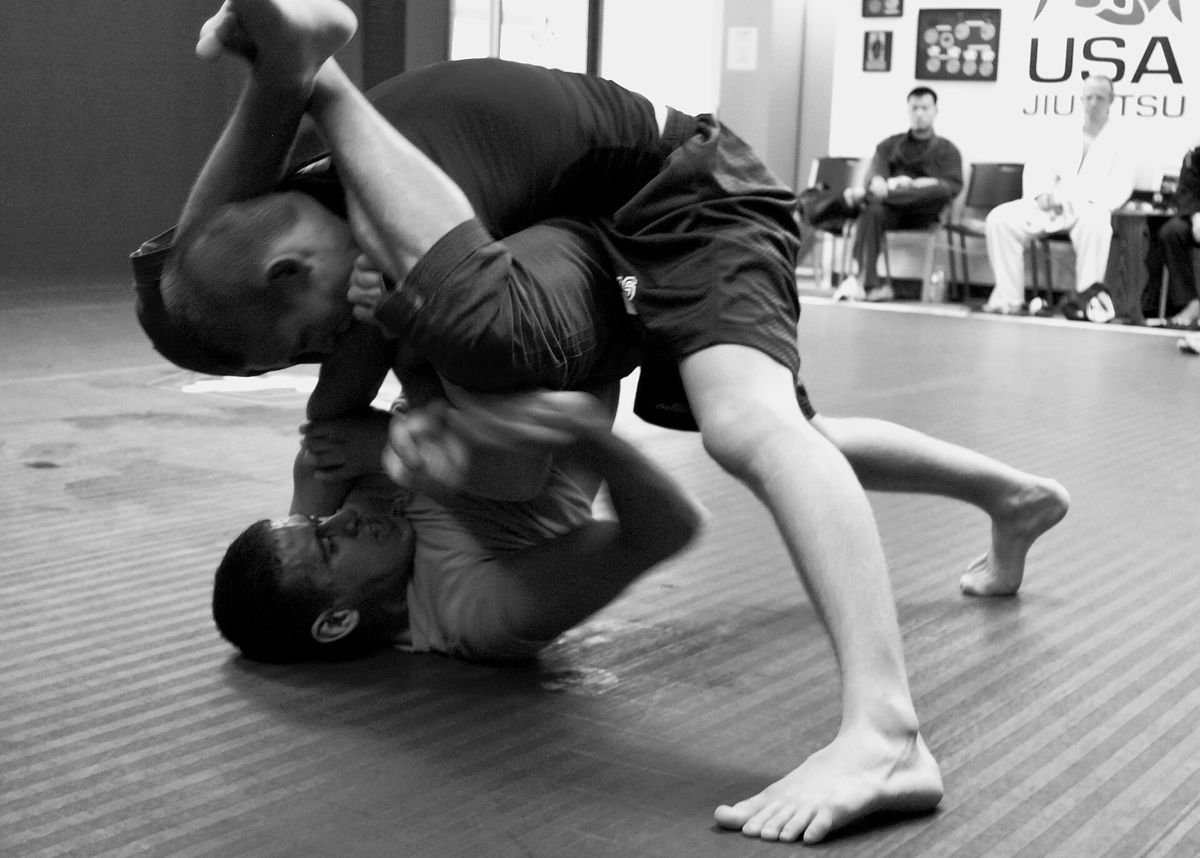
No-gi grappling during a black belt test.
Without the jacket there are no lapel grips and no collar strangles, and the vocabulary shifts to underhooks and body locks.
Mark Bonica · CC BY 2.0 · Wikimedia Commons
Compare that with the equipment questions on this site's measured sports. A polyurethane swimsuit, a composite bat and a bench shirt all made the same event easier or faster. Removing the gi does not make grappling easier or harder — it changes what grappling is.
Fighting adds gloves, shin protection and a mouthguard, because the first phase contains strikes. The gloves are light, because the strikes are required to be controlled rather than damaging, which puts ju-jitsu in the same category as karate rather than boxing.
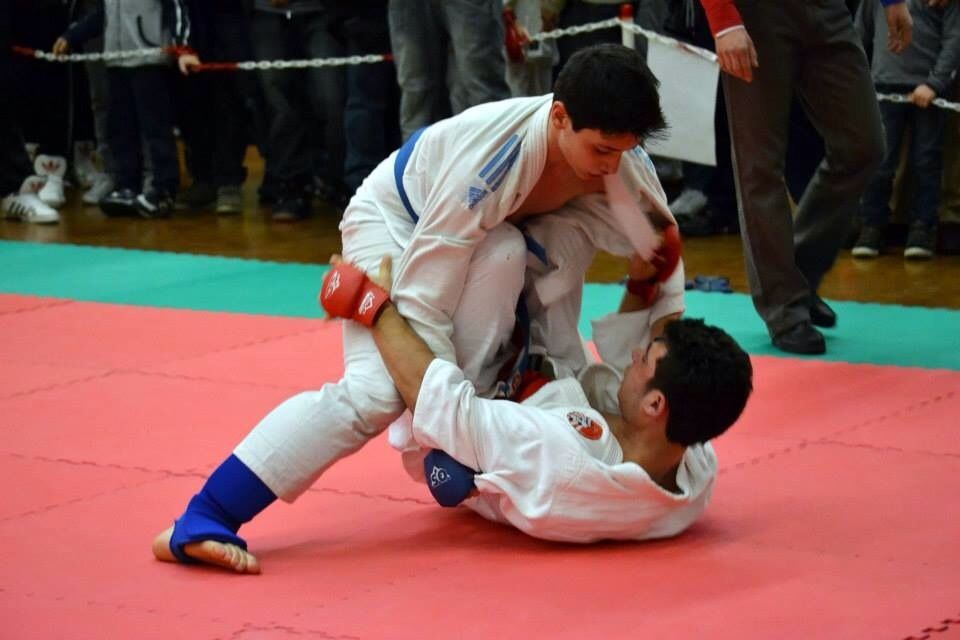
Vincenzo Ciolino in a ju-jitsu bout, 2014, both fighters in gloves and shin protection.
The Fighting system's equipment exists because its first phase contains strikes.
Vincicioli · CC BY-SA 3.0 · Wikimedia Commons
Duo needs nothing at all beyond the gi.
09Governing body politics
The JJIF governs a word, and the word is not its own.
"Ju-jitsu", "jujutsu" and "jiu-jitsu" are used by classical Japanese schools that do not compete, by hundreds of independent organisations with their own gradings, by a very large Brazilian grappling sport with its own federations and its own culture, and by this federation, which runs a codified competitive code and holds international recognition.
That is a harder governance position than any other combat sport covered here. Judo, taekwondo, wrestling, boxing and karate each have contested politics, but in each case the international federation governs something recognisably central to the activity. The JJIF's competitive sport is one claimant among several to a name whose largest constituency is somewhere else.
The Ne-waza discipline, added in 2015, is the federation's most consequential strategic move. Submission grappling had grown into one of the largest combat activities in the world almost entirely outside the JJIF, and adding a ne-waza competition brought a version of it inside. It did not bring the Brazilian federations, their athletes or their events, which continue as before.
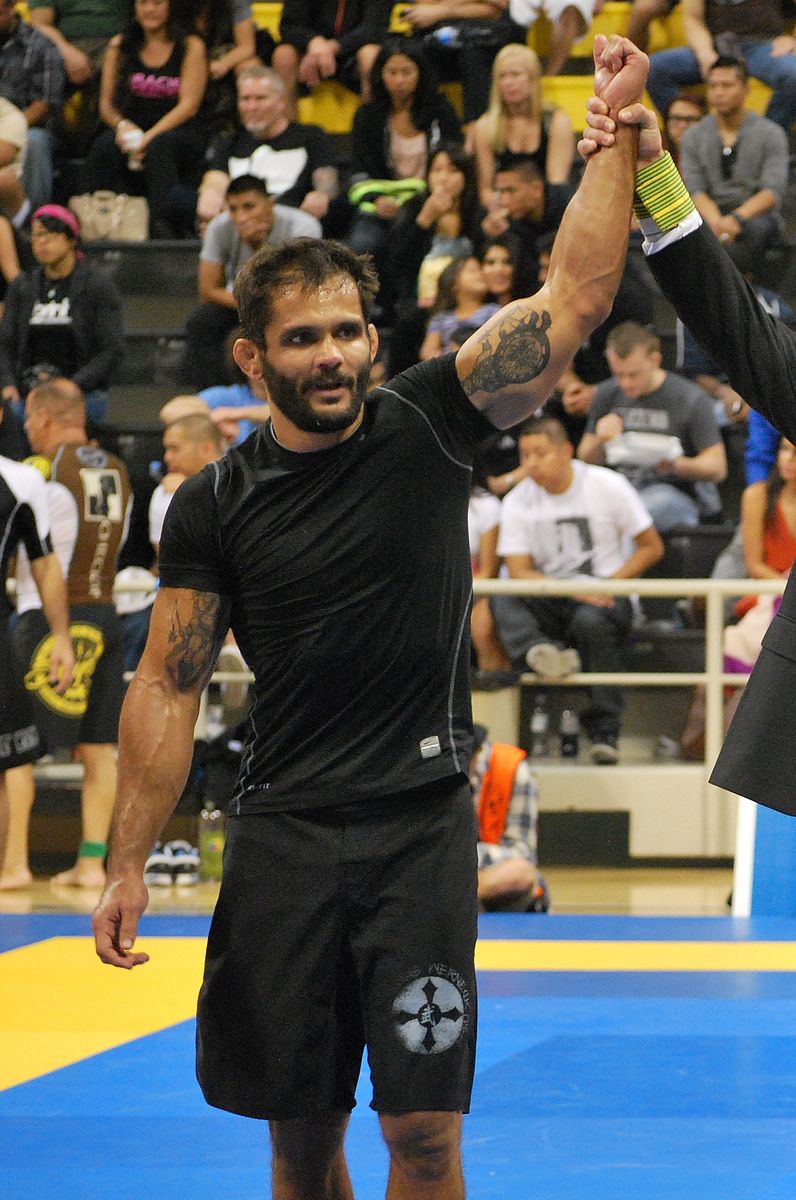
Cassio Werneck's hand raised after winning gold at the 2012 IBJJF No-Gi World Championship, Long Beach.
The Brazilian sport's own federation and world championships, which continue outside the JJIF.
Theentropykid · CC BY-SA 3.0 · Wikimedia Commons
Institutionally, the sport has done well by the standards of its size: a World Games place, an appearance at the 2018 Asian Games, and international recognition. What it does not have is an Olympic place, and the obstacle is partly that the IOC already has judo — a sport created by removing most of ju-jitsu, admitted sixty years ago, and occupying the slot its parent would need.
10Controversies that forced rule changes
What a ju-jitsu competition is for. The founding problem, and the Fighting system's three phases are the answer. If a bout could be settled at one range, the sport would collapse into judo, into kickboxing, or into submission grappling — all of which already exist and are better established. Requiring the bout to pass through all three ranges is a rule written to preserve the sport's reason to exist.
Techniques that cannot be contested. A large part of the art is self-defence against attacks that cannot be applied at full force to a resisting opponent without injuring them. The Duo system is the response: perform them cooperatively with a team-mate and have judges mark the realism and control. It makes a substantial part of the curriculum contestable and it imports every difficulty that judged sports have.
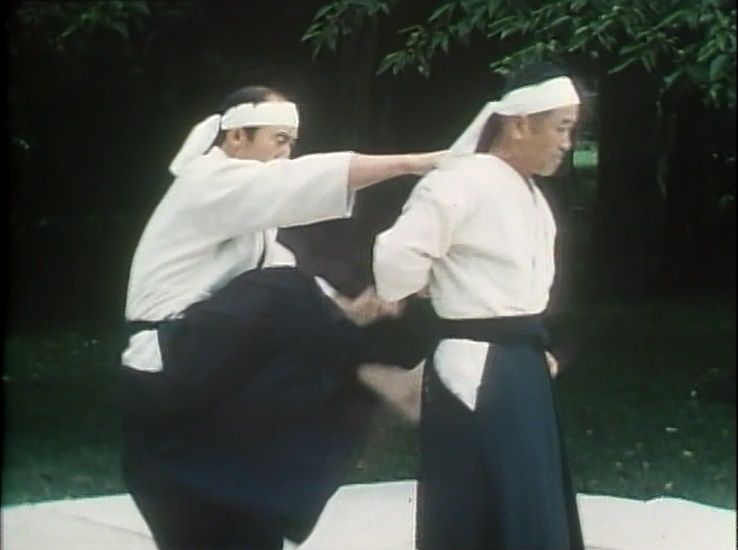
A technique of the Yanagi-shin Kacchū-ryū: seize the striking wrist, move behind, lock the elbow and throw.
The kind of technique that cannot be applied at full force to a resisting partner, and that the Duo system makes contestable by performing it cooperatively.
古武 · CC BY-SA 4.0 · Wikimedia Commons
Grappling's growth outside the federation. Submission grappling expanded enormously through the 2000s and 2010s under Brazilian and independent bodies. The JJIF added ne-waza in 2015, which was a response to a constituency it did not govern rather than to anything inside its own sport.
Gi and no-gi. Contesting both means maintaining two technical codes, and which is the real ne-waza is argued exactly as it is in the Brazilian sport.
The name. Not a rule change and the sport's largest problem: a federation whose sport shares its name with several unrelated activities cannot easily tell anyone what it is, and this affects recruitment, recognition and every conversation about inclusion.
Where it standsthe record, and what is still open · sections 11 to 12
11Series
No series can exist
A comparable score
Ju-jitsu cannot produce one series because it is not one competition. Fighting scores points across three phases and can end in a submission. Ne-waza scores positional advancement and can end in a submission. Duo is marked by a panel of judges on the realism and control of a cooperative demonstration. These are three different quantities wearing the same word. A Duo mark and a Fighting score have less in common than a gymnastics D-score and a boxing decision. One is a judged aesthetic-technical assessment of two team-mates; the other is a count of things one person did to another. There is also nothing stable underneath. The federation added Ne-waza as a discipline in 2015, which changed what the world championship contains, and the largest grappling constituency in the world competes under other bodies whose scoring is different again. So this space records what the sport is rather than what it measured: a federation running three competitions that share a mat, a gi and a name.
1998Scoped to one competitionDuo is judged and cooperative; Fighting is scored and adversarial. They have never been comparable and were never intended to be.
12What is contested now
Recorded as unsettled.
Who owns the name. A classical Japanese art, a Brazilian sport, hundreds of independent schools and one international federation all use it. The JJIF's competitive code is a claimant, not a consensus, and no mechanism exists to resolve it.
Whether the three phases work. Requiring a bout to pass through striking, throwing and groundwork preserves the sport's identity and asks athletes to compete against specialists in every range. Whether that produces good competition or a shallow version of three better sports is argued inside the federation.
Duo's status. A cooperative, judged event at the world championship of a combat sport. It makes a large part of the art contestable; it is also the hardest thing about the sport to explain to anyone outside it, and its place on any future programme would be difficult to defend.
Grappling's centre of gravity. Adding ne-waza in 2015 acknowledged that the largest grappling constituency was outside the federation. It has not brought that constituency in, and the Brazilian bodies continue independently.
The judo problem. The Olympic programme already contains a sport made by removing most of ju-jitsu. Arguing for the parent art alongside its more successful descendant is a genuinely difficult institutional case, and nobody in the sport has found a version of it that works.
Gi and no-gi. Two technical codes, two sets of specialists, one federation maintaining both.